

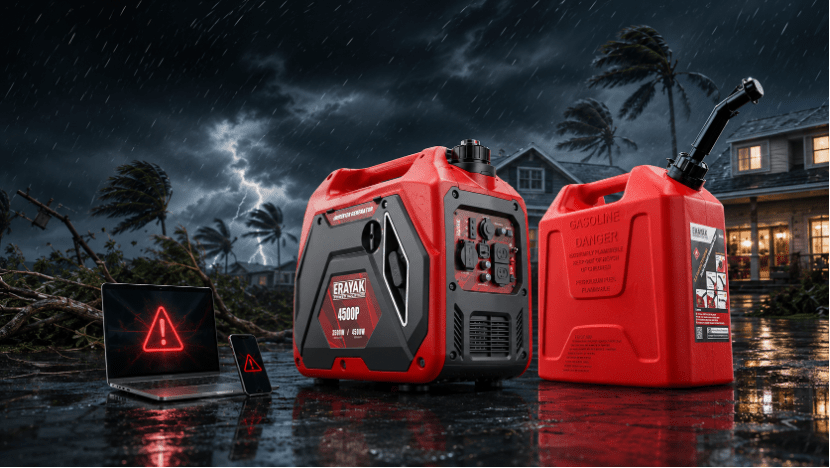
Hurricane Generator Fuel Storage Guide: Is Your Backup Fuel Ready?
Hurricane season can turn a portable generator from a convenience into your family’s lifeline. But the generator itself is only half the emergency plan. If the gasoline in your garage is stale, poorly sealed, contaminated with moisture, or left sitting inside the generator tank for months, your backup power plan may fail exactly when the grid goes down.
Quick Answer
For hurricane generator fuel storage, keep fresh gasoline in an approved, tightly sealed fuel container, label the purchase date, add stabilizer when appropriate, rotate fuel regularly, and never rely on old fuel sitting in the generator tank for months. Stale fuel can clog carburetor jets, cause rough engine surging, make the generator hard to start, and reduce confidence during an outage.
A reliable hurricane fuel setup should include your portable generator, approved fuel cans, fuel stabilizer, funnel or controlled-pour spout, gloves, flashlight, maintenance tools, and a printed fuel rotation checklist. For Erayak owners, pair your generator with a properly stored backup fuel plan before storm warnings begin.
Why Backup Fuel Matters Before Hurricane Season
Many homeowners prepare bottled water, flashlights, batteries, non-perishable food, and a portable generator before hurricane season. But fuel is often forgotten until the last minute. When fuel is old, poorly sealed, or stored in the wrong container, your generator may start poorly, stall under load, surge, or fail to start.
Your Generator Needs Fresh Fuel
A clean generator with stale fuel is still an unreliable backup system. Fuel condition directly affects starting and smooth operation.
Bad Fuel Can Clog Small Parts
Oxidized fuel can leave sticky deposits inside carburetor jets, fuel lines, and the fuel shutoff valve.
Storms Do Not Wait
When a hurricane warning arrives, fuel stations may be crowded or unavailable. Your fuel plan should be ready before the storm.
How Gasoline Goes Bad
Gasoline does not stay fresh forever. Heat, oxygen, moisture, vapor loss, poor sealing, and long storage periods can all reduce fuel quality. Once the fuel degrades, it can become harder to ignite cleanly and may leave sticky deposits inside the generator’s fuel system.
| Fuel Problem | What Happens | Generator Risk |
|---|---|---|
| Oxidation | Fuel reacts with oxygen over time | Sticky varnish and gummy deposits can form |
| Vapor loss | Light volatile components escape through poor seals | Fuel becomes harder to ignite and less reliable |
| Moisture contamination | Humidity enters the container or tank | Water can cause corrosion, stalling, and poor combustion |
| Heat exposure | Fuel expands, vaporizes, and ages faster | Stored fuel becomes less dependable during outages |
| Dirty container | Dust, water, or residue enters the fuel | Carburetor and fuel line blockage risk increases |
| Long storage without rotation | Fuel quality declines without inspection | Generator may fail when emergency power is needed |
E10 Gas vs Ethanol-Free Gas: Different Risks, Same Storage Discipline
Many homeowners assume ethanol-free gas can be stored forever, or that regular E10 gasoline is fine as long as the generator starts once. Both assumptions can create problems. Different fuel types fail in different ways.
| Fuel Type | Main Risk | What It Can Do to Your Generator |
|---|---|---|
| Regular E10 / ethanol blend | Ethanol can attract moisture from the air | Water and ethanol may separate and settle, causing poor combustion, corrosion, stalling, and fuel system trouble |
| Ethanol-free gas | Oxidation and vapor loss still occur over time | Fuel can become stale, less volatile, and leave sticky deposits that clog carburetor jets |
| Old gasoline in thin plastic cans | Vapor can escape and oxygen can enter through poor sealing | Fuel can age faster and become less reliable during emergency use |
| Fuel left in generator tank | Long-term storage inside the machine | Varnish can form in the tank, fuel line, petcock, and carburetor |
Why the Right Gas Can Matters
A fuel can is not just a red container. It is part of your emergency power system. A poor-quality can may seal poorly, allow vapor loss, admit oxygen and moisture, or make refueling messy during stressful storm conditions.
Keep Oxygen Out
A better-sealed container helps slow oxidation and keeps fuel more dependable for emergency generator use.
Reduce Vapor Loss
A secure cap and quality container help preserve the lighter fuel components that support easier starting.
Control Refueling
A controlled-pour spout helps reduce splashing, spilling, and stress when refueling a cooled generator.
The Erayak 5.3 Gallon Gas Can is designed as a hurricane-season fuel storage companion for portable generators. Its heavy-duty structure, sealed storage design, and smooth-pour concept help homeowners prepare fuel more confidently before storms arrive.

How Stale Gas Can Damage Your Generator
Stale gas is not just an inconvenience. It can create a chain reaction: hard starting, rough running, engine surging, clogged carburetor jets, blocked fuel lines, and unreliable output during a blackout.
| Symptom | Possible Fuel Cause | Why It Matters During an Outage |
|---|---|---|
| Hard starting | Old fuel has lost volatility or left deposits | You may waste time troubleshooting during a storm |
| Engine surging | Uneven fuel delivery or poor combustion | Generator may struggle to support stable loads |
| Stalling under load | Clogged fuel path or moisture contamination | Refrigerator, lights, router, or medical chargers may lose power |
| Carburetor clogging | Gummy deposits from oxidized gasoline | Repair may be needed before the generator can run properly |
| Rough operation | Bad fuel quality or partial fuel blockage | Emergency runtime becomes unpredictable |
Why You Should Not Leave Old Fuel in the Generator Tank
After hurricane season ends, many homeowners turn off the generator and roll it back into storage with gasoline still inside. That leftover fuel can age inside the tank, fuel line, petcock, and carburetor, creating sticky deposits and start-up problems months later.
| Storage Mistake | What Can Happen | Better Practice |
|---|---|---|
| Leaving fuel in the tank for months | Fuel oxidizes and leaves deposits | Follow the generator manual for storage, draining, or stabilizing procedures |
| Ignoring the fuel shutoff valve | Fuel can sit in small passages and gum up | Use the shutoff procedure recommended by the manual |
| Skipping post-season maintenance | Old oil, old fuel, and dust remain in the machine | Clean, inspect, and prepare the generator before long-term storage |
| Storing fuel without labels | You cannot tell fuel age during the next storm | Date every fuel can and rotate older fuel first |

Hurricane Generator Fuel Checklist
Use this checklist before hurricane season, before a major storm warning, and after each extended outage.
| Checklist Item | Why It Matters | Recommended Action |
|---|---|---|
| Fuel purchase date | Prevents mystery fuel during outages | Write the fuel type and purchase date on every can |
| Approved fuel container | Improves storage safety and reliability | Use sealed, upright containers designed for gasoline |
| Fuel stabilizer | Supports longer storage planning | Add according to stabilizer label and generator manual guidance |
| Fuel rotation plan | Reduces stale fuel risk | Use first-in, first-out rotation |
| Controlled-pour spout or funnel | Reduces spills during refueling | Keep the spout clean, dry, and stored with the fuel kit |
| Gloves and flashlight | Helps refueling and inspection in poor conditions | Keep them in a labeled emergency fuel bin |
| Generator storage check | Prevents old fuel from sitting inside the machine | Follow the manual for draining or stabilizing before long-term storage |
| Safe storage location | Reduces fire, vapor, and household risk | Store fuel upright in a cool, dry, ventilated non-living area away from ignition sources |
Recommended Erayak Emergency Setup
Erayak 2400P: Compact Hurricane Essentials
Choose the Erayak 2400P when your storm plan focuses on phones, power banks, LED lights, fans, WiFi router, laptop, and compact emergency electronics.
- Good fit for compact home emergency power
- Useful for lights, phones, router, fans, laptop, and small electronics
- Pair with labeled fuel cans, stabilizer, CO alarms, and outdoor-rated cords
Erayak 4500P: Strong Starting Point for Hurricane Home Backup
Choose the Erayak 4500P when your emergency setup includes managed home loads such as refrigerator, lights, fans, WiFi, phone charging, laptop, coffee maker timing, and small household essentials.
- Gas-only portable inverter generator
- Manual recoil start
- 55 lb lightweight design
- 2.25 gal fuel tank
- Up to 8 hours runtime
- THD < 1.2% for sensitive electronics
- 60.5 dB noise level
Erayak 4500PD: Fuel Flexibility for Longer Storm Outages
Choose the Erayak 4500PD when you want gasoline and propane flexibility for hurricane season, storm prep, longer outages, and mixed home and outdoor emergency use.
- Gasoline and propane flexibility
- Useful for longer outage planning
- Good fit for refrigerator, lights, fans, charging, WiFi, coffee timing, and managed emergency loads
Erayak 6800PD / 6800PT: Larger Emergency Backup, RV, 30A, and 120V/240V Planning
Choose the Erayak 6800 series when your storm plan needs more headroom, 30A outlets, selected 120V/240V planning, RV adapter support, pump planning, multiple power zones, and broader home backup overlap.
- 6800W peak power
- 5000W rated power on gasoline at 100% output
- 30A L5-30R outlet
- 30A 120V/240V L14-30R outlet
- Dual 120V household outlets
- TT-30R RV adapter accessory included
 Generator Fuel Safety Checklist
Fuel readiness should never come at the expense of safety. Gasoline is flammable, generator exhaust contains carbon monoxide, and emergency conditions can make mistakes more likely.
- Run the generator outdoors only, away from doors, windows, vents, garages, crawlspaces, basements, sheds, and enclosed spaces.
- Never run a generator indoors or in a garage, even with doors or windows open.
- Keep the generator away from people, pets, children, windows, vents, doors, and sleeping areas.
- Point exhaust away from the home, neighboring homes, and occupied areas.
- Use working carbon monoxide alarms inside the home.
- Use grounded, properly rated, outdoor extension cords.
- Inspect cords for fraying, cuts, crushed insulation, exposed wire, loose plugs, or missing ground pins.
- Do not use frayed, damaged, wet, crushed, or loose cords.
- Keep plug connections dry, elevated, and away from puddles, rain runoff, wet grass, and storm debris.
- Do not backfeed your home through a wall outlet.
- Use a properly installed transfer switch if powering selected home circuits.
- Disconnect loads before starting the generator.
- Add loads gradually after the generator stabilizes.
- Let the generator cool before refueling, draining fuel, or maintenance.
- Store fuel in approved containers away from flame, heat, stoves, grills, living areas, children, and ignition sources.
- Keep fuel cans upright, sealed, labeled, and stored in a cool, dry, ventilated non-living area.
Protect Your Hurricane Backup Power Before the Storm
Your generator is only as ready as the fuel behind it. Before hurricane warnings arrive, inspect your fuel cans, label purchase dates, rotate old gasoline, add stabilizer when appropriate, prepare your refueling tools, and store your generator correctly after each season. Pair Erayak generators with a safer, cleaner, and better-organized fuel plan so your emergency power is ready when the grid goes down.
FAQ: Hurricane Generator Fuel Storage
How should I store generator fuel for hurricane season?
Store generator fuel in approved, tightly sealed fuel containers. Keep the cans upright, labeled with fuel type and purchase date, and stored in a cool, dry, ventilated non-living area away from heat, flame, children, and ignition sources.
Can old gasoline damage a portable generator?
Yes. Old gasoline can lose volatility, oxidize, collect moisture, and leave sticky deposits. This can cause hard starting, rough running, surging, clogged carburetor jets, and fuel line blockage.
Is ethanol-free gas safe to store forever?
No. Ethanol-free gas avoids some moisture-related problems, but it can still oxidize and lose volatile components over time. It still needs proper sealing, labeling, stabilizer planning, and rotation.
Should I leave fuel in my generator after hurricane season?
Do not leave old fuel sitting in the generator for months without following the storage procedure in the manual. Many generators should be drained or stored with properly treated fuel according to the manufacturer’s instructions.
Do I need fuel stabilizer for generator gasoline?
Fuel stabilizer can help with storage planning, but it should be used according to the stabilizer label and your generator manual. Stabilizer works best when added to fresh fuel, not fuel that has already gone bad.
When can I refuel a portable generator?
Turn the generator off and let it cool before refueling. Never pour gasoline onto or near a hot engine. Use a controlled spout or funnel and keep fuel away from heat, flame, and ignition sources.
What Erayak generator is best for hurricane backup power?
Choose the Erayak 2400P for compact emergency essentials, the Erayak 4500P or 4500PD for broader home backup with managed loads, and the Erayak 6800 series for larger home, RV, 30A, 120V/240V, and multi-zone emergency planning.
