

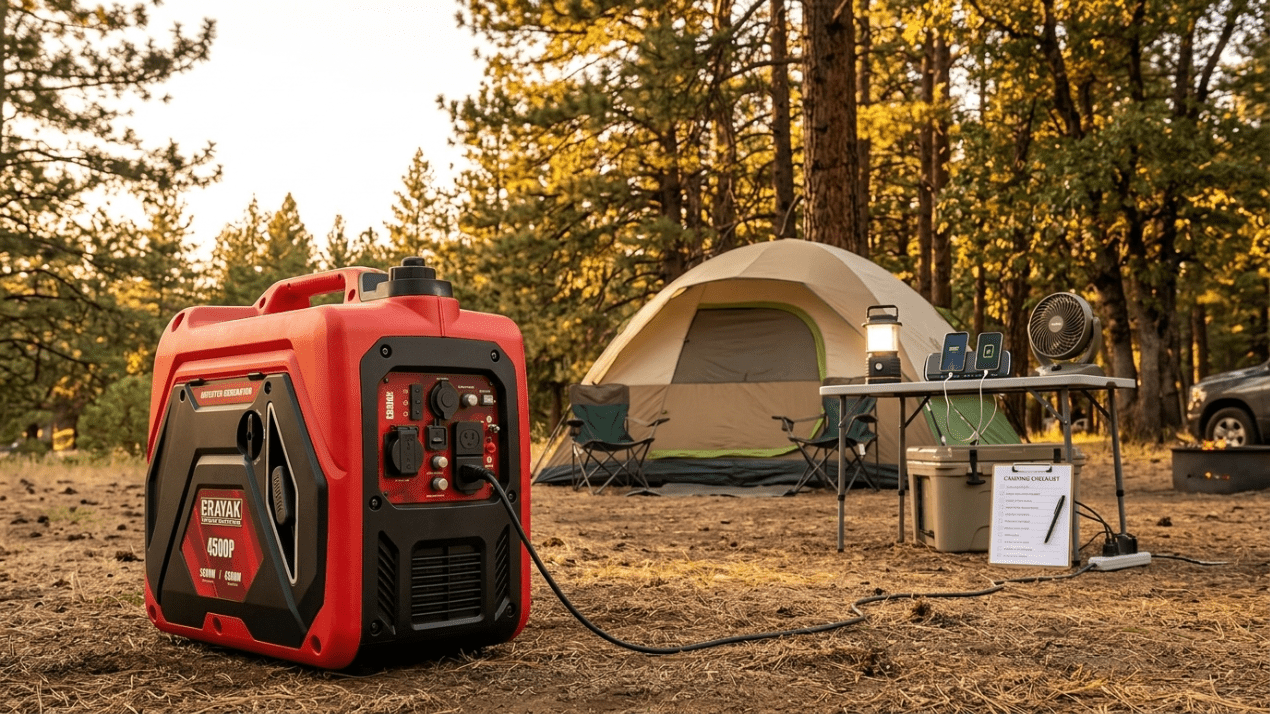
How to Choose a Generator for Camping
A camping generator should be portable, quiet, easy to manage, and sized for real campsite essentials. The right choice depends on whether you need power for lights, phones, fans, a cooler, coffee maker, small cooking gear, camera batteries, outdoor work, or a larger basecamp setup.
Quick Answer
For most camping essentials such as phones, LED lights, camera batteries, laptop charging, small fan, portable speaker, and small electronics, a 2,400W-class inverter generator is usually a practical choice. It is compact enough for campsite use while still giving enough headroom for common outdoor power needs.
For larger camping setups with coffee maker rotation, electric griddle timing, portable cooler, multiple devices, small tools, or extended basecamp use, a 4,500W-class inverter generator gives more flexibility. Choose the Erayak 2400P for compact camping power, the Erayak 4500P for more campsite headroom, and the Erayak 4500PD when dual-fuel flexibility matters.
What Do You Need to Power While Camping?
Camping generator sizing starts with your load list. A minimalist tent camping setup may only need lights and charging. A family campsite may need fans, cooler power, cooking gear rotation, camera batteries, and multiple devices.
Charging + Lights
Phones, headlamps, LED lanterns, camera batteries, GPS devices, and small electronics are low-power loads.
Fans + Cooler + Laptop
Small fans, laptop charging, portable coolers, air pumps, and speakers add convenience without requiring huge wattage.
Cooking Gear Rotation
Coffee makers, electric griddles, kettles, and other heating loads should be used briefly and separately.
Camping Generator Wattage Guide
Most camping electronics are small loads. The larger loads are usually heating appliances, cooking appliances, compressors, air pumps, and tools. Always check the label or manual for your actual devices.
| Camping Load | Typical Load Type | Generator Planning Note |
|---|---|---|
| Phone, camera, GPS charging | Low | Easy to combine with lights and small electronics |
| LED lanterns and string lights | Low | Efficient choice for campsite lighting |
| Small fan | Low to moderate | Useful for warm-weather comfort |
| Portable cooler | Varies by model | Check startup and running requirements |
| Air mattress pump | Short-use motor load | Use briefly and avoid stacking with other large loads |
| Coffee maker | High-watt heating load | Use briefly and separately from other high loads |
| Electric griddle or kettle | High-watt heating load | Better suited for larger generator headroom or rotation |
| Power tools | Motor load | Check starting watts and outlet needs |
Why Quiet Operation Matters at Campgrounds
Noise is one of the biggest differences between a good camping generator and a frustrating one. Campgrounds, dispersed camping areas, and group sites often value quiet hours, neighbor respect, and low-impact operation.
| Quiet Camping Factor | Why It Matters | Planning Tip |
|---|---|---|
| Campground etiquette | Noise travels farther in quiet outdoor spaces | Use the smallest generator that fits your real load |
| Quiet hours | Many campgrounds restrict generator use at certain times | Check campground rules before your trip |
| Load level | Higher electrical load can increase engine demand | Charge devices and run high loads during allowed hours |
| Placement | Distance and exhaust direction affect both safety and noise | Place safely outdoors, never inside tents or vehicles |
Why Choose an Inverter Generator for Camping?
Camping loads often include sensitive electronics: phones, laptops, cameras, drone batteries, portable power stations, LED lights, speakers, and communication gear. A properly sized inverter generator is a good match because it is designed for stable output and efficient operation under lighter loads.
Stable Power
Useful for phones, laptops, cameras, battery chargers, and campsite electronics.
Easy to Move
A compact inverter generator is easier to load, unload, store, and place safely around camp.
Better for Small Loads
Most camping power needs are smaller than home backup loads, so right-sizing matters.
Gas vs Dual-Fuel Camping Generators
Gasoline generators are common, portable, and simple for weekend camping. Dual-fuel generators add propane flexibility, which may be useful for longer trips, basecamp setups, or users who already carry propane for outdoor cooking.
| Fuel Setup | Best For | Camping Note |
|---|---|---|
| Gasoline | Simple portable camping power | Good for compact generators and high-output needs |
| Propane capable | Longer trips and fuel flexibility | Useful if propane is already part of your camp kitchen setup |
| Dual fuel | Flexible outdoor power planning | Helpful when you want more fuel options away from town |
Best Erayak Generator for Camping
Erayak 2400P: Best Fit for Compact Camping Power
Choose the Erayak 2400P for phones, lights, small fans, laptop charging, camera batteries, speakers, air pumps, and compact campsite electronics.
- Practical size for light camping essentials
- Good fit for charging, lighting, and small electronics
- Best when high-watt cooking gear is limited or rotated carefully
Erayak 4500P: More Headroom for Family Camping and Basecamp
Choose the Erayak 4500P when your camping setup includes multiple devices, portable cooler, lights, fans, cooking appliance rotation, tools, or a larger group.
- Gas-only portable inverter generator
- Manual recoil start
- 55 lb lightweight design
- 2.25 gal fuel tank
- Up to 8 hours runtime
- THD < 1.2% for sensitive electronics
- 60.5 dB noise level
Erayak 4500PD: Dual-Fuel Flexibility for Longer Camping Trips
Choose the Erayak 4500PD when you want 4,500W-class camping power with gasoline and propane flexibility for extended outdoor use, basecamp setups, and larger camping loads.
- Gasoline and propane flexibility
- Useful for longer camping trips and basecamp planning
- Good fit for users who already carry propane for camp cooking
Camping Generator Safety Checklist
A camping generator should never be operated in a tent, vehicle, camper shell, enclosed shelter, garage, cabin, or any partially enclosed area. Carbon monoxide cannot be seen or smelled.
- Run the generator outdoors only.
- Keep it far away from tents, doors, windows, vents, vehicles, and sleeping areas.
- Point exhaust away from people, tents, neighboring campsites, and enclosed spaces.
- Never run a generator inside a tent, SUV, van, truck bed cap, cabin, or screen room.
- Use working carbon monoxide alarms when camping in RVs, cabins, or enclosed sleeping areas.
- Keep the generator dry and away from standing water.
- Use properly rated outdoor extension cords.
- Do not overload the generator.
- Let the generator cool before refueling.
- Store fuel away from flames, stoves, grills, heaters, and sleeping areas.
- Follow campground generator rules and quiet-hour restrictions.
Power Your Campsite the Right Way
For lights, charging, small fans, laptop power, camera batteries, and compact campsite electronics, choose the Erayak 2400P. For larger camping setups, cooking appliance rotation, portable cooler use, and more headroom, choose the Erayak 4500P or 4500PD.
FAQ: How to Choose a Generator for Camping
What size generator do I need for camping?
For phones, lights, laptop charging, camera batteries, small fans, and compact campsite electronics, a 2,400W-class inverter generator is often enough. For larger camping setups with cooking appliance rotation, portable cooler use, tools, or multiple users, a 4,500W-class generator gives more headroom.
Is an inverter generator good for camping?
Yes. An inverter generator is a good choice for camping because it is well suited for electronics such as phones, laptops, cameras, battery chargers, LED lights, and portable gear.
Can I use a generator for tent camping?
Yes, but the generator must stay outdoors and far away from tents, sleeping areas, vehicles, and enclosed spaces. Never operate a generator inside or next to a tent.
Can a camping generator run a coffee maker?
Often yes, but coffee makers are high-watt heating loads. Use them briefly and separately from other large loads, especially on compact generator setups.
What is the best quiet generator for camping?
A compact inverter generator is usually the best starting point for quiet camping power. Choose a generator that matches your real loads and follow campground quiet-hour rules.
Can I run a generator at night while camping?
Only if campground rules allow it and the generator is placed safely outdoors away from tents and sleeping areas. Many campgrounds have quiet hours, so check the rules before relying on overnight generator use.
What Erayak generator is best for camping?
Choose the Erayak 2400P for compact camping essentials. Choose the Erayak 4500P for larger campsite loads and more headroom. Choose the Erayak 4500PD when dual-fuel flexibility is important for longer camping trips.
