

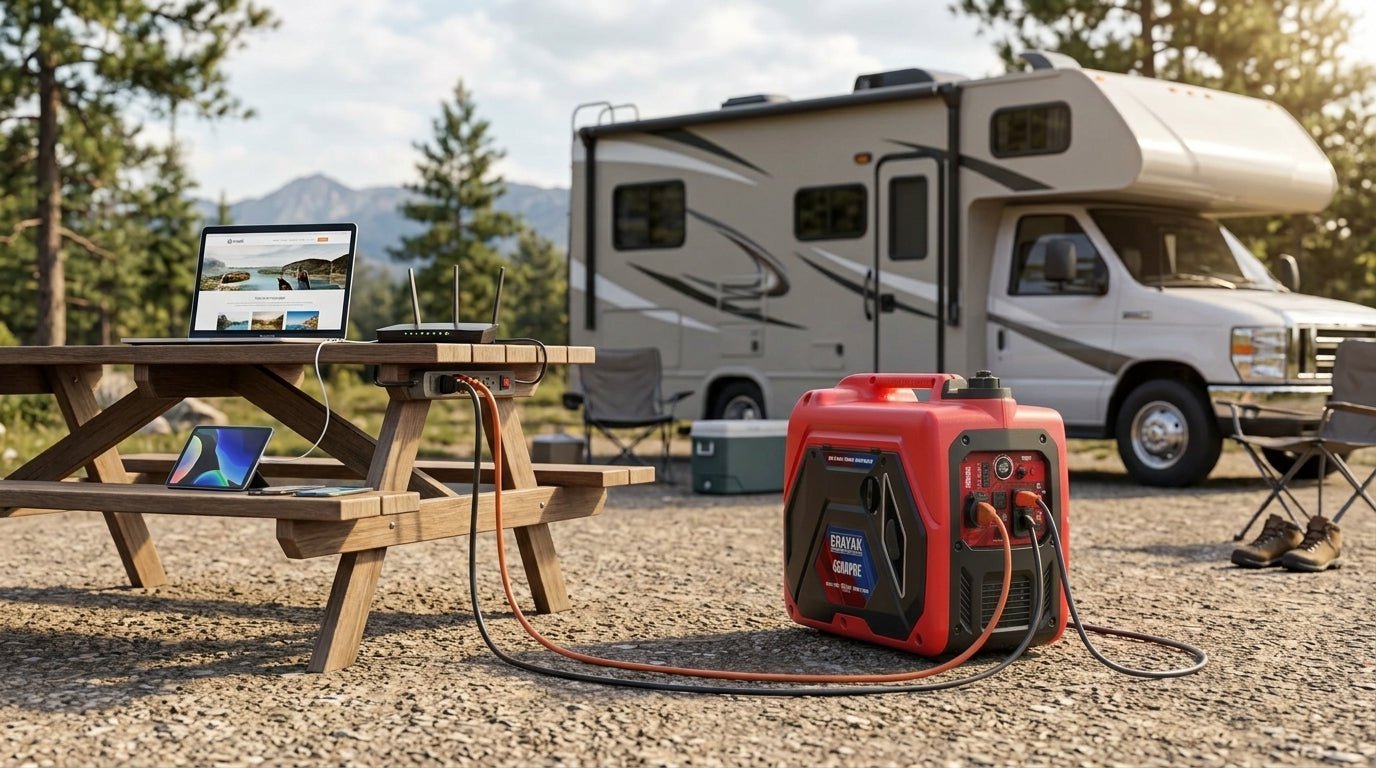
Best Quiet 30 Amp RV Generators for 2026
The best quiet 30 amp RV generator is usually a 4,000W to 4,500W inverter generator with enough starting capacity for one rooftop air conditioner, clean power for RV electronics, and a practical 30 amp RV connection path. For most 30 amp travel trailers, the 4,500W class is the sweet spot.
- A 30 amp RV is usually 120V x 30A = 3,600W maximum through the RV service.
- Generator starting watts help with AC startup, but they do not remove the RV's 30A limit.
- Quiet inverter power is usually a better camping choice than a loud open-frame jobsite generator.
- Run the microwave, electric water heater, coffee maker, and hair dryer separately from AC startup.
Quick Answer: What Is the Best Quiet Generator for a 30 Amp RV?
For most 30 amp RVs with one rooftop air conditioner, choose a quiet inverter generator in the 4,000W to 4,500W class. That range gives you better AC starting margin than a 2,000W-class camping generator while still staying portable enough for many RV trips.
A smaller 2,000W to 2,500W inverter generator can be useful for battery charging, lights, fans, electronics, and light camping loads. But if your goal is one rooftop AC plus normal 30 amp RV comfort, it is usually not the best single-generator answer.
Best ERAYAK fit: choose the ERAYAK 4500P if you want a gas-only 4,500W inverter generator for 30 amp RV camping. Choose the ERAYAK 4500PD if you want the same practical RV power class with gasoline and propane flexibility for camping and storm-backup planning.
Best Quiet 30 Amp RV Generator Picks
This guide is focused on the quiet 30 amp RV buyer: one rooftop AC, campsite noise, sensitive electronics, manageable weight, fuel strategy, and enough load-management margin for real camping.
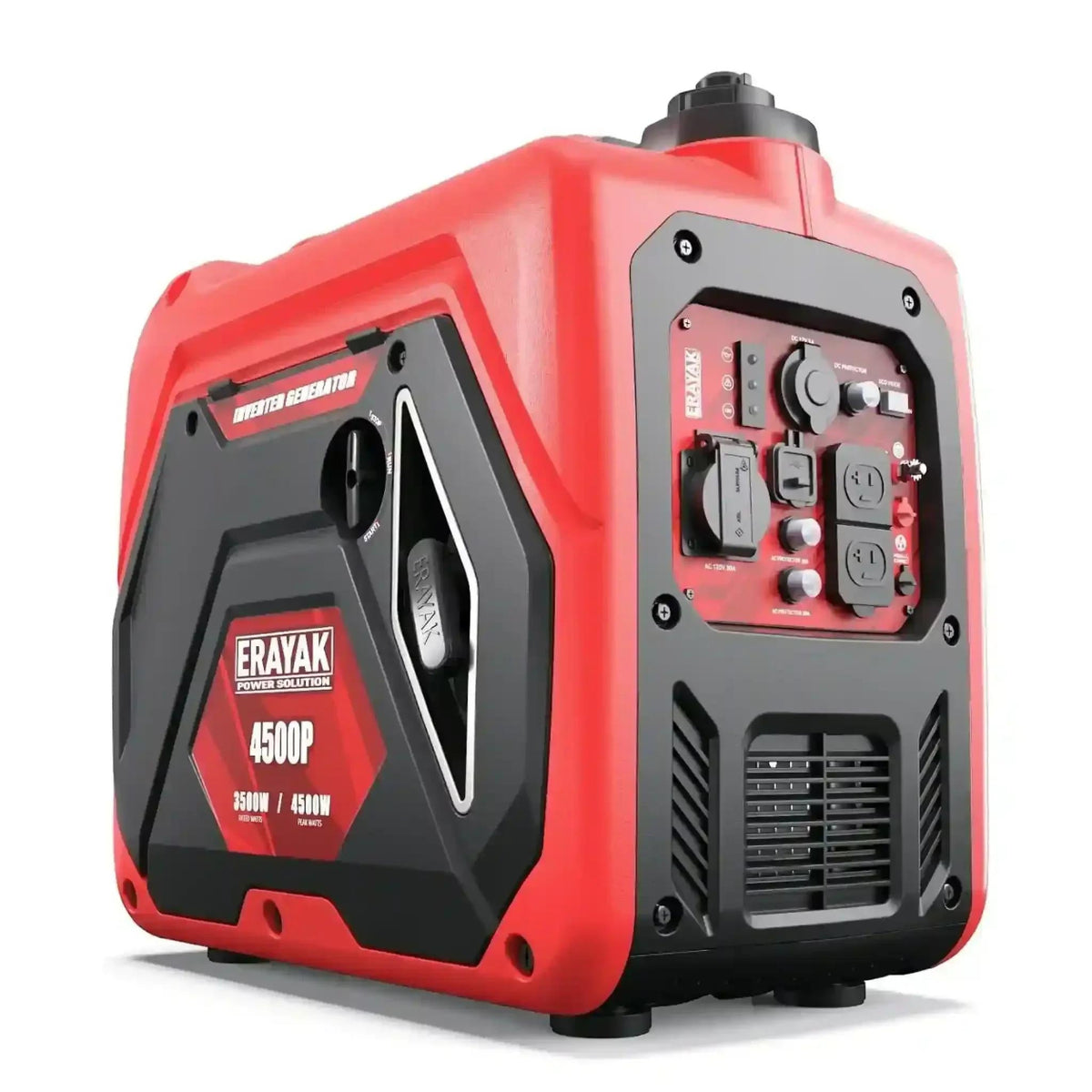
Best gas-only pick: ERAYAK 4500P
The ERAYAK 4500P is the cleanest fit if you want a gas-only 4,500W class inverter generator for 30 amp RV camping. It is a 55 lb class unit with a 2.25 gallon fuel tank, up to 8 hours runtime, 60.5 dB noise rating, and THD below 1.2% for cleaner power.
- Best for RVers who want simple gasoline power
- Strong match for one RV AC plus managed smaller loads
- Confirmed gas-only model with manual recoil start
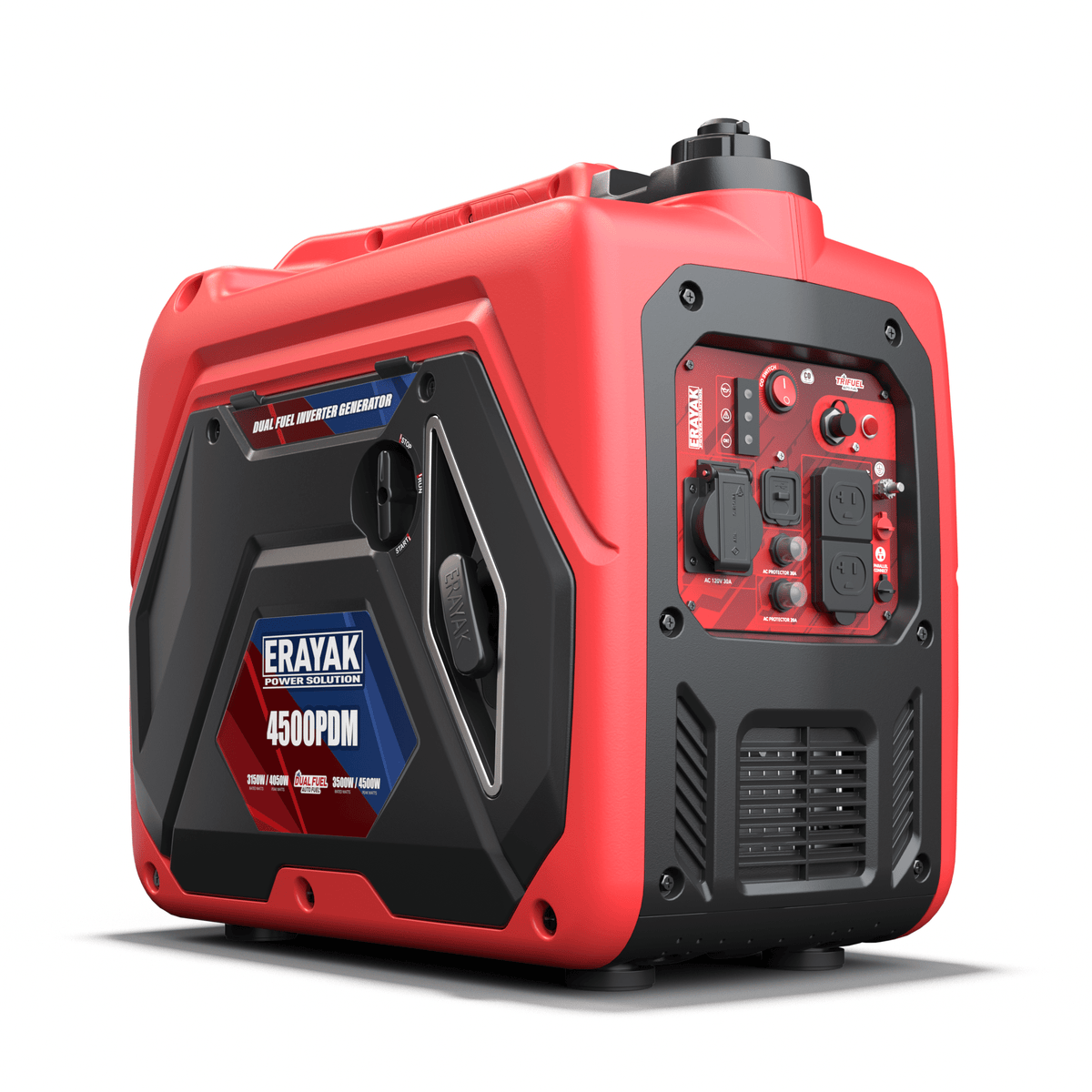
Best dual-fuel pick: ERAYAK 4500PD
The ERAYAK 4500PD is the stronger fit if you want gasoline plus propane flexibility for 30 amp RV trips, boondocking, and backup-power planning. It is the better product route for shoppers specifically searching for a quiet dual-fuel RV generator.
- Best for RVers who want gas and propane flexibility
- Good match for one rooftop AC plus selected comfort loads
- Useful crossover fit for RV camping and outage readiness
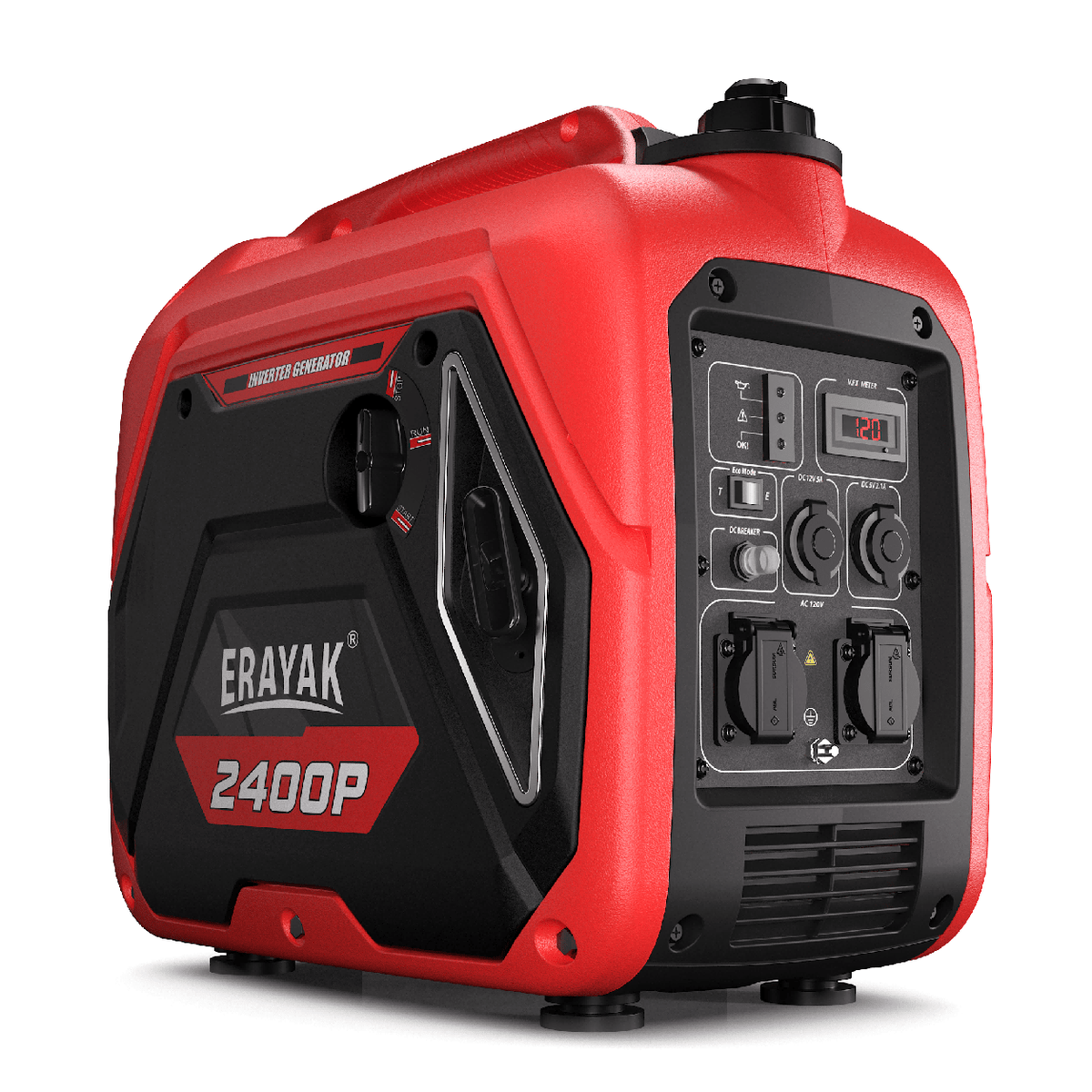
Best light-load companion: ERAYAK 2400P
The ERAYAK 2400P is not the default choice for a full 30 amp RV with rooftop AC, but it is useful for lighter camping, battery charging, small trailers, electronics, fans, and refrigerator-only support when quiet portability matters more than AC headroom.
- Better for light camping loads than full 30A RV comfort
- Useful for charging, lights, fans, and electronics
- Not the primary pick for a standard rooftop AC setup
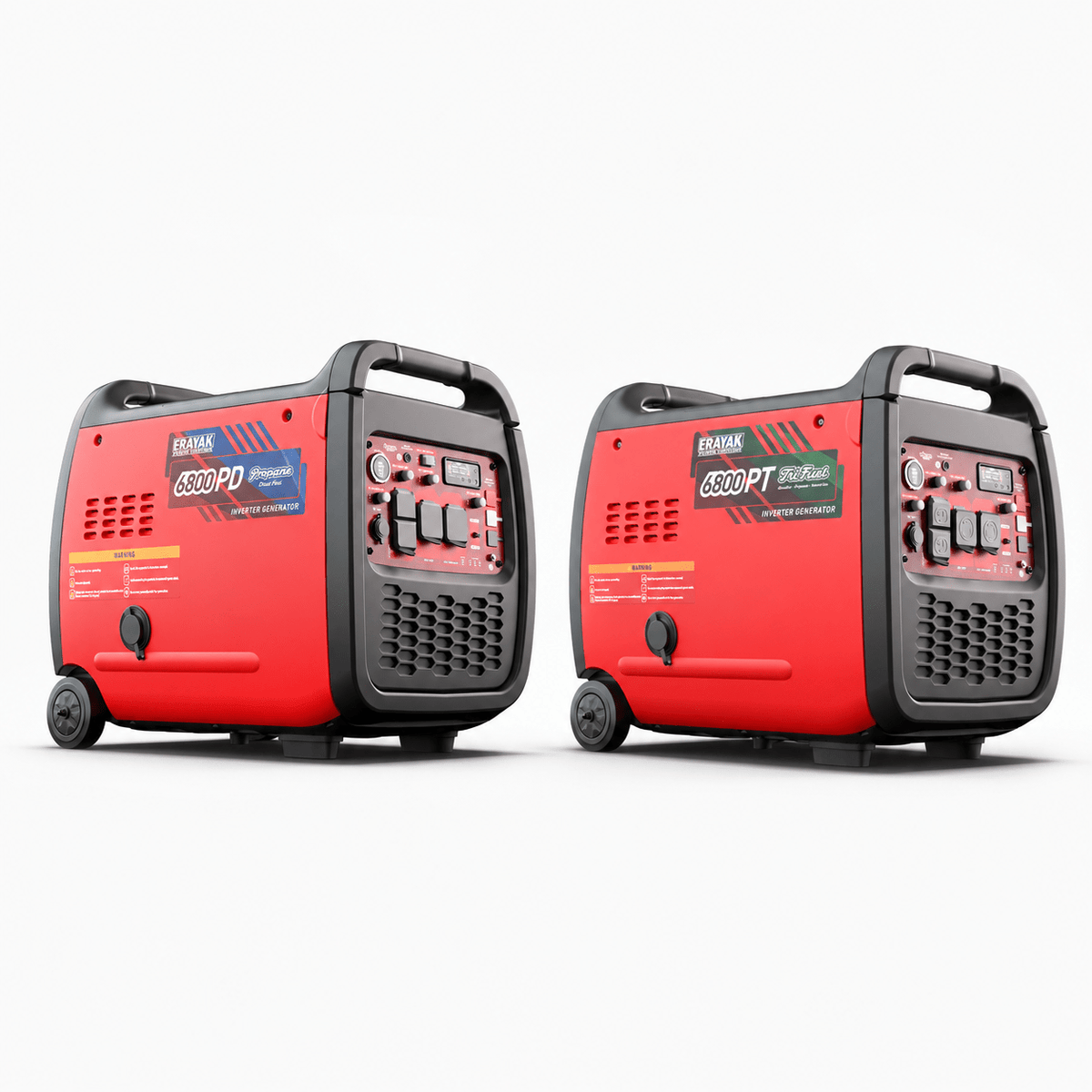
Upgrade path: ERAYAK 6800PD / 6800PT
If your 30 amp RV generator decision overlaps with larger home backup, selected circuits, 120V/240V planning, sump pump, well pump, or a bigger RV setup, consider the ERAYAK 6800PD / 6800PT series. The 6800PD is dual fuel, while the 6800PT is tri-fuel.
- 6800W peak output
- 5000W rated output on gasoline at 100% output
- 120V/240V L14-30R planning path for selected backup needs
What Size Generator Do You Need for a 30 Amp RV?
A standard 30 amp RV service is 120 volts x 30 amps, or 3,600 watts. In real camping, you still need starting-watt margin for the air conditioner compressor, but your RV inlet and breaker limit how much continuous power the RV can use through that 30 amp connection.
| Generator class | Best for | 30 amp RV reality | Recommendation |
|---|---|---|---|
| 2,000W to 2,500W inverter | Charging, lights, laptops, fans, small camper loads | May struggle with standard rooftop AC unless conditions are favorable and a soft start is installed | Good companion generator, not the main 30A RV comfort pick |
| 3,000W to 3,500W inverter | Some 13,500 BTU AC setups with strict load management | Can work in some RVs, but margin may be tight in heat, altitude, or older AC setups | Consider only if weight and size matter more than headroom |
| 4,000W to 4,500W inverter | 30 amp RV with one rooftop AC plus selected normal loads | Best balance of AC starting margin, campsite comfort, and portability | Best all-around class for most quiet 30A RV buyers |
| 5,500W+ inverter or larger backup setup | Large RVs, two-AC planning, or home-backup crossover | More generator power does not turn a 30 amp RV inlet into unlimited power | Use for broader backup planning, not just a basic 30A RV match |
For a deeper size-only breakdown, see ERAYAK's guide to the best generator for a 30 amp RV.
How Quiet Should a 30 Amp RV Generator Be?
For campground comfort, look for an inverter generator around 60 dB or lower when possible, but read the measurement conditions. Generator noise changes with load, distance, surface, engine speed, exhaust direction, and whether the manufacturer measured at quarter load, half load, or rated load.
| Noise range | How it feels at camp | Best use | Buyer note |
|---|---|---|---|
| 50 to 55 dB | Very quiet for a generator | Light-load camping and close campsites | Often smaller inverter units or eco-mode operation |
| 56 to 60 dB | Quiet enough for many RV camping scenarios | Balanced quiet RV generator shopping | Good target for 30 amp RV users |
| 61 to 65 dB | Noticeable but often still manageable | Higher loads, larger inverters, more open RV loops | Placement and campground rules matter more |
| 66 dB+ | Likely to carry across campsites | Less ideal for quiet campgrounds | Higher complaint risk, especially at night or in tight loops |
Noise tip: do not compare dB numbers without checking distance and load. A generator rated at 58 dB at light load may sound very different when starting an RV air conditioner.
Features That Matter in a Quiet 30 Amp RV Generator
A quiet 30 amp RV generator is not only about peak watts. The best fit should match your AC startup needs, connection path, campsite noise expectations, and fuel preference.
Cleaner power for RV electronics, chargers, laptops, routers, and control boards.
Check outlet type, adapter path, breaker limits, and cord rating before you travel.
Rooftop AC startup is often the reason 30A RV owners choose the 4,500W class.
Helps reduce noise and fuel use under lighter loads, though AC startup may need full response.
Weight, handles, wheels, and storage space matter as much as peak watts.
Gas-only is simple and strong; dual fuel adds propane flexibility for camping and outages.
What Can a Quiet 30 Amp RV Generator Run?
A 4,000W to 4,500W inverter generator can usually support one rooftop AC in many 30 amp RV setups plus selected smaller loads, but it is still a managed-load setup. Avoid starting the AC while also running the microwave, electric water heater, coffee maker, or hair dryer.
| Load combination | Practical result | Best habit |
|---|---|---|
| RV AC + converter + refrigerator controls + lights | Typical 4,500W-class use case in many 30A RVs | Let the AC start and stabilize before adding more loads |
| RV AC + microwave | May be possible, but can overload some setups | Run the microwave after AC startup and turn off other heavy loads |
| Electric water heater + AC + small appliances | Often too much for comfortable 30A load management | Use propane water heating or turn electric water heater off during AC use |
| Battery charging + lights + electronics | Easy for most inverter generators | Use eco mode when the manual allows and loads are light |
For AC-specific startup guidance, see ERAYAK's RV AC generator size guide.
Gas vs Dual Fuel for a 30 Amp RV Generator
Gasoline usually provides the strongest output from a portable generator and is easy to find on the road. Propane stores well, connects naturally with many RVers' fuel planning, and can be useful during outages or long trips. Dual fuel gives you both options, but propane output can be lower than gasoline output, so leave margin when sizing for RV AC startup.
| Fuel choice | Best reason to choose it | 30 amp RV note |
|---|---|---|
| Gas-only inverter generator | Simple fueling and strongest output from the generator platform | Good fit if you want maximum practical AC-starting margin from a portable RV generator |
| Dual-fuel inverter generator | Gasoline plus propane flexibility for camping and backup planning | Leave extra margin on propane, especially when starting a rooftop AC in hot weather |
| Larger 120V/240V platform | RV plus home-backup crossover, selected circuits, or larger load planning | Useful for broader backup needs, but not required for every 30 amp RV campsite |
Choose gas-only if you want simple maximum-output RV power. Choose dual fuel if you value fuel flexibility, propane storage, and storm backup planning.
30 Amp RV Generator Safety Notes
Never run a fuel-powered generator inside an RV, tent, garage, truck bed with a covered shell, enclosed storage bay, or near open windows, doors, vents, or slide-outs. Operate it outdoors with proper ventilation, follow the owner's manual, use working carbon monoxide alarms, and keep exhaust pointed away from people and living spaces.
Before connecting to your RV
- Use the correct RV-rated cord and adapter for your generator outlet and RV inlet.
- Do not exceed the RV's 30 amp service limit.
- Turn off heavy loads before starting the generator or connecting the RV.
- Keep the generator dry, level, ventilated, and away from public walking paths.
- Do not operate the generator in standing water or enclosed campsite structures.
- Let the generator cool before refueling.
FAQ: Best Quiet 30 Amp RV Generators
What size generator is best for a 30 amp RV?
Most 30 amp RV owners should look at a 4,000W to 4,500W inverter generator if they want to run one rooftop AC plus selected normal RV loads. A 30 amp RV service is 120V x 30A, or 3,600 watts maximum through the RV connection.
Will a 4,500 watt generator run a 30 amp RV?
In many managed-load setups, yes. A 4,500W class inverter generator can usually provide enough starting margin for one RV air conditioner and enough running power for selected smaller loads. It still will not let you run every heavy appliance at once.
How quiet should a 30 amp RV generator be?
A good quiet target is around 60 dB or lower when possible. Always compare the measurement distance and load condition, because generator noise increases when the air conditioner, microwave, or other heavy loads run.
Is a 2,000 watt generator enough for a 30 amp RV?
It can power light loads such as charging, lights, fans, laptops, and some small appliances. It is usually not the best single-generator answer for a 30 amp RV with a standard rooftop air conditioner unless the setup is carefully managed and verified.
Is dual fuel worth it for a 30 amp RV generator?
Dual fuel is worth considering if you want gasoline power plus propane flexibility. Gasoline usually provides the strongest output, while propane is convenient for storage and backup planning. Leave sizing margin when using propane for AC-heavy loads.
Which ERAYAK generator is best for a quiet 30 amp RV?
The ERAYAK 4500P is the gas-only fit for quiet 30 amp RV power. The ERAYAK 4500PD is the better choice if you want dual-fuel flexibility. The ERAYAK 2400P is better for light camping loads rather than full 30 amp RV air-conditioning use.
Choose a quiet inverter generator with enough AC starting margin
For most 30 amp RV shoppers, the practical short list is simple: compare the ERAYAK 4500P gas-only model and the ERAYAK 4500PD dual-fuel model, then match your choice to your fuel preference, AC load, campground rules, and portability needs.
