

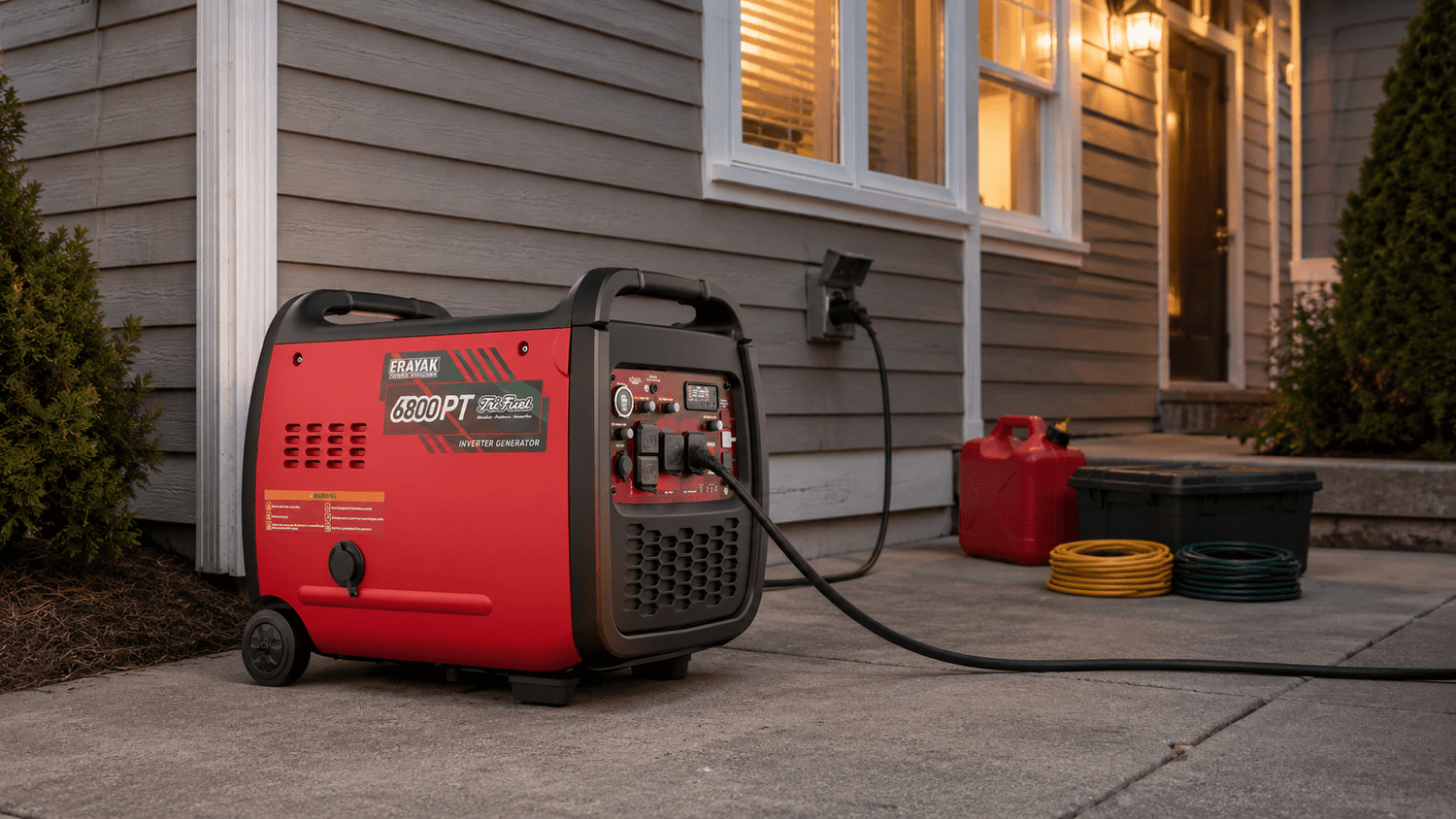
Home Backup Generator Guide: How to Choose, Size, and Use Backup Power Safely
A home backup generator should match the loads you actually need during an outage, not an inflated whole-house wish list. Use this guide to size essentials, plan fuel, connect power safely, and avoid the most dangerous generator mistakes.
Add the running watts of the appliances you want to use at the same time, then add the largest starting surge from a motor-driven load such as a refrigerator, sump pump, furnace blower, or air conditioner. Leave extra capacity instead of running the generator at its limit.
Quick Answer: What Size Home Backup Generator Do You Need?
For basic outage essentials, many homes can start with a portable generator in the 3,000W to 5,000W class if they manage loads carefully. For a stronger essentials setup with a refrigerator, lights, router, sump pump, small cooking appliance, and selected 120V/240V circuits, many homeowners look at roughly 5,000W to 7,500W of running capacity. Larger whole-home standby systems are a different category and can be much bigger.
The smartest first question is not “Can it run my whole house?” It is “Which loads must stay on during the first 24 to 72 hours of an outage?” That answer usually leads to a safer, more affordable, and easier-to-fuel generator plan.
How to Choose a Home Backup Generator
Start by choosing the outage job. A generator for phone charging, lights, a modem, and a refrigerator is very different from a generator meant to support a well pump, sump pump, window AC, furnace blower, or selected 240V circuits.
Refrigerator, freezer, lights, router, phone charging, fans, and a few small devices. This is the most fuel-efficient plan.
Portable AC, window AC, microwave, coffee maker, TV, or a larger pump. These need more surge planning and load discipline.
Selected home circuits through a professionally installed transfer switch or interlock. This is cleaner than running many cords through the home.
For many U.S. homeowners, an inverter generator is a good fit for essential backup because it is designed for cleaner power output, lower noise, and better fuel efficiency than many conventional open-frame generators. If your plan includes 240V loads or a transfer-switch setup, confirm voltage, outlet, and electrician requirements before buying.

How to Size a Backup Generator in 4 Steps
- List only the loads you need during an outage. Avoid sizing from every appliance in the house unless you are planning a full standby system.
- Write down running watts. Use the appliance label, manual, or a watt meter when possible.
- Add starting watts for motors. Refrigerators, freezers, pumps, furnace blowers, and air conditioners can need a temporary surge at startup.
- Add margin. Do not plan to run every load at the generator's maximum rating. Leave room for surge, heat, altitude, fuel type, and real-world use.
Simple formula: total running watts you use at the same time + the largest starting surge = minimum generator capacity to consider. If two motors may start together, add more margin or stagger the loads.
Home Backup Appliance Wattage Chart
Actual wattage varies by model, age, compressor type, and startup behavior. Use this chart for planning, then verify your own equipment before relying on it in a storm.
| Appliance or Load | Typical Running Watts | Startup / Surge Notes | Backup Priority |
|---|---|---|---|
| Refrigerator | 150-800W | Compressor startup can be several times running load | High |
| Freezer | 100-700W | Surge varies widely by compressor | High |
| Sump pump | 800-1,500W | High starting surge; size carefully | High in flood-prone homes |
| Gas furnace blower | 400-1,200W | Motor startup matters | High in winter outages |
| Router / modem | 10-50W | Low surge | Medium to high |
| LED lights | 5-20W each | Low surge | High |
| Microwave | 900-1,500W | Use one high-draw appliance at a time | Medium |
| Coffee maker | 800-1,500W | Heating load; usually no major surge | Low to medium |
| Portable AC or window AC | 500-1,800W | Compressor startup can be significant | Seasonal comfort or safety need |
| Well pump | 750-2,000W+ | May require 240V and high surge | High if no municipal water |
When in doubt, size from the nameplate or manual instead of a generic chart. Pumps, air conditioners, and older refrigerators are the loads most likely to surprise you.
Example: Sizing an Essentials Backup Setup
Here is a practical outage setup for a home that wants food protection, communications, light, and limited comfort.
| Load | Estimated Running Watts | Planning Note |
|---|---|---|
| Refrigerator | 600W | Allow compressor surge |
| Freezer | 500W | Stagger startup if possible |
| Router, phone charging, lights | 250W | Low draw but important |
| Sump pump | 1,000W | High surge load |
| Portable AC or microwave | 1,200W | Use one comfort load at a time |
This setup can easily reach 3,500W or more before surge. A homeowner who wants to run these loads with less juggling should look beyond the smallest portable generator category and consider a higher-capacity inverter generator with the right outlets and voltage support.
How to Connect a Generator to Home Loads Safely
There are two common portable-generator approaches: heavy-duty outdoor-rated extension cords for individual appliances, or a professionally installed inlet with a manual transfer switch or approved interlock for selected circuits. The right choice depends on your budget, home wiring, local code, and which loads you need.
Extension cord setup
This can work for simple essentials like a refrigerator, freezer, lights, router, and small devices. Use properly rated cords, keep cords protected from water and heat, and never overload a cord or power strip.
Transfer switch or interlock setup
If you want to power selected home circuits, use a properly installed inlet and transfer switch or approved interlock. This helps prevent backfeeding, which can endanger utility workers and damage equipment. Hire a qualified electrician and follow local electrical code.

Never plug a generator into a wall outlet. Backfeeding through a dryer outlet, range outlet, or household receptacle is dangerous and can be illegal. Use the correct connection equipment installed by a qualified professional.
Fuel Planning: Gas, Propane, and Natural Gas
Generator sizing is only half the plan. During a multi-day outage, fuel availability may matter just as much as wattage.
Usually offers strong output and wide availability, but it needs safe storage, rotation, and stabilizer planning.
Stores longer than gasoline and can simplify storm preparation, though output may be lower than gasoline on many generators.
Useful when available and supported by the generator, but output is often lower than gasoline and installation details matter.
For storm backup, many households prefer fuel flexibility. A dual-fuel or tri-fuel generator can give you more options when gas stations are closed, propane is easier to store, or a natural gas connection is part of a planned backup setup.
Best Erayak Fit for Home Backup
For this topic, product recommendations belong after the sizing and safety guidance. The goal is not to push a generator before the reader understands their load plan; it is to route the right homeowner to the right backup category.
The ERAYAK 6800 series is the strongest fit when home backup involves more than a refrigerator and a few lights. It is designed for higher-capacity outage planning, selected 120V/240V needs, and RV or home backup scenarios where fuel flexibility matters. The 6800PD is dual fuel, while the 6800PT is tri-fuel. The series is rated at 6800W peak and 5000W rated output on gasoline at 100% output.
If your outage plan is limited to lighter loads, camping crossover use, or smaller essential circuits, compare Erayak's inverter generator collection before jumping to a larger unit.
How to Use Backup Power Safely
Never run a fuel-powered generator indoors. Never run it in a garage, basement, shed, crawlspace, enclosed porch, or near open windows, doors, vents, or intake fans. Always operate the generator outdoors with proper ventilation and follow the manual, local code, and carbon monoxide safety guidance.
Do these before the next outage
- Install battery-powered carbon monoxide alarms on every level of the home.
- Place the generator outdoors, away from openings, and direct exhaust away from people and structures.
- Keep the generator dry and protected according to the manual; do not operate it in unsafe wet conditions.
- Let the generator cool before refueling.
- Store fuel safely and away from living areas.
- Use a qualified electrician for transfer switch, inlet, or interlock work.
- Test your outage plan before storm season, including cords, fuel, oil, startup, and load order.
Home Backup Generator Buying Checklist
| What to Check | Why It Matters | What to Confirm |
|---|---|---|
| Running and peak watts | Prevents overload and failed appliance startup | Your total running load plus surge margin |
| 120V / 240V support | Some home circuits and pumps may require 240V | Voltage and outlet match for your connection plan |
| Outlet types | Determines cord, inlet, RV, or transfer-switch compatibility | Household outlets, 30A outlets, and needed adapters |
| Fuel type | Affects storage, runtime, output, and outage readiness | Gasoline, propane, or natural gas support |
| Noise and placement | Important for neighbors, nighttime use, and comfort | Safe outdoor placement with enough distance from openings |
| Maintenance | Backup equipment must start when needed | Oil, fuel rotation, test runs, spark plug, and storage routine |
FAQ: Home Backup Generators
What size generator do I need for basic home backup?
For lights, a refrigerator, router, phone charging, and a few small loads, many homes can start with a portable generator in the 3,000W to 5,000W class if loads are managed carefully. Add pumps, air conditioning, microwave use, or selected panel circuits and you may need more capacity.
Can a portable generator run a whole house?
A portable generator can run selected home loads, but it should not be assumed to run the entire house. Whole-home standby systems are usually much larger and professionally installed. For portable backup, choose the circuits and appliances that matter most.
Do I need a transfer switch?
If you want to connect a generator to home wiring or selected circuits, use a professionally installed transfer switch or approved interlock. For individual appliances, properly rated outdoor extension cords may be enough. Never backfeed through a wall outlet.
Is an inverter generator good for home backup?
Yes, an inverter generator can be a good home backup choice for essentials because it is designed for cleaner power and quieter, more efficient operation than many conventional generators. Confirm capacity, voltage, outlets, and fuel needs for your specific outage plan.
Can I run a generator in a garage if the door is open?
No. Never run a fuel-powered generator in a garage, even with the door open. Carbon monoxide can build up quickly and move into living spaces. Run the generator outdoors, away from windows, doors, vents, and enclosed areas.
Should I choose gas, propane, or tri-fuel for home backup?
Gasoline often provides strong output, propane stores well, and natural gas can be convenient when properly supported. A dual-fuel or tri-fuel generator can provide more outage flexibility, but output, setup, and installation details vary by fuel type and model.
Build a Safer Home Backup Plan Around Real Loads
Choose the appliances that matter most, calculate wattage with startup surge, decide how you will connect power safely, and pick a generator that gives you enough capacity without making fuel storage harder than it needs to be.
