

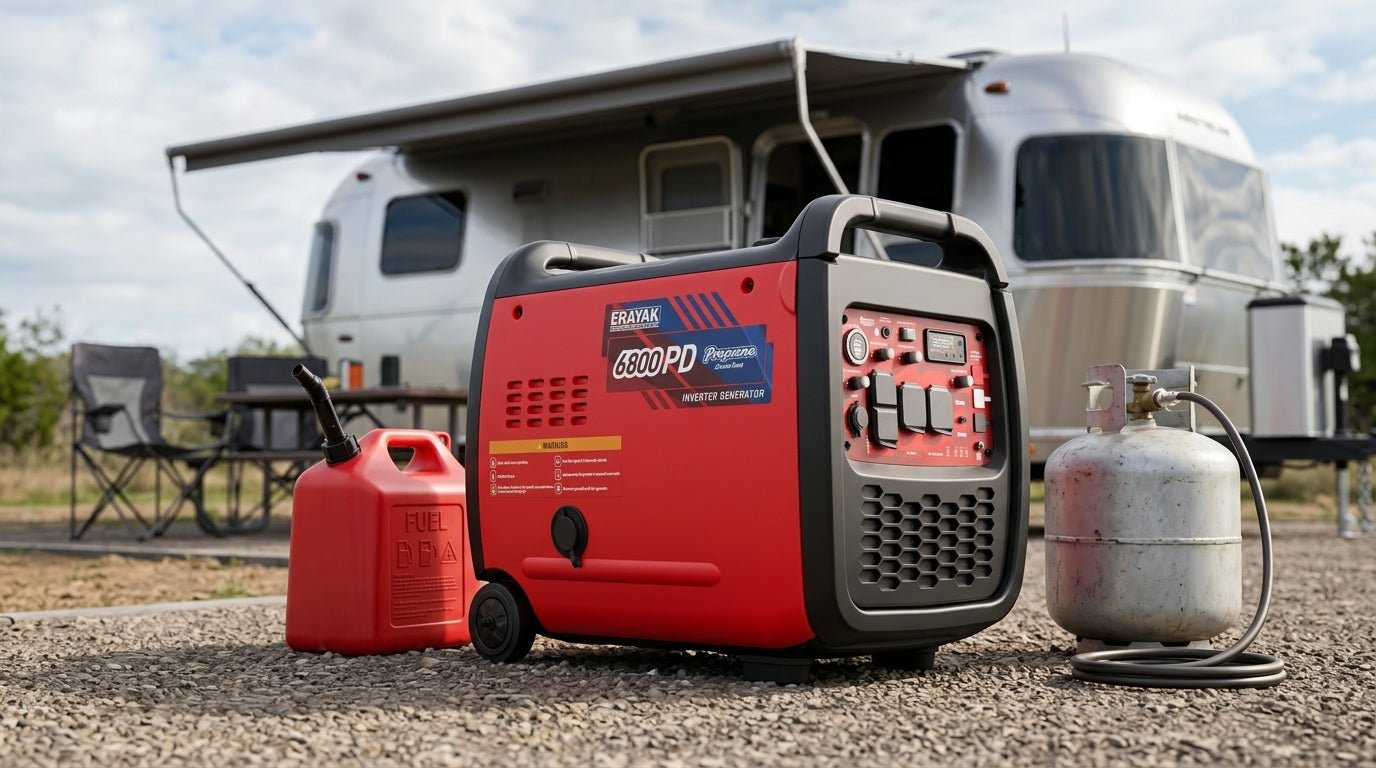
Generator fuel guide
Best fuel for a generator: gasoline vs propane vs natural gas.
Choosing the right generator fuel affects runtime, storage, portability, starting power, emergency readiness, and long-term cost. This guide compares gasoline, propane, natural gas, dual fuel, and tri fuel generator setups for portable power, RV camping, and home backup.
Quick Answer: What Is the Best Fuel for a Generator?
For most portable generators, gasoline is the easiest fuel to find and refuel quickly. For storage and emergency readiness, propane is often more convenient because it stores well in cylinders. For installed home backup planning, natural gas can be the most convenient fuel if your home has a reliable gas line. For flexibility, a dual fuel or tri fuel generator gives you more options when one fuel is unavailable.
Gasoline
Best if you need fast refueling, strong output, and easy availability on road trips or during short outages. The tradeoff is storage: gasoline can degrade over time and must be stored carefully.
Propane
Best if you want a cleaner, cylinder-based fuel that is easy to keep for emergencies. The tradeoff is lower power output on many portable generators compared with gasoline.
In This Guide
Generator Fuel Type Comparison Chart
Use this chart if you are comparing gasoline vs propane generators, propane vs natural gas generators, or trying to decide whether a dual fuel generator is worth it.
| Fuel Type | Best For | Main Advantages | Main Tradeoffs | Best ERAYAK Fit |
|---|---|---|---|---|
| Gasoline | Portable power, camping, short outages, high starting loads | Easy to find, quick to refuel, strong output on many portable generators | Shorter storage life, flammable, may be hard to find during widespread outages | 2400P, 4500P, 4500PD, 6800PD/PT |
| Propane LPG | RV camping, long-term emergency storage, backup fuel planning | Stores well in cylinders, cleaner handling, common for RV and camping users | Usually lower output than gasoline on the same generator; tank size affects runtime | 4500PD, 6800PD/PT |
| Natural Gas | Home backup where a natural gas line is available | No gasoline cans or propane-cylinder swaps; useful for longer outage planning | Not portable; requires proper connection and installation; output may be lower than gasoline | 6800PT |
| Dual Fuel | RV owners and homeowners who want gasoline + propane flexibility | More flexible than single fuel; gasoline for output, propane for storage | More components than single-fuel models; still requires safe fuel handling | 4500PD, 6800PD |
| Tri Fuel | Users who want gasoline, propane, and natural gas options | Maximum fuel flexibility for outage planning | Higher complexity; natural gas use should be professionally planned | 6800PT |

1. Gasoline Generators: Best for Portable Power and Strong Output
Gasoline is the most common fuel for portable generators. It is widely available, easy to refill from a gas can, and usually delivers the highest output on multi-fuel portable generators.
Short outages and portable use
Gasoline is practical when you need to move the generator between home, campsite, jobsite, or RV use.
High starting power
If you need to start refrigerators, power tools, pumps, or RV appliances, gasoline often gives the best output headroom.
Storage management
Gasoline should be stored in approved containers, kept away from ignition sources, and managed according to your generator manual and local rules.
2. Propane Generators: Best for Storage and RV Camping
Propane, also called LPG, is popular for RVs, camping, grills, and emergency preparation. It is stored in cylinders, which makes it convenient for buyers who want backup fuel without relying only on fresh gasoline.
Storage-friendly backup fuel
Propane cylinders are easy to keep for emergency use, and many RV owners already carry propane for appliances.
Power output and tank size
On many dual fuel generators, propane output is lower than gasoline output. Runtime also depends heavily on tank size, temperature, and load.
3. Natural Gas Generators: Best for Home Backup Planning
Natural gas is not the normal choice for a portable camping generator. It is most useful when your generator is part of a home-backup plan and your property already has a suitable natural gas supply.
Important installation note
Natural gas generator use should be planned with the correct hose, fittings, pressure, flow, and appliance requirements. For home backup connections, consult qualified professionals and follow all local codes, product manuals, and utility requirements.
4. Dual Fuel vs Tri Fuel Generators: Which Is Better?
A dual fuel generator usually runs on gasoline and propane. A tri fuel generator adds natural gas capability. The best choice depends on whether you are buying for RV camping, emergency storage, or home-backup planning.
| Generator Type | Fuel Options | Best Buyer | When to Choose It |
|---|---|---|---|
| Single Fuel | Usually gasoline only | Budget-focused portable users | Choose this if you want the simplest generator and do not need propane or natural gas. |
| Dual Fuel | Gasoline + propane | RV owners, campers, homeowners | Choose this if you want gasoline for output and propane for storage-friendly backup. |
| Tri Fuel | Gasoline + propane + natural gas | Home-backup planners | Choose this if natural gas is part of your long-duration outage plan. |
What Kind of Gas Should You Use in a Generator?
Most portable gasoline generators are designed for regular unleaded gasoline, but you should always follow the generator manual for octane rating, ethanol limits, oil requirements, and storage instructions. Do not assume that premium gasoline, E85, diesel, kerosene, or aviation fuel is acceptable unless the manual clearly says so.
Fresh unleaded gasoline
Fresh fuel is usually better than old fuel that has been sitting for months. Use the fuel type and octane level specified by your generator manual.
Ethanol blends
Some small engines have ethanol limits. Check the manual before using high-ethanol fuel.
Diesel or other fuels
Never put diesel, kerosene, or other fuels into a gasoline generator unless the product is specifically designed for that fuel.
Best Generator Fuel by Use Case
| Use Case | Best Fuel Type | Why | Recommended ERAYAK Path |
|---|---|---|---|
| Camping and tailgating | Gasoline or propane | Gasoline is easy to refuel; propane is convenient if you already carry cylinders. | 2400P for light loads; 4500PD for dual fuel RV camping |
| 30A RV or travel trailer | Dual fuel | Gasoline helps with higher starting loads; propane improves fuel flexibility. | 4500PD |
| Short home outage | Gasoline or dual fuel | Good for refrigerator, lights, router, and selected essentials when safely operated outdoors. | 4500P, 4500PD, or 6800PD/PT depending on load |
| Longer outage planning | Dual fuel or tri fuel | Multiple fuel options reduce dependence on one supply during storms. | 6800PD for dual fuel; 6800PT for tri fuel |
| Natural gas backup plan | Tri fuel | Natural gas can reduce fuel storage and refueling burden when properly installed. | 6800PT |

ERAYAK Product Match: Which Fuel Setup Fits You?

ERAYAK 2400P
Choose the ERAYAK 2400P if you want a light portable inverter generator for camping, electronics, small essentials, and simple gasoline refueling.

ERAYAK 4500PD
Choose the ERAYAK 4500PD if you want gasoline + propane flexibility for RV camping, 30A RV use, and portable emergency backup.

ERAYAK 6800PD / 6800PT
Choose the ERAYAK 6800PD/PT if you need higher output, 120V/240V planning, and dual fuel or tri fuel options for home-backup strategy.
Generator Fuel Safety Notice
Every fuel-powered generator produces carbon monoxide. Operate portable generators outdoors only, away from doors, windows, vents, garages, tents, RV openings, and enclosed spaces. Never refuel a hot or running generator. Store fuel in approved containers and follow your generator manual, local codes, and all fuel-supplier instructions.
- Never run a generator indoors or in a garage.
- Keep exhaust pointed away from people and openings.
- Use properly rated outdoor extension cords or professionally installed transfer equipment.
- Do not overload the generator.
- Install and test carbon monoxide alarms where required.
FAQs: Generator Fuel Types
What is the best fuel for a generator?
For most portable generator users, gasoline is the easiest fuel to find and refuel quickly. For emergency storage, propane is often more convenient. For home backup where a gas line is available, natural gas can be convenient when properly installed.
Do inverter generators run on gas?
Many inverter generators run on gasoline. Some inverter generators are dual fuel and can run on gasoline or propane, while selected tri fuel models can also use natural gas.
Is propane or gas better for a generator?
Gasoline is usually better for maximum output and fast refueling. Propane is better for long-term storage and cleaner handling. A dual fuel generator gives you both options.
What kind of gas does a generator use?
Most portable gasoline generators use regular unleaded gasoline, but always check your manual for the required octane rating, ethanol limits, and fuel storage instructions.
Is natural gas good for a generator?
Natural gas is useful for home backup planning if your property has a suitable supply and the generator is designed for natural gas. It is not the normal choice for mobile camping use.
Is a dual fuel generator worth it?
Yes for many RV owners and homeowners. Dual fuel gives you gasoline for output and propane for storage flexibility, which can be useful during camping trips and outages.
What is a tri fuel generator?
A tri fuel generator is designed to run on gasoline, propane, and natural gas. It is best for buyers who want maximum fuel flexibility for home backup planning.
Can I use old gasoline in a generator?
Old gasoline can cause starting and performance problems. Use fresh fuel and follow the manual for fuel stabilizer, draining, and storage procedures.
Which ERAYAK generator should I choose?
Choose 2400P for light portable gasoline power, 4500PD for dual fuel RV and camping use, and 6800PD/PT for higher-output backup planning with dual fuel or tri fuel options.
Choose gasoline for simplicity, propane for storage, and tri fuel for backup flexibility.
If you only need portable power, a gasoline inverter generator is simple and practical. If you want RV and emergency flexibility, choose a dual fuel model. If your generator also supports home-backup planning and natural gas is part of your strategy, consider a tri fuel model.
