

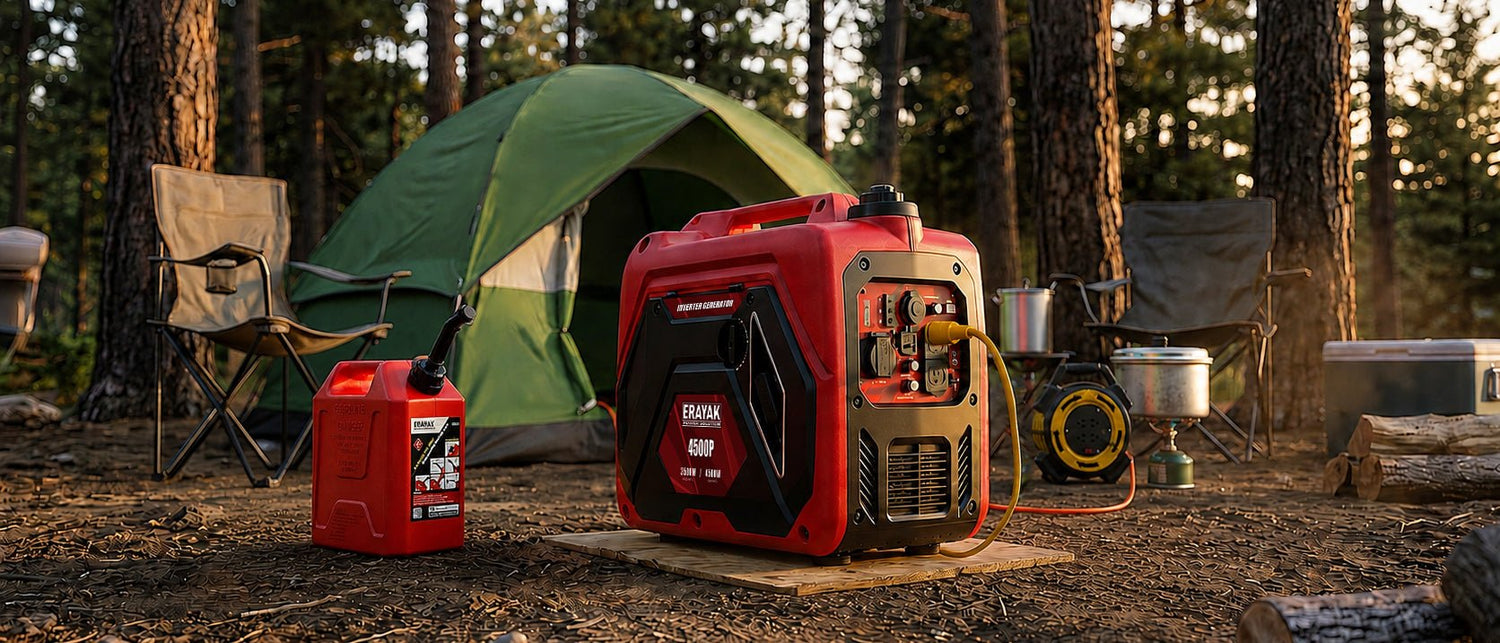
How Does an Inverter Generator Work? AC to DC to Clean AC
An inverter generator makes electricity in three controlled steps: the engine and alternator create raw AC power, a rectifier converts that power to DC, and an inverter module rebuilds it into stable AC power for electronics, RV loads, camping gear, and home essentials.
Quick Answer: How Inverter Generators Work
An inverter generator works by generating raw AC power, converting it to DC, then inverting it back into clean, stable AC power. Because the final output is controlled electronically, the generator can keep voltage and frequency steadier while allowing the engine to slow down under lighter loads.
That is why inverter generators are popular for laptops, routers, TVs, CPAP machines, RV electronics, portable refrigerators, camping loads, and home backup essentials. They are not magic, though: the generator still needs enough running watts and starting watts for the appliances you connect.
What an Inverter Generator Does
A conventional portable generator usually sends alternator output directly to the outlets after mechanical and electrical regulation. An inverter generator adds an electronic conversion stage between the alternator and the outlets. That extra stage is the main difference.
The inverter system controls the final waveform instead of depending only on engine speed. This helps the generator deliver cleaner power during changing loads and allows Eco Mode or smart throttle behavior when the connected load is light.
Simple version: a conventional generator is mostly mechanical regulation. An inverter generator is mechanical generation plus electronic power conditioning.
The Three-Stage Power Conversion Process
The exact design varies by manufacturer, but most portable inverter generators follow the same basic path.
Engine and alternator create raw AC power
The gasoline, propane, or multi-fuel engine spins an alternator. This produces raw AC electricity. In an inverter generator, this raw output does not need to go straight to the outlets in its original form.
Rectifier converts AC to DC
The raw AC is converted into DC power through rectifier circuits. This creates a DC bus that the inverter electronics can control more precisely than unconditioned alternator output.
Inverter module rebuilds clean AC output
The inverter then converts DC back into stable AC power. The control board manages voltage, frequency, and waveform quality so the final output is more suitable for modern electronics and variable household loads.
 Why Clean Power Matters
Many modern devices use sensitive electronic power supplies. Laptops, TVs, routers, battery chargers, CPAP machines, RV control boards, and some appliance controls can be more comfortable with stable voltage, stable frequency, and a cleaner sine wave.
Clean power is often discussed through THD, or total harmonic distortion. Lower THD means the AC waveform is closer to a smooth sine wave. Inverter generators usually target low-THD output because the waveform is electronically rebuilt rather than simply passed through from the alternator.
| Power issue | Why it matters | How inverter generators help |
|---|---|---|
| Voltage swings | Can cause lights to flicker, electronics to shut down, or chargers to behave poorly | Electronic output control helps stabilize voltage as loads change |
| Frequency drift | Some devices expect steady 60Hz power in the U.S. | The inverter stage rebuilds output frequency electronically |
| High waveform distortion | May create heat, noise, buzzing, or compatibility issues in sensitive equipment | Low-THD sine-wave output is one of the main reasons buyers choose inverter models |
| Sudden startup surge | Air conditioners, pumps, compressors, and refrigerators can demand extra watts briefly | The control system responds to load changes, but the generator must still be properly sized |
How Variable Engine Speed Works
Conventional portable generators often need to run at a fixed engine speed to maintain output frequency. Inverter generators can separate engine speed from final output frequency because the inverter electronics rebuild the AC waveform.
When the load is light, the engine can slow down. When a larger load is connected, the control system increases engine speed to supply more power. This is why inverter generators are often quieter and more fuel-efficient during partial-load operation.
Light loads
The engine can run slower, reducing noise and fuel use while still providing stable AC output for small electronics.
Medium loads
The engine rises to match demand, which helps support appliances like refrigerators, battery chargers, and small kitchen loads.
High surge loads
The system responds quickly, but sizing still matters. RV AC units, pumps, and compressors need enough surge headroom.
Inverter vs Conventional Generator Mechanism
The biggest mechanical difference is not just the enclosure or sound level. It is how the generator manages output quality.
| Feature | Inverter generator | Conventional portable generator |
|---|---|---|
| Power path | Raw AC to DC to electronically rebuilt AC | Alternator output regulated more directly |
| Engine speed | Can vary with load in Eco Mode or smart throttle operation | Often runs at fixed speed to maintain frequency |
| Power quality | Usually designed for cleaner, lower-distortion output | Varies widely by model, alternator, AVR quality, and load |
| Noise and fuel use | Often better at partial load because the engine can slow down | Often louder and less efficient under light load |
| Best use cases | RV, camping, electronics, home essentials, clean portable power | Rugged high-wattage work, simpler heavy-load use, budget power |
What Inverter Generators Do Not Solve
Inverter technology improves output quality and partial-load behavior, but it does not remove the need for correct sizing, safe operation, and proper connection methods.
- They do not create unlimited starting watts. RV AC, sump pumps, well pumps, compressors, and tools still need surge capacity.
- They are not indoor-safe. Any fuel-powered generator creates carbon monoxide and must be operated outdoors.
- They do not replace proper transfer equipment. Home backup connections should use code-compliant transfer equipment installed by a qualified electrician.
- They are not always the cheapest repair path. Inverter electronics add complexity compared with simpler conventional models.
Generator safety notice: Never run a fuel-powered generator indoors, in a garage, in a shed, under an RV, on a porch, or near open windows. Operate it outdoors with the exhaust pointed away from people, doors, windows, and vents. Use working carbon monoxide alarms when a generator is used for RV or home backup.
Which Erayak Inverter Generator Fits the Way This Technology Is Used?
If you are learning how inverter generators work because you want clean, quiet, portable power, match the product to your load size and fuel needs. The inverter mechanism matters most when you are powering electronics, RV comfort loads, or home essentials that benefit from stable output.
 ERAYAK 2400P Inverter Generator
Best fit for readers who want compact inverter power for camping, charging, small electronics, and lighter emergency loads.
- Good entry point for learning what clean inverter output does in real use.
- Best when you are not trying to start large AC or pump loads.
- Useful for smaller, quieter outdoor power needs.
 ERAYAK 4500P Gas Inverter Generator
Best fit for readers who want a gas-only 4500W inverter generator for RV, camping, portable AC planning, and home essentials.
- Confirmed gas-only model; do not choose it for propane or natural gas use.
- Confirmed THD below 1.2%, useful for clean-power education and sensitive electronics context.
- Good route for buyers who want more headroom than a compact 2400W-class generator.
 ERAYAK 4500PD Dual-Fuel Inverter Generator
Best fit when the reader understands inverter benefits and wants fuel flexibility for RV travel, storm backup, and essential-load planning.
- Natural product route for RV AC, refrigerator, lights, router, and managed home essentials.
- Useful when propane flexibility matters during travel or outages.
- Good match for buyers comparing clean inverter power against conventional generators.
 ERAYAK 6800PD / 6800PT Series
Best fit when clean inverter power is part of a larger backup plan involving selected circuits, pumps, or 120V/240V planning.
- Relevant for more complex home-backup readers.
- Use when a 4500W-class generator is not enough for the planned loads.
- Choose 6800PD for dual fuel or 6800PT when tri-fuel planning is needed.
Compare Erayak Inverter Generators for Clean Portable Power
Once you understand the AC-to-DC-to-AC process, the next step is choosing the right wattage and fuel type for your real loads.
FAQ
How does an inverter generator work in simple terms?
It makes raw AC power with an engine and alternator, converts that power to DC, then uses inverter electronics to convert it back into stable AC power for outlets.
Why are inverter generators better for electronics?
They are often better for electronics because the inverter stage controls voltage, frequency, and waveform quality. This can provide cleaner, lower-distortion power than many conventional portable generators.
Does an inverter generator always run at 3600 RPM?
No. Many inverter generators can vary engine speed based on load because the final AC output frequency is controlled electronically. This is one reason they can be quieter and more fuel-efficient at partial load.
What is the difference between an inverter and a rectifier in a generator?
A rectifier converts AC power to DC power. An inverter converts DC power back to AC power. In an inverter generator, both steps are part of the clean-power conversion process.
Can an inverter generator run an RV air conditioner?
Yes, if it is sized for the RV AC running watts and starting surge. The inverter mechanism helps with clean power and load response, but it does not replace the need for enough wattage headroom.
Are inverter generators safe to use indoors?
No. Fuel-powered inverter generators produce carbon monoxide just like conventional generators. They must be operated outdoors, away from doors, windows, vents, and occupied spaces.


