

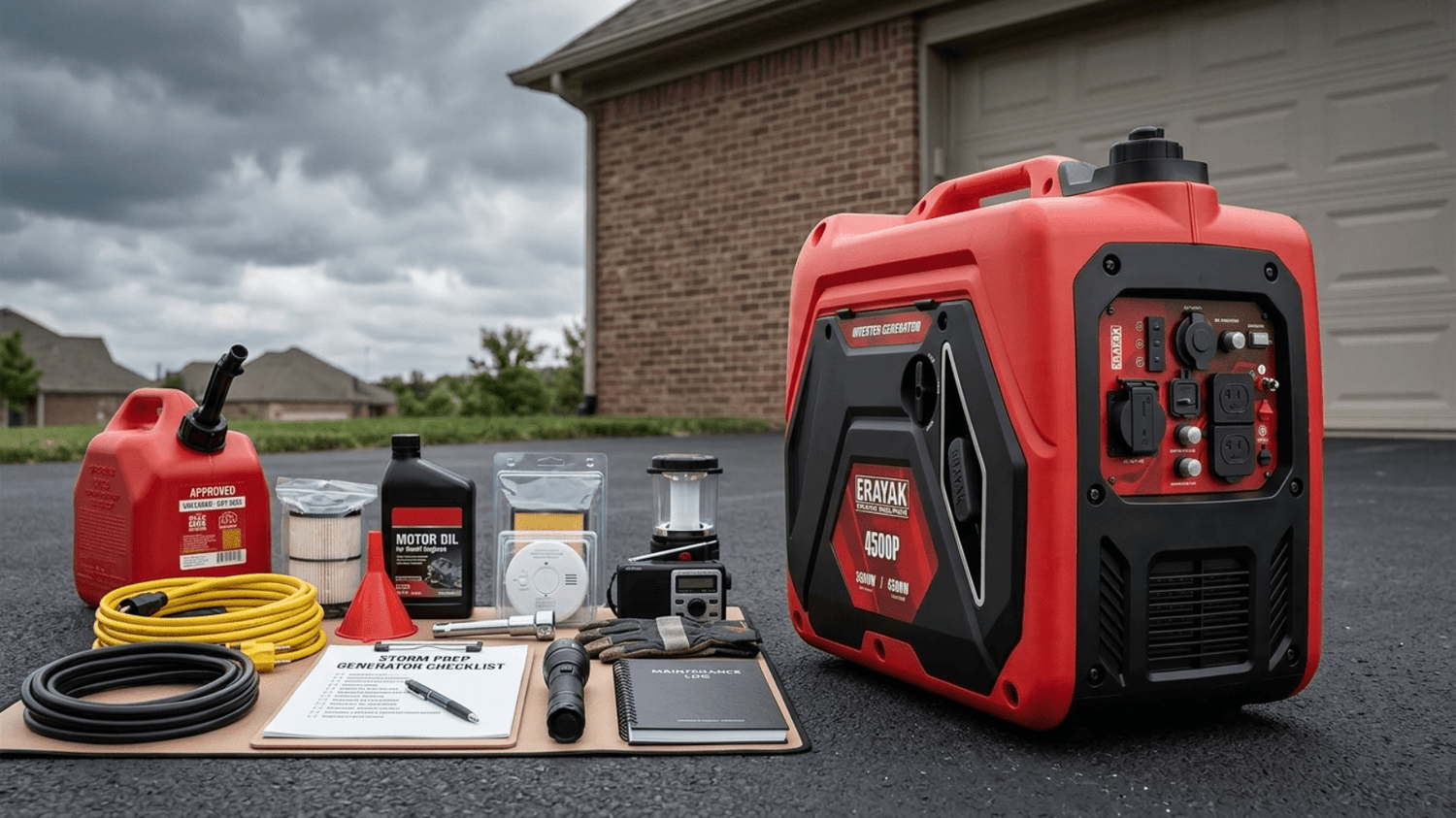
Do Inverter Generators Last Longer? Lifespan & Durability Guide
Inverter generators can last longer in real-world RV, camping, and home-essential use because they do not always need to run at full engine speed. But lifespan still depends on load, maintenance, fuel quality, heat, storage, and the quality of the engine and electronics.
Quick Answer: Do Inverter Generators Last Longer?
Often, yes, inverter generators can last longer than conventional portable generators when they are used for light to moderate loads and maintained correctly. Their biggest durability advantage is variable engine speed: under smaller loads, the engine can slow down instead of running constantly at high RPM. That can reduce fuel use, heat, vibration, and mechanical wear.
The more accurate answer is: an inverter generator usually lasts longer when it is properly sized and not run near maximum output for long periods. A conventional generator may still be the better long-life choice for heavy continuous loads if it has a larger engine, simpler electronics, and a strong maintenance record.

How Long Do Inverter Generators Last?
For many consumer portable inverter generators, a realistic life expectancy is often discussed in operating hours rather than calendar years. A lightly used generator may sit in storage most of the year and still last for many seasons, while a generator used for long outage runs can accumulate wear much faster.
| Generator type or use pattern | Typical lifespan expectation | What affects the number most |
|---|---|---|
| Consumer portable inverter generator | Often around 1,000 to 2,000+ operating hours with proper care | Oil changes, clean air filter, fuel quality, load level, storage, and heat |
| Higher-quality inverter generator | Can exceed the basic consumer range when maintained and not overloaded | Engine quality, cooling design, electronics quality, and maintenance discipline |
| Conventional portable generator | Can also last many years, especially for rugged heavy-load use | Engine size, fixed-RPM wear, maintenance, load, vibration, and storage |
| Commercial diesel or standby generator | Can last far longer than small portable gasoline units | Different engine class, professional installation, service schedule, and duty cycle |
Important context: a small portable inverter generator and a large diesel standby generator are not in the same durability category. When shoppers ask whether inverter generators last longer, the most useful comparison is usually inverter portable generator vs conventional portable generator.
Why Inverter Generators May Last Longer
Inverter generators are not automatically more durable just because they use inverter technology. Their advantage comes from how they run under common real-world loads: phone chargers, refrigerators, RV battery charging, lights, routers, fans, small appliances, and occasional higher-demand tools or air conditioners.
1. Variable RPM reduces engine stress
Many conventional generators run at a fixed engine speed to maintain 60Hz output. Inverter generators can adjust engine speed to match the load, so light loads usually mean lower RPM, less heat, and less wear.
2. Lower vibration protects components
Reduced engine speed under lighter loads can also reduce vibration. Over time, less vibration helps protect fasteners, housings, wiring, connectors, and sensitive electronics.
3. Cleaner power reduces electrical stress
Inverter generators convert power through electronics to produce stable AC output. This is especially useful for sensitive electronics and can reduce stress during load changes.
4. Better fuel control can keep engines cleaner
Efficient load matching can improve fuel use and reduce unnecessary high-speed operation. Cleaner operation can help slow carbon buildup when paired with fresh fuel and regular maintenance.
5. Less heat usually means longer component life
Heat shortens the life of oil, wiring, plastic parts, seals, and electronics. A generator that spends more time at lower output can often manage heat better than one forced to run hard all the time.
6. Right-sizing matters
An inverter generator lasts longer when it has enough headroom. Running at 40% to 70% load is usually easier on the machine than running near maximum output for hours.

Inverter vs Conventional Generator Lifespan
The best way to compare lifespan is by use case. A conventional generator can be rugged and long-lasting, but it often runs louder and at a fixed engine speed. An inverter generator is usually more efficient and comfortable for variable loads, but it also contains more electronics.
| Durability factor | Inverter generator | Conventional generator |
|---|---|---|
| Light-load operation | Usually better because the engine can slow down | Usually less efficient because engine speed often stays fixed |
| Heavy continuous load | Can wear faster if undersized or run near max output too often | Can be strong if the engine and alternator are sized for the job |
| Electronics complexity | More electronic parts; quality and cooling matter | Simpler power system; fewer electronic components |
| Noise and vibration | Usually quieter with less vibration under moderate loads | Often louder with more vibration |
| Sensitive electronics | Usually the better choice because of stable inverter output | Power quality varies by model and load behavior |
Bottom line: inverter generators often have a lifespan advantage for RV, camping, refrigerator, portable AC, and home-essential loads because those loads are not always demanding full power. For heavy continuous worksite loads, durability depends more on engine size, duty cycle, cooling, and maintenance than on the word "inverter."
When an Inverter Generator May Wear Faster
An inverter generator can wear out early if the user treats it like a larger commercial machine. These are the most common lifespan killers:
- Running near maximum output for long periods: heat and oil stress rise quickly when the generator has no headroom.
- Ignoring oil changes: small air-cooled engines depend heavily on clean oil.
- Using stale fuel: old gasoline can gum up the carburetor and cause hard starts, rough running, and power instability.
- Operating in dust, sand, or poor airflow: dirty filters and blocked cooling paths increase engine temperature.
- Storing with untreated fuel: long storage without fuel care is one of the fastest ways to create starting and carburetor problems.
- Overloading with high-surge appliances: air conditioners, pumps, compressors, and refrigerators need startup headroom.
How to Make an Inverter Generator Last Longer
Most lifespan gains come from simple maintenance habits. Always follow the owner's manual for your exact model, but these rules are useful for most portable inverter generators.
| Maintenance habit | Why it helps lifespan | Practical tip |
|---|---|---|
| Change oil on schedule | Protects bearings, piston rings, and other high-friction engine parts | Check the manual for break-in and normal intervals; change sooner after hard use |
| Keep the air filter clean | Prevents dust from entering the engine and keeps airflow healthy | Inspect more often in dry campsites, dusty jobsites, and storm cleanup |
| Use fresh fuel | Reduces carburetor deposits and hard-start problems | Use stabilizer for storage and rotate gasoline before it gets old |
| Avoid constant max load | Reduces heat, vibration, and oil stress | Choose a generator with enough surge and running-watt headroom |
| Exercise the generator | Keeps parts lubricated and reveals problems before an outage | Run it periodically under a safe load according to the manual |
| Store it clean and dry | Protects connectors, control panels, fasteners, and fuel components | Let it cool, clean dust, manage fuel, and cover it only after storage prep |
Generator safety notice: Never run a fuel-powered generator indoors, in a garage, in a shed, under an RV, on a porch, or near open windows. Operate it outdoors with the exhaust pointed away from people, doors, windows, and vents. Use working carbon monoxide alarms when a generator is used for home or RV backup.
Signs a Generator Is Nearing the End of Its Useful Life
A generator does not fail only because it reaches a certain number of hours. Watch for operating symptoms, especially before storm season or long RV trips.
- Hard starting even with fresh fuel and proper choke use
- Unstable output, flickering lights, or frequent overload shutdowns
- Excessive oil consumption or visible smoke after warmup
- Metallic engine noise, severe vibration, or loose components
- Fuel leaks, cracked hoses, damaged wiring, or repeated carburetor problems
- Repair cost approaching the cost of a properly sized replacement generator
If the generator is used for emergency backup, reliability matters more than squeezing out one more season. A unit that starts inconsistently may not be the one you want to depend on during a storm outage.
Which Erayak Inverter Generator Fits Long-Term Use?
For long-term value, choose the generator around your real load rather than buying only by peak watts. A generator that has reasonable headroom for your common loads will usually run cooler, quieter, and with less stress.
| Use case | Best Erayak fit | Why it fits |
|---|---|---|
| Small camping, light backup, refrigerator-only planning, battery charging | ERAYAK 2400P | Good fit when the goal is compact portable inverter power for smaller loads rather than whole-RV or whole-home backup. |
| Gas-only RV, camping, home essentials, and clean-power portable use | ERAYAK 4500P | A gas-only 4500W inverter generator option for users who do not need propane or natural gas flexibility. |
| RV comfort loads, storm backup essentials, portable AC plus refrigerator scenarios | ERAYAK 4500PD | Dual-fuel flexibility helps users plan for RV travel, outages, and longer backup windows when propane is useful. |
| Larger selected-load home backup, 120V/240V planning, sump pump or well pump scenarios | ERAYAK 6800PD / 6800PT | The higher-capacity path when backup planning involves more complex loads and 120V/240V equipment. |
Compare Erayak Inverter Generators for RV and Home Backup
If durability is your goal, start with the loads you run most often. The right inverter generator should have enough running-watt and starting-watt headroom so it does not spend every outage or camping trip at maximum output.
FAQ
Do inverter generators really last longer than regular generators?
They often can, especially under light to moderate loads, because variable RPM reduces unnecessary engine speed, heat, vibration, and fuel use. However, a well-built conventional generator can still last a long time, especially for heavy continuous loads.
How many hours does an inverter generator last?
Many consumer portable inverter generators are commonly discussed in the 1,000 to 2,000+ hour range with proper care. Higher-quality units can exceed that, while poor maintenance, stale fuel, overloads, heat, and dust can shorten life significantly.
Is it bad to run an inverter generator all day?
Running all day is not automatically bad if the generator is rated for the load, has enough ventilation, receives scheduled maintenance, and is refueled safely after cooling. Long runs near maximum output create more heat and wear than moderate-load operation.
What shortens inverter generator lifespan the most?
The biggest problems are skipped oil changes, stale fuel, dirty air filters, poor storage, blocked cooling airflow, overloads, and running high-surge appliances without enough wattage headroom.
Are inverter generators more expensive to repair?
They can be, because they include inverter electronics in addition to the engine. That is why cooling, clean operation, dry storage, and avoiding overloads matter. The fuel savings, quieter operation, and cleaner power often make the tradeoff worthwhile for RV, camping, and home-essential use.
Should I buy an inverter generator for long-term home backup?
For selected essential loads, an inverter generator can be a strong long-term option. For central air, whole-home backup, well pumps, or 120V/240V circuits, size the generator carefully and use proper transfer equipment installed by a qualified electrician.


