

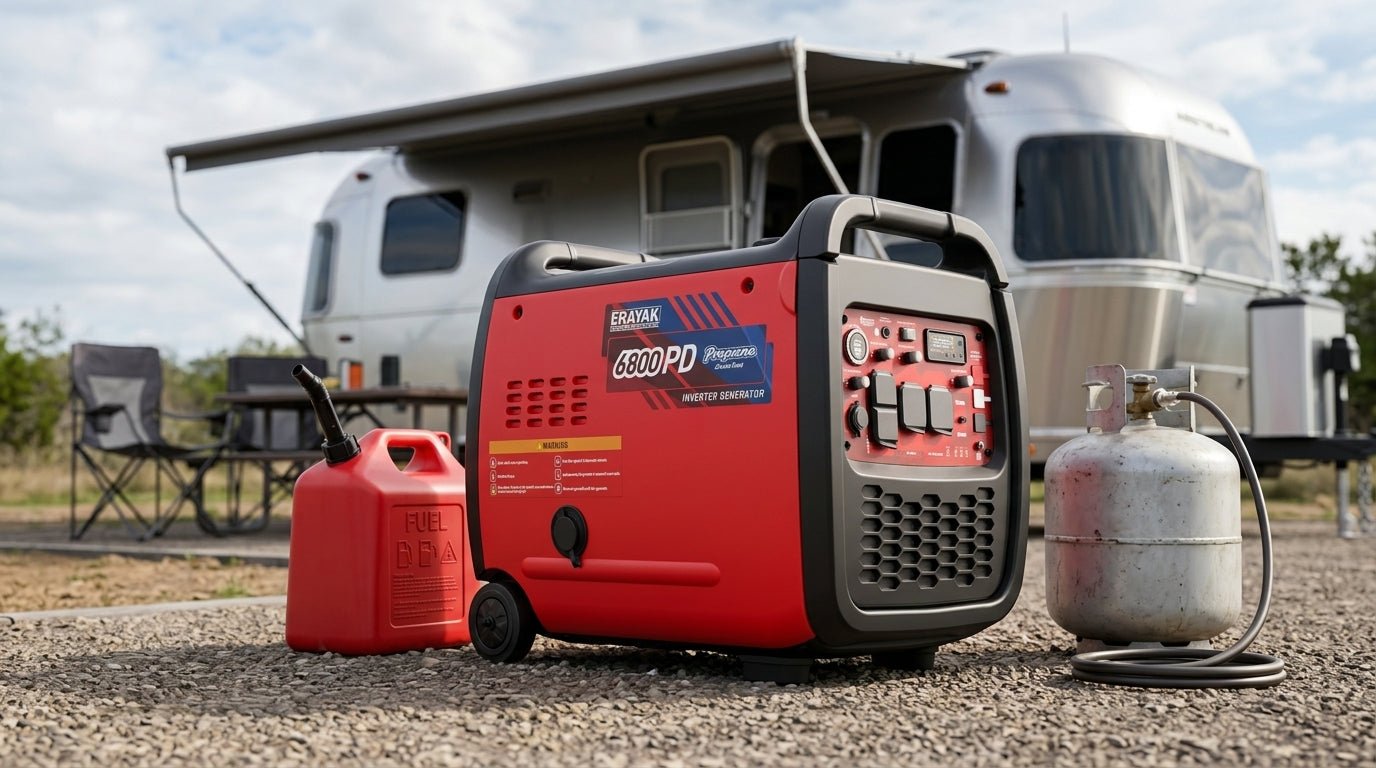
Are Propane Generators Quieter Than Gas? dB Truth & Quiet Picks
Propane can sometimes sound a little smoother than gasoline, but fuel type is not what makes a generator quiet. The bigger difference comes from inverter technology, engine speed, muffler design, load level, and whether the generator is enclosed or open-frame.
Quick Answer: Is a Propane Generator Quieter Than Gas?
A propane generator is not automatically quieter than a gas generator. On the same dual-fuel generator, propane may sound slightly smoother and may measure a little lower in some conditions, but the difference is usually small. A loud open-frame generator will still be loud on propane.
If you want a quiet propane generator for RV camping, home backup, or neighborhood use, look first for an enclosed inverter generator with Eco Mode and a published noise rating. Fuel choice matters for storage, emissions, maintenance, and convenience, but enclosure and inverter design matter more for decibels.
Propane vs Gas Generator Noise: Fuel Is Not the Main Factor
The same engine can feel different on propane, but the biggest noise sources are still mechanical movement, exhaust, cooling air, and engine speed.
Propane may sound smoother
Because propane enters as a vapor and burns cleanly, some users perceive a softer tone. That does not always mean a major decibel drop.
Gasoline is not always louder
A well-designed enclosed gasoline inverter generator can be much quieter than a propane-capable open-frame generator.
Design decides comfort
Inverter control, acoustic panels, muffler quality, fan path, and load level usually matter more than whether the engine is burning propane or gasoline.
CTR-friendly answer: If you are asking "are propane generators quieter than gas?" the practical answer is: sometimes slightly, but not enough to make a loud generator quiet. Buy for inverter design and noise rating first, then choose propane if you want its fuel advantages.
How Loud Are Propane and Gas Generators?
Noise ratings vary by model, load, distance, and test method. Use this chart for buyer-level expectations, then confirm the rating on the exact generator you are considering.
| Generator type | Typical noise range | What it feels like | Best fit |
|---|---|---|---|
| Open-frame gas generator | 70 dB to 85+ dB | Loud, jobsite-style sound. Can be tiring near campsites or homes. | Worksites and situations where noise is less important. |
| Open-frame propane or dual-fuel generator | 70 dB to 85+ dB | May sound smoother on propane, but still usually loud if the frame is open. | Utility power when fuel flexibility matters more than quiet operation. |
| Enclosed gas inverter generator | About 50 dB to mid-60 dB range | Much more campsite- and neighborhood-friendly, especially at light load. | Camping, RV, tailgating, and lighter home backup. |
| Enclosed dual-fuel propane inverter generator | About 50 dB to mid-60 dB range | Often the best combination for quiet power and fuel flexibility. | RV camping, storm backup, refrigerator/freezer, and propane storage plans. |
Why a few dB matters: Decibels are logarithmic, so a small number change can be noticeable. But changing fuel alone is rarely as powerful as switching from open-frame to enclosed inverter design.
Why Do Some People Think Propane Generators Are Quieter?
Smoother tone
Propane can produce a slightly smoother combustion feel in some engines. Human ears may interpret tone as comfort, even when the dB number is similar.
Less fuel smell
Propane avoids stale gasoline odor and carburetor varnish issues. Cleaner smell can make the whole setup feel less intrusive.
Better product category
Many propane-capable portable generators are dual-fuel inverter models built for RV users, and those buyers also demand quiet operation.
What Really Makes a Generator Quiet?
When comparing quiet propane generator reviews, use this checklist before deciding.
Enclosed inverter housing
A full enclosure and acoustic path help contain engine, exhaust, and fan noise better than an exposed steel frame.
Eco Mode / variable RPM
Inverter generators can slow down under lighter loads instead of running at a constant high speed all the time.
Right sizing
A generator running near overload is louder. Choose enough wattage for starting surge so the engine is not constantly straining.
Distance and direction
Even a quiet generator should be placed outdoors, away from sleeping areas, neighbors, windows, and reflective walls.
Load management
Air conditioners, microwaves, pumps, and heaters can raise engine speed quickly. Schedule loads when possible.
Maintenance
Old oil, dirty air filters, loose panels, and poor spark plugs can make a generator sound harsher than it should.
Quiet Propane Generator Picks for RV and Home Backup
For Erayak buyers, the best propane-noise match is usually a dual-fuel or tri-fuel inverter generator, not a converted open-frame generator.
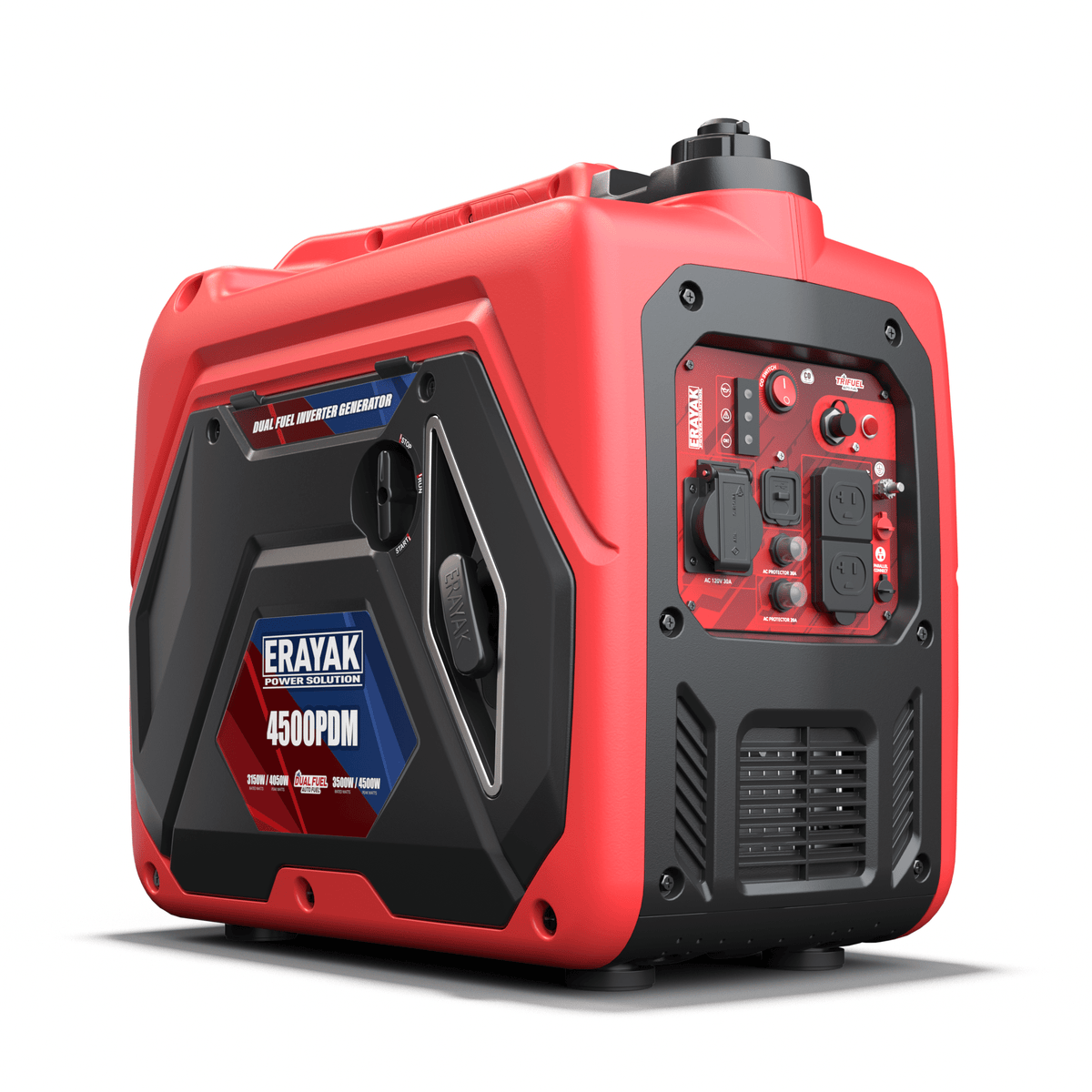
ERAYAK 4500PD Dual-Fuel Inverter Generator
The 4500PD is the strongest Erayak fit for shoppers searching for a quiet propane generator for RV camping, refrigerator/freezer backup, and 30A-style comfort loads. It gives buyers propane flexibility while keeping the more important quiet-power features: enclosed inverter design and load-responsive operation.
- Dual-fuel setup for gasoline or propane planning.
- Strong fit for RV camping, portable AC planning, and storm backup essentials.
- Cleaner product match than trying to convert an old gas-only open-frame generator to propane.
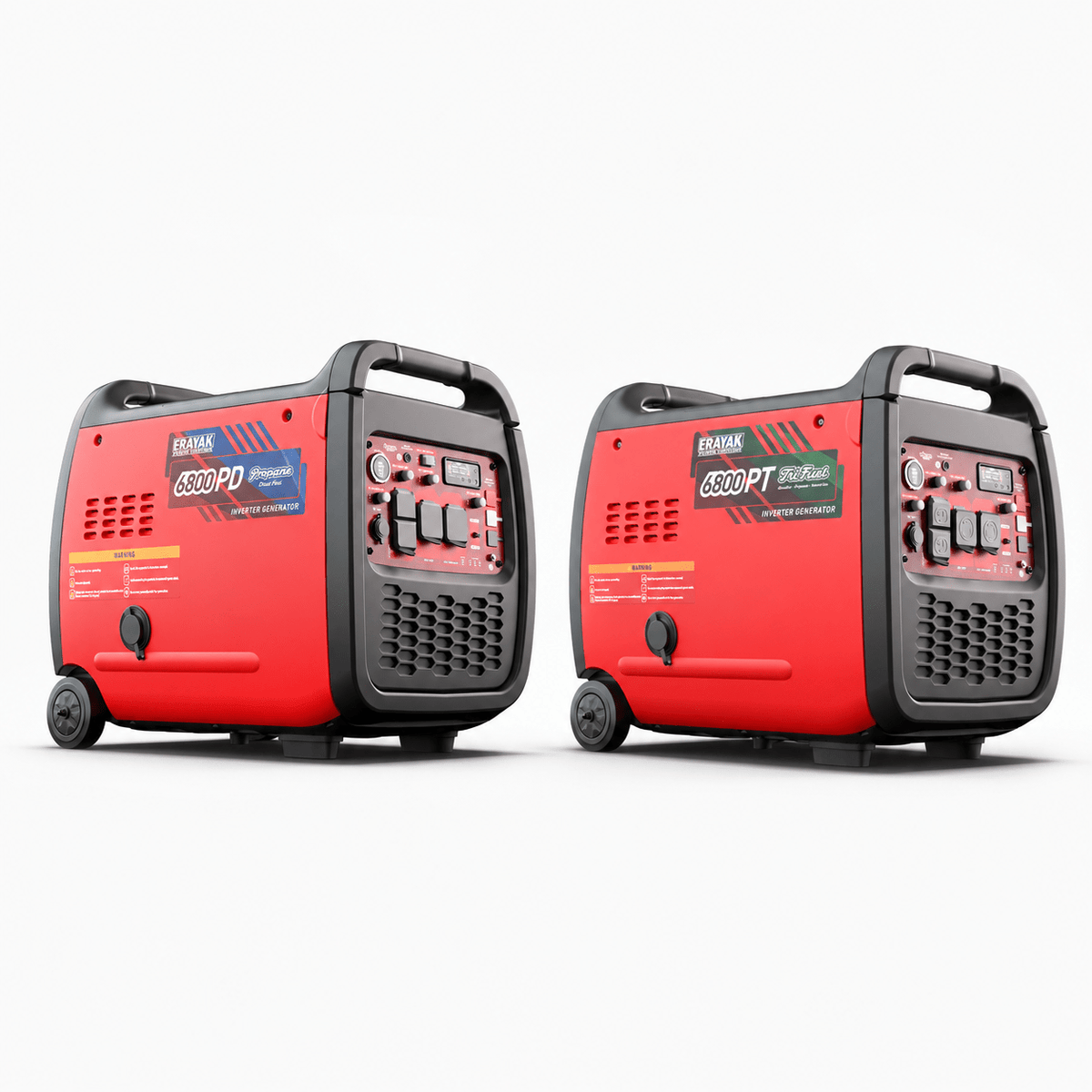
ERAYAK 6800PD / 6800PT Series
If your noise question is tied to home backup, selected circuits, sump pump, well pump, or 120V/240V planning, the 6800 series is the larger Erayak path. Choose 6800PD for dual fuel or 6800PT when tri-fuel flexibility, including natural gas planning, matters.
- 6800W peak output and 5000W gasoline rated running output.
- 6800PD is dual fuel; 6800PT is tri fuel.
- 30A L5-30R, 30A 120V/240V L14-30R, dual 120V household outlets, and TT-30R adapter accessory for RV connection planning.
Propane vs Gas: Noise Is Only One Part of the Decision
| Factor | Propane | Gasoline |
|---|---|---|
| Noise | May sound slightly smoother, but quietness still depends on design. | Can be quiet in an enclosed inverter generator, loud in open-frame models. |
| Power output | Often produces less output than gasoline on the same generator. | Usually provides the generator's strongest rated output. |
| Storage | Stores well in tanks and avoids stale gasoline problems. | Easy to find, but needs fuel rotation and safe storage practices. |
| Maintenance | Cleaner fuel can reduce carburetor varnish concerns. | More vulnerable to stale fuel and gummed carburetors if stored poorly. |
| Best use | RV camping, storm preparedness, backup fuel storage, dual-fuel flexibility. | Maximum output, familiar refueling, short-term high-load use. |
Propane Generator Safety Notes
Cleaner fuel does not make a generator indoor-safe. Propane, gasoline, and natural gas generators all produce dangerous exhaust.
Carbon monoxide
- Never run a fuel generator indoors.
- Never run it in a garage, RV, tent, shed, or enclosed porch.
- Keep it outdoors and away from windows, doors, vents, and sleeping areas.
- Use working carbon monoxide alarms when camping or during outages.
Fuel and conversion safety
- Use the fuel types approved by the generator manufacturer.
- Do not rely on aftermarket conversion kits unless the manufacturer and qualified technician support the setup.
- Check hoses, regulators, shutoff valves, and tank placement before operation.
- Follow local rules for campground and neighborhood quiet hours.
Propane Generator Noise Questions
Are propane generators quieter than gas generators?
Not automatically. On the same generator, propane may sound slightly smoother, but the difference is usually small. Enclosed inverter design, Eco Mode, muffler quality, and load level matter more than fuel type.
Is a propane generator quieter than gas at night?
Only slightly, if at all. Nighttime makes any generator seem louder because background noise is lower. Choose an enclosed inverter generator and manage the load if quiet nighttime operation is important.
How loud is a gas generator?
A traditional open-frame gas generator can often be in the 70 dB to 85+ dB range. Enclosed gas inverter generators can be much quieter, often around the 50 dB to mid-60 dB range depending on load and test method.
How loud is a propane generator?
A propane generator can be loud or quiet depending on its design. Open-frame propane-capable generators can still be loud, while enclosed dual-fuel inverter generators are usually much more campsite- and neighborhood-friendly.
What is the quietest propane generator type?
The quietest practical type is usually an enclosed dual-fuel inverter generator with Eco Mode, enough wattage headroom, and a published noise rating. Avoid assuming that an open-frame propane generator will be quiet just because it uses propane.
Will converting a gas generator to propane make it quieter?
Usually not enough to matter. A conversion may change fuel behavior, but it will not add an acoustic enclosure, better muffler, or inverter load control. For quiet operation, buy a factory dual-fuel inverter generator instead of converting a loud open-frame model.
Are propane generators quiet enough for RV parks?
Some are, but the exact noise rating and campground rules matter. Look for an enclosed inverter generator, avoid running heavy loads during quiet hours, and place the generator safely outdoors away from nearby campers.
For Quiet Power, Choose the Generator Design First and the Fuel Second
Propane is a useful fuel for RV camping and backup planning, but it is not a magic noise solution. If quiet operation matters, start with an enclosed inverter generator, size it correctly, use Eco Mode when practical, and choose propane for storage and fuel-flexibility benefits.


