

Generator Oil Change: Signs, Schedule & Maintenance Tips
Clean oil protects a generator engine from heat, friction, deposits, and premature wear. If the oil is dark, gritty, low, smells burnt, or the generator is harder to start, change it before the next outage, RV trip, or long runtime session.
Quick Answer: When Should You Change Generator Oil?
Change generator oil according to the owner's manual, after the break-in period on a new generator, and any time the oil looks dark, gritty, milky, low, or smells burnt. Many portable generators fall somewhere around 50 to 100 operating hours after break-in, or at least once per year when used lightly, but the right interval depends on the engine, oil type, temperature, load, dust, and runtime.
Dirty or gritty oil, burnt smell, low oil, overheating, harder starts, or abnormal engine noise.
Use an hour meter or maintenance log during outages, RV trips, and jobsite use.
Use the oil type and fill amount in the current manual for your exact generator.
Key Signs Your Generator Oil Needs Changing
Do not wait for engine trouble if the oil is already showing warning signs. Oil condition matters as much as the hour count.
| Warning Sign | What It Can Mean | What To Do |
|---|---|---|
| Dark, thick, or gritty oil | Oil is contaminated or breaking down. | Change the oil before the next long runtime. |
| Burnt smell | Oil may have overheated or oxidized. | Stop, cool the engine, inspect oil level, and change oil. |
| Harder starting or rough running | Old oil can increase friction and drag. | Check oil, fuel, air filter, spark plug, and load conditions. |
| Unusual knocking, ticking, or grinding | Lubrication may be poor or oil level may be low. | Shut down and inspect before continuing. |
| Low-oil shutdown or frequent top-offs | Oil level is low, leaking, burning, or not being checked often enough. | Top off only with the correct oil, then inspect and change if contaminated. |
| Milky-looking oil | Possible moisture contamination. | Change oil and investigate storage, condensation, or water exposure. |
Generator Oil Change Schedule: Practical Rule of Thumb
The owner's manual is the authority. Use the chart below as a planning guide only, especially when preparing for storms, camping trips, or long outages.
| Generator Situation | Oil Change Planning Range | Why It Matters |
|---|---|---|
| New generator break-in | Follow the first-change interval in the manual, often earlier than normal service | Break-in oil can collect tiny metal particles and assembly residue. |
| Portable generator without oil filter | Often around 50 hours after break-in, depending on manual and load | Small engines work hard and hold limited oil volume. |
| Inverter generator or light seasonal use | Often 50-100 hours or annually, depending on model and manual | Light use still creates moisture and aging over time. |
| Long outage, high heat, heavy load, dusty site | Inspect more often and shorten the interval if oil darkens quickly | Heat, dust, and high load accelerate oil breakdown. |
| Stored generator | Change before storage or before seasonal restart if oil is old or contaminated | Fresh oil helps reduce corrosion and storage-related deposits. |
Manual-first rule: do not copy another brand's interval. Oil capacity, engine design, oil filter use, climate, and load all change the maintenance schedule.
How to Change Generator Oil Safely
Exact steps vary by generator, but this workflow fits many portable and inverter generators. Follow your manual for drain-plug location, oil type, oil amount, and filter instructions.
| Step | What To Do | Important Detail |
|---|---|---|
| 1. Prepare supplies | Correct oil, drain pan, funnel, rags, gloves, wrench, and filter if equipped. | Confirm oil grade and capacity before draining. |
| 2. Warm briefly | Run the generator for a few minutes if the manual allows. | Warm oil drains more completely. Do not burn yourself. |
| 3. Shut down fully | Turn off loads, shut down, disconnect cords, and let hot parts become safe to touch. | Never service a running generator. |
| 4. Drain old oil | Place a pan under the drain, remove plug or tilt as directed by the manual. | Keep oil off the ground and away from drains. |
| 5. Replace filter if equipped | Some engines use an oil filter; many small portable generators do not. | Use the correct filter and gasket procedure. |
| 6. Refill carefully | Add the recommended oil slowly and check the dipstick or fill mark. | Overfilling can cause smoking, fouling, or poor running. |
| 7. Test and inspect | Run briefly, shut down, recheck level, and inspect for leaks. | Record the date and runtime hours. |
Generator Oil Change Mistakes To Avoid
Match viscosity and specification to your manual and expected temperature range.
New engines often need an early first oil change to remove break-in debris.
Too much oil can create smoke, leaks, fouled plugs, or poor performance.
Low oil can trigger shutdown or cause serious engine wear if ignored.
Never service a hot, running, connected, or loaded generator.
During outages, generator hours add up fast. Track them before maintenance gets fuzzy.
Oil Maintenance Tips for Outages, RV Trips, and Storage
Oil maintenance gets easier when you plan before the generator is needed. Keep the right oil, funnel, gloves, drain pan, and manual with the generator kit.
| Scenario | Maintenance Tip | Why It Helps |
|---|---|---|
| Storm season | Change old oil before the season and keep spare oil on hand. | Long outages may push the generator toward the next service interval quickly. |
| RV camping | Check oil level before travel days and after long runtime sessions. | Vibration, heat, and extended use can reveal leaks or consumption. |
| Dusty jobsite or dry campsite | Inspect oil and air filter more often. | Dust can accelerate engine wear and contamination. |
| Storage | Store with clean oil when the manual recommends it and run periodic checks. | Old oil can hold contaminants and moisture. |
Erayak Generator Maintenance Reminders
Use the current manual for the exact oil type, oil capacity, break-in interval, and service schedule for your model. The product recommendations below are light routing notes, not a replacement for model-specific maintenance instructions.
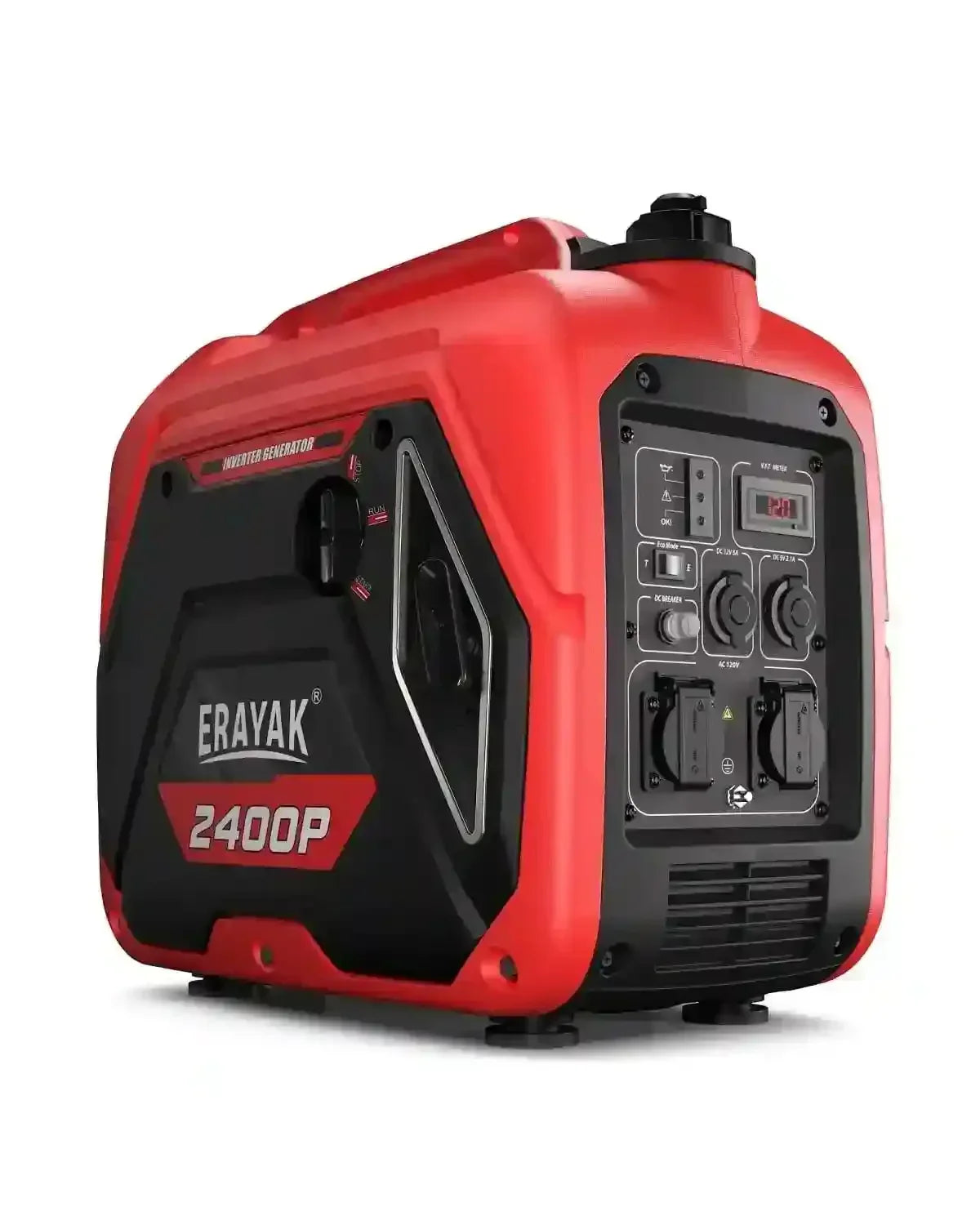
Erayak 2400P: Light Camping and Small Backup Loads
The 2400P is a compact fit for camping, battery charging, and light backup loads. Keep a simple maintenance log if you use it across multiple trips.
Compare the Erayak 2400P
Erayak 4500P: Gas-Only 4,500W-Class RV and Backup Fit
The 4500P is gas only, manual recoil start, 55 lb class, with a 2.25 gal fuel tank, up to 8 hours runtime, 60.5 dB, and THD below 1.2%. Track runtime closely during RV and outage use.
Compare the Erayak 4500P
 Erayak 4500PD: Dual-Fuel RV and Home Essentials
The 4500PD is a strong fit for RV comfort loads and outage-prep flexibility. If it becomes your storm backup generator, keep oil and maintenance supplies ready before severe weather arrives.
Compare the Erayak 4500PD
Erayak 6800PD/PT: Larger Backup Planning
For larger selected-circuit backup, 120V/240V planning, sump pump, well pump, or longer outage use, the 6800PD/PT series requires the same manual-first maintenance discipline.
See the Erayak 6800PD/PT SeriesSafety and Used-Oil Disposal
Never service a generator while it is running, connected to loads, or too hot to touch safely. Work outdoors or in a well-ventilated service area away from ignition sources. Keep used oil off soil, pavement drains, septic systems, and household trash.
Collect used oil in a clean, sealed container and take it to an approved recycling or disposal location. Wipe spills promptly, keep oil away from children and pets, and follow local disposal rules.
FAQ: Generator Oil Change and Maintenance
How often should I change generator oil?
Follow your owner's manual first. Many portable generators need an early break-in oil change, then oil changes around 50 to 100 operating hours or annually, depending on the engine, oil filter, load, heat, dust, and use pattern.
What are the signs generator oil is bad?
Change the oil if it looks dark, thick, gritty, milky, low, or smells burnt. Hard starting, rough running, overheating, abnormal engine noise, or frequent low-oil shutdowns are also warning signs.
Should I change generator oil before or after storage?
Many owners change oil before storage so old contaminants are not sitting in the engine. If the generator has been stored for a long time, inspect the oil before running and follow the manual's storage and restart guidance.
Can I use synthetic oil in a generator?
Sometimes, but only if it matches the generator manual's oil specification and viscosity guidance for your temperature range. Do not assume synthetic oil automatically extends the service interval.
What happens if I overfill generator oil?
Overfilling can cause smoke, oil leaks, fouled spark plugs, rough running, or other performance issues. Drain excess oil and reset the level according to the dipstick or fill procedure in the manual.
Why does my generator shut off with low oil?
Many generators include a low-oil shutdown system to help protect the engine. If it shuts down, let the generator cool, check the oil level on a level surface, inspect for leaks, and refill with the correct oil before restarting.
Can I change generator oil during a power outage?
Yes, if you can shut the generator down safely, disconnect loads, let it cool enough to service, and handle used oil properly. Keep spare oil, a funnel, drain pan, gloves, and the manual ready before storm season.
Clean Oil Keeps Your Generator Ready
A generator oil change is not just routine maintenance. It protects the engine when the power is out, the RV trip is underway, or backup power is needed most. Track runtime, inspect oil condition, follow the manual, and change oil before warning signs become engine damage.
