

Generator Safety During Hurricane Season: What Homeowners Get Wrong
A portable generator can help keep critical loads running during a storm outage, but the biggest mistakes are usually about placement, ventilation, cords, fuel, and overloads—not wattage alone.
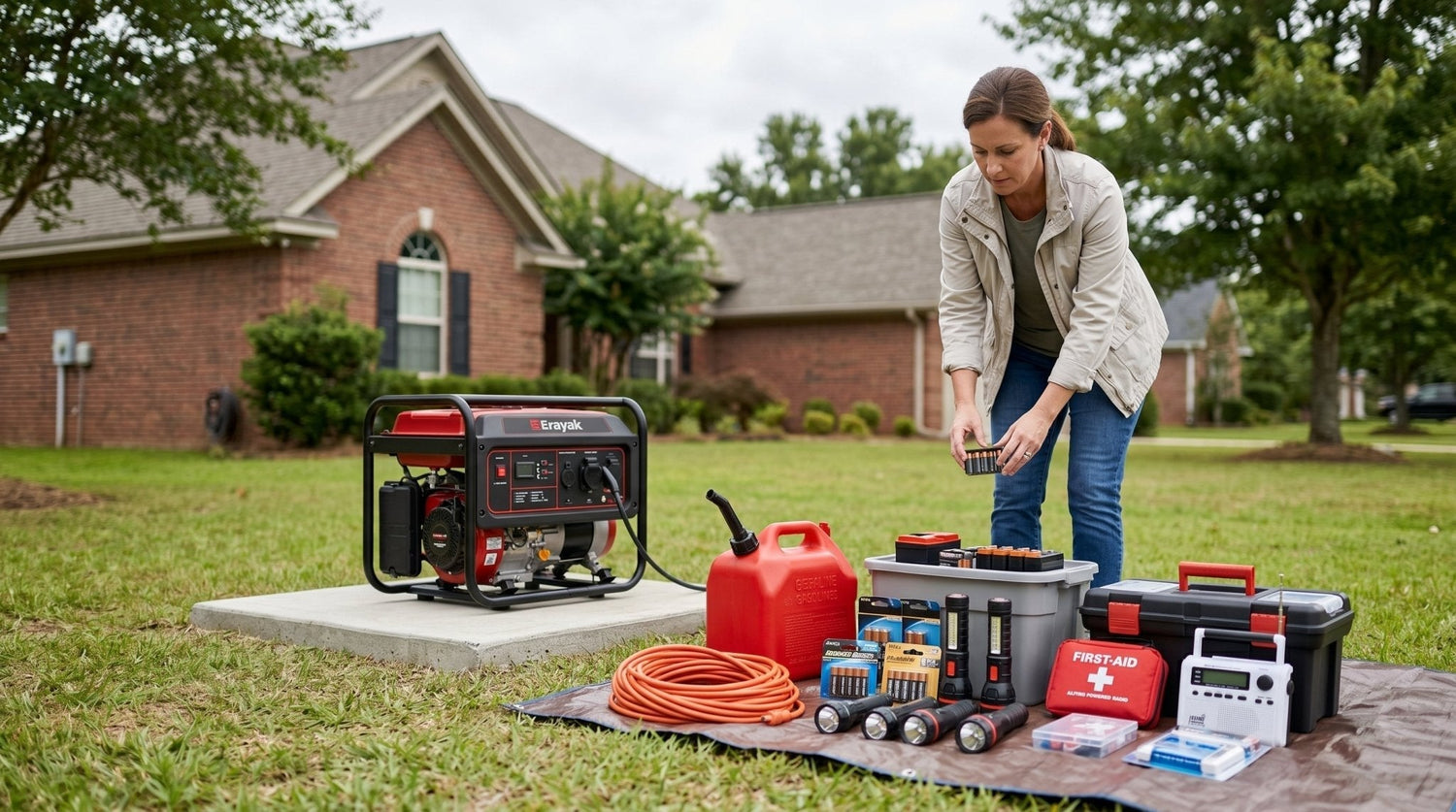
 Generator safety starts with outdoor placement, ventilation, and a clear load plan before the outage begins.
During hurricane season, the most dangerous generator mistakes are running it too close to the home, using it in a garage or semi-enclosed space, overloading it, using unsafe cords, refueling while hot, and failing to plan essential loads before the storm arrives.
A fuel-powered generator should always operate outdoors with proper ventilation. The CDC advises keeping a generator outside at least 20 feet away from doors, windows, and vents. The Red Cross also warns that opening doors, windows, or using fans will not prevent carbon monoxide buildup in the home.
Table of Contents
- Why hurricane season makes generator safety more important
- Mistake 1: Running a generator in a garage or semi-enclosed space
- Mistake 2: Placing the generator too close to windows or doors
- Mistake 3: Overloading the generator during an outage
- Mistake 4: Using unsafe cords or backfeeding
- Mistake 5: Poor fuel planning before the storm
- Mistake 6: Operating in unsafe rain or unstable conditions
- Hurricane season generator safety checklist
- ERAYAK options for storm-season backup planning
- FAQ
Why Hurricane Season Makes Generator Safety More Important
The Atlantic hurricane season runs from June 1 through November 30, which means homeowners may face sudden outages, wet conditions, high heat, limited fuel availability, and rushed setup decisions. That combination is exactly why generator safety matters before the first storm warning appears.
Many people think generator safety is mainly about choosing enough watts. Wattage matters, but a storm-season backup plan also needs safe outdoor placement, carbon monoxide awareness, outdoor-rated cords, fuel handling, dry operating conditions, and realistic load management.
Key point: A generator is not a set-it-anywhere appliance. It is fuel-powered equipment that must be operated outdoors, away from openings, on stable ground, with loads added carefully.
Running a Generator in a Garage or Semi-Enclosed Space
This is the mistake that needs the clearest answer: do not run a portable generator in a garage, basement, shed, porch enclosure, crawl space, or any indoor or semi-enclosed area. Opening the garage door is not enough. Fans are not enough. Cracked windows are not enough.
Portable generators produce carbon monoxide, a gas that cannot be seen or smelled. During a power outage, people often move the generator closer to the home for convenience, noise control, or weather protection. That convenience can turn dangerous very quickly.
Generator Safety Notice
- Never run indoors.
- Never run in a garage.
- Never run near open windows.
- Always operate outdoors with proper ventilation.
Placing the Generator Too Close to Windows or Doors
Some homeowners move the generator outside but keep it near a window, door, vent, porch, or garage opening. That is still unsafe. Exhaust can move with wind, enter through openings, or collect near the structure.
The CDC placement rule is simple: keep the generator outside at least 20 feet away from doors, windows, and vents. Point exhaust away from the home and nearby occupied spaces whenever possible.
 Safe generator placement should be obvious: outdoors, ventilated, dry, stable, and away from doors, windows, vents, and garages.
Overloading the Generator During an Outage
After a hurricane outage, it is tempting to plug in everything at once: refrigerator, freezer, portable AC, lights, router, microwave, coffee maker, sump pump, and chargers. That is how overload problems start.
Motor-driven appliances such as refrigerators, freezers, sump pumps, and air conditioners may need extra starting watts. If several of them start at the same time, the generator may trip, stall, or overload.
| Priority Level | Typical Loads | Planning Advice |
|---|---|---|
| Critical | Refrigerator, freezer, medical or communication devices, phone charging | Plan these first and verify actual wattage before the storm. |
| Comfort | Portable AC, fans, router, laptop, LED lights | Add only if the generator has enough headroom for startup surge. |
| High Draw | Microwave, electric kettle, toaster, large tools, space heater | Avoid running these with other major loads unless capacity is clearly sufficient. |
Load management tip: Add loads gradually. Do not start a refrigerator, portable AC, and other motor-driven appliances at the same time if the generator is already near its limit.
Using Unsafe Extension Cords or Backfeeding
Extension cords matter during a storm outage. Use outdoor-rated cords that are properly sized for the load and in good condition. Do not use damaged cords, undersized cords, or tangled cord piles that can overheat.
Never plug a generator into a household wall outlet. That practice, often called backfeeding, can energize wiring in dangerous ways and put utility workers, neighbors, and your own home at risk. If you want to connect a generator to home circuits, use appropriate transfer equipment installed by a qualified professional.
Poor Fuel Planning Before the Storm
Fuel is part of the backup plan. Waiting until a storm is close can mean long lines, empty stations, or limited supply. Plan fuel needs before hurricane conditions arrive, store fuel in approved containers, and keep fuel away from living areas and ignition sources.
Do not refuel a hot generator. Shut it down and allow it to cool according to the owner’s manual before adding fuel. Spilled fuel near a hot engine can create fire risk.
 Prepare generator fuel, cords, lighting, and essential supplies before the storm, not during the outage.
Operating in Unsafe Rain or Unstable Conditions
Hurricane-season outages often come with wet ground, wind, debris, and unstable surfaces. A generator should operate on dry, stable ground with proper ventilation. Do not operate it in standing water, flooded areas, or where cords and plugs can sit in water.
Weather protection must never become an enclosure. Any cover or shelter must follow the generator manufacturer’s guidance and must not trap exhaust or restrict ventilation.
Hurricane Season Generator Safety Checklist
Prepare the equipment
Test the generator, inspect cords, check oil and fuel, read the manual, and confirm appliance wattage before the weather turns dangerous.
Choose the location
Place the generator outdoors, at least 20 feet away from doors, windows, and vents, on dry and stable ground.
Manage the load
Start with critical appliances, add loads gradually, and avoid running several high-surge devices at the same time.
Cool before fueling
Shut the generator down and allow it to cool before refueling. Keep approved fuel containers away from heat and living spaces.
Do this now: Make a written load list before hurricane season peaks. Decide what you will power first, what can wait, and what should not run at the same time.
ERAYAK Generator Options for Storm-Season Backup Planning
The right generator depends on your essential loads, fuel preference, outlet needs, and how much headroom you want during a storm outage. Use this product-fit guide as a starting point, then verify appliance wattage and follow the owner’s manual.
ERAYAK 4500PD Series
Storm EssentialsA strong fit for common hurricane-season essentials such as refrigerator, lights, router, device charging, and selected cooling loads when properly sized and managed.
Compare the ERAYAK 4500PD Dual-Fuel Generator for Storm-Season EssentialsERAYAK 6800PD / 6800PT Series
Higher-Capacity PlanningBetter suited for larger backup plans where users want more capacity, 120V/240V flexibility, RV crossover use, or broader home backup planning. Gasoline rated output is 5000W with 6800W peak power.
See the ERAYAK 6800PD/PT Series for Larger Home Backup PlanningERAYAK 4500P Gas Only
Gasoline PortableFor users who want a gasoline-only inverter generator with more headroom than a small unit. The 4500P is gas only, manual recoil start, 55 lb, has a 2.25 gal fuel tank, up to 8 hours runtime, 60.5 dB noise rating, and THD < 1.2%.
Compare the ERAYAK 4500P Gas Inverter GeneratorERAYAK Inverter Generator Collection
Compare OptionsCompare portable inverter generators by power need, fuel preference, backup scenario, and home or RV use case before choosing your storm-season setup.
Shop ERAYAK Inverter Generators for Storm-Season Backup PlanningImportant: Do not choose a generator by peak wattage alone. Check running wattage, starting surge, fuel type, cord setup, outlet compatibility, and the actual loads you plan to power.
Generator Safety During Hurricane Season FAQ
Can I run a generator in my garage if the door is open?
No. Do not run a portable generator in a garage, even with the garage door open. A generator should run outdoors with proper ventilation and away from doors, windows, vents, and enclosed or semi-enclosed spaces.
How far should a generator be from the house?
The CDC advises keeping a generator outside at least 20 feet away from doors, windows, and vents. Exhaust should be directed away from the home and occupied spaces whenever possible.
Can I plug a generator into a wall outlet?
No. Plugging a generator into a household wall outlet can create dangerous backfeeding. If you want to connect a generator to home circuits, use appropriate transfer equipment installed by a qualified professional.
Can I run a generator in the rain?
Follow the generator manual. Keep the generator dry, outdoors, and ventilated. Do not operate it in standing water or where cords and plugs can sit in water. Any weather protection must not trap exhaust or restrict airflow.
What should I power first during a hurricane outage?
Start with critical essentials such as refrigerator, freezer, communication devices, lights, medical or necessary devices, and limited comfort loads such as fans or a portable AC only if the generator is properly sized.
How do I avoid overloading a generator?
Add up running watts, allow extra headroom for startup surge, start appliances gradually, and avoid running multiple high-draw devices at the same time. Check both appliance labels and the generator manual.
Build a Safer Backup Power Plan Before the Next Outage
The safest generator setup starts before the storm: know where the generator will sit, what loads you will power first, what cords you will use, how fuel will be stored, and which appliances should not run together.
