

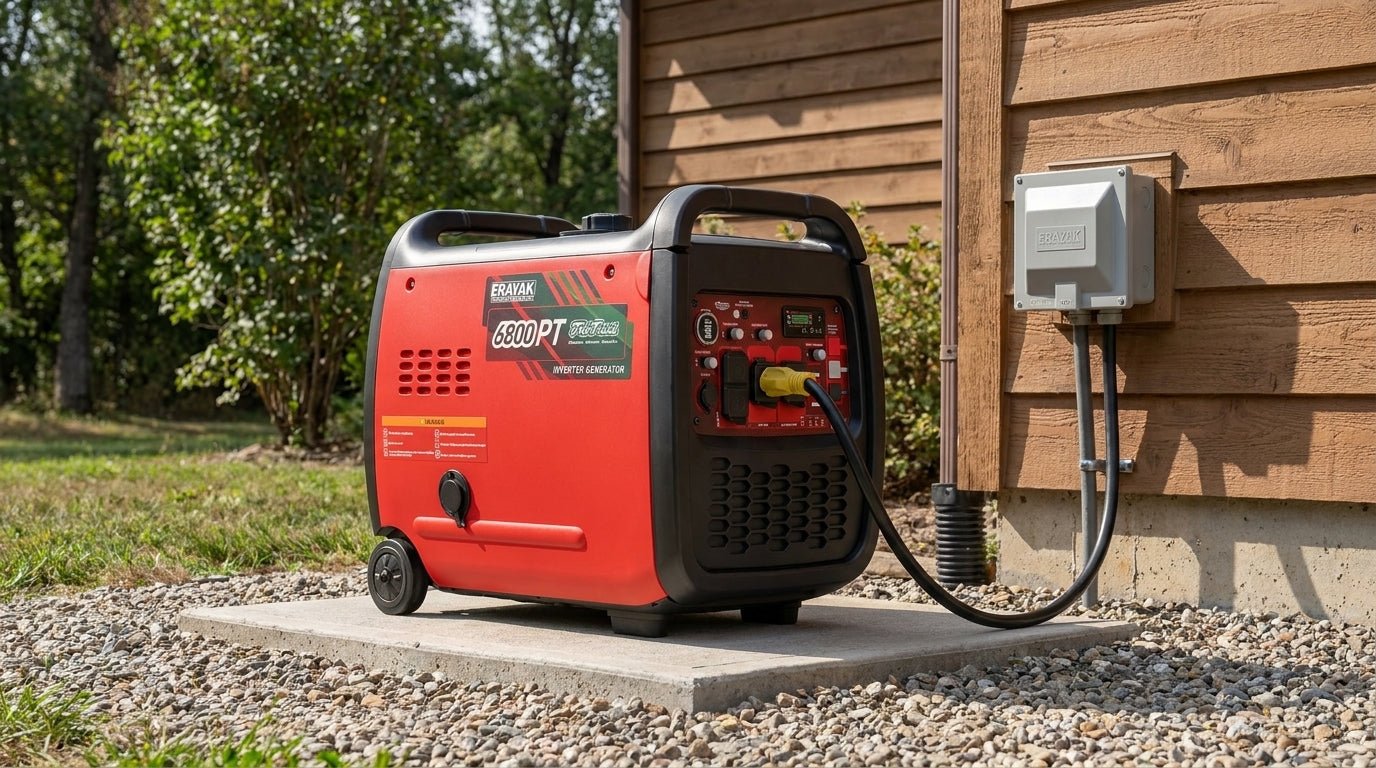
Can a Portable Generator Run Central Air? Soft Start & Size Guide
A portable generator can run some central air conditioners, but only when the generator, transfer equipment, AC tonnage, starting surge, and load plan are all matched. A soft start can help, but it does not turn every central AC system into a small-generator load.
Quick Answer
A portable generator can run central air only in the right setup. Small central AC units with a professionally installed soft start may be possible on a properly sized 120V/240V generator. Larger 3-ton, 4-ton, or 5-ton systems often need a much larger generator than many homeowners expect.
Before buying a generator for central AC, check the outdoor condenser nameplate for voltage, RLA, LRA, MCA, and breaker size. Then ask an HVAC technician or electrician whether a soft start is appropriate. If your goal is reliable outage comfort, it may be smarter to run a portable AC or window AC plus essential loads instead of trying to run the whole central system.
Can a Portable Generator Run Central Air?
Yes, sometimes. The key word is sometimes. Central air conditioners are hard loads because they have both running power and high compressor startup surge. A generator that can run lights, refrigerators, routers, and a furnace blower may still fail to start a central AC compressor.
The realistic answer depends on five things:
- The AC size in tons or BTU
- The condenser nameplate amperage, especially LRA or starting amps
- Whether a soft start is installed and learned correctly
- The generator's rated watts, surge watts, and 120V/240V output
- What else you run at the same time
Good SEO answer, honest buyer answer: a portable generator may run smaller central AC systems with soft start, but central AC should never be treated like a simple refrigerator load.
Check the AC Nameplate Before Sizing a Generator
Do not size a generator from tonnage alone. The outdoor condenser label gives better information. Look for these fields:
| Label term | What it means | Why it matters |
|---|---|---|
| Voltage | Often 208/230V or 240V for central AC | The generator usually needs 120V/240V output and transfer equipment. |
| RLA | Rated load amps while running | Helps estimate running watts. |
| LRA | Locked rotor amps at compressor startup | Shows why startup surge can be much higher than running load. |
| MCA | Minimum circuit ampacity | Helps an electrician evaluate circuit requirements. |
| Breaker or fuse size | Maximum overcurrent protection | Not the same as running load, but useful for planning. |
A rough running-watt estimate is volts x running amps. But startup surge can be several times higher, especially without a soft start.
What Does a Soft Start Do for Central AC?
A soft start device reduces the compressor startup surge by ramping the motor more gradually. This can make an AC easier to start on generator power, but it does not reduce the running load to zero and it does not solve an undersized generator.
Soft start can help with
- Lowering compressor inrush current
- Reducing generator bog-down during startup
- Improving the chance of starting smaller AC systems
- Making selected-circuit backup more practical
Soft start does not fix
- A generator with insufficient running watts
- A large AC paired with a small generator
- Too many loads running at the same time
- Improper transfer switch or wiring setup
Have the soft start installed and verified by a qualified HVAC technician. Some systems may also have warranty, compatibility, or local-code considerations.
What Size Generator to Run Central Air?
The table below is a planning guide, not a promise. Your AC nameplate and electrician/HVAC review matter more than any generic chart.
| Central AC size | Without soft start | With soft start | Practical note |
|---|---|---|---|
| 1.5 to 2 tons | May still require substantial surge capacity | Sometimes possible on a smaller 120V/240V generator if verified | Best candidate for portable-generator evaluation. |
| 2.5 to 3 tons | Often difficult for mid-size portable generators | May be possible only with careful sizing and limited other loads | Do not guess from tonnage alone. |
| 3.5 to 5 tons | Usually outside small portable generator comfort zone | Still may need a large generator | Consider portable AC, load shedding, or standby-class planning. |
If the generator is also running refrigerator, freezer, lights, sump pump, router, and furnace blower, those loads reduce the headroom available for central AC startup.
Central AC Usually Requires 240V Transfer-Switch Planning
Most residential central AC condensers are 240V loads. That means you need more than a standard 120V extension-cord setup. A central AC backup plan usually involves a properly installed transfer switch or interlock, correct breaker planning, and a 120V/240V generator.
Do not backfeed a home or improvise an AC connection. Generator-to-panel work should be handled by a qualified electrician. AC equipment should be reviewed by a qualified HVAC technician.
For many homes, the better outage plan is selected-circuit backup: refrigerator, freezer, lights, router, sump pump, furnace blower, and a smaller cooling option, rather than forcing the central AC to run.
When a Portable AC or Window AC Is the Better Backup Plan
If your central AC is too large for a portable generator, you can still create a practical cooling plan. Many outage-prep buyers choose one cool room instead of whole-house central AC.
- Use a portable AC or window AC for a bedroom or living area.
- Keep refrigerator, freezer, router, fans, and lights on selected circuits.
- Use load management so cooling does not compete with pump startup.
- Choose dual fuel or tri fuel based on your fuel-storage plan.
This approach often matches portable inverter generators better than central AC backup, especially during long outages.
Erayak Product Fit: Central AC vs Selected-Circuit Backup
Erayak's portable inverter generators are best positioned around selected-circuit backup and realistic outage comfort, not blanket claims that every central AC will run.
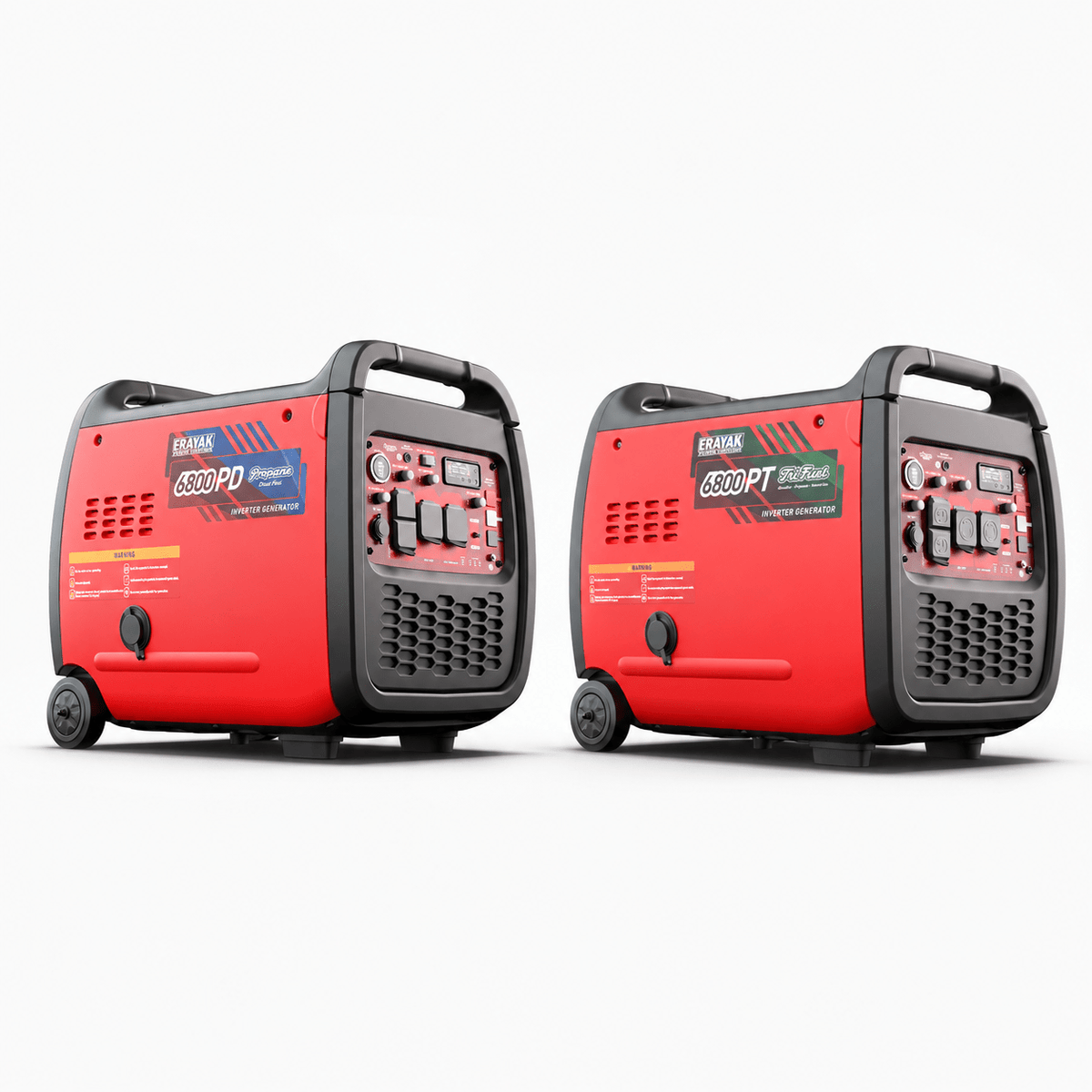
ERAYAK 6800PT: Best Fit for 120V/240V Selected-Circuit Planning
The ERAYAK 6800PT is the Erayak model to evaluate if your backup plan includes 120V/240V selected circuits, a transfer switch or interlock, well pump planning, sump pump planning, or a professionally reviewed small central AC with soft start.
- 6800W peak and 5000W gasoline rated output at 100% output
- 120V/240V capability with 30A L14-30R planning
- Tri fuel flexibility for gasoline, propane, and natural gas
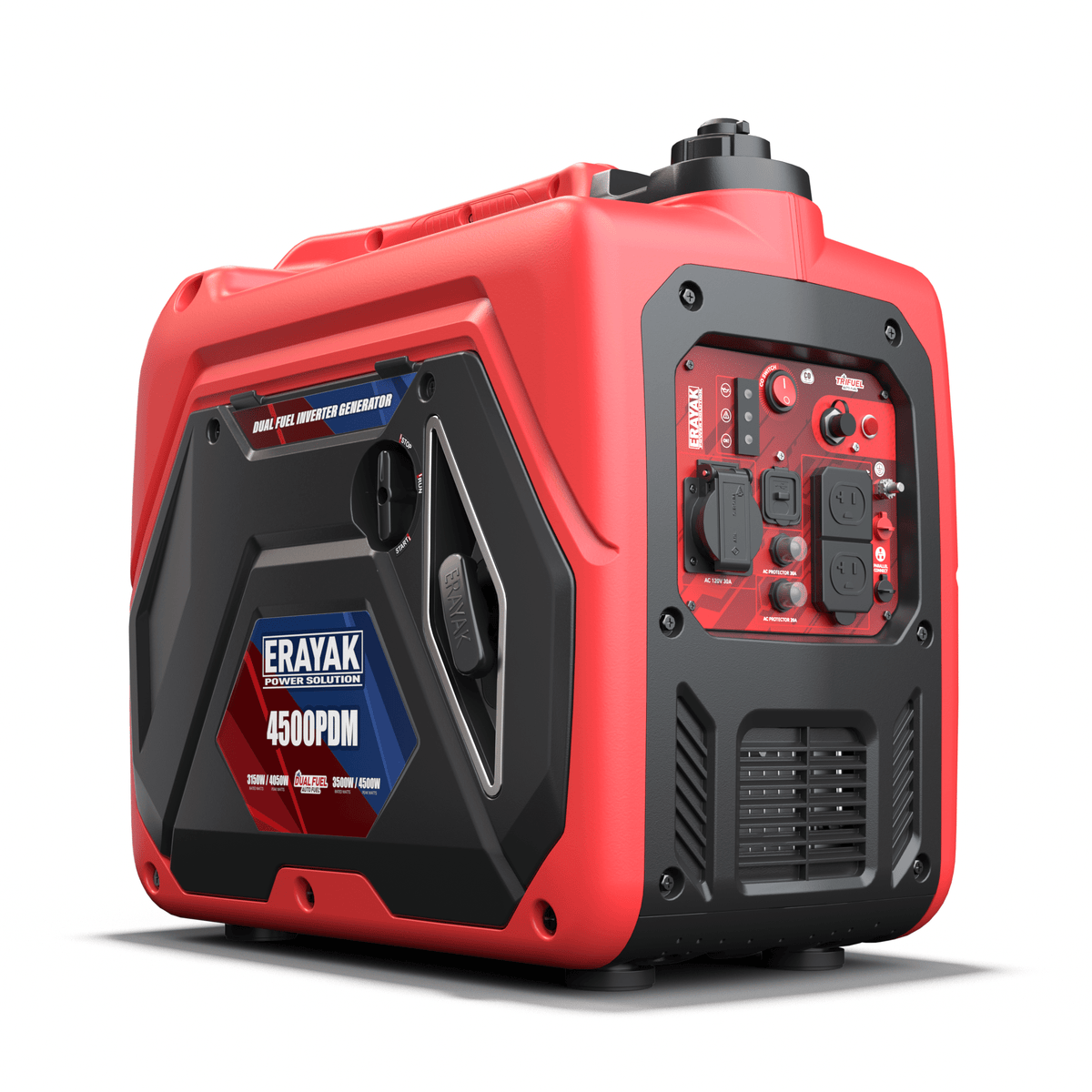
ERAYAK 4500PD: Better Fit for Portable AC and 120V Essentials
If central AC is unrealistic for your load plan, the ERAYAK 4500PD is a practical dual-fuel option for portable AC, refrigerator/freezer backup, lights, router, RV use, and common 120V essentials.
- Gasoline and propane flexibility
- Good match for portable AC plus essential loads
- Simpler than 120V/240V central AC planning
Safety Notes
Generator safety notice: fuel-powered generators must run outdoors only. Never run a generator indoors, in a garage, in a shed, on an enclosed porch, or near open windows, doors, or vents. Carbon monoxide can be deadly.
Central AC backup involves both HVAC equipment and home electrical equipment. Use a qualified HVAC technician for soft start compatibility and a qualified electrician for transfer-switch, interlock, breaker, inlet, and wiring work.
Related Guides
FAQ: Portable Generators and Central Air
Can a portable generator run central air?
Sometimes. Smaller central AC systems with soft start and proper 120V/240V transfer equipment may be possible, but larger systems often require a much larger generator. Check the AC nameplate and ask an HVAC/electrical professional.
What size generator do I need to run central AC?
There is no single size. It depends on AC tonnage, RLA, LRA, soft start, voltage, generator rated watts, and other loads. Larger 3- to 5-ton systems often need more capacity than typical mid-size portable generators can provide.
Will a soft start let a smaller generator run central AC?
A soft start can reduce startup surge, but it does not eliminate running watts or guarantee compatibility. It must be matched to the AC system and verified by a qualified technician.
Can the ERAYAK 6800PT run central air?
It may be worth evaluating for smaller, professionally reviewed central AC setups with soft start and limited other loads. It should not be treated as a universal central AC generator. Plan around 6800W peak and 5000W gasoline rated output.
Is portable AC easier to run than central AC?
Usually yes. Portable AC and window AC units are often easier to support with portable generators, especially when the goal is cooling one room during an outage rather than the whole house.
Do I need 240V to run central AC?
Most residential central AC condensers are 240V loads. That usually requires a 120V/240V generator and properly installed transfer equipment.
Bottom Line
A portable generator can run some central AC systems, especially smaller units with a properly installed soft start, but many central air systems need more capacity than buyers expect. For most outage plans, selected-circuit backup plus portable AC is the more realistic portable-generator strategy.
