


Bonded Neutral vs Floating Neutral Generator: What Home Backup Buyers Need to Know
Bonded neutral and floating neutral are not marketing terms. They affect grounding, GFCI behavior, transfer switch compatibility, and whether a generator is treated as a separately derived source in a home-backup setup.
Quick Answer
A bonded neutral generator has the neutral connected to the generator frame. A floating neutral generator does not bond neutral to the frame inside the generator. For many home transfer switch setups where the house panel already has the neutral-ground bond, floating neutral is commonly used, but the correct answer depends on the generator, transfer equipment, GFCI design, and local code.
Do not remove bonding wires, add bonding plugs, or modify a generator based only on internet advice. Check the generator manual and transfer switch instructions, then have a qualified electrician confirm the safe setup.
What Is a Bonded Neutral Generator?
In a bonded neutral generator, the neutral conductor is connected to the generator frame. This can be appropriate when the generator is used as a standalone power source for tools, appliances, or certain jobsite-style loads, depending on the generator design and instructions.
What Is a Floating Neutral Generator?
In a floating neutral generator, the neutral is not bonded to the generator frame inside the generator. This can be useful in many home transfer-switch applications because the home electrical system already has a neutral-ground bond at the service equipment.
Simple idea: in a properly designed system, neutral and ground should be bonded where the system design requires it, not randomly in multiple places.
Bonded Neutral vs Floating Neutral Generator Comparison
| Topic | Bonded neutral | Floating neutral |
|---|---|---|
| Neutral-frame connection | Neutral is bonded to generator frame | Neutral is not bonded to generator frame |
| Standalone use | Often common for portable standalone use | May need proper bonding approach depending on use |
| Home transfer switch use | May require switched neutral or other design considerations | Often compatible with many transfer setups, but verify equipment |
| GFCI behavior | Can trip if used with some transfer equipment | Can reduce certain nuisance trips in compatible home setups |
| DIY modification risk | High. Do not change bonding without manufacturer guidance and electrician review. | |
Why Transfer Switch Type Matters
The neutral question becomes important when connecting a portable generator to a house. Some transfer switches switch only the hot conductors. Others switch the neutral as well. The right match depends on whether the generator is bonded, whether it has GFCI protection, and whether the setup is treated as separately derived.
Ask your electrician
- Is this generator bonded or floating neutral?
- Does the transfer switch switch neutral?
- Does the generator have GFCI protection on the output?
- Where is the neutral-ground bond in this system?
Do not assume
- Do not assume all inverter generators are floating neutral.
- Do not assume all transfer switches work with all generators.
- Do not assume a bonding plug is a universal fix.
- Do not remove a bond because a forum said so.
GFCI Tripping and Neutral Bonding
Some portable generators include GFCI protection. When a bonded neutral generator is connected to transfer equipment that does not switch neutral, the GFCI may detect an imbalance and trip. That does not automatically mean the generator is bad. It means the generator and transfer equipment may not be matched correctly.
The solution is not to defeat safety devices. The solution is to confirm the generator neutral configuration, transfer switch design, GFCI behavior, and code requirements with a qualified electrician.
Should You Use a Generator Bonding Plug?
A bonding plug can create a neutral-ground bond for certain standalone generator uses, but it is not a universal solution and can be unsafe in the wrong setup. It should not be used blindly with home transfer equipment.
Important: do not use a bonding plug, remove a bond, or rewire neutral/ground unless the generator manual, transfer equipment instructions, and a qualified electrician all support that configuration.
How to Check Whether a Generator Is Bonded or Floating Neutral
The safest first step is to read the current generator manual and label information. Some manuals explicitly state whether the neutral is bonded to frame or floating.
Electricians can also test continuity between neutral and ground when the generator is off and properly isolated. This is not something to do casually if you are not trained, because incorrect testing or interpretation can lead to dangerous assumptions.
Best practice: document the generator model, outlet type, GFCI status, neutral configuration, transfer switch model, and intended loads before installation.
Erayak Product Fit for Home Backup Planning
For Erayak buyers, neutral bonding should be handled as part of the installation plan, not as a guess made after purchase. Always confirm the current manual and transfer equipment requirements.
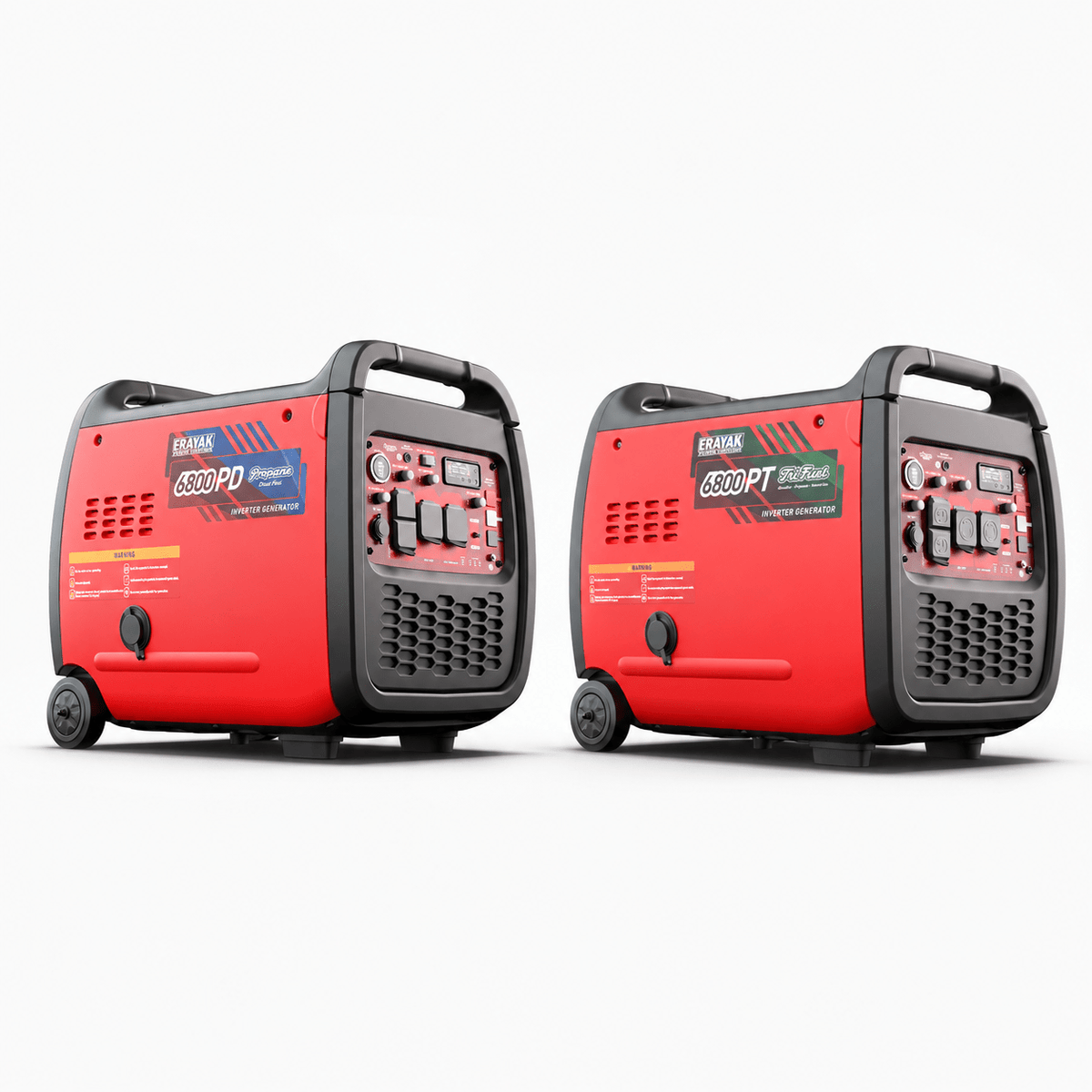
ERAYAK 6800PT: 120V/240V Transfer-Switch Planning
The ERAYAK 6800PT is the strongest Erayak fit when your home backup plan includes 120V/240V selected circuits, transfer switch or interlock planning, well pump planning, and tri-fuel flexibility. Confirm neutral bonding requirements with the current manual and installer.
- 6800W peak and 5000W gasoline rated output at 100% output
- 120V/240V selected-circuit planning
- Tri fuel flexibility for home backup planning
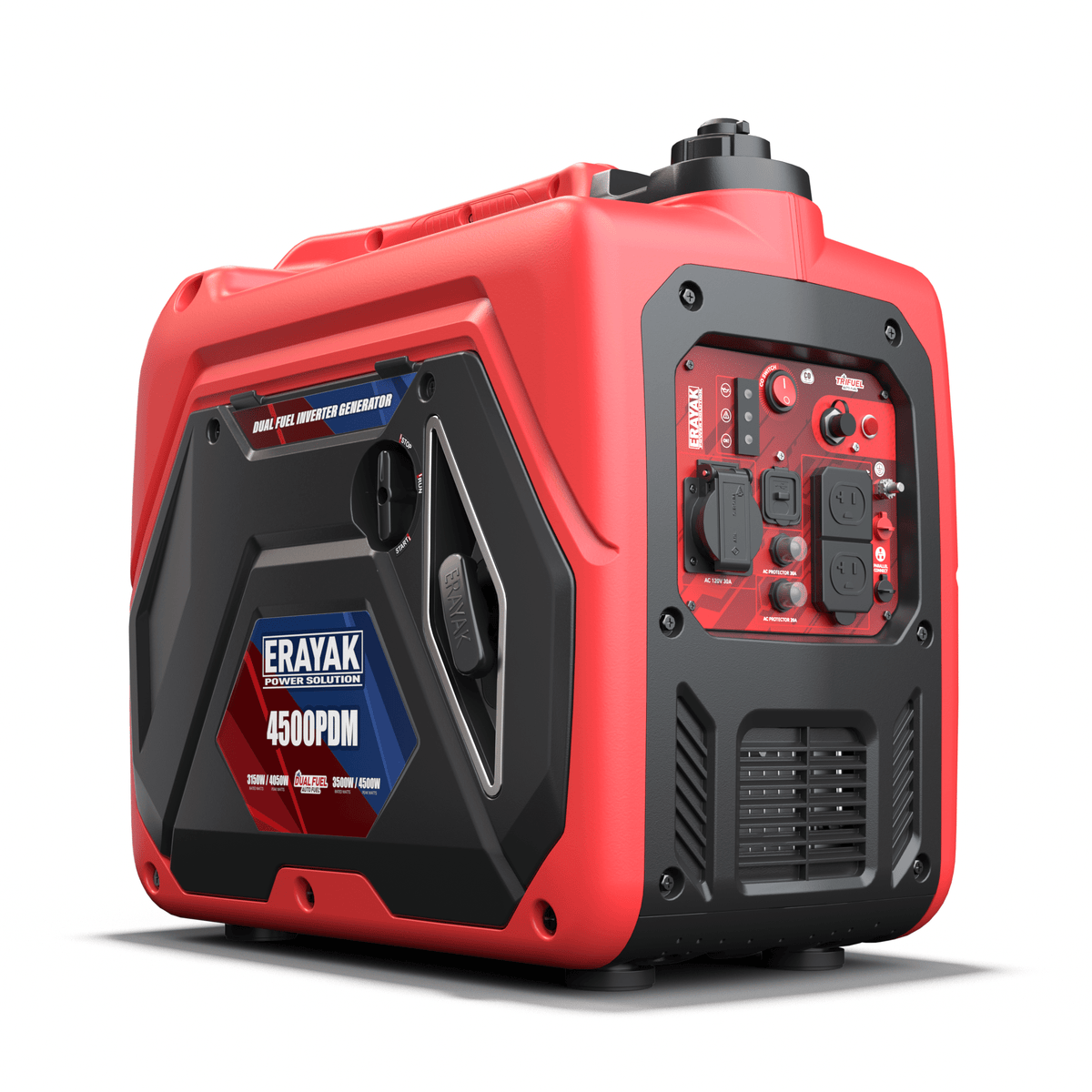
ERAYAK 4500PD: 120V Dual-Fuel Essentials
The ERAYAK 4500PD is a better fit when your plan is RV power, portable AC, refrigerator/freezer backup, and 120V essentials instead of a 120V/240V home transfer setup.
- Gasoline and propane flexibility
- Good match for RV and essential-load backup
- Simpler path when 240V circuits are not needed
Safety Notes
Generator safety notice: fuel-powered generators must run outdoors only. Never operate a generator indoors, in a garage, in a shed, on an enclosed porch, or near open windows, doors, or vents. Carbon monoxide can be deadly.
Neutral bonding, grounding, transfer switches, and generator GFCI behavior are electrical safety topics. Use the generator manual, transfer equipment instructions, local code, and a qualified electrician.
Related Guides
FAQ: Bonded Neutral and Floating Neutral Generators
What is a bonded neutral generator?
A bonded neutral generator has the neutral conductor connected to the generator frame. This can be appropriate for some standalone generator uses, depending on the generator design and instructions.
What is a floating neutral generator?
A floating neutral generator does not bond neutral to the generator frame inside the generator. Many home transfer-switch setups use a floating neutral generator because the home panel already has the neutral-ground bond.
Which is better for a transfer switch?
It depends on the transfer switch and generator. Many non-switched-neutral transfer setups expect a floating neutral generator, while bonded neutral generators may require switched-neutral equipment or other design considerations.
Can I use a bonding plug with a transfer switch?
Do not use a bonding plug with a transfer switch unless the generator manual, transfer equipment instructions, and a qualified electrician confirm that it is correct. A bonding plug is not a universal fix.
Why does my generator GFCI trip on a transfer switch?
GFCI tripping can happen when the generator neutral configuration and transfer equipment do not match. Do not bypass GFCI protection. Have an electrician confirm the correct setup.
Can I convert a bonded neutral generator to floating neutral?
Do not modify generator neutral bonding unless the manufacturer instructions and a qualified electrician support it. Incorrect modification can create shock, fire, or code-compliance hazards.
Bottom Line
Bonded neutral vs floating neutral matters most when a portable generator is connected to home wiring. Before you buy or install a transfer switch, confirm the generator neutral configuration, transfer switch design, GFCI behavior, and local code requirements.
