

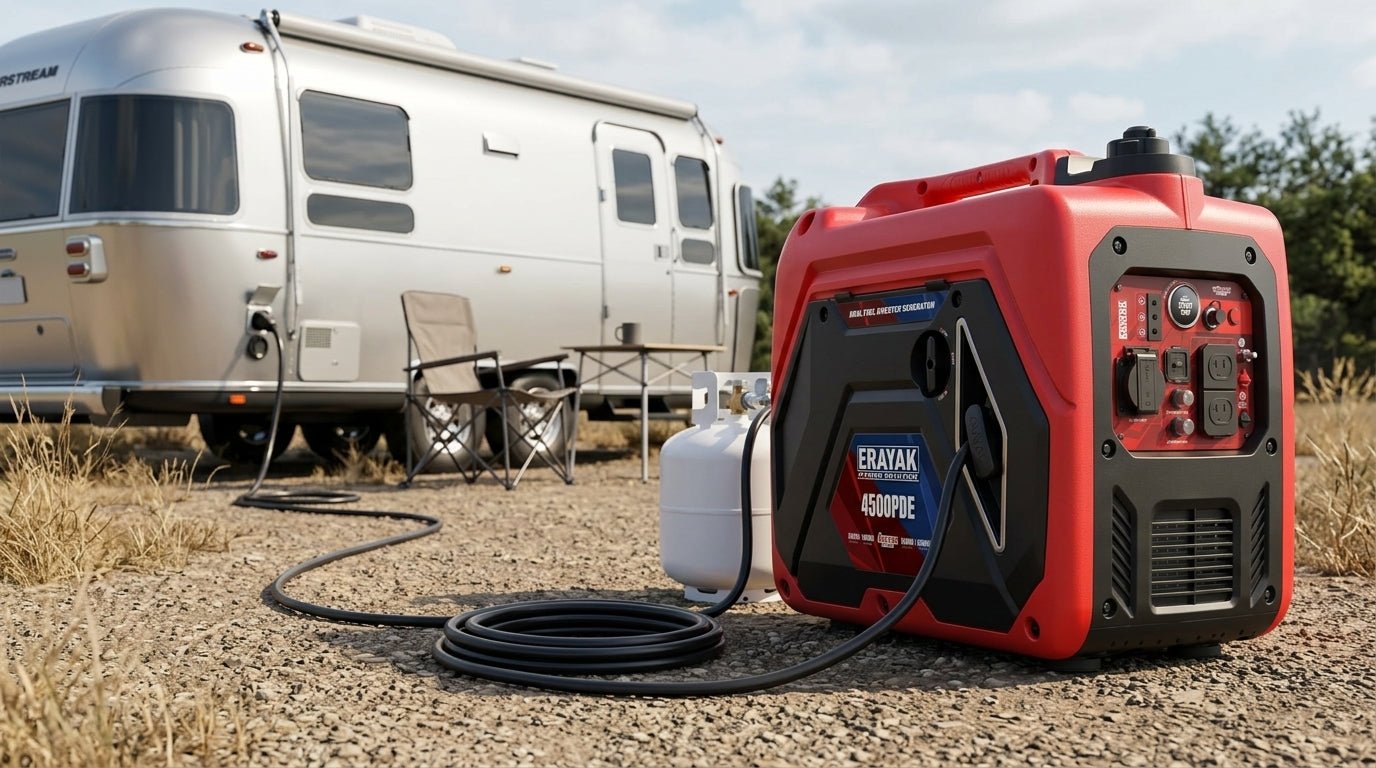
How Much Gas Does an RV Generator Use? RV Runtime Charts
RV generator runtime depends on fuel tank size, load percentage, Eco Mode, outside temperature, altitude, fuel type, and whether you are running a rooftop air conditioner. Use the charts below as planning ranges, then confirm the exact runtime in your generator manual.
Quick Answer: How Long Will an RV Generator Run?
A small 2,000W to 2,400W inverter generator may use roughly 0.10 to 0.20 gallons of gas per hour at light load. A 4,000W to 4,500W RV inverter generator may use roughly 0.25 to 0.50 gallons per hour under moderate RV loads, and more when running an air conditioner hard in hot weather.
For quick planning: one gallon of gas may last about 2 to 10 hours depending on load. Five gallons may last about 10 to 50 hours. A 20 lb propane tank may last about 5 to 18 hours depending on generator size, load, and temperature. These are planning ranges, not guaranteed runtime numbers.
The Simple RV Generator Runtime Formula
Runtime is easier to estimate when you separate fuel amount from fuel burn rate.
Know your fuel
Gas tank size, spare gas cans, or propane tank size decide how much energy you start with.
Estimate load
Light charging loads burn far less fuel than RV AC, microwave, converter, and fridge running together.
Divide fuel by burn rate
Runtime equals usable fuel divided by gallons per hour or propane tank consumption.
Gasoline Runtime Chart: 1, 2, 5, and 10 Gallons
The table below uses broad planning ranges for modern inverter generators. Real runtime changes with load, temperature, altitude, maintenance, fuel quality, and whether Eco Mode can stay active.
| Gasoline amount | Light load 0.10-0.20 gal/hr |
Moderate RV load 0.25-0.50 gal/hr |
Heavy AC load 0.50-0.80+ gal/hr |
|---|---|---|---|
| 1 gallon | 5-10 hours | 2-4 hours | 1-2 hours |
| 2 gallons | 10-20 hours | 4-8 hours | 2.5-4 hours |
| 5 gallons | 25-50 hours | 10-20 hours | 6-10 hours |
| 10 gallons | 50-100 hours | 20-40 hours | 12-20 hours |
If you are running only battery charging, lights, router, and small electronics, the generator may stay in a low-burn range. If the RV air conditioner cycles frequently in hot weather, expect runtime to drop quickly.

Propane Runtime Chart: 20 lb and 100 lb Tanks
Propane is popular for RV camping because it stores well and many RVers already carry propane. The tradeoff is that propane usually provides slightly less power and sometimes shorter runtime than gasoline under the same load.
| Propane tank | Approx. fuel amount | Light to moderate load | RV AC or heavier load |
|---|---|---|---|
| 20 lb propane tank | About 4.6-4.7 gallons propane | 8-18 hours | 4-9 hours |
| 30 lb propane tank | About 7 gallons propane | 12-27 hours | 6-14 hours |
| 100 lb propane tank | About 23-24 gallons propane | 40-90 hours | 20-45 hours |
How Long Will a Generator Run an RV Air Conditioner?
RV air conditioners are the biggest runtime challenge for most campers. A generator that runs all night with light loads may only run a few hours when the AC compressor is cycling hard.
| RV AC setup | Typical running watts | Runtime impact | Planning advice |
|---|---|---|---|
| 13,500 BTU rooftop AC | About 1,300W-1,600W | Moderate to high fuel use | Use a 4,000W-4,500W class generator for more headroom. |
| 15,000 BTU rooftop AC | About 1,500W-1,800W | High fuel use | Use load management and consider a soft start if the AC is hard to start. |
| AC plus microwave or water heater | Often too much together | Runtime drops and overload risk rises | Turn off heavy appliances before starting or running AC. |
| AC at night in mild weather | Lower average load if cycling | Longer runtime | Pre-cool the RV and use fans to reduce compressor cycling. |
For overnight RV AC planning, do not rely only on “hours at 25% load” marketing numbers. Air conditioners often put the generator into a much higher load range, especially in hot, humid weather.
What Affects RV Generator Runtime?
Load percentage
A generator at 25% load uses far less fuel than the same generator at 75% load.
Gas vs propane
Gasoline usually gives stronger output. Propane stores well but may reduce output and runtime.
Eco Mode
Eco Mode saves fuel when loads are light, but the generator may throttle up for AC, microwave, or charging surges.
Other runtime variables
- Outside temperature: RV AC runs harder in hot weather.
- Altitude: engine output can drop at higher elevation.
- Maintenance: dirty air filters, old spark plugs, and stale fuel reduce efficiency.
- Battery charging: RV converter load changes based on battery state of charge.
- Appliance habits: microwave, electric water heater, coffee maker, and hair dryer can quickly raise load.
Erayak Runtime-Friendly RV Generator Picks
For runtime planning, choose the generator around the load you actually need. A smaller inverter generator can be very efficient for light loads. A 4,500W dual-fuel inverter generator is the better fit when RV AC and 30 amp camping comfort matter.
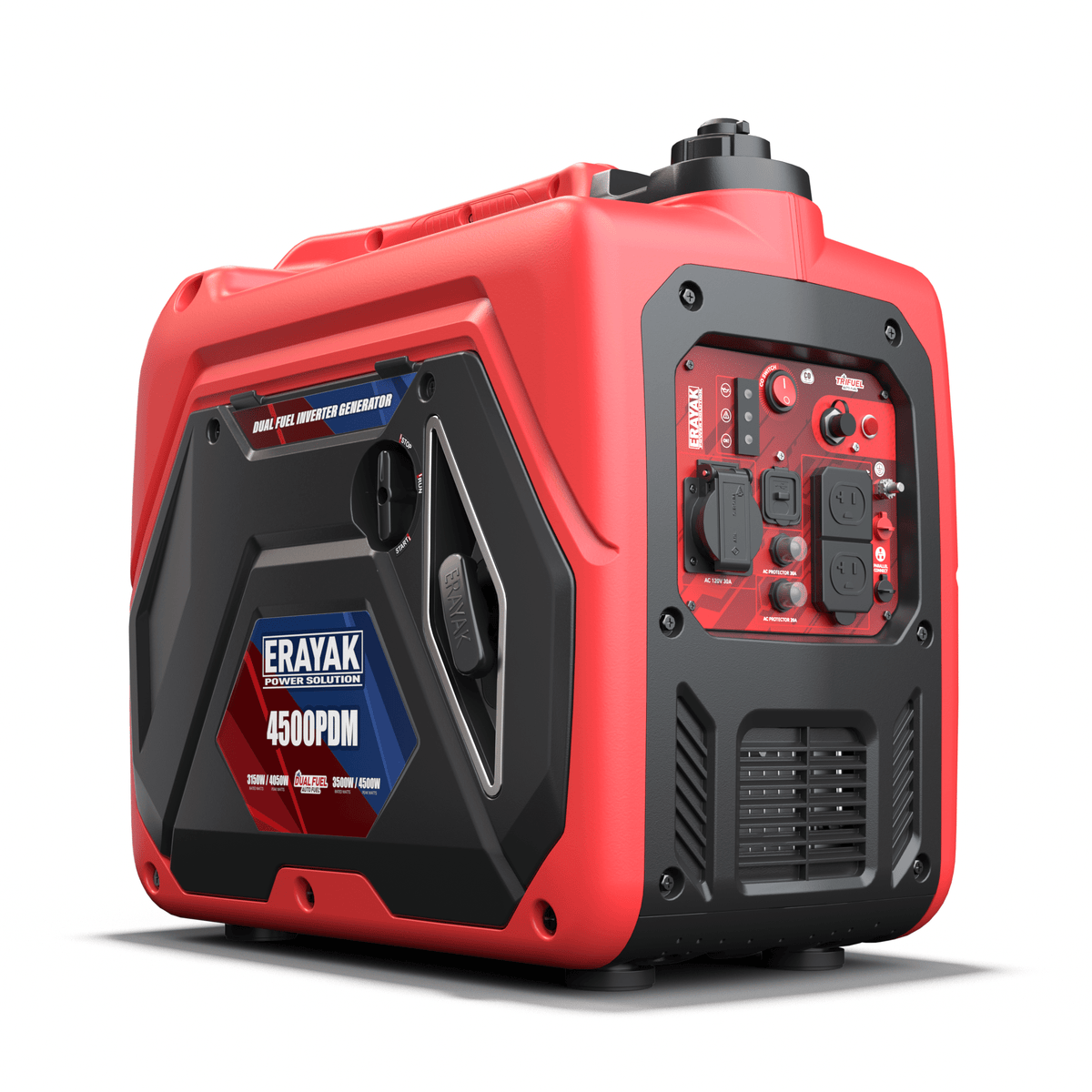
Best for RV AC and Dual-Fuel Camping: Erayak 4500PD
The Erayak 4500PD is the primary fit when your runtime question includes a rooftop RV AC, 30 amp RV comfort loads, propane flexibility, and boondocking. It gives more headroom than a small 2,000W class generator while still fitting portable RV use.
- Best for: 30 amp RV camping, RV AC planning, refrigerator, converter charging, and propane-friendly trips.
- Fuel options: gasoline and propane.
- Runtime note: actual runtime depends on load, fuel type, temperature, and Eco Mode use.
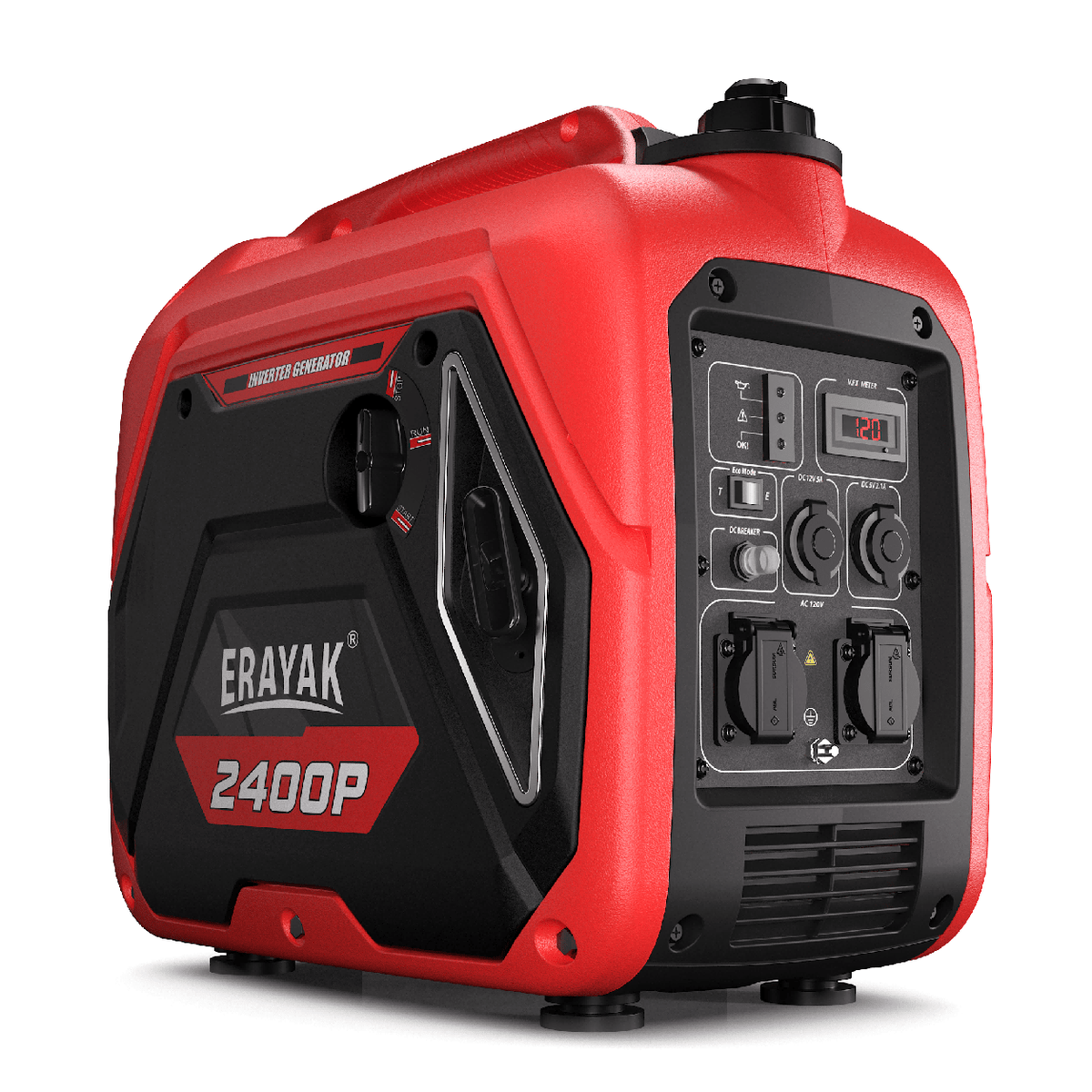
Best for Light Loads and Fuel-Saving Camping: Erayak 2400P
The Erayak 2400P is the better fit when your RV runtime needs are light: battery charging, lights, phone and laptop charging, router, fans, and small campsite loads. It is not the default choice for a standard rooftop RV AC.
- Best for: light boondocking, small camping loads, and backup charging.
- Planning note: use a larger generator when RV AC is part of the plan.
Safe Continuous Running and Refueling
Many RVers ask how long they can run a generator continuously. The safe answer is: follow the generator manual, fuel safely, check oil as required, and never refuel a hot or running generator.
- Never refuel while running. Shut the generator off and let it cool before adding fuel.
- Check oil on schedule. Long runtime means oil level and maintenance matter.
- Do not run indoors or in compartments. Portable generators must run outdoors with exhaust away from people and openings.
- Respect campground quiet hours. Some campgrounds restrict generator use even if your fuel plan allows overnight runtime.
- Use rated cords and connections. Undersized cords can overheat and waste power.
- Do not run a portable generator while driving. Portable units are not designed to operate strapped to a bumper, rack, or truck bed on the road.
Generator Safety Notice
Never run a fuel-powered generator inside an RV, tent, truck bed enclosure, garage, shed, or near open windows, doors, vents, or slide-outs. Carbon monoxide can be deadly. Operate the generator outdoors with exhaust pointed away from people and structures, and use working carbon monoxide alarms.
FAQ: RV Generator Runtime
How much gas does an RV generator use?
A small inverter generator may use roughly 0.10 to 0.20 gallons per hour at light load. A 4,000W to 4,500W RV inverter generator may use roughly 0.25 to 0.50 gallons per hour at moderate load, and more when running an RV air conditioner heavily.
How long does a gallon of gas last in a generator?
One gallon may last about 5 to 10 hours under light loads, 2 to 4 hours under moderate RV loads, or 1 to 2 hours under heavy AC loads. Exact runtime depends on the generator, load, Eco Mode, and conditions.
How long will 5 gallons of gas last in a generator?
Five gallons may last about 25 to 50 hours at light load, 10 to 20 hours at moderate RV load, or 6 to 10 hours under heavy AC load. Use these as planning ranges, not guaranteed numbers.
How long does a 20 lb propane tank last on a generator?
A 20 lb propane tank may last about 8 to 18 hours under light to moderate loads, or 4 to 9 hours with heavier RV AC use. Cold weather, tank size, generator load, and propane vaporization all affect runtime.
How long will a generator run an RV air conditioner?
A generator running a 13,500 or 15,000 BTU RV air conditioner may run several hours on a tank, but runtime drops when the compressor cycles often in hot weather. Load management and a properly sized generator matter more than the advertised 25% load runtime.
Is propane runtime shorter than gasoline runtime?
Often yes. Propane stores well and burns cleanly, but it usually provides less energy output than gasoline. Expect propane runtime and available wattage to be lower in many real-world setups.
How long can you run an RV generator continuously?
Follow the generator manual. Many generators can run for long periods if fueled and maintained correctly, but you must shut down safely for refueling, check oil as required, and allow maintenance breaks. Never refuel a hot or running generator.
Can I run a portable RV generator overnight?
Only if it is allowed at your campsite, positioned safely outdoors, has enough fuel, and is operated according to the manual. Use carbon monoxide alarms and keep exhaust away from RVs, tents, windows, and neighboring campsites.


