

Inverter Generator vs Traditional Generator: Which Should You Buy?
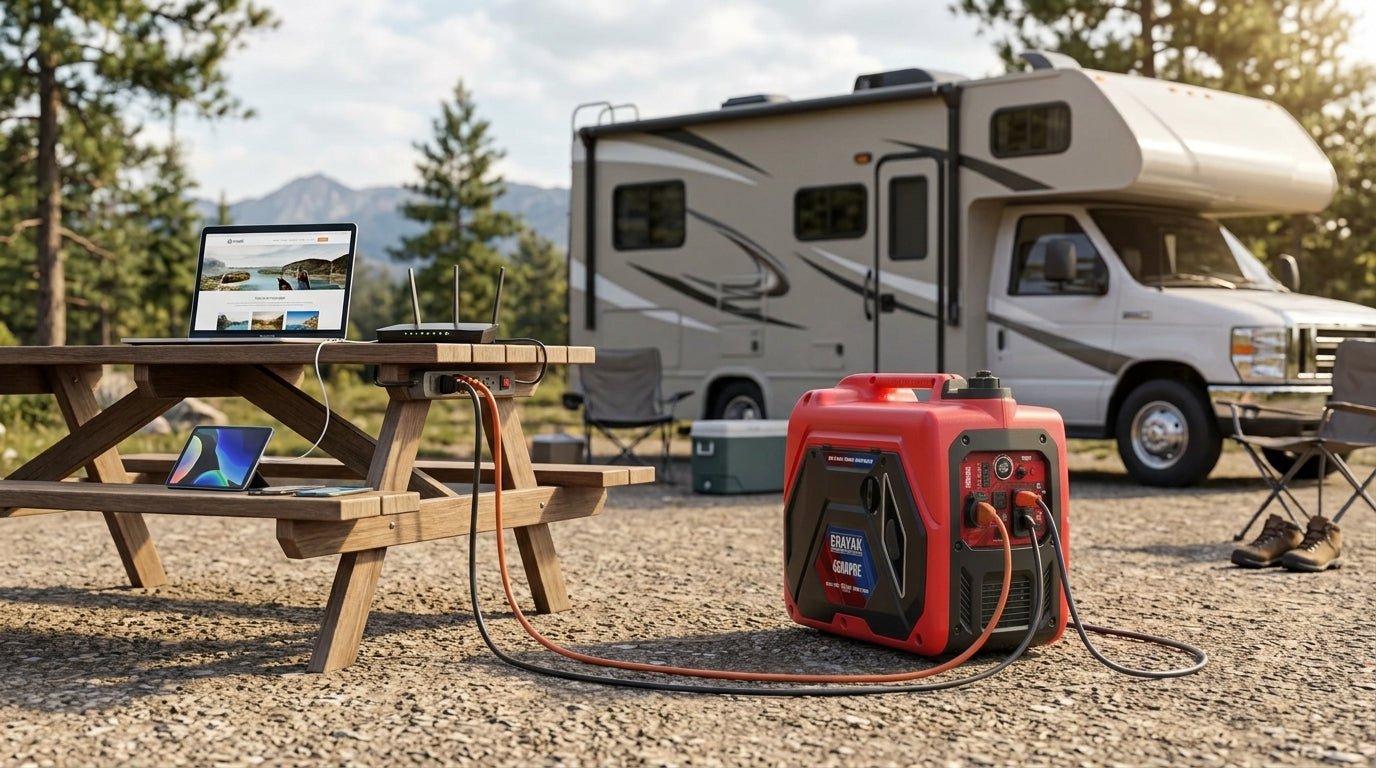
Inverter generators and traditional generators both make portable power, but they are built for different priorities. Inverter models usually win for quiet operation, cleaner power, RV camping, and sensitive electronics. Traditional open-frame generators can still make sense when you need the most watts for the lowest upfront cost.
- Choose inverter for RVs, camping, electronics, quiet hours, and fuel efficiency at light loads.
- Choose traditional for lower upfront cost and high-watt outdoor loads where noise matters less.
- Size either type by running watts, starting watts, outlets, and safety features.
An inverter generator is usually better for modern buyers who need quiet, portable, fuel-conscious power for RVs, camping, home essentials, routers, laptops, CPAP machines, TVs, and RV control electronics. A traditional generator may be better if your main goal is low cost per watt for job sites, large outdoor loads, or emergency power where noise and power quality are less important.
The best choice is not just inverter vs traditional. It is the generator that can start your largest appliance, run your must-have loads, fit your fuel plan, and operate safely outdoors.

Inverter Generator vs Traditional Generator: Side-by-Side
| Factor | Inverter generator | Traditional generator | Who wins? |
|---|---|---|---|
| Power quality | Digitally rebuilds AC power; better for sensitive electronics. | Conventional alternator output can have more voltage and frequency variation. | Inverter |
| Noise | Often quieter, especially enclosed inverter designs in eco mode. | Often louder because the engine runs at a fixed speed. | Inverter |
| Fuel use at light loads | Can throttle up or down with demand. | Usually runs at a constant speed even when loads are small. | Inverter |
| Upfront price per watt | Usually higher. | Usually lower. | Traditional |
| Portability | Often more compact in the 2000W to 4500W range. | Can be heavier and bulkier, especially open-frame models. | Inverter |
| Heavy-duty wattage | Available, but higher-output inverter models cost more. | Often strong value for high-watt job-site loads. | Traditional |
How the Two Generator Types Work
A traditional generator uses an engine and alternator to produce AC power directly. To maintain frequency, many conventional units run at a fixed engine speed. This design is simple and cost-effective, but it can be louder and less efficient at small loads.
An inverter generator creates power in stages. It generates electricity, converts it to DC, and then digitally rebuilds clean AC output. That inverter stage is what helps with lower total harmonic distortion, steadier voltage, and better compatibility with electronics.
If you are powering laptops, routers, LED TVs, smart appliances, RV electronics, battery chargers, or a CPAP machine, clean inverter power is usually the safer choice. For more detail, see the THD in generators guide.

Choose an Inverter Generator If You Care About Quiet, Clean, Portable Power
For most RV, camping, tailgating, and home-essential users, an inverter generator is the more comfortable everyday choice. It is especially useful when the generator will run near people, electronics, or noise-sensitive places.
Lower noise and eco mode make inverter generators better for shared outdoor spaces and campground etiquette.
Cleaner power helps protect laptops, routers, TVs, RV boards, chargers, and small medical devices.
When loads are small, inverter generators can reduce engine speed instead of running full speed all day.
Choose a Traditional Generator If Low Cost per Watt Matters Most
Traditional portable generators are not automatically bad. They are often a practical choice when you need high output for outdoor tools, temporary job-site use, or selected emergency loads and the generator will be placed far enough away that noise is less of a concern.
| Traditional generator may fit when... | Watch-out |
|---|---|
| You need a lot of watts at the lowest upfront price. | Noise, fuel use, and electronics compatibility may be weaker. |
| You are powering simple tools or resistive loads outdoors. | Check surge demand and extension-cord ratings. |
| You do not need to carry the generator often. | Open-frame units can be heavy and harder to store. |
Cost and Fuel Reality: Are Inverter Generators Worth It?
Inverter generators usually cost more upfront, but the value comes from cleaner output, lower noise, lighter-load efficiency, and better fit for RV or electronics-heavy use. The exact fuel savings depend on load level, fuel type, eco mode, engine size, maintenance, and how many hours you run the generator.
Be cautious with absolute savings claims. An inverter generator may save meaningful fuel during light and moderate loads, but it does not guarantee the same savings for every user or every appliance. If you run near full load most of the time, the efficiency gap can shrink.
| Buyer priority | Better value choice | Why |
|---|---|---|
| Lowest purchase price | Traditional generator | More watts per dollar, especially for open-frame models. |
| Quiet RV or camping power | Inverter generator | Lower noise and better load-matching behavior. |
| Electronics and appliances | Inverter generator | Cleaner output is a better match for modern devices. |
| Heavy outdoor tool loads | Traditional or large inverter | Choose by starting watts, outlet type, and job-site noise tolerance. |
Both inverter and traditional fuel generators produce carbon monoxide. Never run either type indoors, in a garage, in a tent, under an RV awning, on a porch, or near open windows. Use generators outdoors only, far from doors, windows, and vents, with exhaust pointed away from occupied spaces. Use working CO alarms and properly rated cords or professional transfer equipment.
ERAYAK Inverter Generator Fit by Use Case
ERAYAK's strongest fit in this comparison is the inverter-generator side: quiet portable power, clean output, RV/camping usability, and selected home essentials.

Best Gas-Only Inverter Fit: ERAYAK 4500P
The ERAYAK 4500P is a strong fit if you want the benefits of inverter power without paying for fuel options you do not need. It is gas-only, manual recoil start, in the 55 lb class, with a 2.25 gallon fuel tank, up to 8 hours runtime, 60.5 dB operation, and THD below 1.2%.
- Best for: RV camping, one-AC planning, home essentials, electronics, and quiet portable power.
- Choose it when: gasoline is your preferred fuel and simple portability matters.
- Do not choose it for: propane, natural gas, electric start, or remote start.

Best Dual-Fuel Upgrade: ERAYAK 4500PD
Choose the 4500PD when the inverter-generator benefits matter and you also want gasoline plus propane flexibility. It is the more practical route for RV users and outage planners who store propane or want a second fuel option.
- Best for: RV comfort loads, camping, storm backup, and fuel flexibility.
- Choose it when: dual fuel solves a real storage or availability problem.
- Do not call it: tri-fuel. For natural gas planning, compare 6800PT.
Most RV, Camping, and Electronics Users Should Choose an Inverter Generator
A traditional generator can still be the low-cost wattage winner for rough outdoor loads. But if your generator will power electronics, RV appliances, campsite loads, or home essentials near people, an inverter generator is usually the better long-term fit.


