

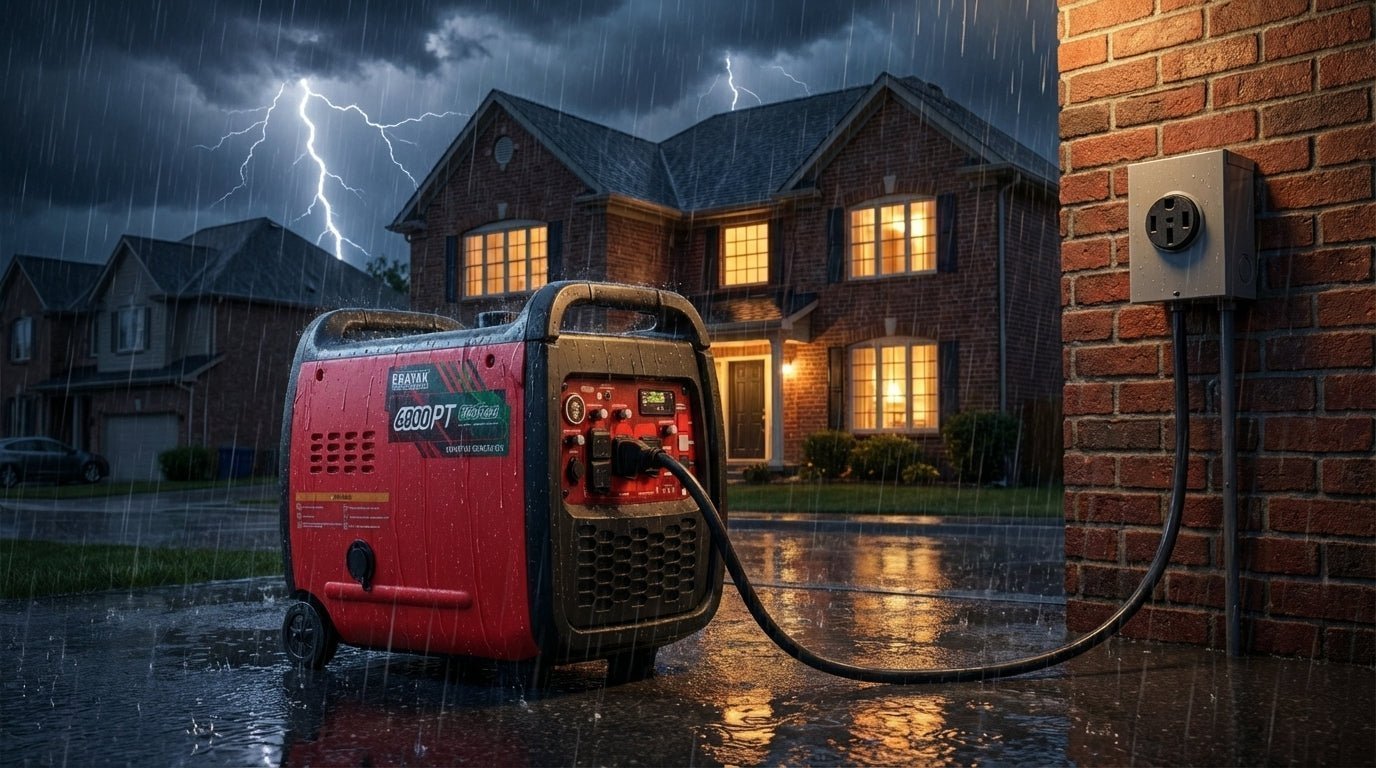
Smallest 240V Generator Guide: Portable 120V/240V Options
Looking for the smallest 240V generator or a portable generator with a 240V outlet? Start by checking for true 120V/240V output, a 4-prong L14-30R-style outlet, and enough running and starting watts for the load. Most tiny 2,000W and 3,000W inverter generators are 120V only.
Quick Answer: What Is the Smallest Practical 240V Generator?
For most U.S. buyers who want a compact inverter design, the smallest practical 240V generator is usually a 120V/240V model in the 5,000W to 7,000W peak class. Some open-frame 240V generators start closer to 4,000W to 4,500W peak, but they may be heavier, louder, or less suitable for sensitive electronics. Compare voltage, outlet type, rated watts, weight, and design—not peak wattage alone.
That does not mean every buyer needs 240V. If your load is a 30A RV, refrigerator, battery charger, portable AC, or normal household outlet, a smaller 120V inverter generator may be the better match. Choose 240V only when the load or transfer equipment truly requires it.
If you want the compact Erayak match, compare the ERAYAK 6800PD/PT platform: 6800W peak, 5000W rated output on gasoline at 100% load, 120V/240V dual voltage, 30A L14-30R, 30A L5-30R, dual 120V household outlets, 90.4 lb weight, and a 23.8 x 16.7 x 21.5 in footprint.

What Makes a Generator a True 240V Generator?
A true 240V portable generator is not just a high-watt generator. It must provide native 120V/240V output and the right outlet for the load or transfer equipment you plan to use.
120V/240V Output
The spec sheet should clearly say 120V/240V, 120/240V, dual voltage, or split-phase output.
L14-30R Outlet
A 30A 120V/240V L14-30R outlet is a common portable-generator connection for transfer switches, inlets, and selected home backup circuits.
Rated Running Watts
Peak watts help with startup surge, but rated watts tell you what the generator can support continuously.
Why the Smallest 240V Inverter Generators Usually Start Around 5,000W
Many shoppers search for the smallest 240V generator hoping for a lightweight 2,000W suitcase inverter. In practice, most 2,000W to 3,000W inverter generators are built for 120V camping, refrigerator, lights, chargers, CPAP, and small-appliance loads.
Some open-frame 240V generators begin around the 4,000W to 4,500W peak class. They can be a lower-cost way to get a 240V outlet, but “smallest by wattage” does not automatically mean lightest, quietest, cleanest power, or easiest to store.
For a compact enclosed inverter generator with native 120V/240V output and an L14-30R-style receptacle, the 5,000W to 7,000W peak class is a more realistic starting point. That distinction matters when comparing a basic small 240V generator with a small 240V inverter generator.
| Generator class | Usually 240V? | Best fit | Key caution |
|---|---|---|---|
| 2,000W to 3,000W suitcase inverter | Usually no | Camping, refrigerator, small electronics, light 120V backup | Usually 120V only, even when parallel-capable. |
| 4,000W to 4,500W RV inverter | Usually no | 30A RV, portable AC, refrigerator, home essentials | Good 120V power does not mean 240V output. |
| 4,000W to 4,500W open-frame generator | Some models | Budget 240V tools and selected loads | Verify 240V amperage, starting watts, noise, weight, and power quality. |
| 5,000W to 7,000W compact 120V/240V generator | Often yes, if specified | Selected home circuits, well pump planning, 240V outlet needs | Confirm L14-30R, rated watts, and connection method. |
| Large open-frame generator | Often yes | Budget high-watt backup, jobsite loads | May be louder, bulkier, and less refined than enclosed inverter designs. |
How to Check for a 240V Outlet Before You Buy
For searches like “generator with 240V outlet” and “portable generator with 240V outlet,” the outlet panel matters more than the headline wattage.
- Find the voltage spec. Look for 120V/240V output, not only 120V.
- Find the receptacle type. For many portable home-backup setups, look for a 30A 120V/240V L14-30R outlet.
- Check rated watts. Peak watts are temporary. Rated running watts define the real continuous load plan.
- Check transfer equipment. Home circuits require a proper inlet, cord, transfer switch, or interlock setup.
- Check your appliance nameplate. Well pumps, shop tools, and compressors may need more starting watts than expected.

Compact 240V Generator Comparison
The “smallest” 240V generator depends on what you mean by small: lowest weight, smallest footprint, enclosed inverter design, 240V outlet availability, or easiest storage.
| Option type | Voltage / outlet focus | Compactness notes | Best fit | Tradeoff |
|---|---|---|---|---|
| ERAYAK 6800PD/PT | 120V/240V, 30A L14-30R, 30A L5-30R, dual 120V outlets | 90.4 lb; 23.8 x 16.7 x 21.5 in; enclosed inverter platform | Compact 240V inverter backup, well pump planning, selected home circuits | 30A platform; not a 50A whole-house standby replacement. |
| Premium enclosed 6,000W-7,000W inverter class | Often available with 120V/240V output | Quiet, refined, but often heavier and more expensive | Buyers prioritizing premium enclosed inverter design | Higher price and more weight than many compact buyers expect. |
| Open-frame 4,000W-7,500W class | Often includes 120V/240V outlet | Can be cost-effective, but usually louder and bulkier | Budget home backup where noise and footprint matter less | Less compact and less refined for quiet residential use. |
| Small 120V inverter generator | Usually 120V only | Lightest and easiest to store | Camping, 30A RV alternatives, refrigerator, light essentials | Not suitable when the load truly requires 240V. |
For broad queries like “240V generator,” the right answer is not always the smallest unit. The better question is whether the generator has the right 240V outlet and enough rated output for the actual load.
Best Erayak Compact 240V Match: 6800PD / 6800PT
The ERAYAK 6800 series is the right Erayak product family for this topic because it supports 120V/240V output in a compact enclosed inverter design. Choose 6800PD if gasoline/propane is enough. Choose 6800PT if you also want natural gas capability for home backup planning.
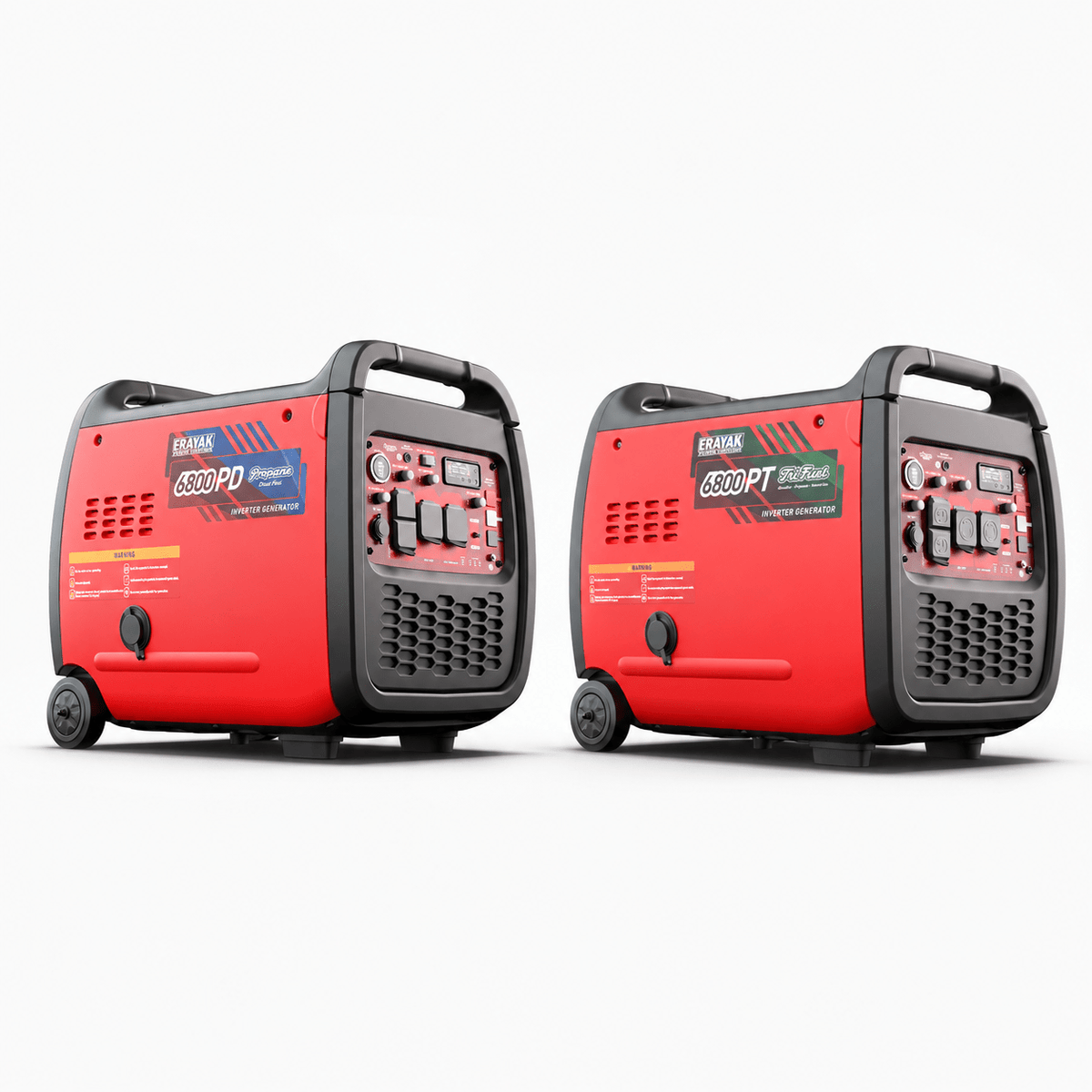
ERAYAK 6800PT: Compact 120V/240V Tri-Fuel Inverter Generator
The ERAYAK 6800PT combines 6800W peak power, 5000W rated continuous output on gasoline at 100% load, 120V/240V dual voltage, and tri-fuel flexibility in a 90.4 lb enclosed inverter platform.
- Voltage: 120V / 240V dual-voltage output for selected backup applications.
- Outlets: 30A 120V/240V L14-30R, 30A 120V L5-30R, dual 120V household outlets, and TT-30R RV adapter accessory.
- Fuel: 6800PT supports gasoline, propane, and natural gas. Professional natural gas connection is recommended.
- Portability: 90.4 lb and 23.8 x 16.7 x 21.5 in footprint for a compact 240V-capable inverter class.
- Important limit: It does not include a built-in 50A receptacle and is not a whole-house standby replacement.
Watch: ERAYAK 6800W Inverter Generator for Home Emergency Power
This product overview is a useful visual companion to the 120V/240V outlet checklist and 6800PD/PT specifications above. Use it to understand the platform in a home-emergency-power context, then confirm your load, outlet, fuel, and transfer-equipment requirements before buying.
Video: ERAYAK 6800W Inverter Generator: The Best Home Emergency Power?
When You Actually Need 240V
A 240 volt generator is useful when the load truly requires 240V. If every device on your list uses normal 120V household outlets, a smaller 120V inverter generator may be a better match.
Well Pump Backup
Many deep well pumps are 240V and need strong starting watts. Check pump voltage, running amps, and locked-rotor amps before sizing.
Selected Home Circuits
A transfer switch or interlock setup may use a 120V/240V generator inlet for selected critical circuits.
240V Tools
Some welders, air compressors, and shop equipment require 240V. Nameplate amps and duty cycle matter.
RV Buyers: You May Not Need 240V
Many RV owners search for a 240V generator because the RV plug looks large. But a standard 30A RV TT-30 plug is 120V, not 240V. If your goal is running a 30A travel trailer, RV air conditioner, refrigerator, battery charger, and outlets, a 120V RV-focused inverter generator may be smaller and more practical.
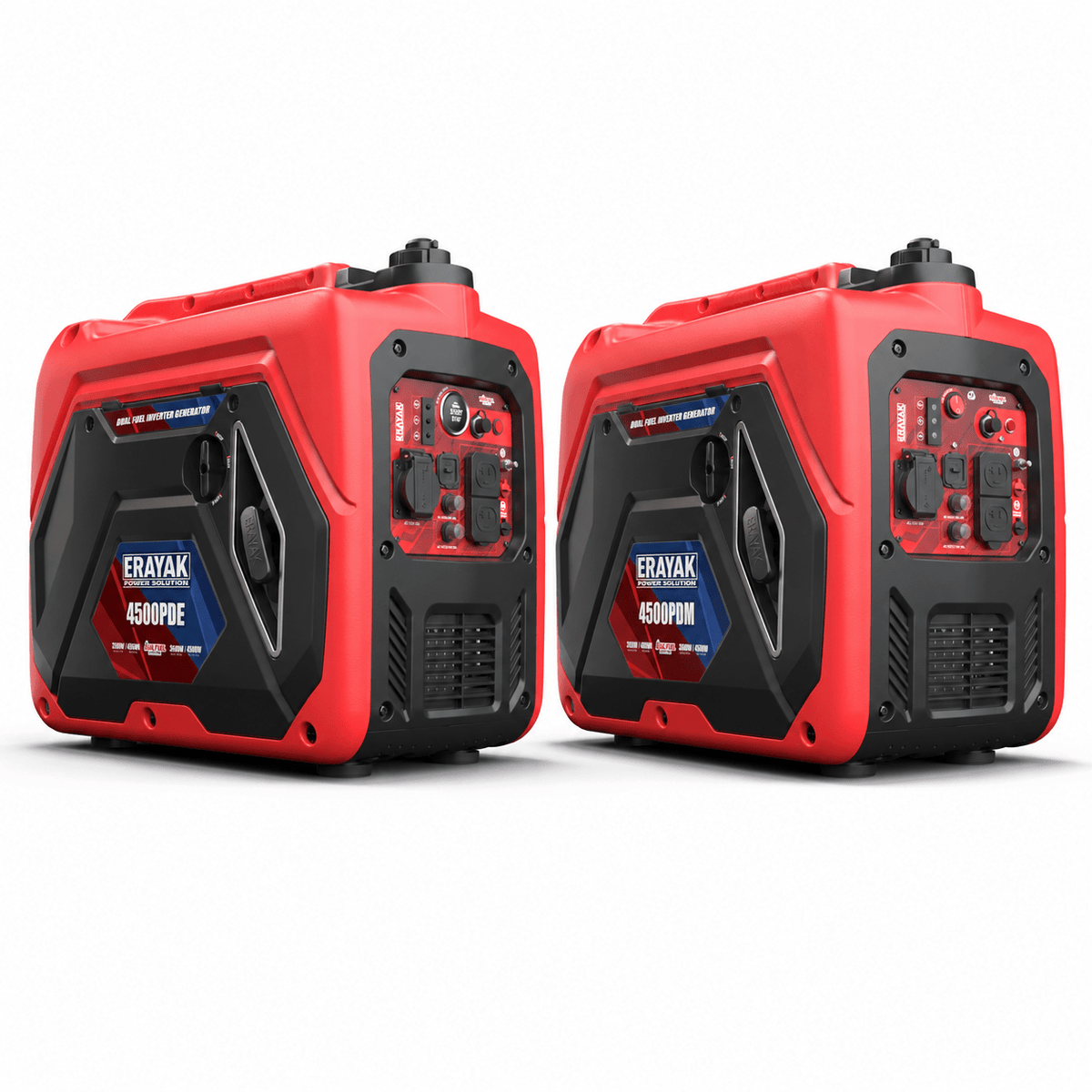
For 30A RV Power, Compare the ERAYAK 4500PD Instead
The ERAYAK 4500PD is not the 240V product for this article. It is the better fit when the buyer actually needs compact 120V RV power rather than 240V home backup.
- Best fit for many 30A RV and camping loads.
- Dual-fuel gasoline and propane flexibility.
- Smaller practical alternative if 240V is not required.
How Much Wattage Does a Small 240V Generator Need?
The smallest physical generator is not always the right generator. Motor loads, such as well pumps and compressors, need starting watts. Home backup setups also need enough rated output for the circuits that run after startup.
| 240V use case | Common generator direction | What to check before buying |
|---|---|---|
| 1/2 HP to 3/4 HP well pump | Often 5,000W to 6,800W peak, 120V/240V capable | Pump voltage, running amps, starting amps/LRA, depth, and other simultaneous loads. |
| Selected home backup circuits | 120V/240V generator with 30A L14-30R and transfer equipment | Total running watts, largest starting surge, inlet/cord rating, and electrician plan. |
| 240V welder or shop tool | Depends heavily on tool amperage and duty cycle | Nameplate amps, starting surge, breaker size, and whether generator output is compatible. |
| Central AC or large electric heat loads | May exceed compact portable generator class | Starting surge, soft-start options, rated running watts, and whether a larger standby system is needed. |
Small 240V Generator Mistakes to Avoid
Assuming any big generator has 240V
Some high-watt generators are still 120V only. Confirm 120V/240V specs and the 4-prong outlet.
Buying 240V for a 30A RV that only needs 120V
A TT-30 RV plug is 120V. If that is your only use case, a 120V RV generator may be the better buy.
Using peak watts as running watts
Peak watts are temporary. Rated running watts define the continuous load plan.
Expecting a compact portable unit to power the whole house
A compact 240V generator is best for selected critical loads. It is not the same as a permanently installed whole-house standby generator.
Skipping professional installation
For home backup, transfer-switch or interlock installation and natural gas connections should be handled by qualified professionals.
FAQ: 240V Generators and Compact 120V/240V Options
What is the smallest 240V generator?
The smallest practical 240V generators are usually compact 120V/240V models in the 5,000W to 7,000W peak class. Smaller 2,000W to 3,000W suitcase generators are usually 120V only.
Can a 2,000 watt generator make 240V?
Most 2,000W portable inverter generators do not provide 240V output. They are usually designed for 120V camping and small appliance loads.
What outlet should I look for on a 240V generator?
Look for native 120V/240V output and a 30A L14-30R-style outlet. For home backup, pair it with a proper inlet, cord, transfer switch, or interlock setup.
Is the ERAYAK 6800PT a 240V inverter generator?
Yes. The ERAYAK 6800PT supports 120V/240V output and includes a 30A 120V/240V L14-30R outlet. It is the tri-fuel version of the 6800 series and supports gasoline, propane, and natural gas.
Can a small 240V generator run a well pump?
It may, if the generator matches the pump voltage and starting-watt requirement. Check the pump nameplate, running amps, locked-rotor amps, and other simultaneous loads before choosing generator size.
Do I need a 240V generator for a 30A RV?
Usually no. A standard 30A RV TT-30 plug is 120V. If you only need 30A RV power, a 120V RV-focused generator may be smaller and more practical.
Does a compact 240V generator need a transfer switch?
If you want to power home circuits, use a properly installed transfer switch or interlock kit. Do not backfeed a home through a household outlet or dryer outlet.
Is a 240V generator the same as a 50 amp generator?
No. A generator can provide 120V/240V output through a 30A L14-30R outlet without having a 50A receptacle. Always check the outlet type, breaker rating, and rated running watts.
Start with the outlet, then size the generator around the load.
If your load truly needs 240V, compare the ERAYAK 6800PD/PT platform and verify the appliance starting watts, connection method, and transfer equipment before buying. If your load is a 30A RV or normal 120V essentials, a smaller 120V inverter generator may be the smarter choice.


