

![How to Connect a Portable Generator to a House Safely [2026 Guide] - Erayak Power](http://erayakpower.com/cdn/shop/articles/how-to-connect-a-portable-generator-to-a-house-safely-2026-guide-4025304.jpg?v=1782222683&width=1500)
How to Connect a Portable Generator to a House Safely [2026 Guide]
The safest ways to connect a portable generator to a house are a manual transfer switch, an approved interlock kit with a power inlet box, or properly rated outdoor extension cords for plug-in appliances only. Never backfeed a house through a wall outlet, dryer outlet, or double-male cord.
Quick Answer
To connect a portable generator to a house, use one of three safe methods: a manual transfer switch, an approved generator interlock kit with an outdoor inlet box, or outdoor-rated extension cords connected directly to individual appliances. A transfer switch or interlock should be installed by a qualified electrician and must isolate your home from utility power.
For selected home circuits, many portable home-backup setups use a 30A 120V/240V inlet and an L14-30 generator cord. For larger selected-circuit planning, well pump backup, or natural gas fuel flexibility, compare a 120V/240V inverter generator such as the ERAYAK 6800PT. For simpler 120V essentials and RV-style outage loads, the ERAYAK 4500PD may be a better fit.
Safe Ways to Connect a Portable Generator to a House
There is no single best setup for every home. The right method depends on whether you only need a few plug-in appliances, or whether you want to power selected circuits through your electrical panel.
| Connection method | Best for | What it can power | Key requirement |
|---|---|---|---|
| Outdoor-rated extension cords | Simple emergency appliance backup | Plug-in loads such as refrigerator, freezer, router, lamps, chargers | Use properly rated cords directly from the generator to appliances. Do not route through a wall outlet. |
| Manual transfer switch | Selected critical circuits with a simple, controlled setup | Preselected circuits such as refrigerator, furnace blower, sump pump, lights, router, some well pump setups | Professional installation and correct generator/inlet sizing. |
| Interlock kit with generator inlet | Homes where load management across the panel is useful | Selected circuits managed manually by turning breakers on and off | Approved panel-specific interlock, generator breaker, inlet box, and professional installation. |
Important: A portable generator does not automatically make your whole house available at full power. Transfer switches and interlocks are normally used for selected loads. You still need load management.
Never Backfeed a House With a Generator
Do not plug a generator into a wall outlet, dryer outlet, or homemade double-male cord. This is often called backfeeding. It can energize utility lines, injure utility workers, damage equipment, create fire risk, and violate electrical code.
The safe purpose of a transfer switch or interlock is to prevent your generator and the utility grid from being connected at the same time. Without that isolation, generator power can travel where it should not.
If you do not have a transfer switch or interlock, the safer temporary method is to run the generator outdoors and connect only individual plug-in appliances with properly rated outdoor extension cords. Do not connect the generator to household wiring.
Transfer Switch vs Interlock Kit: Which One Do You Need?
Both options can be safe when properly installed. The difference is how much of your panel you can access and how much load management responsibility you take on.
Manual transfer switch
A manual transfer switch usually feeds a set of preselected circuits. It is straightforward during an outage because the circuits are already chosen.
- Good for critical-load backup
- Clearer for users who want fewer decisions during an outage
- Can limit overload risk by restricting circuits
- May be less flexible if your needs change
Generator interlock kit
An interlock kit uses a mechanical plate that prevents the main breaker and generator breaker from being on together. It lets you choose circuits from the main panel, but you must manage load carefully.
- Flexible access to panel circuits
- Often useful for selected-circuit home backup
- Requires a compatible, approved kit for your panel
- Requires disciplined breaker-by-breaker load management
Either option should be planned with a qualified electrician. Local code, panel type, neutral switching, grounding/bonding, generator output, and inlet size can all affect the correct setup.
Power Inlet Box, L14-30R Cord, and 30A Home Backup
For many portable generator home-backup setups, the electrician installs a weatherproof power inlet box outside the house. During an outage, the generator stays outdoors, and a generator cord connects the generator to the inlet.
A common setup uses a 30A 120V/240V L14-30 style connection. This type of connection can support selected 120V circuits and certain 240V loads when the generator, transfer equipment, and load plan are matched correctly.
| Item | What it does | Why it matters |
|---|---|---|
| Power inlet box | Outdoor connection point mounted on the house | Keeps generator exhaust outdoors while safely routing power to approved transfer equipment. |
| L14-30 generator cord | Connects a 30A 120V/240V generator outlet to the inlet box | Must match the generator outlet and inlet rating. Use a properly rated cord. |
| Transfer switch or interlock | Isolates generator power from utility power | Prevents unsafe backfeeding and makes panel connection possible. |
| Load management | Choosing which circuits run at the same time | Prevents overload and keeps the generator within its rated output. |
The ERAYAK 6800PD/PT platform is a 120V/240V class option with a 30A 120V/240V L14-30R outlet. It is not a 50A whole-house standby generator, so plan selected loads and leave headroom.
How to Connect a Portable Generator During an Outage
The exact procedure depends on your installed equipment and generator manual. The outline below is a practical overview, not a substitute for your electrician's instructions.
Place the generator outdoors
Keep the generator outdoors, away from doors, windows, vents, and enclosed spaces. Never run it in a garage, shed, basement, or enclosed porch.
Check fuel, oil, cords, and load plan
Confirm the generator is ready, the correct fuel is connected, and your cord matches the generator outlet and inlet box. Decide which circuits or appliances you will run first.
Connect the generator cord before loading circuits
With the generator off or unloaded according to your manual, connect the rated generator cord to the generator and inlet box. Make sure locking connectors are fully seated.
Start the generator and let it stabilize
Start the generator outdoors and allow it to run smoothly before adding loads. Follow the startup sequence in the manual.
Switch from utility to generator using approved equipment
Operate the transfer switch or interlock as installed and instructed. The system should prevent utility power and generator power from being connected together.
Add loads gradually
Turn on important loads one at a time. Start with refrigerator, freezer, sump pump, furnace blower, router, or essential lighting. Avoid starting multiple motor loads at once.
How to Connect a Generator to a House Without a Transfer Switch
If you do not have a transfer switch or interlock, do not connect the generator to house wiring. The safer temporary approach is to power plug-in appliances directly from the generator using properly rated outdoor extension cords.
Safer temporary use
- Run the generator outdoors only
- Use outdoor-rated cords sized for the load
- Plug appliances directly into the cord or generator outlet
- Keep cords away from standing water, pinch points, and trip hazards
Do not do this
- Do not use a double-male cord
- Do not plug into a wall outlet
- Do not plug into a dryer outlet
- Do not modify cords, panels, or breakers yourself
This method can support refrigerators, freezers, routers, lights, phone chargers, and some plug-in appliances, but it will not safely power hardwired loads such as many furnaces, well pumps, or panel circuits.
What Size Generator Do You Need to Connect to a House?
Do not size a generator by the full rating of your electrical service, such as 100A or 200A. A portable generator is normally used for selected loads. Start by listing the circuits or appliances you want during an outage, then add running watts and starting surge.
| Backup plan | Typical loads | Generator class to consider |
|---|---|---|
| Basic plug-in appliance backup | Refrigerator, freezer, router, lamps, chargers | Small to mid-size inverter generator depending on combined load and surge. |
| 120V essential-load backup | Fridge, freezer, portable AC, lights, router, small kitchen loads | 4500W-class inverter generator can be practical for many 120V essential plans. |
| Selected-circuit home backup | Refrigerator, furnace blower, sump pump, lights, router, some pump loads | Higher-capacity 120V/240V generator with transfer equipment and load management. |
| Well pump or 240V planning | 240V well pump, selected home circuits, essential loads | 120V/240V generator with enough surge margin and a professionally planned connection. |
For the Erayak 6800 series, use accurate planning numbers: 6800W peak and 5000W gasoline rated output at 100% output. Output can be lower on propane or natural gas, so avoid sizing with no margin.
Erayak Product Fit for Home Connection Planning
Choose the generator after the connection method and load list are clear. The safest setup is the one where the generator, fuel, cord, inlet, transfer equipment, and circuits all match.
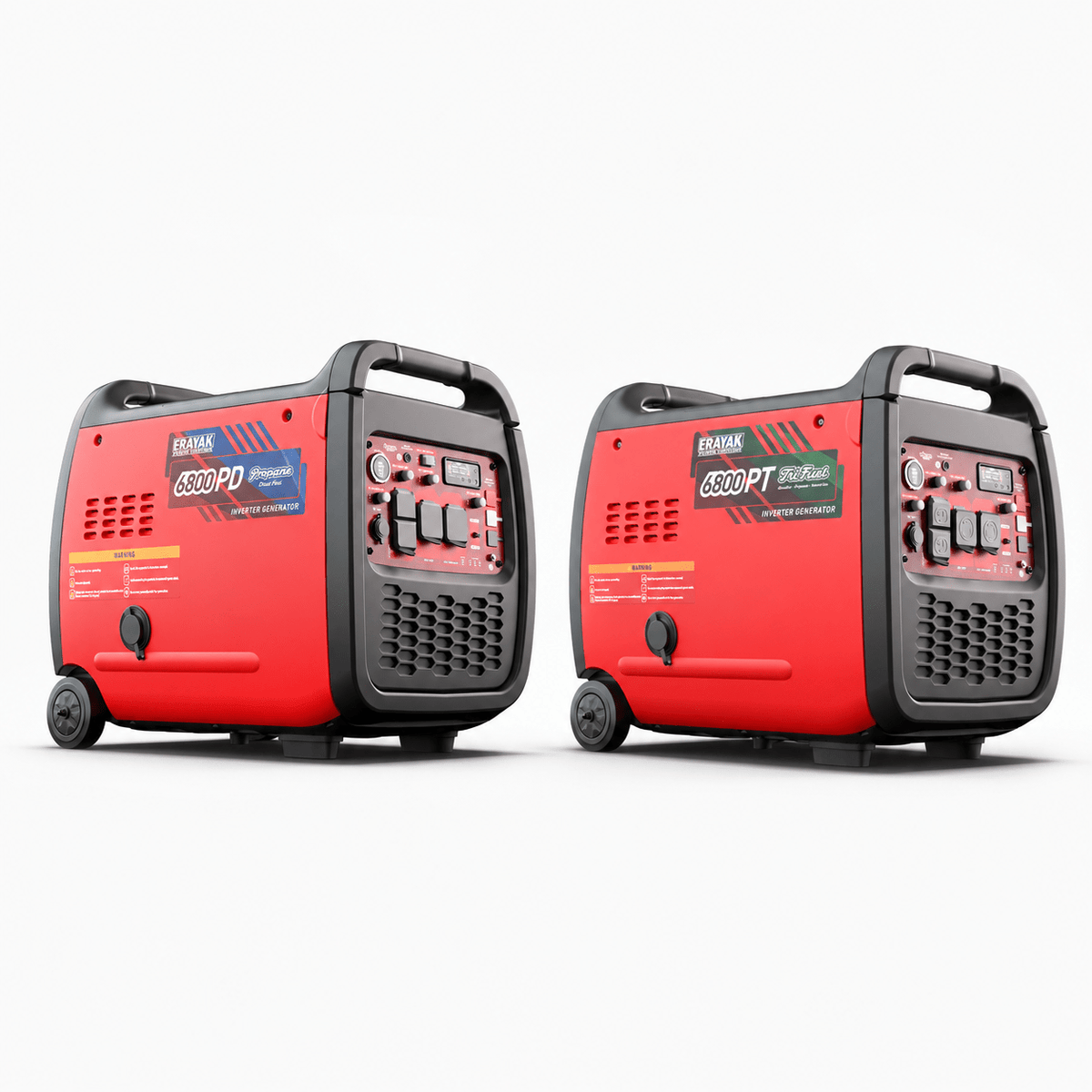
ERAYAK 6800PT: 120V/240V Tri-Fuel Backup Planning
The ERAYAK 6800PT is the best fit when your home backup plan includes 120V/240V selected circuits, an L14-30R connection, natural gas flexibility, well pump planning, sump pump planning, or longer outage preparedness.
- 6800W peak and 5000W gasoline rated output at 100% output
- 120V/240V capability for selected-circuit planning
- Tri fuel flexibility: gasoline, propane, and natural gas
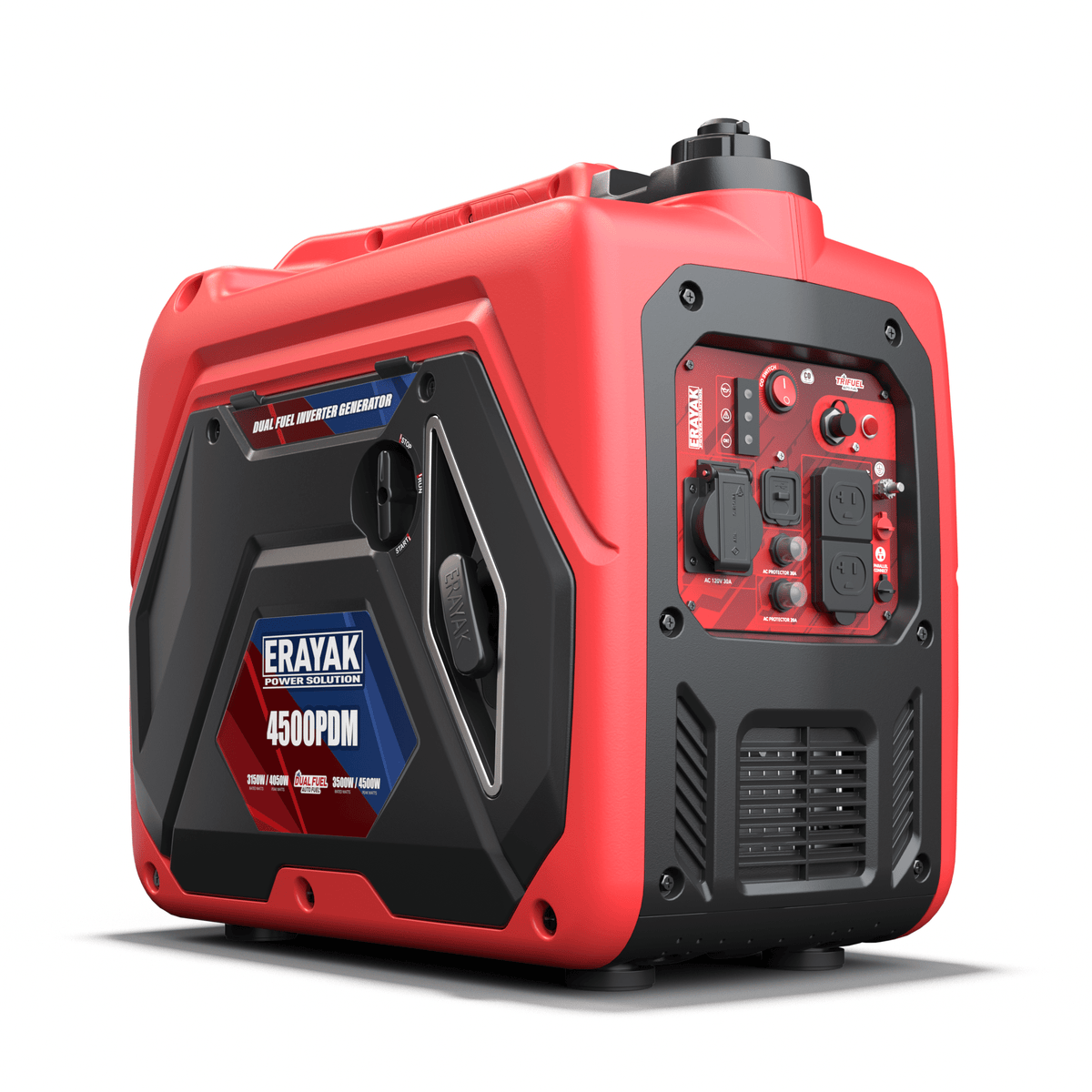
ERAYAK 4500PD: Dual Fuel for 120V Essentials
The ERAYAK 4500PD is a better fit when you do not need 240V home circuits and want a portable dual-fuel inverter generator for RV use, refrigerator/freezer backup, portable AC planning, and common 120V outage loads.
- Gasoline and propane flexibility
- Good match for RV and essential-load backup
- Simpler choice when natural gas and 240V are not part of the plan
Related Guides
FAQ: Connecting a Portable Generator to a House
Can I connect a portable generator directly to my house?
You can connect a portable generator to house circuits only through approved transfer equipment, such as a manual transfer switch or a compatible interlock kit with a generator inlet. Do not plug a generator into a wall outlet or dryer outlet.
What is the safest way to connect a generator to a house?
The safest panel-connected methods are a professionally installed manual transfer switch or an approved interlock kit with an outdoor power inlet box. For temporary plug-in use, connect appliances directly with properly rated outdoor extension cords.
Can I connect a generator to my house without a transfer switch?
Without a transfer switch or interlock, do not connect the generator to house wiring. Use outdoor-rated extension cords to power individual plug-in appliances directly from the generator.
What is a generator interlock kit?
A generator interlock kit is a mechanical device installed on a compatible breaker panel so the main utility breaker and generator breaker cannot be on at the same time. It must be approved for the panel and installed correctly.
What is a generator power inlet box?
A power inlet box is an outdoor connection point where you plug in the generator cord. It connects to approved transfer equipment so the generator can feed selected home circuits while the generator stays outdoors.
Do I need a 30A or 50A generator inlet?
Many portable generator setups use a 30A inlet, especially with L14-30 style 120V/240V generators. A 50A inlet is for larger systems and must match the generator, wiring, breaker, transfer equipment, and load plan. Do not assume a 50A inlet is better if the generator output is 30A.
Can a portable generator power a 200 amp house?
A portable generator is normally used for selected loads, not the full 200A service capacity. Choose critical circuits such as refrigerator, freezer, lights, router, sump pump, furnace blower, or well pump, then size the generator for those loads and starting surge.
Where should I place a generator when connecting it to a house?
Place the generator outdoors with proper ventilation, away from doors, windows, vents, garages, sheds, and enclosed spaces. Fuel generators produce carbon monoxide and must never be run indoors.
Bottom Line
The safest way to connect a portable generator to a house is to plan the connection before the outage: choose a transfer switch or approved interlock kit, install an outdoor inlet box, use the correct generator cord, and manage only the loads your generator can support.
If you only need a refrigerator, freezer, router, and lights, direct extension-cord backup may be enough. If you want selected home circuits, furnace blower, sump pump, well pump, or 120V/240V backup, work with a qualified electrician and compare a generator platform such as the ERAYAK 6800PT.


