
What Kind of Oil Does a Generator Take? (10W-30 vs 5W-30 Guide)
Most portable generators use 4-stroke engine oil, and SAE 10W-30 is the common default for normal weather. This 2026 guide explains generator oil type, 5W-30 vs 10W-30, seasonal temperature charts, oil capacity, break-in changes, and the mistakes that can shorten generator life.
Quick oil rule
- Use 4-stroke engine oil for most portable generators.
- SAE 10W-30 is the common all-purpose choice.
- 5W-30 synthetic is useful for cold-weather starts.
- Never use 2-cycle oil unless your manual specifically says so.
- Check oil level before every generator run.
Quick Answer: What Oil Does a Generator Use?
Most portable generators take SAE 10W-30 4-stroke engine oil. For cold-weather operation below 40°F (4°C), many owners use 5W-30 full synthetic if the generator manual allows it. For hot-weather use, some engines may allow SAE 30 or 10W-40, but thicker oil is not automatically better.
The correct generator oil depends on your owner's manual, outdoor temperature, engine design, and service interval. Always match the recommended viscosity and oil capacity for your exact model, especially during break-in and long outage operation.
Why Generator Oil Matters
Generator oil lubricates internal engine parts, reduces friction, carries heat away from moving components, and helps protect against premature wear. During an outage, a portable generator may run for many hours at a steady load, so old oil, low oil, or the wrong viscosity can quickly become a reliability problem.
Oil also affects starting performance. A cold engine needs oil that can flow quickly at startup, while a hot engine needs oil that can maintain enough film strength after the generator reaches operating temperature. That is why many manuals show a temperature-based oil chart rather than one universal answer.
Generator Oil Type Chart: 10W-30, 5W-30, SAE 30, and More
The best oil for a generator is the viscosity recommended in the owner's manual for your operating temperature. For many modern portable generators, 10W-30 is the everyday answer, but cold weather, summer heat, and long run times can change the better choice.
| Oil Type | Best Temperature Range | Best Use Case | What to Know |
|---|---|---|---|
| SAE 10W-30 | Normal all-season use when approved | Most portable generator use, RV camping, summer storms, standard home backup | The common default for many 4-stroke generator engines. Synthetic or conventional may be acceptable depending on the manual. |
| SAE 5W-30 full synthetic | Cold weather and broad all-season use when approved | Winter outages, cold starts, stored emergency generators | Flows more easily at low temperatures than 10W-30. A strong choice for winter storm readiness when the manual allows it. |
| SAE 30 | Warm weather only | Older small engines and steady warm-weather operation | Can make cold starting harder. Avoid in freezing conditions unless your manual specifically supports it. |
| SAE 10W-40 | Hot weather or high-load use when approved | Some engines in high-temperature conditions | Use only if your generator manual allows it. Thicker oil is not automatically safer. |
| 2-cycle oil | Only for 2-stroke engines | Not for typical 4-stroke portable generators | Do not pour 2-cycle mix oil into a standard 4-stroke generator crankcase. |
Search intent shortcut: If you searched "what kind of oil does a generator take," start with SAE 10W-30 4-stroke engine oil, then adjust for your owner's manual and outdoor temperature.
Generator Oil Temperature Chart
Temperature is one of the main reasons generator oil recommendations vary. Use this chart as a planning guide, then confirm the exact viscosity in your manual before filling the crankcase.
| Outdoor Temperature | Common Oil Choice | Best For | Important Note |
|---|---|---|---|
| Below 0°F (-18°C) | 5W-30 full synthetic when approved | Extreme winter starts | Cold-flow performance matters. Keep the generator stored safely and ready before a storm. |
| 0°F to 40°F (-18°C to 4°C) | 5W-30 or 10W-30 when approved | Winter backup and shoulder-season outages | 5W-30 synthetic usually starts easier in cold weather. |
| 40°F to 100°F (4°C to 38°C) | 10W-30 | Most portable generator use | The common all-purpose range for many 4-stroke portable generators. |
| Above 100°F (38°C) | 10W-30, SAE 30, or 10W-40 when approved | Hot climates and summer outage use | Follow your manual. Do not jump to thicker oil unless the manufacturer supports it. |
5W-30 vs 10W-30 Generator Oil
The "W" in 5W-30 and 10W-30 refers to winter cold-flow behavior. Both oils act like a 30-weight oil at operating temperature, but 5W-30 flows more easily during cold starts.
Use 10W-30 for normal weather
10W-30 is a safe starting point for many portable generators in moderate temperatures, RV use, and common home outage preparation.
Use 5W-30 synthetic for cold starts
5W-30 synthetic is often better when the generator may need to start during freezing weather or after storage.
Follow the manual first
Some generator makers publish a viscosity chart by temperature. That chart should override generic online advice.
For emergency preparedness, cold-start performance matters. Oil that is too thick at startup can make the engine harder to pull-start or harder for the electric starter to crank.
Can I Use Car Oil in My Generator?
Yes, in many cases you can use automotive 4-stroke motor oil in a generator if it matches the viscosity and service rating required by the owner's manual. For example, a bottle of SAE 10W-30 automotive oil may be acceptable for many small 4-stroke generator engines.
Small-engine oil can still be a good choice because portable generators are air-cooled, often run at steady high RPM, and may not have the same oil filtration as a car engine. The safest rule is simple: match the manual's viscosity, use clean fresh oil, and change it on schedule.
Do not use the wrong oil type: Avoid 2-cycle oil, used oil, old contaminated oil, or heavy diesel oil unless your generator manual specifically approves it. If the oil bottle does not match the viscosity and engine type your manual calls for, do not guess during an outage.
How Much Oil Does a Generator Take?
Generator oil capacity depends on engine size, not just peak watts. Small inverter generators may take less than half a quart, while larger portable generators may take around one quart or more. Check the dipstick and manual instead of pouring in a whole bottle.
| Generator Size | Typical Oil Capacity | Filling Tip |
|---|---|---|
| 2,000W to 2,400W inverter generator | About 0.35 to 0.5 qt | Add slowly and check the dipstick often. |
| 3,500W to 4,500W portable generator | About 0.55 to 0.8 qt | Do not assume a full quart is correct. |
| 5,000W to 7,000W portable generator | About 0.8 to 1.2 qt | Use the manual capacity and final dipstick reading. |
| Large 7,000W+ open-frame generator | Often 1.1 qt or more | Capacity varies widely by engine displacement. |
How to check the oil level correctly
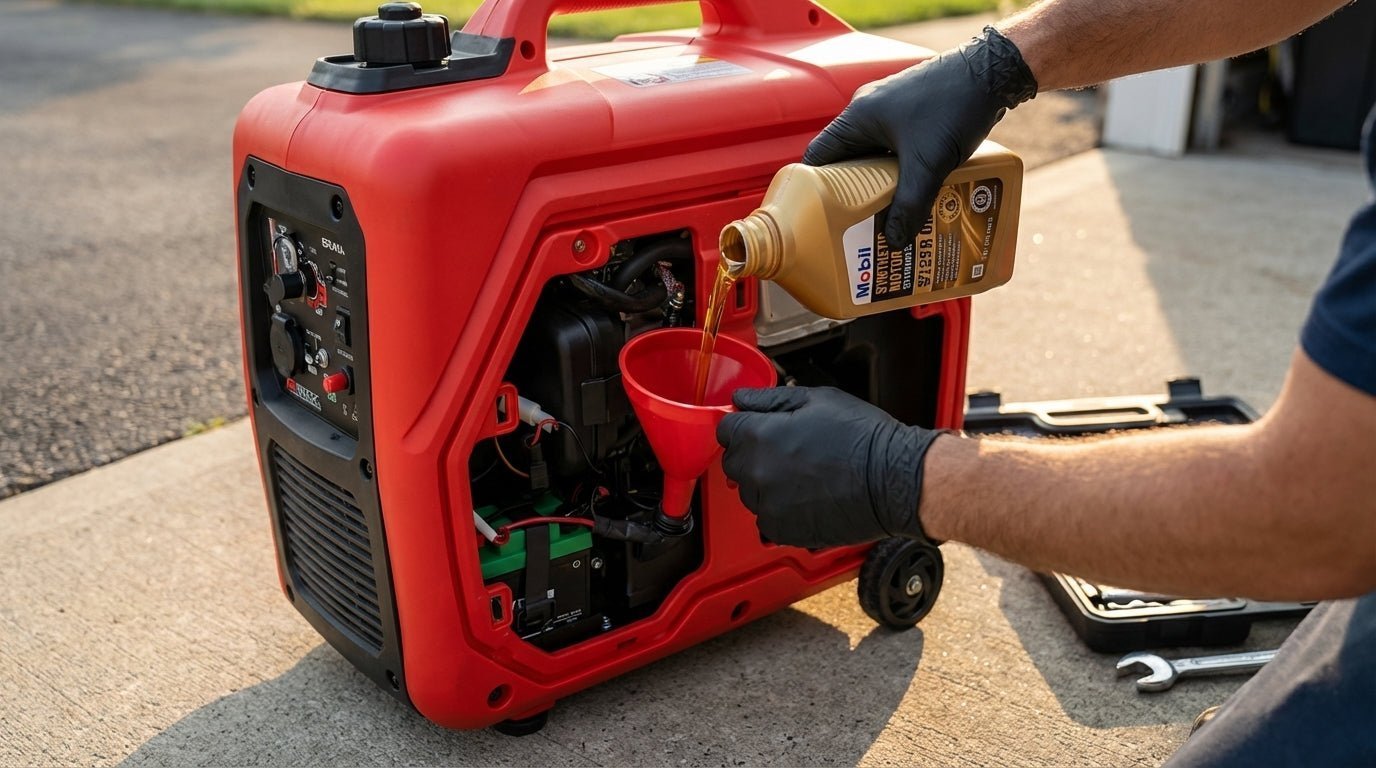
Place the generator on a level surface. Add oil slowly with a funnel. Let the oil settle, then check the dipstick or fill-hole mark exactly as your manual describes. Overfilling can cause smoking, poor running, oil in the air box, or hard starting.
How Often Should You Change Generator Oil?
Oil change intervals vary by generator, but most owners should think in two stages: the break-in oil change and routine maintenance. Always follow your model's manual when it gives a specific interval.
| Situation | Common Oil Change Timing | Why It Matters |
|---|---|---|
| New generator break-in | Often after the first 5 to 10 hours | Removes early break-in debris and gives the engine a clean start. |
| Routine use | Often every 50 to 100 hours, or seasonally | Fresh oil protects under steady high-RPM running. |
| Dusty, hot, or extended outage use | More frequently than the normal interval | Heat, dust, and long runtime break oil down faster. |
| Long-term storage | Change before storage when practical | Clean oil helps reduce corrosion risk while the generator sits. |
Looking for an easy-to-maintain inverter generator?
Modern ERAYAK inverter generators are designed for practical portable power, routine inspection, and owner-friendly backup planning. Keep the correct oil, funnel, and hour log ready before storm season.
How to Change Generator Oil
Changing generator oil is a basic maintenance task, but the exact drain plug location, dipstick method, and oil capacity vary by model. Read the owner's manual before starting.
- Run the generator briefly if your manual recommends warming the oil, then turn it off.
- Let hot parts cool enough to work safely.
- Move the generator to a level, ventilated outdoor work area.
- Remove the oil fill cap or dipstick.
- Drain used oil into an approved pan.
- Reinstall the drain plug or close the drain path securely.
- Add the recommended oil slowly with a funnel.
- Check the level according to the manual.
- Run the generator briefly, shut it off, and recheck for leaks.
- Recycle used oil at an approved collection site. Do not dump oil on the ground.
Maintenance safety: Let hot engine parts cool before handling the drain plug, muffler area, or oil fill cap. Keep oil and rags away from ignition sources.
What Happens If You Use the Wrong Oil in a Generator?
The wrong generator oil can create starting problems, smoke, excess wear, or engine damage. The risk depends on how wrong the oil is, how long the generator runs, and whether the engine is operating in cold or hot weather.
| Wrong Oil Situation | Possible Result | What to Do |
|---|---|---|
| Oil is too thick for cold weather | Hard starting, slow cranking, poor startup lubrication | Switch to the approved cold-weather viscosity. |
| Oil is too thin for hot operation | Increased wear, oil consumption, weaker protection under load | Use the manual's recommended hot-weather oil. |
| Oil is overfilled | Smoke, fouled spark plug, oil in air box, rough running | Drain excess oil to the correct level. |
| 2-cycle oil used in a 4-stroke crankcase | Poor lubrication and potential engine damage | Drain it and refill with the correct 4-stroke oil before running. |
| Old or contaminated oil | Sludge, poor lubrication, shortened engine life | Change oil and inspect maintenance schedule. |
Generator Oil Mistakes to Avoid
Using 2-cycle oil in a 4-stroke generator
Most portable generators are 4-stroke engines with a separate oil fill. They need engine oil in the crankcase, not oil mixed into gasoline.
Choosing oil only by brand
Brand matters less than matching the viscosity, service rating, and temperature range in the manual.
Overfilling the crankcase
Too much oil can cause smoke, fouled plugs, oil in the air filter, and poor running. Fill slowly and check the level.
Running through an outage without checking oil
Extended outage use can rack up hours quickly. Check oil level before each run and follow hour-based maintenance intervals.
Ignoring cold weather
Oil that works fine in summer may be too thick for winter startup. For cold-weather backup, verify whether 5W-30 synthetic is approved for your generator.
Erayak Generator Maintenance Fit
Oil choice is only one part of reliable backup power. A good generator should be easy to inspect, easy to maintain, and built with protection features that help prevent avoidable engine damage.

ERAYAK 2400P: Lightweight Inverter Generator for Simple Maintenance
The ERAYAK 2400P is a strong fit for owners who want a compact gas inverter generator for camping, RV battery charging, and light emergency backup. Its smaller engine class makes routine checks and oil changes more approachable than larger backup units.
- Good match for lighter camping and small emergency loads.
- Gas-only portable design for simple backup planning.
- Use the oil type and capacity listed in the current ERAYAK manual for your exact unit.

ERAYAK 4500PD: Dual-Fuel Backup With More Load Headroom
The ERAYAK 4500PD is the better fit when your generator has to cover RV comfort loads or more home essentials. Propane can be useful for storage-friendly backup planning, but oil checks and oil-change intervals still matter on any fuel.
- Good match for 30A RV use, refrigerator backup, and practical outage essentials.
- Dual-fuel gasoline and propane flexibility.
- Always follow the current manual for oil viscosity, capacity, and break-in service.
Product accuracy note: Use the current manual for your exact generator before buying oil. Blog charts help with planning, but the manual controls the final oil type, amount, and service interval.
FAQ: Generator Oil Type, Capacity, and Changes
What kind of oil does a generator take?
Most portable generators take 4-stroke engine oil. SAE 10W-30 is the common default for normal temperatures, while 5W-30 full synthetic is often used for cold-weather starts when approved by the manual.
What oil does a portable generator use?
Most portable generators use 4-stroke motor oil, commonly 10W-30. Check the manual for exact viscosity, oil capacity, and service rating.
Is 10W-30 good for a generator?
Yes. 10W-30 is one of the most common oil choices for portable generators in moderate temperatures. Your manual should still control the final choice.
Can I use 5W-30 instead of 10W-30 in my generator?
Sometimes yes, especially in cold weather, if your generator manual allows 5W-30. Synthetic 5W-30 can improve cold starts, but the manual should guide the final choice.
Can I use synthetic oil in my generator?
Yes, if synthetic oil with the correct viscosity and service rating is allowed by your generator manual. Synthetic 5W-30 is often useful for cold-weather backup preparation.
Can I use car oil in my generator?
In many cases, yes. Automotive 4-stroke oil can be used if it matches the viscosity and service requirements in the generator manual. Do not use 2-cycle oil in a typical 4-stroke generator.
Can I mix 5W-30 and 10W-30 in a generator?
It is better not to mix oils unless you have no practical alternative. For best protection, drain and refill with one oil type that matches the manual's recommendation.
How much oil does a generator take?
Small inverter generators may take roughly 0.35 to 0.5 qt, mid-size generators may take roughly 0.55 to 0.8 qt, and larger portable generators may take around 0.8 to 1.2 qt. Always fill to the dipstick or manual specification.
How often should generator oil be changed?
Many generators need a break-in oil change after the first 5 to 10 hours, then routine changes every 50 to 100 hours or seasonally. Use your owner's manual for the exact interval.
Can low oil prevent a generator from starting?
Yes. Many portable generators include low-oil shutdown protection. If the oil level is too low, the generator may shut off or fail to start until oil is added to the correct level.
What happens if generator oil is overfilled?
Overfilling can cause smoke, hard starting, oil in the air filter, spark plug fouling, and rough operation. Drain excess oil until the level matches the manual's fill mark.
Choose an ERAYAK Inverter Generator and Keep the Right Oil Ready
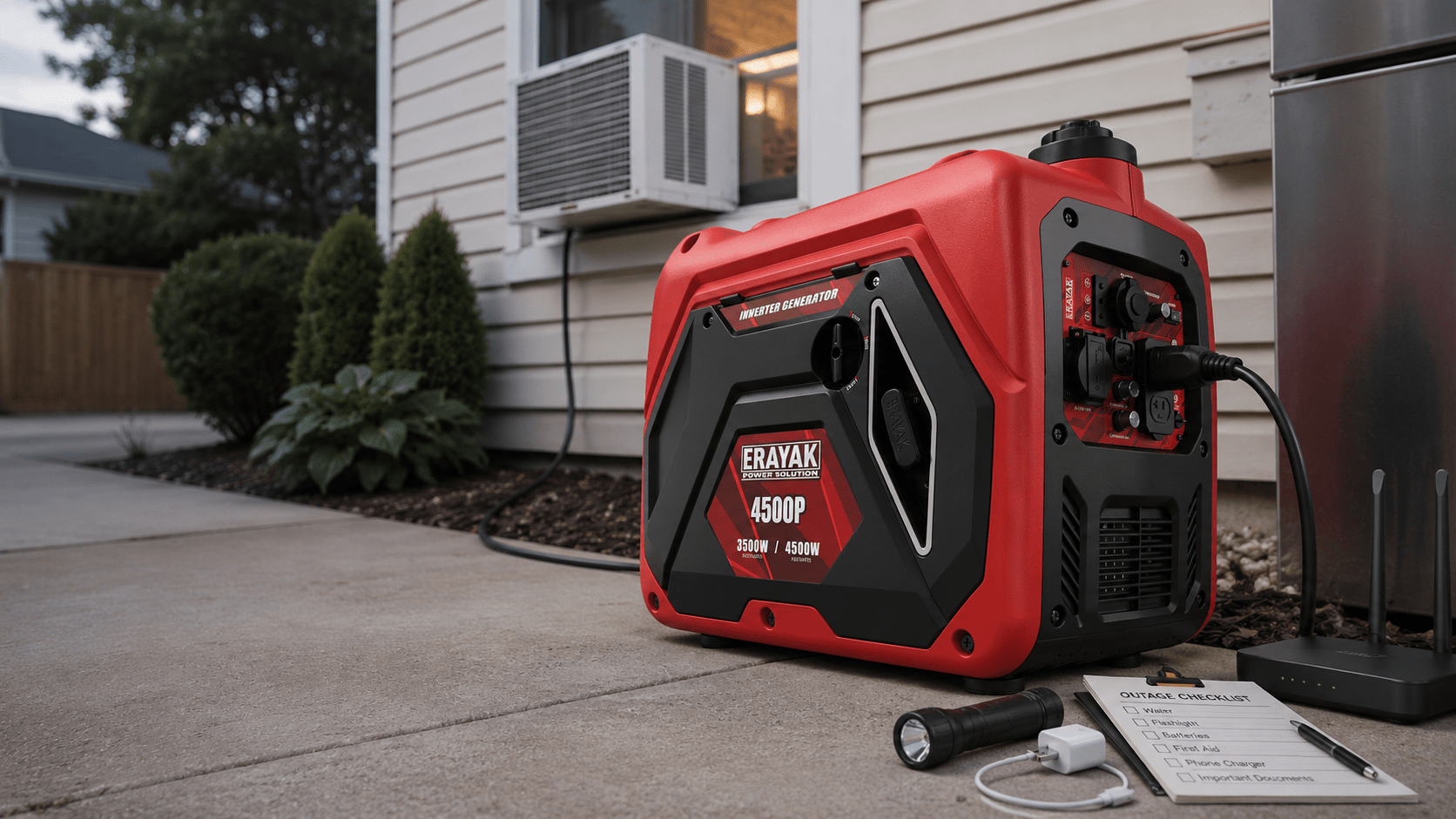
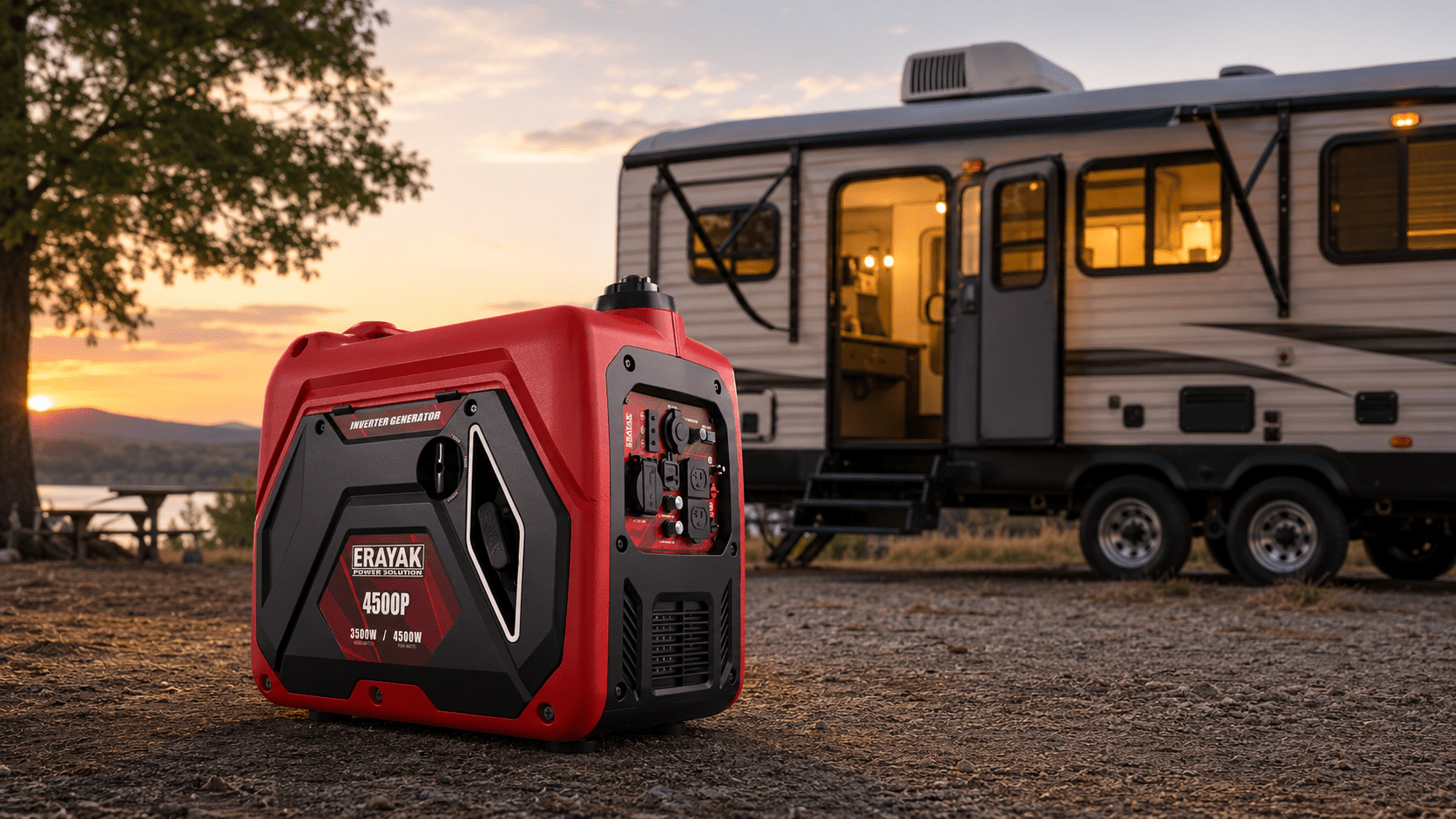
A generator is easiest to trust when it is sized correctly, maintained on schedule, and stocked with the right oil before the next outage or RV trip. Compare ERAYAK inverter generators for quiet, portable backup power.

Leave a comment
All comments are moderated before being published.
This site is protected by hCaptcha and the hCaptcha Privacy Policy and Terms of Service apply.