

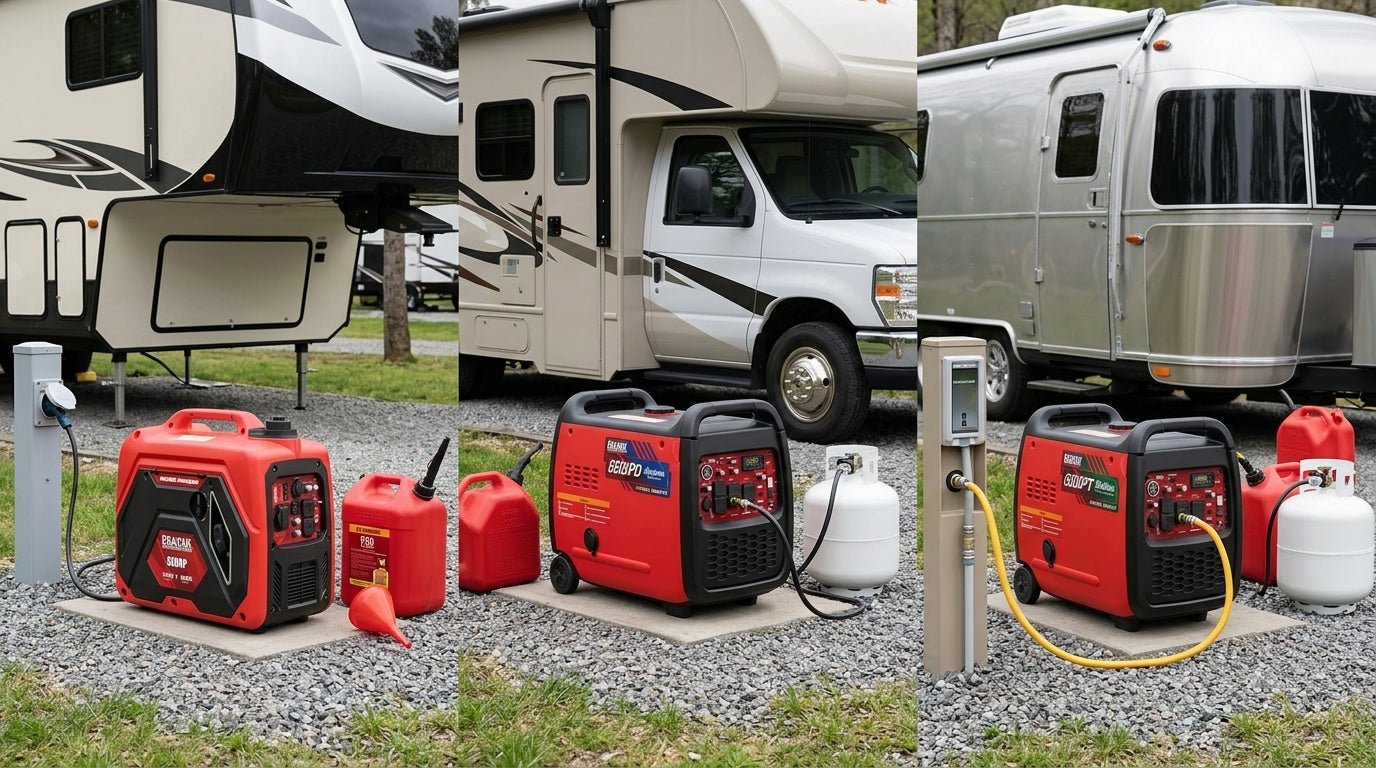
Tri Fuel vs Dual Fuel Generator: Which Is Better in 2026?
Dual fuel generators run on gasoline and propane. Tri fuel generators add natural gas. The better choice depends on whether you need portable RV/camping flexibility or a longer home-backup plan with a natural gas connection.
Quick Answer
Choose a dual fuel generator if you want a portable generator for RV trips, camping, refrigerator backup, portable AC planning, or short-to-medium outages where gasoline and propane are enough.
Choose a tri fuel generator if your main goal is home backup and you have, or plan to install, a safe natural gas connection. Natural gas can reduce refueling work during longer outages, but the generator still must run outdoors and must be connected according to local code.
For Erayak shoppers, the ERAYAK 4500PD dual fuel inverter generator is the simpler RV and 120V essentials choice, while the ERAYAK 6800PT tri fuel inverter generator is the stronger fit for 120V/240V selected-circuit home backup planning.
What Is a Dual Fuel Generator?
A dual fuel generator runs on two fuel types, usually gasoline and propane. Gasoline gives the generator its strongest output in many portable-generator setups. Propane stores longer, burns cleaner, and is easy to keep in cylinders for RV trips or emergency use.
Dual fuel does not mean the generator uses both fuels at the same time. It means the engine and fuel system are designed to run on either gasoline or propane, depending on the model instructions and your setup.
Best dual fuel use cases
- RV camping and 30A RV power planning
- Refrigerator, freezer, router, lights, and phone charging
- Portable AC and small home essentials
- Short-to-medium outages where propane storage is useful
Why buyers choose it
- Usually simpler and more portable than tri fuel systems
- Propane can be stored longer than gasoline when handled correctly
- Good fit when you do not have a natural gas hookup
- Often enough for RV and essential-load backup needs
What Is a Tri Fuel Generator?
A tri fuel generator runs on three fuel types: gasoline, propane, and natural gas. This is why many shoppers search for the tri fuel generator meaning before buying. The third fuel, natural gas, is the main difference.
Natural gas can be useful for home backup because it comes from a utility line instead of a portable fuel tank. That can reduce the need to store gasoline or swap propane cylinders during a longer outage. However, natural gas setup is not casual plug-and-play. The gas line, hose, regulator compatibility, placement, and electrical connection should follow the generator manual and local code.
Simple definition: dual fuel usually means gasoline plus propane. Tri fuel means gasoline plus propane plus natural gas.
Tri Fuel vs Dual Fuel Generator Comparison
The best way to compare dual fuel and tri fuel generators is not by asking which one is universally better. The better question is: which fuel plan matches how you will actually use the generator?
| Category | Dual Fuel Generator | Tri Fuel Generator |
|---|---|---|
| Fuel types | Gasoline and propane | Gasoline, propane, and natural gas |
| Best fit | RV, camping, jobsite, portable backup, essential 120V loads | Home backup planning, longer outages, natural gas homes, selected circuits |
| Portability | Usually simpler for travel and RV use | Portable, but most valuable when planned around a home setup |
| Fuel storage | Propane stores well; gasoline needs rotation and stabilizer | Natural gas can reduce stored-fuel needs when available |
| Power output | Usually strongest on gasoline, slightly reduced on propane | Usually strongest on gasoline, reduced on propane and natural gas |
| Setup complexity | Lower. Good for portable use with approved fuel connections | Higher when using natural gas. May require professional gas and electrical setup |
| Best Erayak match | ERAYAK 4500PD | ERAYAK 6800PT |
Gasoline vs Propane vs Natural Gas: Fuel Consumption and Power
Many shoppers ask for a tri fuel generator fuel consumption comparison. The key point is that fuel type affects both convenience and power output. Gasoline often provides the highest output. Propane and natural gas typically produce less output because they have lower energy density in common generator use.
| Fuel | Strengths | Tradeoffs | Best use |
|---|---|---|---|
| Gasoline | Usually highest output and easiest to understand for surge loads | Storage life is limited; needs safe containers, rotation, and stabilizer planning | Maximum output, short outages, emergency starting watt margin |
| Propane | Stores well, cleaner handling, common for RV and emergency cylinders | Output is usually lower than gasoline; cold weather and tank size can affect performance | RV use, camping, storm prep, cleaner long-term storage |
| Natural gas | No portable fuel tank to refill when connected to a suitable utility gas line | Usually lower output than gasoline; requires proper gas supply and setup | Home backup where natural gas is available and professionally planned |
For the Erayak 6800 series, use the gasoline rating when doing conservative load planning: 6800W peak and 5000W gasoline rated output at 100% output. Propane and natural gas output can be lower, so leave more headroom when using those fuels.
Dual Fuel and Tri Fuel Generator Pros and Cons
Dual fuel pros
- Good balance of portability and fuel flexibility
- Propane is practical for RV and emergency storage
- Simpler than natural gas planning for most buyers
- Usually a better fit for camping, RV, and 120V essentials
Dual fuel cons
- No natural gas option
- Propane output is usually lower than gasoline output
- Long outages still require enough stored fuel
Tri fuel pros
- Gasoline, propane, and natural gas flexibility
- Strong fit for homes with natural gas access
- Can reduce the need to store large amounts of gasoline
- Better fuel-plan resilience during longer outages
Tri fuel cons
- Natural gas setup is more complex
- Natural gas output is usually lower than gasoline output
- Not necessary for many RV or small camping users
- Home circuit use requires proper transfer equipment
Which One Should You Buy?
Use the table below as a practical shortcut. It keeps the decision tied to real use cases instead of treating tri fuel as automatically better for everyone.
| Your situation | Better choice | Why |
|---|---|---|
| RV camping, 30A RV use, tailgating, campsite power | Dual fuel | Propane flexibility matters, but natural gas usually does not help on the road. |
| Apartment patio or very small outdoor backup setup | Usually dual fuel | Natural gas connection and home transfer equipment may not be available or practical. |
| Refrigerator, freezer, router, lights, and small essentials | Dual fuel or tri fuel | Dual fuel can cover many essentials; tri fuel makes more sense if those loads are part of a longer home-backup plan. |
| Home with natural gas line and planned transfer switch or interlock | Tri fuel | Natural gas can reduce refueling work during long outages when the setup is properly installed. |
| Well pump, sump pump, selected circuits, or 120V/240V backup | Often tri fuel in the right wattage class | You may need 120V/240V output, more surge margin, and a planned home connection. |
| You want the simplest fuel plan | Dual fuel | Gasoline plus propane covers most portable generator use without natural gas setup. |
Erayak Product Fit: Dual Fuel or Tri Fuel?
Product fit should follow the job. A tri fuel generator is not automatically the best generator for every buyer. It is best when the third fuel, natural gas, actually solves a problem for your home backup plan.
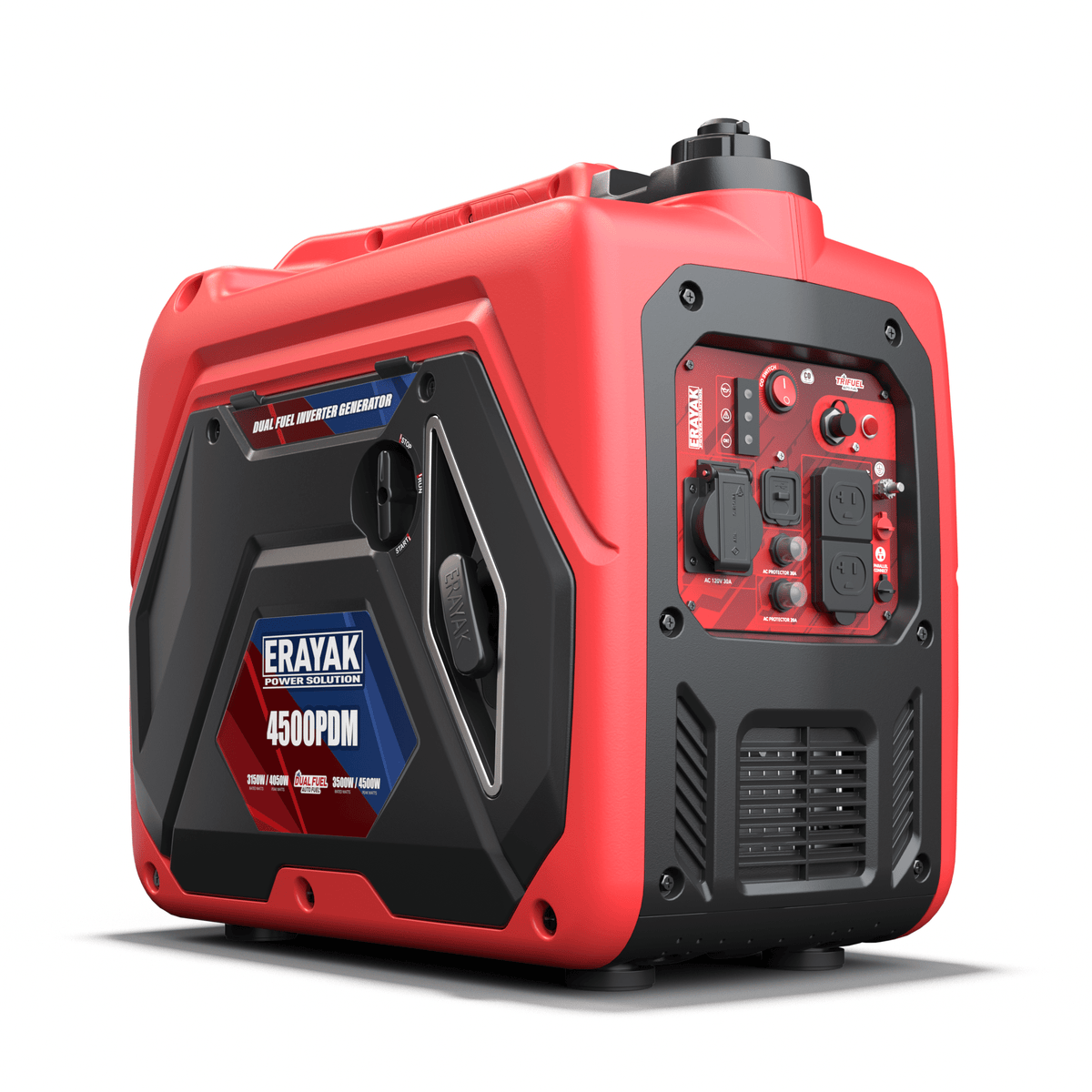
ERAYAK 4500PD: Dual Fuel for RV and 120V Essentials
The ERAYAK 4500PD is the better fit when you want gasoline and propane flexibility without natural gas setup. It is a practical match for RV camping, refrigerator and freezer backup, portable AC planning, and essential 120V outage loads.
- Gasoline and propane fuel flexibility
- Strong fit for RV, camping, and emergency essentials
- Good choice when natural gas is not available or not needed
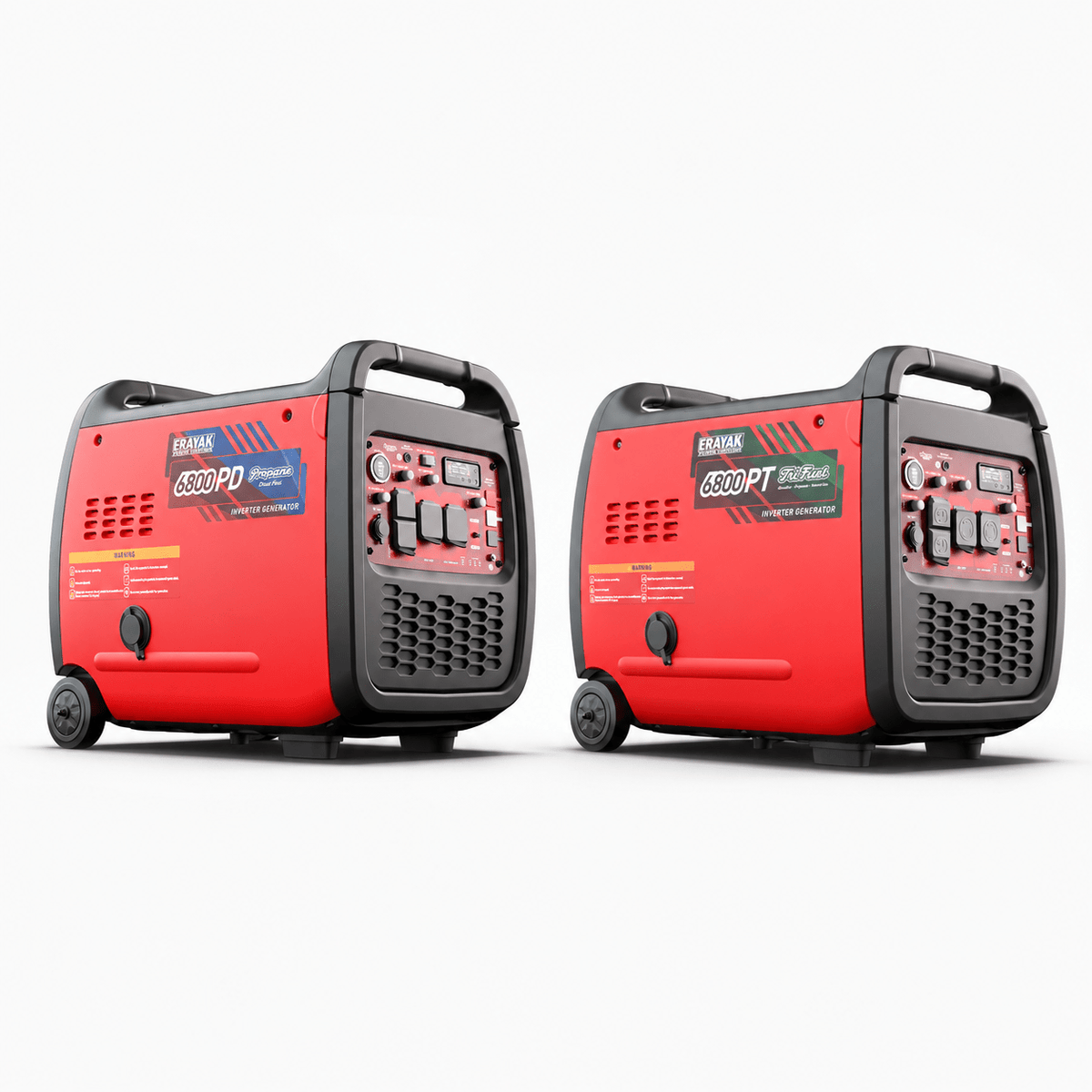
ERAYAK 6800PT: Tri Fuel for 120V/240V Home Backup Planning
The ERAYAK 6800PT is the stronger fit when you want gasoline, propane, and natural gas flexibility in a 120V/240V inverter generator platform. Use it for selected-circuit backup planning, well pump or sump pump planning, and longer outage preparedness when your setup is installed correctly.
- 6800W peak and 5000W gasoline rated output at 100% output
- 120V/240V capability with 30A L14-30R planning
- Tri fuel flexibility for homes with natural gas access
What about the ERAYAK 6800PD? The 6800PD is the dual fuel version of the 6800 platform. It is useful when you want 120V/240V capability and gasoline/propane flexibility, but do not need natural gas. The 6800PT is the tri fuel version for gasoline, propane, and natural gas planning.
Safety and Installation Notes Before You Buy
Generator safety notice: Fuel-powered generators must run outdoors only. Never run a generator indoors, in a garage, in a shed, on an enclosed porch, or near open windows, doors, or vents. Carbon monoxide can be deadly. Use working CO detectors and follow the generator manual.
For home circuits, use proper transfer equipment
If you want to power home circuits, use a properly installed manual transfer switch or approved interlock system. Do not backfeed your home by plugging a generator into a wall outlet. Panel work should be handled by a qualified professional and should follow local code.
For natural gas, confirm supply before assuming runtime
Natural gas can be convenient, but the generator still needs a suitable gas supply, correct hose and regulator setup, outdoor placement, and adequate capacity under load. Ask a qualified professional to confirm the gas line and connection plan.
Leave headroom on propane and natural gas
Because propane and natural gas output can be lower than gasoline output, do not size your generator with zero margin. Add headroom for motor starting surge, fuel type, temperature, altitude, and simultaneous loads.
Related Guides
FAQ: Tri Fuel vs Dual Fuel Generators
What does a tri fuel generator run on?
A tri fuel generator runs on gasoline, propane, and natural gas. The exact setup depends on the generator model, fuel hose, regulator, and installation instructions.
What is the difference between dual fuel and tri fuel generators?
A dual fuel generator usually runs on gasoline and propane. A tri fuel generator adds natural gas as a third option. Natural gas is the main reason many home-backup buyers choose tri fuel.
Is a tri fuel generator better than dual fuel?
Tri fuel is better if you have a natural gas connection and want more fuel flexibility for home backup. Dual fuel is often better for RV, camping, and simpler portable use where gasoline and propane are enough.
Can a dual fuel generator run on natural gas?
Normally, no. A standard dual fuel generator is built for gasoline and propane. Do not connect natural gas unless the generator is specifically designed and approved for natural gas operation.
Does natural gas make less power than gasoline?
In many portable generator setups, yes. Gasoline usually provides the highest output. Propane and natural gas often reduce available output, so leave extra wattage headroom when sizing loads.
Are tri fuel generators worth it?
They can be worth it for homes with natural gas access, longer outage risk, and a planned transfer switch or interlock setup. They may not be worth the extra complexity for occasional camping or small portable loads.
What is a multi fuel generator?
A multi fuel generator is any generator designed to run on more than one fuel type. Dual fuel and tri fuel generators are both types of multi fuel generators.
Which Erayak generator should I choose?
Choose the ERAYAK 4500PD if you want a dual fuel inverter generator for RV, camping, and 120V essentials. Choose the ERAYAK 6800PT if you need tri fuel flexibility, 120V/240V planning, and selected-circuit home backup capability.
Bottom Line
A dual fuel generator is the practical choice for many RV, camping, and essential-load buyers because gasoline and propane cover most portable use cases. A tri fuel generator is the better home-backup choice when natural gas access, 120V/240V planning, and longer outage readiness matter.
For Erayak buyers, start with the 4500PD if your world is RV and 120V essentials. Step up to the 6800PT when your backup plan includes natural gas, selected home circuits, or 120V/240V loads.


