

![Best Portable Generators for Home Power Outages [2026] - Erayak Power](http://erayakpower.com/cdn/shop/articles/best-portable-generators-for-home-power-outages-2026-2606307.jpg?v=1782222679&width=1500)
Home Power Outage Generator Guide
Best Portable Generators for Home Power Outages [2026]
The best home generator for a power outage is not always a whole-house standby unit. For many homeowners, the smarter first question is: Which essential circuits and appliances do I need to keep running?
This guide compares portable inverter generators, dual-fuel and tri-fuel options, 120V vs 120V/240V output, and transfer-switch planning so you can choose a realistic home backup generator for refrigerators, freezers, lights, routers, sump pumps, well pumps, portable AC, and other outage essentials.
Quick Answer
What Is the Best Generator for a Home Power Outage?
For most power outages, the best generator is the smallest unit that can safely handle your essential loads with enough starting-watt headroom. If you only need lights, phones, a router, and small electronics, a battery power station or compact inverter generator may be enough. If you need a refrigerator, freezer, sump pump, furnace blower, or portable AC, a 4500W-class inverter generator is a more realistic starting point.
If your home backup plan includes 120V/240V selected circuits, a transfer switch, or many well-pump scenarios, compare the ERAYAK 6800PT tri-fuel inverter generator. It offers 6800W peak output, 5000W gasoline rated output, and 120V/240V capability for selected-circuit backup planning. If you do not need 240V, the ERAYAK 4500PD dual-fuel inverter generator is a better fit for many 120V essentials and RV-style outage loads.
Best Home Generator Types for Power Outages
Search results for home generators often mix three very different products: battery power stations, portable generators, and permanent standby generators. They do not solve the same problem.
| Generator Type | Best For | Main Tradeoff | Erayak-Relevant Fit |
|---|---|---|---|
| Battery power station | Indoor-safe phones, router, laptops, small electronics, short outages | Limited stored energy; high-watt appliances drain it quickly | Good for silent indoor backup, but not a fuel generator replacement for long outages. |
| Portable inverter generator | Outdoor fuel-powered backup for essentials, RV use, refrigerators, freezers, selected appliances | Must run outdoors; requires fuel and safe setup | Best match for many Erayak shoppers because it balances cost, mobility, cleaner power, and lower noise. |
| 120V/240V portable generator | Transfer switch planning, selected home circuits, many well pumps, larger outage setups | Requires more setup discipline and the right home connection equipment | ERAYAK 6800PT/6800PD fit this role when 120V/240V output is required. |
| Permanent standby generator | Automatic whole-home backup for long outages when budget and installation are acceptable | Higher equipment and installation cost; fixed installation | A good category for some homes, but not necessary for every essential-load outage plan. |
SEO intent note: If you searched for "best home generator for power outage," decide first whether you want automatic whole-home backup or a portable selected-load setup. Erayak is strongest for the second path: portable inverter generators for essential home backup, RV crossover use, and flexible fuel planning.
Best ERAYAK Generator Picks for Home Outages
These picks are organized by real outage use case, not by the biggest wattage number alone. The right choice depends on whether you need 120V only, 120V/240V, dual-fuel flexibility, tri-fuel flexibility, or a smaller quiet backup plan.

Best 120V/240V Outage Pick
ERAYAK 6800PT: Tri-Fuel Generator for Selected Home Circuits
The 6800PT is the strongest Erayak fit for homeowners planning selected-circuit backup through a proper transfer switch or interlock. It is the right direction when you need 120V/240V output, fuel flexibility, and more headroom than a 4500W-class generator.
- Best fit for selected circuits, many 240V planning scenarios, and larger outage loads.
- Supports gasoline, propane, and natural gas use when set up according to the manual.
- Useful upgrade path for well pump, sump pump, refrigerator, freezer, lights, router, and selected essentials.
Best 120V Essential-Load Pick
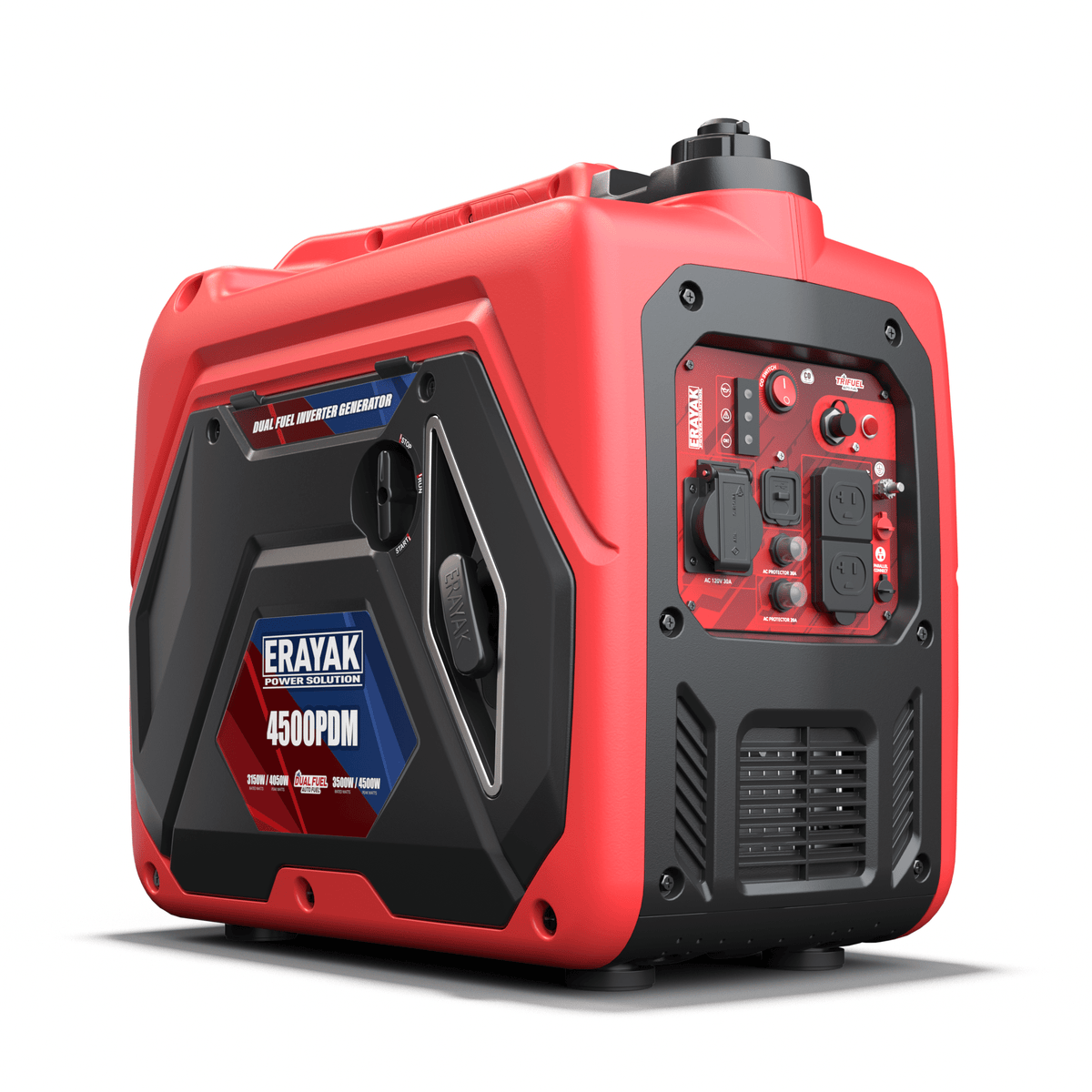
ERAYAK 4500PD: Dual-Fuel Backup for Everyday Essentials
The 4500PD is the cleaner fit when your outage plan is mostly 120V: refrigerator, freezer, router, lights, TV, small devices, and selected portable AC planning. It also works well for RV owners who want one generator for camping and home essentials.
- Best fit when propane storage and 120V essentials matter more than 240V output.
- More practical than a small camping generator for refrigerator/freezer backup.
- Good crossover option for RV weekends, storm season, and emergency preparedness.
Best Gas-Only 4500W Option
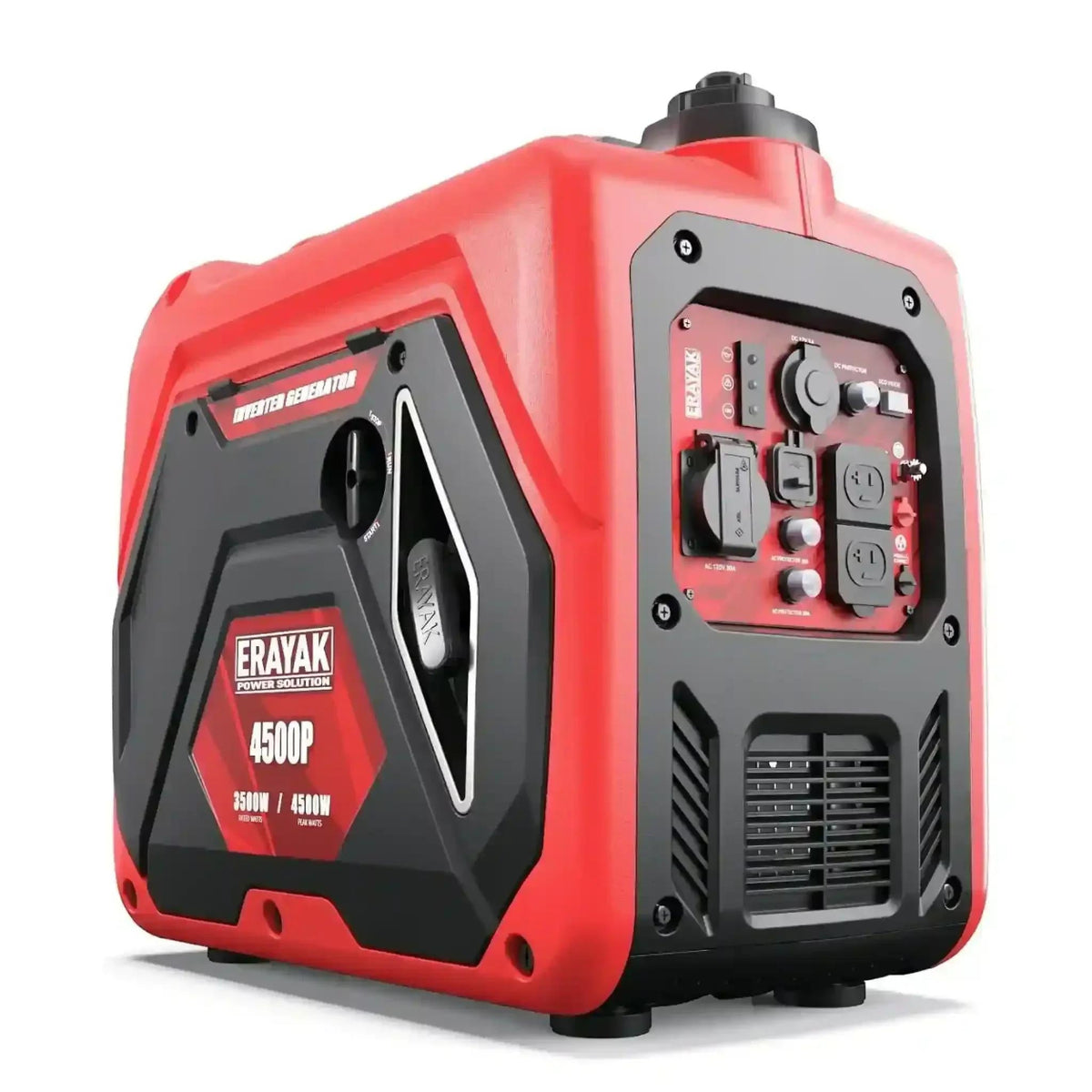
ERAYAK 4500P: Gas Inverter Generator for Essential Backup
The 4500P is the gas-only path for shoppers who want quiet enclosed inverter power and do not need propane or 240V. It is a practical option for refrigerator backup, lights, router, small electronics, and RV/camping crossover use.
- Best fit when you want a simpler gasoline inverter generator.
- Useful step-up from compact camping generators for more home backup margin.
- Good choice when dual-fuel flexibility is not a priority.
Home Power Outage Wattage Chart
Start with running watts, then add starting watts for motor-driven appliances. Refrigerators, freezers, sump pumps, well pumps, furnace blowers, and air conditioners can draw much more power for a short moment when starting.
| Outage Load | Typical Running Watts | Possible Starting Watts | Generator Planning Note |
|---|---|---|---|
| Refrigerator or freezer | 600W-800W | 1200W-2000W | A 2400W generator may work for one fridge-only setup; 4500W gives more headroom. |
| Router, modem, phones, lights, laptop | 100W-500W combined | Usually low | Battery power station, 2400P, or any larger inverter generator can fit. |
| Sump pump | 700W-1200W | 1500W-3000W | Check the pump label. Add headroom if a refrigerator or freezer runs at the same time. |
| Furnace blower | 400W-800W | 800W-1600W | May require transfer equipment if hardwired. Confirm with an electrician. |
| 1/2 HP 240V well pump | 1000W-1500W | 3000W-5000W | Often points toward a 120V/240V generator such as 6800PT plus proper connection planning. |
| Portable AC or window AC | 800W-1600W | 1600W-3500W+ | 4500W-class is a better starting point than a small camping generator. |
| Microwave or coffee maker | 900W-1500W | Usually low | Run high-draw appliances one at a time during an outage. |
| Electric space heater | 1500W | 1500W | Possible but inefficient; it uses a large share of a portable generator's output. |
Planning rule: Add your must-run running watts, then make sure the generator has enough surge capacity for the largest motor starting event. If two compressors or pumps may start at the same time, size more conservatively.
Home Connection Planning
Do You Need 120V/240V and a Transfer Switch?
If you want to power individual appliances with extension cords, a 120V inverter generator may be enough. If you want to power selected home circuits through your panel, or if your home has a 240V well pump, you need the right generator output and a safe connection method.
Use Extension Cords For
- Refrigerator or freezer
- Router and small electronics
- Lamps and chargers
- Portable AC in selected cases
Use a Transfer Switch or Interlock For
- Selected home circuits
- Hardwired furnace blower
- Many well pump setups
- Safer panel connection planning
Choose 120V/240V When
- Your transfer setup requires 240V
- You have a 240V pump or circuit
- You want better selected-circuit flexibility
- Your electrician confirms the setup
The ERAYAK 6800PT is the best match in this article when 120V/240V output matters. The 4500PD is a better match when your backup plan is 120V-only and focused on portable essentials.
Gas, Propane or Natural Gas: Which Fuel Is Best During an Outage?
Fuel choice matters as much as wattage. A generator that is powerful on paper will not help if the fuel is hard to store, hard to find, or difficult to manage during storm season.
| Fuel Type | Advantages | Tradeoffs | Best Erayak Fit |
|---|---|---|---|
| Gasoline | Strong output and widely available in normal conditions | Storage life and storm availability can be issues | 4500P, 4500PD, 6800PT |
| Propane | Easier long-term storage and common for emergency preparedness | Output may be lower than gasoline depending on model and conditions | 4500PD, 6800PT |
| Natural gas | Convenient for homes with a suitable gas supply | Requires correct setup and may produce less output than gasoline | 6800PT |
For many emergency-preparedness buyers, dual-fuel or tri-fuel capability is valuable because it gives more ways to keep power available. For simple portable use, gasoline-only can still be a practical choice.
How to Choose the Best Generator for Your Home Outage Plan
Choose 4500P or 4500PD If You Need:
- Refrigerator or freezer backup
- Router, lights, TV, phones, and small electronics
- Portable AC planning in selected cases
- RV camping and home backup crossover use
- 120V-only backup without selected 240V circuits
Choose 6800PT If You Need:
- 120V/240V output for selected-circuit planning
- More headroom for larger outage loads
- Tri-fuel flexibility for gasoline, propane, or natural gas planning
- Well pump, sump pump, refrigerator, freezer, and lighting scenarios
- A generator to discuss with your electrician for transfer-switch setup
Do not buy a generator based only on headline wattage. Check voltage, running watts, starting watts, outlet type, fuel type, noise level, weight, and how you will safely connect the loads you plan to power.
Home Generator Safety Notice
Portable generators are outdoor machines. Quiet inverter power, dual-fuel operation, or tri-fuel operation does not make a fuel generator indoor-safe. Carbon monoxide can be deadly.
- Never run a generator indoors.
- Never run a generator in a garage, basement, shed, crawlspace, enclosed patio, or near open windows.
- Always operate generators outdoors with proper ventilation and safe clearance from doors, windows, and vents.
- Install and maintain carbon monoxide alarms in your home.
- Use properly rated outdoor extension cords when powering appliances directly.
- Never backfeed a home panel through a dryer outlet or improvised cord.
- For home circuits, use a transfer switch or approved interlock installed according to local code by a qualified professional.
FAQs: Best Home Generators for Power Outages
What is the best generator for a home power outage?
The best generator depends on your outage plan. For 120V essentials such as a refrigerator, freezer, lights, router, and small electronics, a 4500W-class inverter generator is often practical. For selected circuits, many well-pump scenarios, or 120V/240V planning, compare a 120V/240V generator such as the ERAYAK 6800PT.
Is a portable generator enough for home backup?
Yes, a portable generator can be enough for essential-load backup. It is not the same as a fully automatic whole-house standby generator, but it can keep selected appliances and circuits running when sized and connected safely.
What size generator do I need for power outages?
List your must-run appliances, add their running watts, then account for the largest starting-watt surge. Many refrigerator-and-essentials plans fit a 4500W-class generator, while selected-circuit or 240V plans may require a larger 120V/240V generator.
Do I need a 240V generator for home backup?
You may need 240V if your plan includes selected home circuits through a transfer switch, a 240V well pump, or other 240V loads. If you only power plug-in 120V appliances directly, a 120V generator may be enough.
Is a tri-fuel generator better for outages?
A tri-fuel generator can be better for outage preparedness because it gives you more fuel options: gasoline, propane, and natural gas. The tradeoff is that output and setup requirements can vary by fuel, so always follow the product manual and plan your connection carefully.
Can I plug a generator into my house?
Only through a proper transfer switch or approved interlock setup installed according to local code. Do not backfeed a home through a dryer outlet or improvised cord. For simple appliance backup, use properly rated outdoor extension cords directly to the appliances.
Can a generator run a refrigerator and a sump pump at the same time?
Often yes, but you need enough starting-watt headroom. A refrigerator and sump pump can both surge when motors start, so a 4500W-class generator is usually safer than a very small generator for this combination.
Can I run a fuel generator indoors during an outage?
No. Never run a gasoline, propane, or natural gas generator indoors, in a garage, basement, shed, or near open windows. Fuel generators must operate outdoors with proper ventilation.
Home Outage Backup
Build a Backup Plan Around the Loads You Actually Need
Choose the ERAYAK 4500PD for many 120V home essentials and RV crossover use, or step up to the ERAYAK 6800PT when your outage plan needs 120V/240V output, tri-fuel flexibility, and selected-circuit backup planning.


