

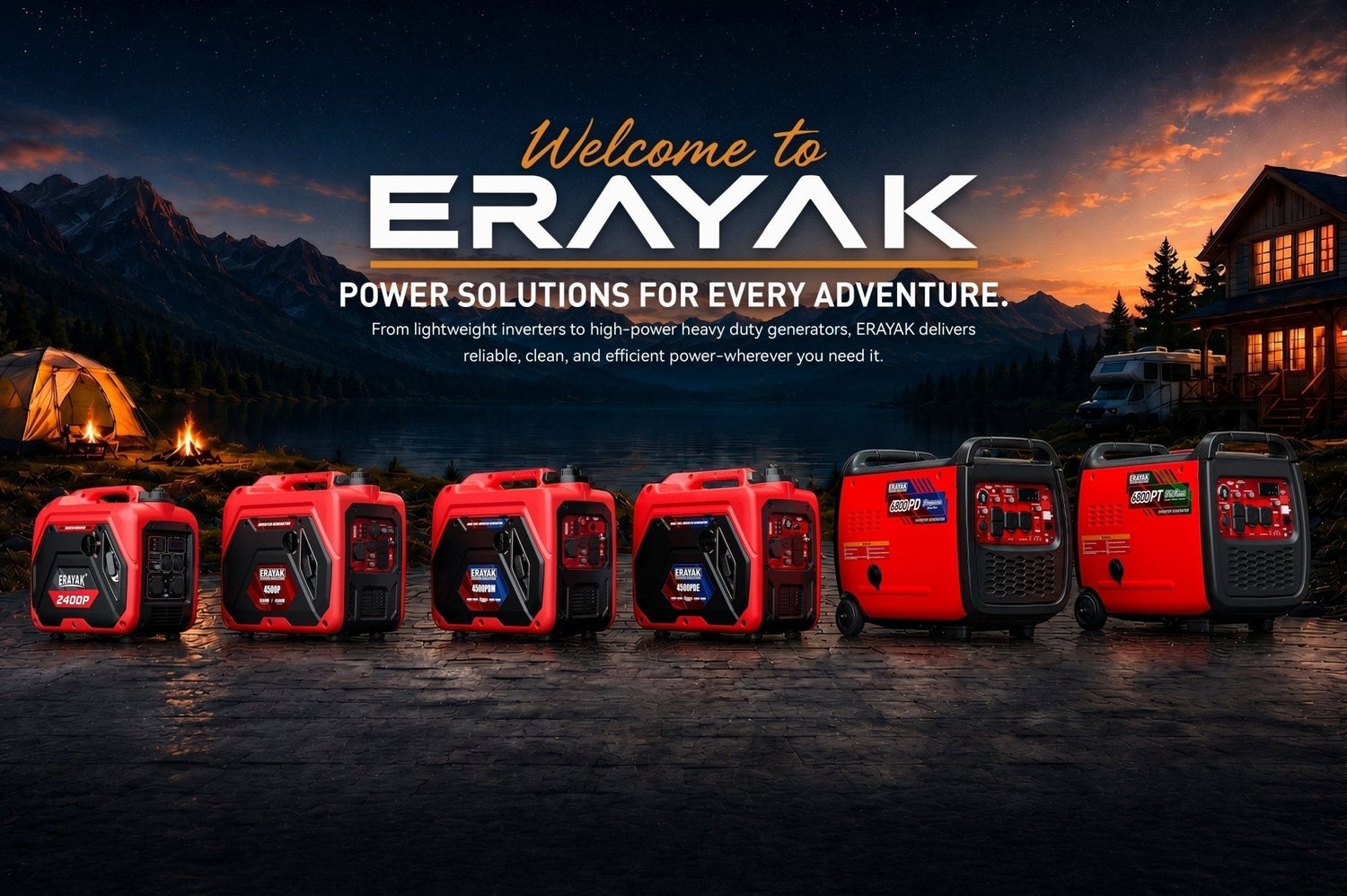
Fuel-Efficient Generator Guide
Most Fuel-Efficient Generators in 2026: How to Choose + Top Picks
The most fuel-efficient generator is usually not the model with the biggest tank or the longest advertised runtime. Real fuel savings come from inverter technology, Eco Mode, correct generator sizing, and a fuel plan that matches your actual load.
This guide explains how to compare fuel-efficient portable generators, why an oversized generator can waste fuel, and which ERAYAK inverter generator fits camping, RV power, refrigerator backup, propane planning, and selected home essentials.
Quick Answer
What Is the Most Fuel-Efficient Generator?
The most fuel-efficient portable generator is usually a properly sized inverter generator with Eco Mode. Inverter generators can reduce engine speed under lighter loads, which helps save fuel when running variable loads such as refrigerators, routers, lights, chargers, fans, and small electronics.
For small loads, the ERAYAK 2400P is the most practical fuel-saving fit because it avoids running an oversized generator for a tiny load. For RV AC, refrigerator-plus-freezer backup, and propane flexibility, compare the ERAYAK 4500PD. For larger selected home loads or 120V/240V planning, step up to the ERAYAK 6800PD/PT series.
Why Many Fuel-Efficient Generator Articles Miss the Real Buyer Problem
Searches like most efficient generator, fuel efficient generator, and most fuel efficient portable generator are not just asking for a list of models. Most buyers want to know how long a generator can run without wasting fuel, whether propane is better than gasoline, and what size generator makes sense for their real load.
The biggest fuel-efficiency mistake is oversizing. A high-capacity generator can be the right choice for a well pump, portable AC, or selected home circuits, but it can waste fuel if your actual load is only a refrigerator, router, and a few lights.
Tank Size Is Not Efficiency
A large fuel tank can increase runtime, but it does not always mean the generator uses less fuel per useful watt-hour.
Eco Mode Works Best on Variable Loads
Eco Mode is most useful when loads cycle up and down, such as refrigerators, chargers, fans, routers, and lights.
Right-Sizing Saves Fuel
The most efficient generator is often the smallest inverter generator that still has enough starting-watt headroom.
How to Compare Generator Fuel Efficiency
Do not compare generators only by advertised runtime. Runtime claims often depend on load percentage, fuel tank size, ambient conditions, fuel type, and whether Eco Mode is active. A better buying process looks at the whole operating plan.
| Efficiency Factor | Why It Matters | Buyer Takeaway |
|---|---|---|
| Inverter technology | Lets the engine adjust speed to demand instead of running flat-out all the time. | Best for variable loads and quieter portable backup. |
| Eco Mode | Can reduce RPM, fuel use, and noise under lighter loads. | Use it for refrigerators, routers, lights, chargers, and campsite loads. |
| Correct wattage size | An oversized generator can burn more fuel than needed for small loads. | Size for running watts plus starting-watt surge, not peak watts alone. |
| Fuel type | Gasoline, propane, and natural gas have different storage, output, and availability tradeoffs. | Fuel flexibility can be more valuable than a tiny runtime difference. |
| Load management | Running a microwave, heater, AC, and pump at the same time increases fuel use fast. | Run high-draw loads one at a time when possible. |
Practical formula: compare your actual load first, then choose the generator class. A compact inverter can be the fuel-efficient choice for light loads, while a 4500W or 6800W inverter generator can be more efficient in practice when smaller units would be overloaded.
Most Fuel-Efficient Generators in 2026: Top Picks by Use Case
These are not ranked by tank size alone. They are ranked by how well the generator size, fuel type, and inverter design fit the real job.
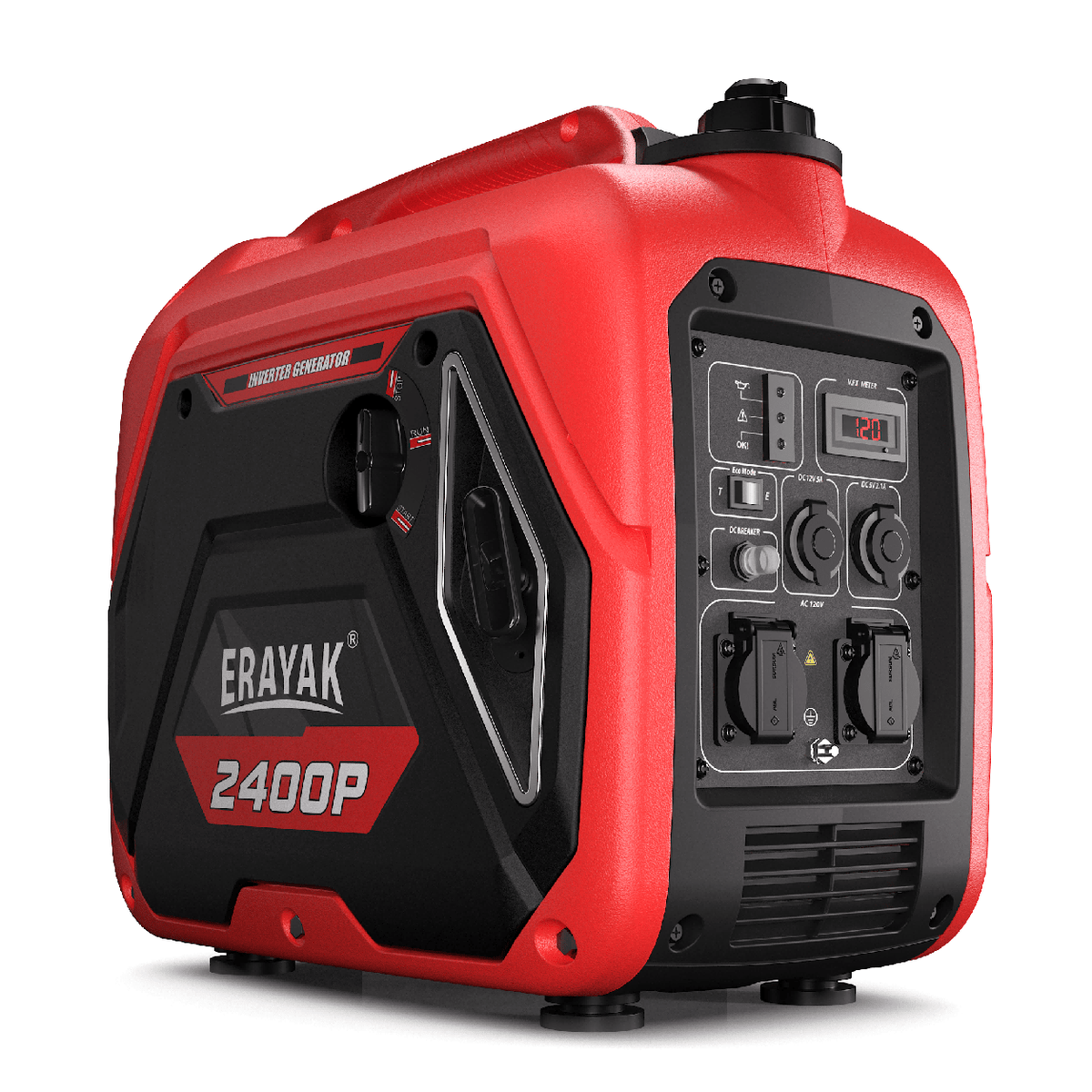
Best For Light Loads
ERAYAK 2400P: Best Fuel-Efficient Small Inverter Generator
The 2400P is the best fit when you want fuel-efficient power for small loads instead of running a large generator lightly loaded for hours. Use it for camping, tailgating, device charging, routers, lights, compatible CPAP machines, fans, and many refrigerator-only backup plans.
- Best for small loads where portability and lower noise matter.
- Avoids wasting fuel on oversized backup needs.
- Not the right fit for most RV AC or large multi-appliance backup plans.
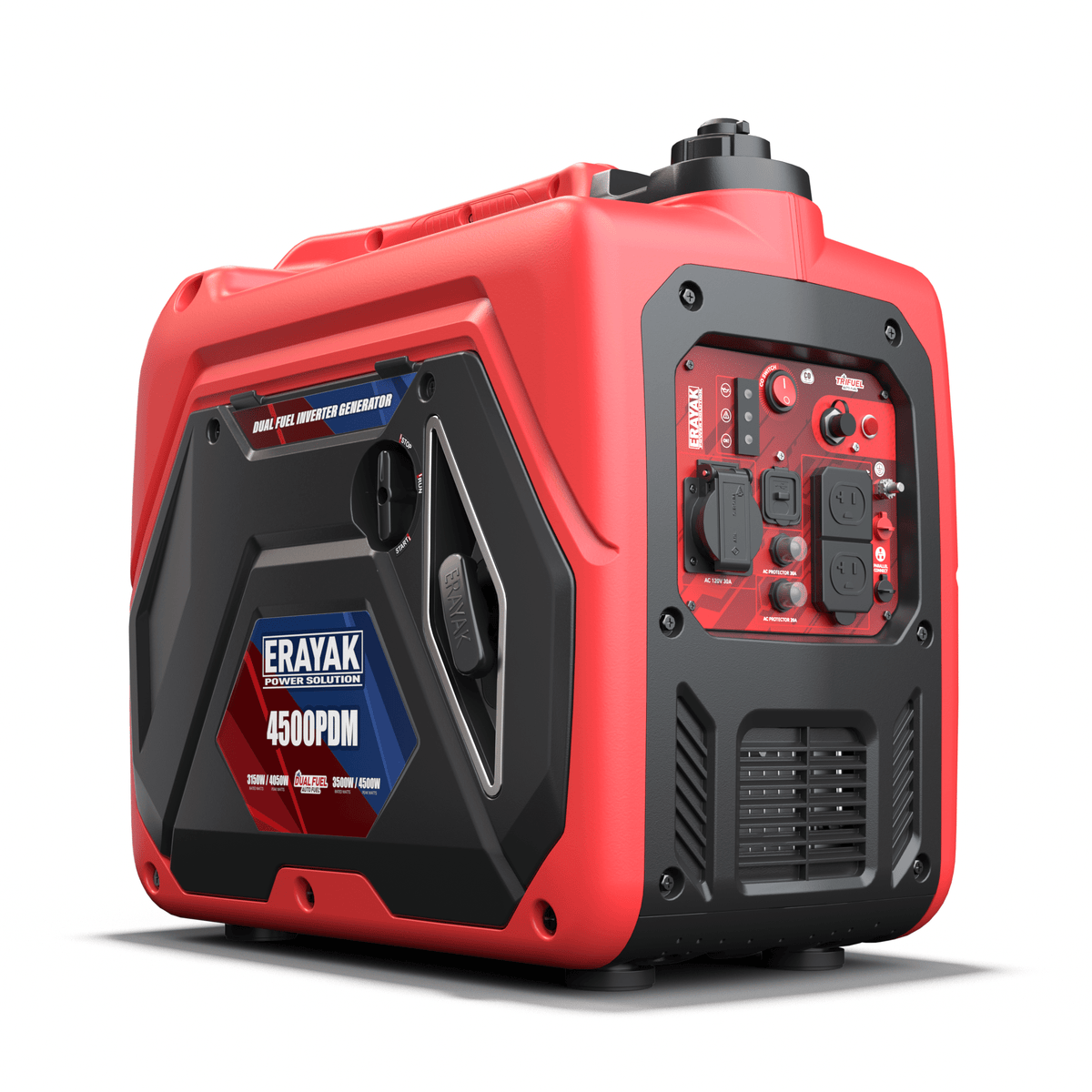
Best Dual-Fuel Pick
ERAYAK 4500PD: Best Fuel-Efficient Dual-Fuel Generator
The 4500PD is the strongest Erayak match for buyers who want fuel flexibility without jumping to a larger 120V/240V platform. It fits RV weekends, many RV AC use cases, refrigerator plus freezer backup, portable AC planning, routers, lights, and storm essentials.
- Best when propane storage and gasoline refueling flexibility both matter.
- Better size than 2400W-class units for fridge + freezer or RV comfort loads.
- A practical middle ground before stepping up to the 6800 series.
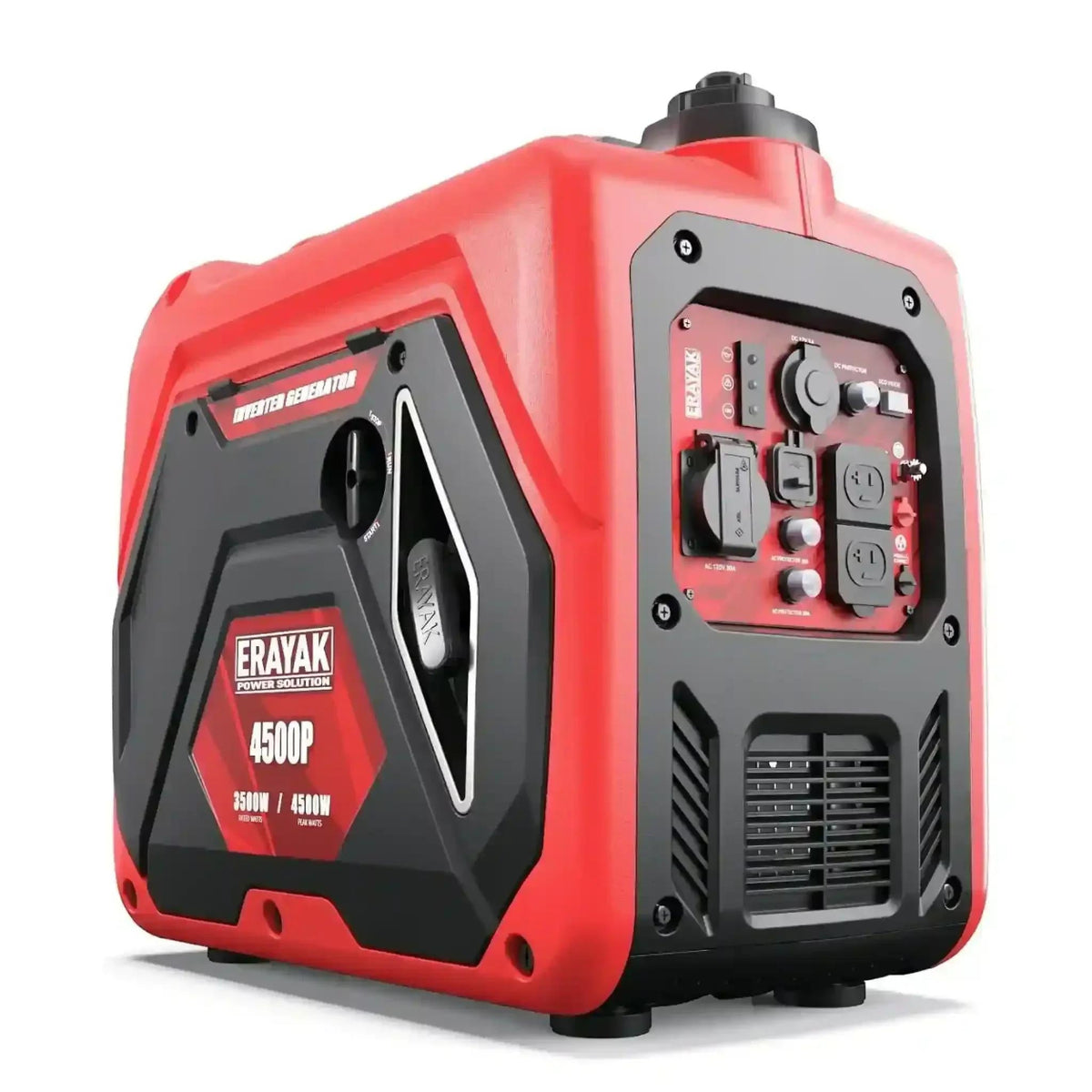
Best Gas-Only 4500W Pick
ERAYAK 4500P: Best Gas Inverter Generator for Simple Backup
The 4500P is the simpler gas-only choice when you want more output than the 2400P but do not need propane. It is useful for RV weekends, refrigerator backup, lights, routers, small devices, and basic home essentials.
- Best for buyers who want 4500W-class inverter power without dual-fuel complexity.
- Gas only, manual recoil start, about 55 lb, 2.25 gal tank, up to 8 hours runtime.
- Not for propane, natural gas, electric start, or remote start shoppers.

Best High-Capacity Pick
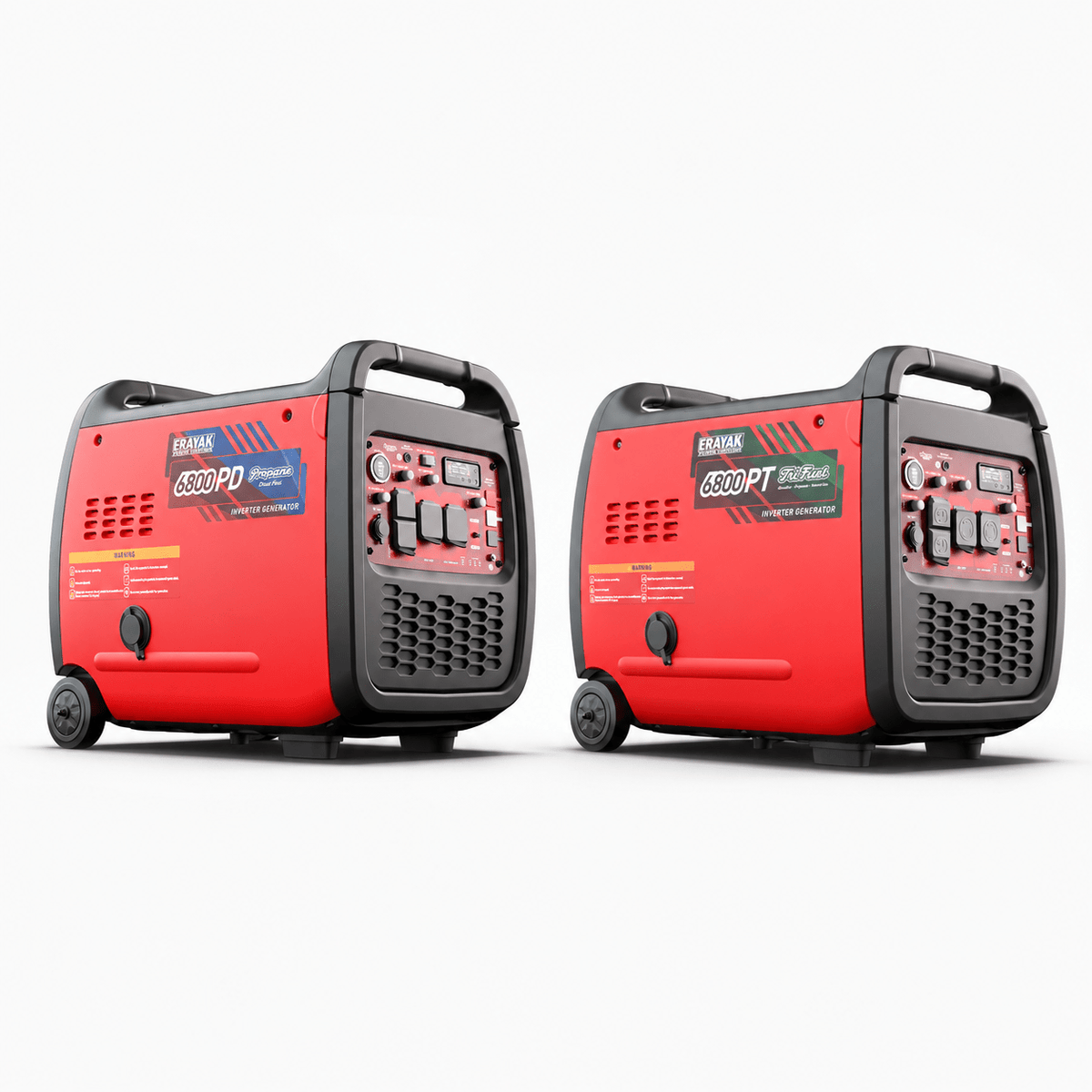
ERAYAK 6800PT: Best Tri-Fuel Generator for Larger Backup Plans
The 6800PT is not the most fuel-efficient choice for tiny loads, but it becomes the right efficiency decision when your real backup plan needs more capacity, 120V/240V output, or tri-fuel planning. It fits selected home circuits, well pump planning, sump pump, refrigerator, freezer, and larger outage setups.
- Best when 4500W-class output is too small for the job.
- Tri-fuel support gives more fuel options during longer outages.
- Use proper transfer equipment and professional setup for home circuits.
Best Dual-Fuel 120V/240V Pick
ERAYAK 6800PD: Best 120V/240V Dual-Fuel Upgrade
The 6800PD is the dual-fuel version of the 6800 platform. Choose it when you need 120V/240V output and gasoline/propane flexibility, but do not need natural gas capability.
- Best for 120V/240V backup shoppers who want gas and propane.
- Useful for selected circuits and larger emergency loads.
- More generator than needed for small camping or device-only backup.
Best Comparison Path
ERAYAK Inverter Generator Collection: Best Way to Compare by Load
The most fuel-efficient generator is the one that matches your actual load. The ERAYAK inverter generator collection lets you compare compact 2400W power, 4500W RV and backup power, and 6800W 120V/240V backup planning in one place.
- Best if you are unsure which wattage class fits your load.
- Compare gas-only, dual-fuel, and tri-fuel directions.
- Use the load chart below before choosing by wattage alone.
Fuel-Efficient Generator Comparison Chart
| Generator | Best Use Case | Power Class | Fuel Strategy | Efficiency Angle |
|---|---|---|---|---|
| ERAYAK 2400P | Camping, light backup, refrigerator-only, router, lights | 2400W peak | Gasoline | Small size avoids wasting fuel on oversized loads. |
| ERAYAK 4500PD | RV AC, refrigerator + freezer, portable AC planning, storm backup | 4500W peak | Gasoline + propane | Balanced output class with storage-friendly propane flexibility. |
| ERAYAK 4500P | Gas-only 4500W-class RV and home essentials | 4500W peak / 3500W running | Gasoline | Good middle ground when 2400W is too small and 6800W is too large. |
| ERAYAK 6800PT | 120V/240V backup, well pump planning, selected circuits | 6800W peak / 5000W rated | Gasoline + propane + natural gas | More efficient fit when smaller generators cannot handle the load. |
| Compact premium 2200W-class inverter | Small-load benchmark comparison | About 2000W-2200W class | Usually gasoline | Useful benchmark, but often too small for RV AC or multiple compressor loads. |
| Conventional open-frame generator | High constant load, jobsite, lower upfront cost | Varies | Usually gasoline or dual fuel | Can be practical for steady loads, but often louder and less efficient for variable light loads. |
How to Choose the Right Size for Fuel Efficiency
Bigger is not always more efficient. Choose by the load you actually need to run, then leave enough headroom for starting watts.
| Your Load | Typical Generator Direction | Best ERAYAK Match | Why It Saves Fuel |
|---|---|---|---|
| Phones, laptops, router, lights, small fan | Battery power station or compact inverter | 2400P | Small generator class avoids oversized fuel use. |
| Refrigerator only or refrigerator + light essentials | 2000W-2400W inverter or 4500W if more headroom is needed | 2400P or 4500PD | Matches compressor surge without jumping too large too fast. |
| Refrigerator + freezer + router + lights | 3500W-4500W inverter | 4500PD | Better surge margin and fuel flexibility for storm backup. |
| RV AC, portable AC, refrigerator, or camping comfort loads | 4500W-class inverter | 4500PD or 4500P | Large enough for real loads without jumping to 6800W class. |
| Well pump, selected circuits, 120V/240V planning | 6800W-class 120V/240V generator | 6800PT | Correct voltage and output can be more efficient than overloading smaller generators. |
Gasoline vs Propane vs Natural Gas: Which Is More Fuel Efficient?
There is no universal winner. Fuel efficiency depends on energy content, generator tuning, load size, temperature, altitude, and runtime strategy. For outage planning, the best fuel is often the one you can store and access reliably.
Gasoline
Gasoline often provides strong portable output and easy refueling in normal conditions, but storage life and storm availability can be concerns.
Propane
Propane stores well and is useful for emergency planning. It may produce less output than gasoline depending on the generator and conditions.
Natural Gas
Natural gas can be convenient for home backup planning when available, but output and connection requirements need careful setup.
Dual-fuel and tri-fuel generators do not automatically use less fuel, but they can make your backup plan more resilient. That is why the ERAYAK 4500PD and 6800PT are strong fits for shoppers who care about both efficiency and fuel availability.
Generator Safety Notice
Fuel-efficient generators still burn fuel and can produce deadly carbon monoxide. Efficiency does not make a generator indoor-safe.
- Never run a generator indoors.
- Never run a generator in a garage, basement, shed, crawlspace, enclosed patio, or near open windows.
- Always operate generators outdoors with proper ventilation and safe clearance from doors, windows, and vents.
- Install carbon monoxide alarms in your home.
- Use properly rated outdoor extension cords when powering appliances directly.
- For home circuits, use a transfer switch or approved interlock installed according to local code by a qualified professional.
FAQs About Fuel-Efficient Generators
What is the most fuel-efficient portable generator?
The most fuel-efficient portable generator is usually a properly sized inverter generator with Eco Mode. For small loads, a compact model like the ERAYAK 2400P can be more practical than running a much larger generator lightly loaded for hours.
Are inverter generators more fuel efficient?
Usually yes for variable loads. Inverter generators can adjust engine speed based on demand, which can reduce fuel use when powering refrigerators, routers, chargers, lights, and other loads that cycle up and down.
Is propane more fuel efficient than gasoline?
Not always. Propane is storage-friendly and cleaner-burning, but gasoline often provides stronger output. Choose propane for storage and backup flexibility, not because it automatically uses less fuel in every generator.
What size generator is most efficient for a refrigerator and freezer?
A refrigerator and freezer together often point toward a 3500W to 4500W-class inverter generator because both appliances can have compressor starting surge. The ERAYAK 4500PD is a strong fit if you also want propane flexibility.
Does Eco Mode save fuel on a generator?
Eco Mode can save fuel when the generator is powering lighter or variable loads. It is less useful when the generator is already running near its limit or powering a large constant load.
Can a fuel-efficient generator power a whole house?
A portable inverter generator is usually better for selected loads than whole-house backup. The ERAYAK 6800PD/PT series can support larger selected-circuit planning, but a true whole-house setup depends on your load panel, transfer equipment, local code, and installation plan.
Can I use a fuel-efficient generator indoors?
No. Gasoline, propane, and natural gas generators must run outdoors with proper ventilation. Never use a fuel generator indoors, in a garage, or near open windows.
Fuel-Efficient Inverter Power
Save Fuel by Choosing the Right Generator Size
Compare ERAYAK inverter generators by load, fuel type, and backup plan. Start with the 2400P for light loads, choose the 4500PD for dual-fuel RV and home essentials, or step up to the 6800PT for 120V/240V backup planning.


