

Best Affordable Generators in 2026: Budget Picks by Use Case
The best affordable generator is not always the cheapest one. It is the lowest-cost generator that can safely handle your real load, run quietly enough for the setting, protect sensitive electronics, and avoid expensive mistakes later.
- Light camping and charging: small inverter generator class.
- Fridge, lights, router, and small tools: 2000W to 2500W inverter class.
- RV comfort or one AC: 4000W to 4500W inverter class.
- Storm backup with more appliances: larger dual-fuel or tri-fuel planning.
For most U.S. buyers, the best affordable generator is a quiet inverter generator sized to the job. A small inverter generator is the value choice for camping, charging, and a refrigerator-only backup plan. A 4000W to 4500W inverter generator is the better value when you need RV air conditioning, a microwave with load management, or several home essentials during an outage.
If the price looks unusually low, check the running watts, noise rating, inverter output, warranty, CO safety features, outlet types, and whether it can actually start your largest motor load. A cheap generator that cannot run the appliance you bought it for is not affordable.
Best Affordable Generators by Budget Range
Prices move throughout the year, so use these ranges as a shopping framework rather than a fixed promise. The real value is matching watts, noise, portability, and fuel options to your use case.
| Budget range | Best generator class | Good for | Do not expect |
|---|---|---|---|
| Lowest budget | Small inverter generator or basic portable generator | Phones, lights, small electronics, fans, campsite charging. | RV air conditioning, whole-home backup, or large startup loads. |
| Value camping budget | 2000W to 2500W inverter generator | Camping, tailgating, battery charging, refrigerator-only backup, and quiet portable power. | Running a 15,000 BTU RV AC without careful sizing or help from a soft start. |
| Best all-around value | 4000W to 4500W inverter generator | 30A RV camping, one rooftop AC with load management, refrigerators, microwave timing, and home essentials. | Full 50A RV service, central AC, or every appliance at the same time. |
| Higher-value backup budget | Larger dual-fuel or tri-fuel inverter generator | More outage flexibility, larger RV loads, selected home circuits, sump pump, well pump planning, and fuel choice. | A true whole-house standby replacement without professional electrical planning. |
Buy the smallest generator that can start your largest required load with reasonable headroom. For many buyers, that means spending a little more for inverter quality, lower noise, and cleaner power instead of buying the cheapest open-frame unit available.

Cheap Generator vs Affordable Generator: The Difference Matters
A cheap generator wins on the checkout screen. An affordable generator wins after the power goes out, the campsite gets quiet, or the refrigerator compressor tries to start.
A low-watt generator may run lights but fail on refrigerators, pumps, microwaves, or RV AC startup surge.
Open-frame generators often cost less per watt but can be too loud for campgrounds, neighbors, or night use.
Non-inverter power may be less ideal for laptops, routers, control boards, CPAP machines, and sensitive electronics.
That does not mean every buyer needs the biggest generator. It means you should compare the total value: starting watts, running watts, inverter output, noise, weight, outlet layout, warranty, fuel storage, and safety features.
Why Affordable Inverter Generators Are Often the Better Buy
Inverter generators usually cost more than basic open-frame models, but they solve several problems that matter for RV, camping, and home-essential buyers. They typically adjust engine speed to demand, produce cleaner power, and run quieter at light loads.
| Feature | Budget open-frame generator | Affordable inverter generator |
|---|---|---|
| Cost per watt | Often lower | Often higher, but better comfort and power quality |
| Noise | Usually louder | Usually quieter, especially in eco mode |
| Electronics | May be less ideal for sensitive devices | Better fit for clean power needs |
| RV and camping use | Can be disruptive in quiet settings | Better fit when noise and portability matter |
If your only goal is powering a construction tool outdoors, a basic generator may be enough. If you care about neighbors, campgrounds, laptops, routers, refrigerators, or RV comfort, the inverter premium often pays for itself.
Choose the Best Budget Generator by Use Case
Budget shopping gets easier when you start with the job instead of the price tag. Here is the practical match for common buyers.
| Use case | Smart affordable size | What it can usually cover |
|---|---|---|
| Tent camping and small electronics | Small inverter class | Phones, lights, fans, camera batteries, small cooking support. |
| Refrigerator-only outage backup | 2000W to 2500W inverter class | Refrigerator startup, router, lights, chargers, and small essentials with load management. |
| 30A RV or travel trailer | 4000W to 4500W inverter class | One rooftop AC, converter charging, TV, lights, and microwave timing. |
| Storm backup for essentials | 4500W+ or larger dual-fuel planning | Refrigerator, freezer, sump pump, lights, router, selected appliances, and more fuel flexibility. |
| Larger backup planning | 6800W-class or larger selected-circuit setup | More startup headroom, 120V/240V planning, and selected circuits with proper transfer equipment. |
Never run a fuel-powered generator indoors, in a garage, in a shed, in a tent, under an RV awning, or near open windows. Use it outdoors only, far from doors, windows, and vents, with the exhaust pointed away from occupied spaces. Install working carbon monoxide alarms and use properly rated outdoor extension cords or a professionally installed transfer setup for home backup.
ERAYAK Affordable Generator Picks by Buyer Type
Instead of calling one model the best for everyone, match the generator to the budget job. Check the current product page for live pricing, availability, included accessories, and current promotions.

Best Light-Load Value: ERAYAK 2400P
The 2400P is the value path for small camping loads, battery charging, refrigerator-focused backup, and buyers who want portable inverter power without jumping straight to a large RV generator.
- Best for: camping, chargers, fridge-only backup, light emergency use.
- Budget logic: pay for quiet inverter power, not unused heavy-load capacity.
- Limit: not the right choice for every RV air conditioner or heavy whole-home load.

Best All-Around Budget Fit: ERAYAK 4500P
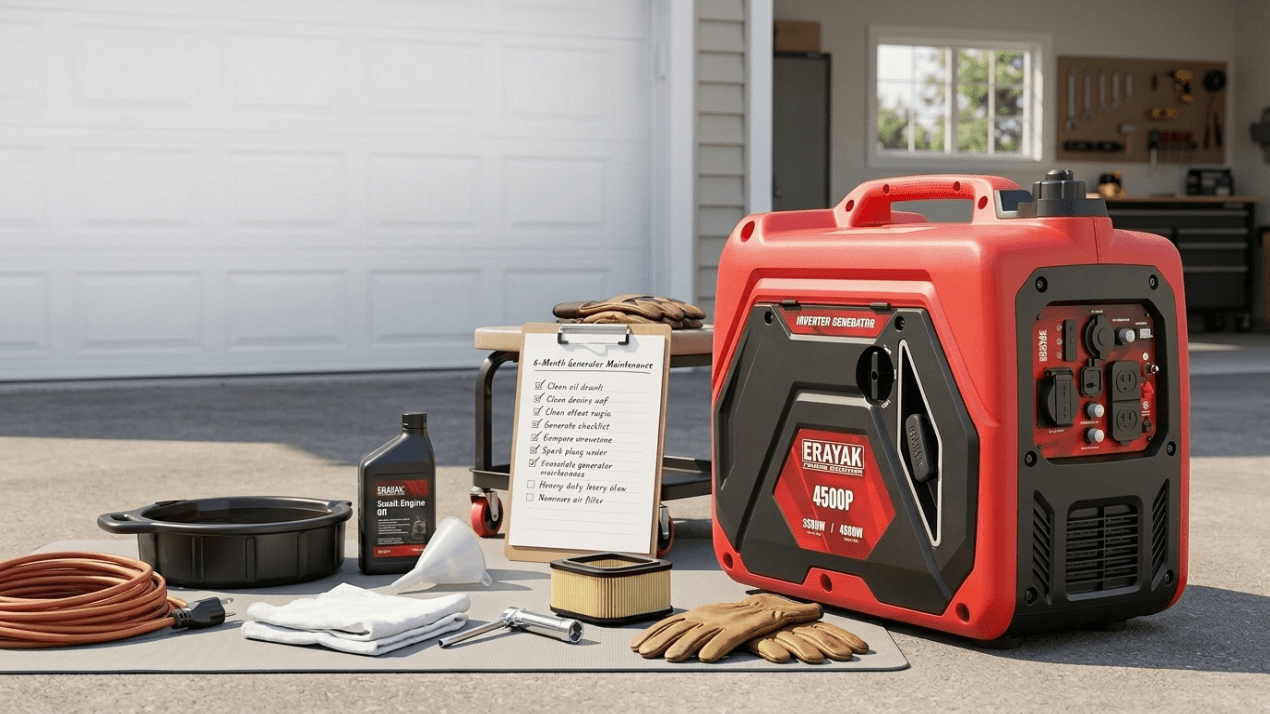
The 4500P is the gas-only 4500W inverter generator path for buyers who want more practical capacity for RV camping and home essentials while keeping the setup simple.
- Confirmed fit: gas-only, manual recoil start, 55 lb class, 2.25 gallon tank, up to 8 hours runtime, 60.5 dB, and THD below 1.2%.
- Best for: RV comfort loads, one-AC planning, refrigerators, microwave timing, and cleaner portable power.
- Limit: do not buy it for propane use, dual-fuel flexibility, electric start, or remote start.

Best Budget Upgrade for Fuel Flexibility: ERAYAK 4500PD
If propane storage and fuel flexibility matter, the 4500PD is the better fit than the gas-only 4500P. It is the practical upgrade for RV users and outage planners who want gasoline plus propane options.
- Best for: dual-fuel RV camping, storm backup, one-AC RV load management, and propane storage planning.
- Budget logic: pay more only if the second fuel option solves a real problem for your trips or outages.
- Limit: dual fuel is not the same as tri fuel; choose 6800PT only if natural gas planning matters.
5 Budget Generator Mistakes That Cost More Later
| Mistake | Why it hurts | Better move |
|---|---|---|
| Buying by peak watts only | Peak watts only cover short startup moments. | Compare running watts and your largest startup load. |
| Ignoring noise | A loud bargain can be unusable at campgrounds or near neighbors. | Choose inverter design and check dB ratings for your setting. |
| Skipping clean power | Sensitive electronics may prefer cleaner inverter output. | Use an inverter generator for laptops, routers, RV electronics, and CPAP planning. |
| Forgetting fuel storage | A generator is not useful if you cannot store or access fuel safely. | Plan gasoline rotation or consider dual-fuel propane convenience. |
| Assuming portable means whole-house | Portable units are selected-load tools unless paired with proper transfer equipment. | List essential circuits and consult a qualified electrician for home connection. |
The Best Affordable Generator Is the One That Fits the Job
For light camping and small backup, do not overbuy. For RV comfort or home essentials, do not underbuy. The sweet spot for many buyers is a quiet inverter generator that can start the largest appliance you truly need, with enough headroom to avoid overloads.

