

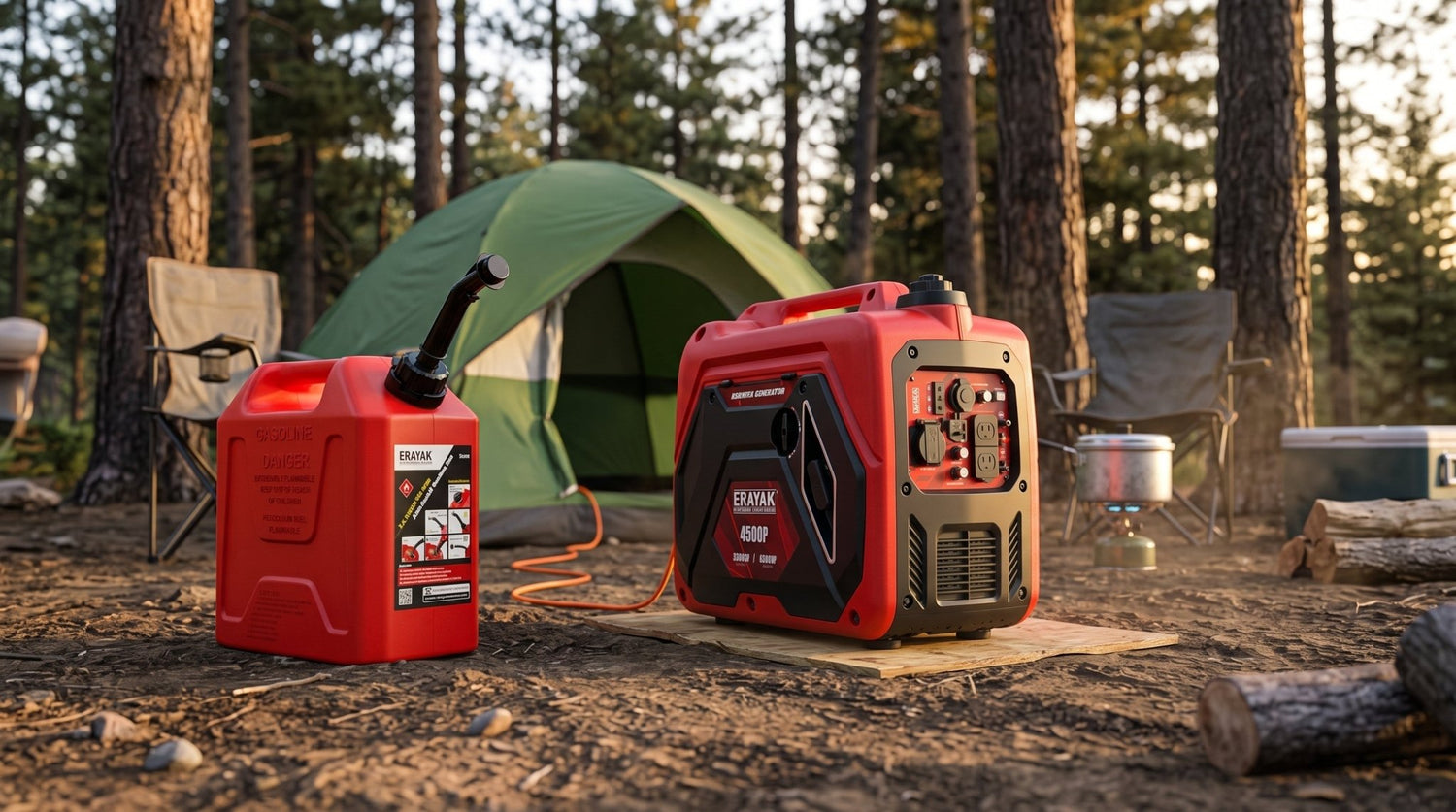
How Quiet Should a Camping Generator Be for a State Park?
For state park camping, aim for a quiet inverter generator around 60 dB or lower and always check the specific campground's generator hours. The best choice is quiet enough for shared campsites, powerful enough for your real loads, and safe to place well away from tents, RV windows, and neighboring campers.
- Look for generator rules on the campground page, not only the state park homepage.
- Assume quiet hours may block generator use overnight.
- Choose inverter power over loud open-frame jobsite models.
- Place the generator outdoors with carbon monoxide safety first.
Quick Answer: How Many Decibels Is Quiet Enough for a State Park?
A camping generator should usually be around 60 dB or lower to be considered quiet for state park or national park-style campgrounds. Some parks use a formal noise limit, such as 60 dBA measured at 50 feet, while many state parks simply enforce quiet hours and prohibit noise that carries beyond your campsite.
Practical buying target: choose a closed-frame inverter generator rated in the 50 to 60 dB range at a clearly stated distance and load. If a generator is advertised at 65 dB or higher, it may still be usable in some places, but it is more likely to attract complaints in tight campsites.
State Park Generator Rules: What Campers Should Expect
State park generator rules vary by state, park, campground loop, and season. One park may allow generators only during posted daytime windows. Another may allow generators in some loops but not in tent-only, primitive, walk-in, or quiet zones. Some parks rely on a measured decibel rule, while others use broader language such as not disturbing neighboring campsites.
Rules may specify a decibel limit at a certain distance, often using dBA weighting.
Many campgrounds restrict generator use during quiet hours, even if the generator is quiet.
Generator use may be allowed in RV loops and restricted in tent, hike-in, or quiet loops.
Before you pack, search the exact park name plus "generator," "quiet hours," and "campground rules." If the park publishes a PDF or reservation-page rule sheet, trust that over generic generator advice.
Camping Generator Decibel Chart
Generator noise ratings can be confusing because manufacturers do not all measure at the same load or distance. A 58 dB rating at quarter load is not the same experience as 58 dB at rated load. Still, the chart below gives a useful camping decision framework.
| Noise level | How it feels at camp | State park suitability | Buying note |
|---|---|---|---|
| Under 50 dB | Very quiet from a distance | Excellent, if generator hours allow | Usually small inverter units or very light load operation |
| 50 to 55 dB | Quiet conversation range | Strong target for tent camping and close campsites | Good fit for lights, charging, laptops, small fans, and light loads |
| 56 to 60 dB | Still considered quiet for many camping situations | Practical target for many state park and national park-style rules | Common range for quiet inverter generators under moderate loads |
| 61 to 65 dB | Noticeable in a quiet campground | Check rules carefully; placement matters | May be acceptable for RV loops but less ideal for quiet tent loops |
| 66 dB and above | Likely to carry across campsites | Higher complaint risk | Often too loud for peaceful camping unless the campground is permissive |
When comparing models, look for the fine print: measurement distance, load percentage, eco mode conditions, and whether the rating is for gasoline or propane. More electrical load usually means more engine speed and more noise.
Why Distance Changes Generator Noise So Much
Distance can make a quiet generator feel much more neighbor-friendly. In open outdoor conditions, doubling the distance from the sound source can reduce measured sound by roughly 6 dB. That does not make an unsafe setup safe, and it does not override campground rules, but it explains why placement is one of the easiest ways to reduce complaints.
Example: 23 feet vs 50 feet
Many portable generator ratings are published around 23 feet. Some campground and national park-style rules refer to 50 feet. Those numbers are not directly interchangeable, because sound drops as distance increases and rises again when reflected by vehicles, walls, trailers, or hard ground.
Simple campsite rule: place the generator as far from people as your campsite, cord length, and safety rules allow, but never place it where exhaust can drift toward tents, RV windows, doors, vents, neighboring sites, or trail areas.
Generator Quiet Hours: Can You Run a Generator at Night?
In most developed campgrounds, the answer is no unless the campground specifically allows it or grants an exception for medical equipment. Quiet hours commonly run overnight, often around 10 p.m. to 6 a.m., but exact times vary. Some parks also limit generator operation to short daytime windows.
- Do not assume a quiet generator is allowed during quiet hours.
- Charge batteries, power stations, and devices during the approved daytime window.
- Use battery power overnight for phones, CPAP-compatible setups, lights, and fans when possible.
- Ask the campground office before arrival if you depend on powered medical equipment.
How to Choose a Quiet Generator for State Park Camping
The quietest generator is not always the best generator. A tiny unit may be quiet but unable to handle your RV converter, fridge, coffee maker, or portable AC. A larger model may cover your loads but become too noticeable in a tight campground. Start with your actual campsite loads, then choose the quietest inverter model that can run them comfortably.
| Camping setup | Best generator direction | Noise priority | Product-routing note |
|---|---|---|---|
| Tent camping and device charging | Small inverter generator or battery power station | Highest; close campsites hear everything | Use generator only during allowed hours and keep loads light |
| Small camper, lights, refrigerator support, charging | 2,000W to 2,500W inverter class | High; this is the quiet camping sweet spot | ERAYAK 2400P fits this lighter camping role |
| 30 amp RV comfort loads and one AC in many setups | 4,000W to 4,500W inverter class | Balance noise with enough power | ERAYAK 4500P or 4500PD may fit where campground rules and load needs allow |
| Large RV or backup-power crossover | Larger inverter or 120V/240V planning | Check rules before assuming campground suitability | Better for home backup or larger RV planning than quiet tent loops |
Features that help reduce campground noise
- Inverter design: better suited to variable camping loads and sensitive electronics.
- Eco mode: lowers engine speed when loads are light, reducing noise and fuel use.
- Closed-frame housing: usually quieter than open-frame construction models.
- Right-sized output: avoid an oversized generator idling loudly for tiny loads or an undersized generator constantly straining.
- Good maintenance: old oil, clogged spark arrestors, loose panels, and poor surfaces can make a generator louder.
ERAYAK Product Match for Quiet Camping
For a state park article, product recommendations should be careful. The right choice depends on the campground's rules, your campsite spacing, and your actual power needs. Use this section as a routing guide, not a blanket promise that any generator is allowed in every park.

ERAYAK 2400P: best fit for light camping loads
The ERAYAK 2400P is the most natural fit for campers who need compact portable power for charging, lights, a small refrigerator load, fans, and basic outdoor use. It is the better product direction when the search intent is "quiet generator for camping" rather than full RV air-conditioner power.

ERAYAK 4500P: gas-only 4,500W class for RV camping
The ERAYAK 4500P is a gas-only inverter generator for RV camping, home essentials, and higher camping loads where you need more headroom. It is rated at 60.5 dB, so always compare that against the campground's posted rule and your planned placement.

ERAYAK 4500PD: dual-fuel flexibility for RV and backup use
The ERAYAK 4500PD is the better path for campers who want gasoline plus propane flexibility for RV trips and storm backup. It is more of a comfort-load and preparedness choice than a tiny tent-camping generator, so check generator hours and noise expectations before using it in state park loops.
How to Make a Camping Generator Quieter Without Creating a Safety Problem
The safest noise improvements come from choosing the right generator, reducing load, increasing distance, and controlling vibration. Avoid improvised boxes, tarps, or enclosures that trap exhaust or block cooling airflow.
- Use eco mode for light loads when the generator manual allows it.
- Run high-draw appliances one at a time to avoid sudden RPM jumps.
- Place the generator on stable dirt, grass, or a vibration-reducing surface instead of a metal platform.
- Point the exhaust away from people, tents, RV openings, and neighboring sites.
- Keep the spark arrestor, air filter, oil, and panels maintained according to the manual.
- Use only outdoor-rated cords sized properly for the load and distance.
Generator Safety Comes Before Noise Reduction
Never run a fuel-powered generator inside a tent, RV, cabin, vehicle, garage, enclosed shelter, or near open windows, doors, vents, or slide-outs. Carbon monoxide can be deadly. Operate the generator outdoors with proper ventilation, follow the owner's manual, use working carbon monoxide alarms, and keep exhaust pointed away from people and living spaces.
FAQ: State Park Generator Noise and Quiet Camping
How many decibels is considered quiet for a camping generator?
A camping generator is generally considered quiet when it runs around 60 dB or lower, especially if that rating is measured at a practical outdoor distance and under a realistic load. For tight campsites, 50 to 55 dB is more neighbor-friendly.
What is the national park generator noise level rule?
National Park Service policy commonly references 60 dBA measured at 50 feet for motorized equipment, while also allowing parks to restrict unreasonable noise. Always check the exact campground rules because local enforcement and quiet hours can be stricter.
Are generators allowed in state parks?
Often yes, but only in allowed campground areas and during posted generator hours. Some state parks restrict generators in tent-only, primitive, hike-in, or quiet loops. Check the exact park and campground page before arrival.
Can I run a quiet generator during campground quiet hours?
Usually no. Quiet hours are about time and disturbance, not just the generator's published decibel rating. If you need power overnight for medical equipment, contact the campground before booking.
Are inverter generators quieter than regular generators?
Inverter generators are usually quieter for camping because they can adjust engine speed to the load and often use enclosed housings. Open-frame construction generators are commonly louder and less campground-friendly.
How far should a generator be from a tent or RV?
Follow the owner's manual first. As a practical camping rule, keep the generator outdoors, away from tents and RV openings, and as far from people as your safe cord setup and campsite layout allow. Do not place it where exhaust can drift into living spaces or neighboring campsites.
Choose the quietest generator that still fits your real load
For light state park camping, start with a compact inverter generator like the ERAYAK 2400P. For RV comfort loads, compare the ERAYAK 4500P gas-only and 4500PD dual-fuel options, then check the exact campground rules before you travel.


