

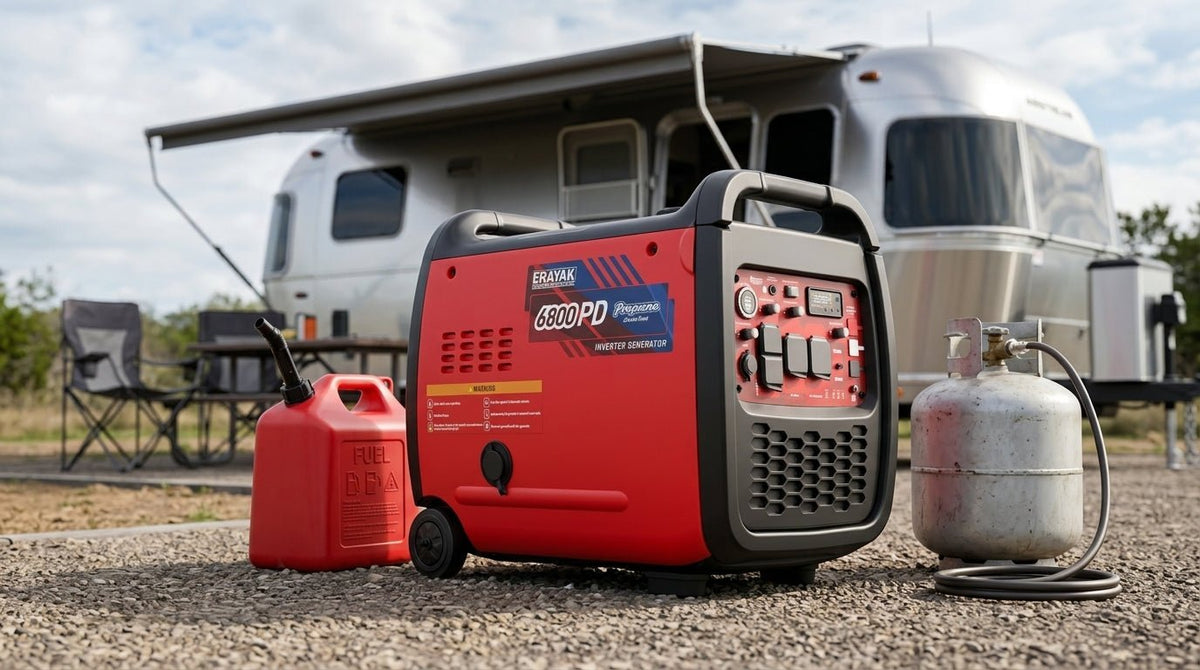
What Size Generator Do I Need for My Camper? Pop-Up & 30 Amp Chart
Find the right generator size for your camper, pop-up camper, 30 amp travel trailer, or RV air conditioner. Use this chart to match your camper type, appliance load, and starting-watt surge before your next trip.
Fast sizing answer
- Pop-up camper without rooftop AC: usually 2,000W to 2,400W.
- 30 amp camper with one RV AC: usually 3,500W to 4,500W.
- Travel trailer without AC: often 2,400W to 3,000W.
- 30 amp service is 120V x 30A, or about 3,600W maximum.
- 50 amp or dual-AC RVs need load-specific planning; full 50 amp shore-power potential is 12,000W.
Quick Answer: What Size Generator Do I Need for My Camper?
For a pop-up camper without rooftop AC, start with a 2,000W to 2,400W inverter generator for lights, charging, a small fridge, fans, and light appliances. If the pop-up has an air conditioner, size the generator from the AC label's running and starting watts; many setups need more than the no-AC range. A 30 amp camper with one 13,500 or 15,000 BTU RV air conditioner usually needs a 3,500W to 4,500W inverter generator. Larger RVs, fifth wheels, dual-AC setups, or heavier appliance use may need 6,000W to 8,000W+ for selected managed loads. Matching the full potential of 50 amp shore service requires 12,000W and the correct 120/240V connection, so use load-specific or professional planning.

Camper Generator Size Chart: Pop-Up, 30 Amp, Travel Trailer
This chart answers the core questions behind the search: what size generator for camper, how big of a generator to run a camper, what size generator for 30 amp camper, and what size generator for pop up camper.
| Camper Type | Typical Power Needs | Recommended Generator Size | Best Fit |
|---|---|---|---|
| Pop-up camper / A-frame camper without rooftop AC | Lights, phone charging, small fridge, fan, battery charging, occasional coffee maker | 2,000W to 2,400W inverter generator | Quiet, lightweight camping power without oversizing. |
| Small camper without AC use | Battery charger, LED lights, fridge controls, laptop, router, small appliances used one at a time | 2,400W to 3,000W inverter generator | Basic campsite power when rooftop AC is not required. |
| 30 amp camper / travel trailer with one RV AC | 13,500 or 15,000 BTU rooftop AC, refrigerator, lights, charging, occasional microwave | 3,500W to 4,500W inverter generator | Most common practical range for 30 amp RV camping. |
| Large travel trailer / fifth wheel | Higher appliance load, larger AC, microwave, battery charging, more simultaneous use | 4,500W to 6,800W+ | More headroom for hot weather and heavier loads. |
| 50 amp RV or dual-AC RV | Two AC units, larger appliances, high simultaneous demand | 6,000W to 8,000W+ for selected managed loads; 12,000W to match full shore-power potential | A portable generator may support selected loads without supplying full 50 amp service; verify output, receptacle, connection, and exact loads. |
Rule of thumb: add the running watts for the appliances you will use at the same time, then add the largest starting surge from one major appliance. For many campers, the rooftop air conditioner is the load that decides generator size.

What Size Generator for Pop Up Camper?
For a pop-up camper without rooftop AC, the best generator size is usually 2,000W to 2,400W. This covers the loads most pop-up camper owners actually use: lights, device charging, a small fridge, fan, battery charging, and occasional light appliance use. If your pop-up has an air conditioner, check its running and starting watts before choosing; the AC may push the required generator above this range.
A large 4,500W generator is usually unnecessary for a simple pop-up camper unless you plan to run a high-draw air conditioner, a microwave, or multiple heavy appliances at the same time. For searchers comparing a generator for pop up camper, the strongest practical answer is: choose the smallest inverter generator that can handle your real peak load with safe headroom.
Best Size
2,000W to 2,400W is the normal sweet spot for simple pop-up camping power without rooftop AC.
Use Case
Lights, charging, small fridge, fan, battery charging, and one small appliance at a time.
When to Size Up
Move higher if your pop-up camper has AC or you want more appliance headroom.
What Size Generator Do I Need for a 30 Amp Camper?
A 30 amp camper uses 120V service, so the theoretical maximum is about 3,600 watts. The math is simple: 120 volts x 30 amps = 3,600 watts. The Cummins RV Generator Handbook gives the same 3,600W maximum for a 30 amp shore cord and 12,000W for the full potential of a 50 amp cord. In real use, generator sizing is not just about the shore-power rating or plug. You also need enough starting wattage for the RV air conditioner compressor and the exact loads you plan to run.
For most 30 amp campers with one 13,500 or 15,000 BTU rooftop AC, a 3,500W to 4,500W inverter generator is the practical range. A 2,000W generator may run lights and charging, but it is usually too small for reliable RV AC startup.
If your camper has a soft-start kit on the air conditioner, your startup demand may be lower. If you are camping in hot weather, using an older AC unit, or running a microwave and AC close together, choose more headroom.
What Size Generator Do I Need for a Travel Trailer?
Most travel trailers need either a small generator for basic campsite power or a larger generator for air conditioning. Without AC, many travel trailers can operate on a 2,400W to 3,000W inverter generator if appliances are managed carefully. With one rooftop AC, most users should start in the 3,500W to 4,500W class.
If you want to run the AC, microwave, coffee maker, and battery charger at the same time, you may need a larger generator or you may need to manage loads one at a time. The safest sizing method is to check the appliance labels in your RV and compare both running watts and starting watts.
How Many Watts Does It Take to Run a Camper?
To calculate camper generator size, list what you need to run at the same time. Add the running watts, then add the largest starting surge. Motors and compressors usually draw much more power for a few seconds when they start.
| Camper Appliance | Typical Running Watts | Typical Starting Watts | Generator Sizing Note |
|---|---|---|---|
| 13,500 BTU RV air conditioner | 1,300W to 1,500W | 2,800W to 3,200W | Main reason many campers need 3,500W+. |
| 15,000 BTU RV air conditioner | 1,500W to 1,800W | 3,000W+ depending on model and conditions | Choose extra headroom in hot weather. |
| Microwave | 1,000W to 1,500W | Usually similar to running watts | Avoid running with AC startup on smaller generators. |
| RV refrigerator / small fridge | 300W to 700W | 600W to 1,200W | Check the appliance label for exact numbers. |
| Coffee maker / electric kettle | 800W to 1,500W | Usually similar to running watts | Use one heavy appliance at a time. |
| Battery charger / converter | 300W to 1,000W | Varies by system | Can add meaningful load while charging depleted batteries. |
| LED lights, phone charging, laptop | 5W to 150W | Minimal | Small loads rarely decide generator size. |
Can a 2000 Watt Generator Run a Camper?
Yes, a 2,000 watt generator can run a small camper or pop-up camper when you are powering light loads: lights, charging, a small fridge, a fan, and maybe one small appliance at a time. It is not usually the right choice for starting a standard RV rooftop air conditioner.
For the query can a 2000 watt generator run a camper, the best answer is: yes for basic camper power, usually no for RV AC. If AC matters, move up to the 3,500W to 4,500W range.
Can a 3000 Watt Generator Run a Camper?
A 3,000 watt generator can run many small camper loads and may run some smaller RV air conditioners, especially if the AC has a soft-start kit. However, it can still be tight for a 13,500 or 15,000 BTU rooftop AC plus normal appliances.
If you want a more comfortable setup for a 30 amp camper, a 4,500W class inverter generator usually gives better startup headroom and fewer load-management problems.
Inverter Generator vs Open-Frame Generator for Campers
For camper and RV use, an inverter generator is usually the better fit. Campers often include sensitive electronics such as converters, thermostats, TVs, routers, and battery chargers. Inverter generators are designed to provide cleaner power and a quieter campsite experience than many open-frame jobsite generators.
When comparing a camper generator, look at wattage, starting watts, outlet compatibility, sound level, fuel type, weight, and whether the generator is easy to move around the campsite.
Recommended ERAYAK Generator Matches by Camper Type
Use these ERAYAK matches as a starting point. Final sizing should always be based on your RV's appliance labels, air conditioner size, outlet needs, and how many loads you plan to run at the same time.
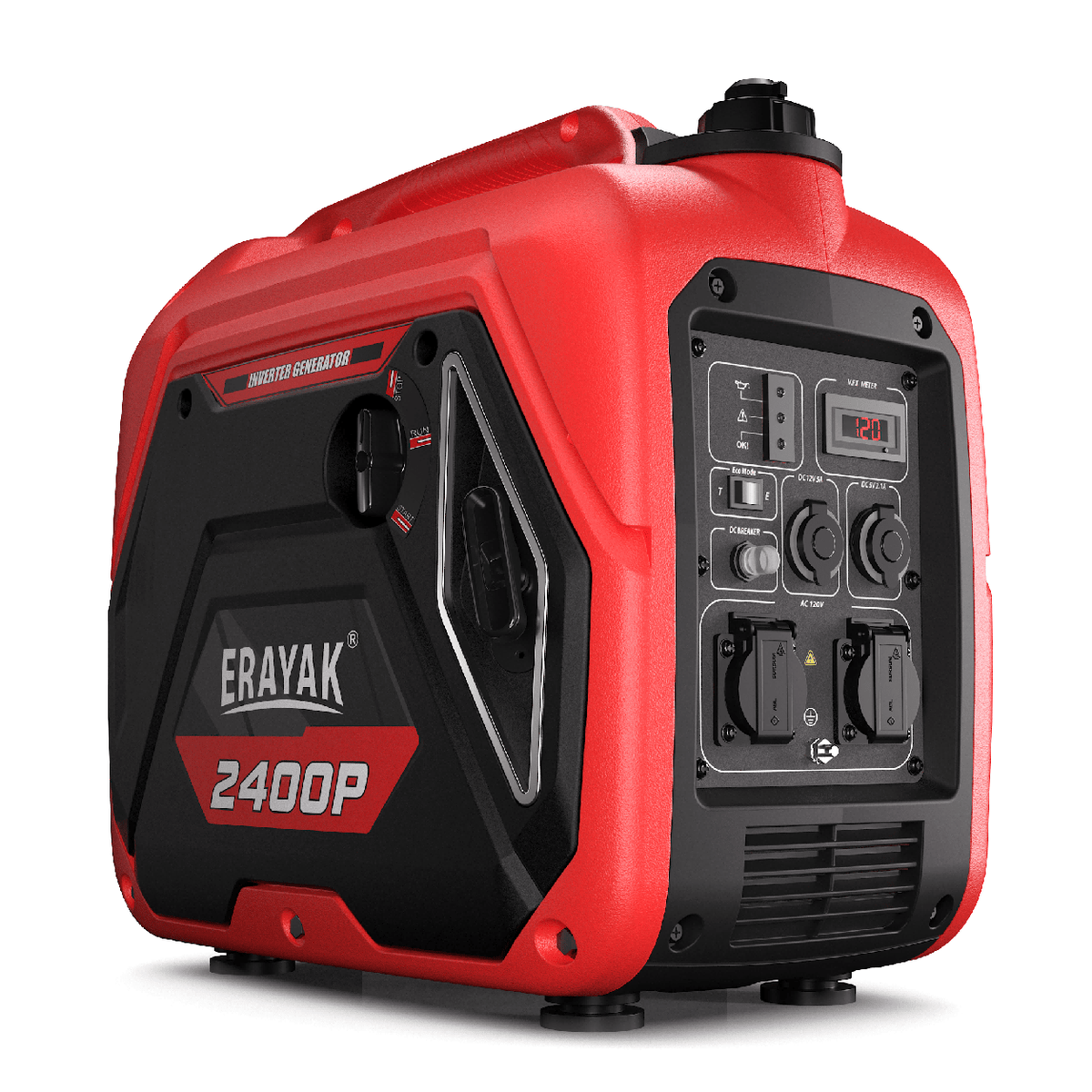
ERAYAK 2400P
Best fit for pop-up campers, basic camping power, small fridge use, battery charging, and quiet lightweight campsite power.
Compare the ERAYAK 2400P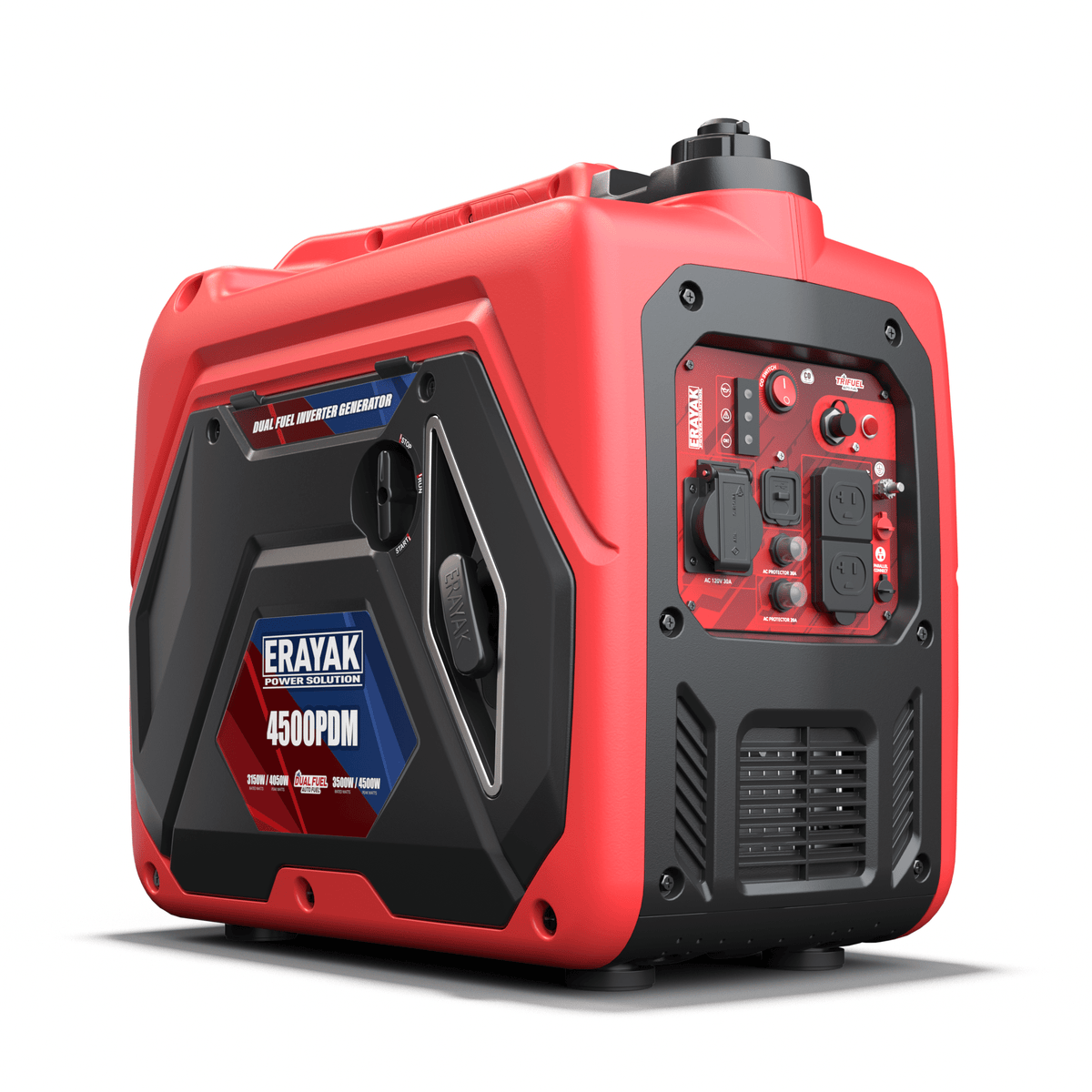
ERAYAK 4500PD Series
Best fit for many 30 amp travel trailers where users want extra headroom for one RV air conditioner and normal RV essentials.
Compare the ERAYAK 4500PD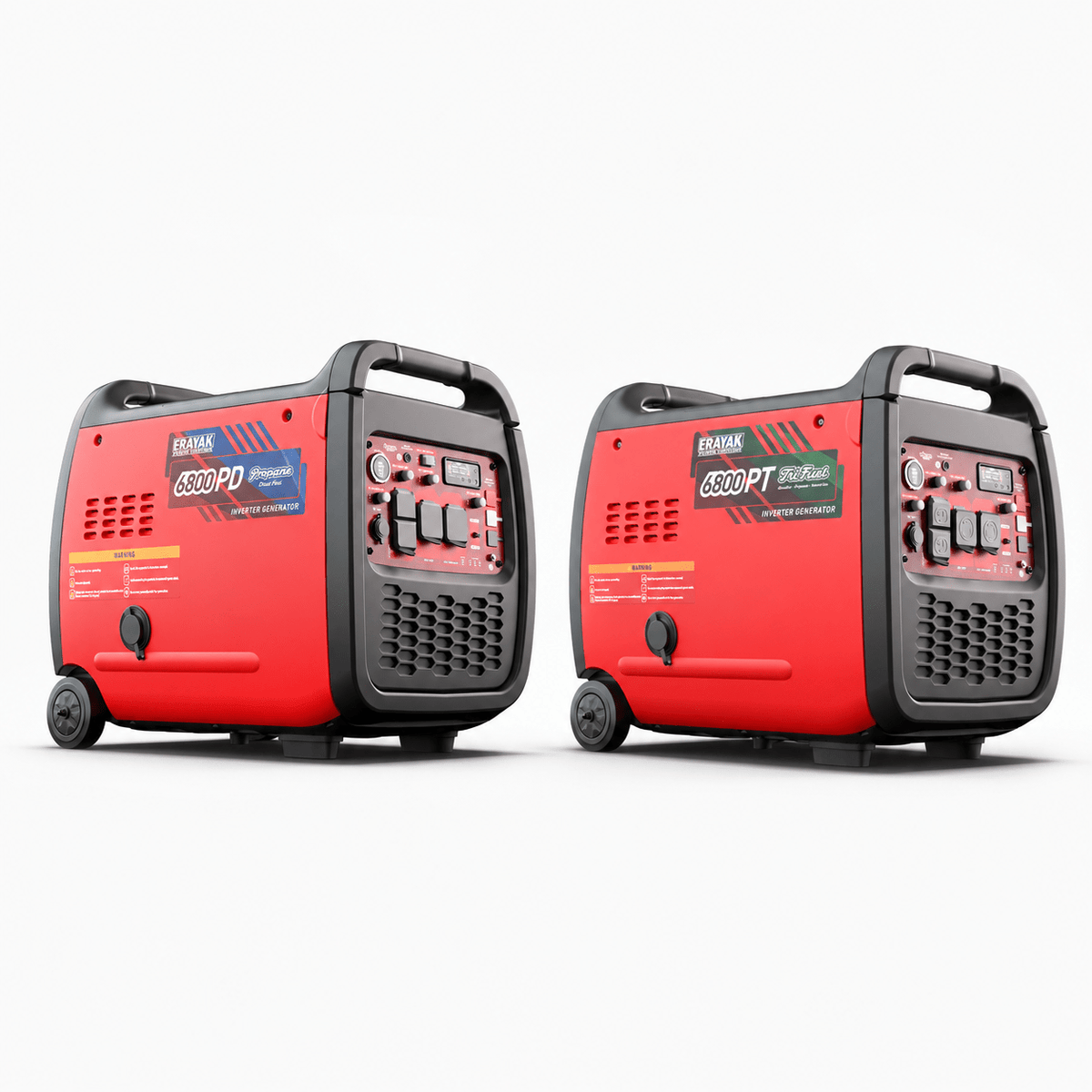
ERAYAK 6800PD / 6800PT Series
Best fit for users who need more capacity for larger RV loads, 120V/240V planning, or combined camping and home backup use. For true 50 amp RV service, size by the exact loads and connection requirements.
See the ERAYAK 6800PD/PTGenerator Safety for Camper and RV Use
Important safety notice: never run a generator inside a camper, RV, tent, garage, truck bed cap, or any enclosed or partially enclosed space. Operate the generator outdoors with exhaust pointed away from people, doors, windows, vents, and neighboring campsites. Use a working carbon monoxide alarm in your RV, keep the generator dry, use properly rated outdoor cords, and follow your generator manual, RV manual, campground rules, and local electrical requirements.
Frequently Asked Questions
What size generator do I need for my camper?
For a pop-up camper without rooftop AC, start around 2,000W to 2,400W. If the pop-up has AC, size from the AC label's running and starting watts. For a 30 amp camper with one RV air conditioner, start around 3,500W to 4,500W. For larger RVs or dual-AC setups, size by the exact loads you plan to run.
What size generator for pop up camper?
A 2,000W to 2,400W inverter generator is usually the best size for a pop-up camper without rooftop AC when you are powering lights, charging, a small fridge, fan, and light campsite appliances. If the camper has AC, use the AC label's running and starting watts to size the generator.
What size generator for 30 amp camper?
Most 30 amp campers with one rooftop AC are better matched with a 3,500W to 4,500W inverter generator. This gives more starting-watt headroom than a small 2,000W generator.
What size generator for a camper AC?
For a standard 13,500 or 15,000 BTU RV rooftop AC, many campers should start around 3,500W to 4,500W. Smaller AC units with soft-start kits may need less, but hot weather and older compressors increase startup demand.
Can a 2000 watt generator run a camper?
Yes for basic camper loads such as lights, charging, a small fridge, and a fan. Usually no for starting a standard RV rooftop air conditioner.
Can a 3000 watt generator run a camper?
A 3,000 watt generator may run many small camper loads and some smaller AC setups, especially with a soft-start kit. For a typical 30 amp camper with a 13,500 or 15,000 BTU AC, 3,500W to 4,500W is usually more comfortable.
How big of a generator to run a camper and microwave?
If you want to run a camper air conditioner and microwave, a 4,500W class generator is often a better starting point. On smaller generators, run one high-draw appliance at a time.
What size generator for a travel trailer?
Without AC, many travel trailers can use 2,400W to 3,000W. With one rooftop AC, most users should start around 3,500W to 4,500W.
Do I need an inverter generator for a camper?
An inverter generator is usually preferred for campers because it is quieter and better suited for sensitive electronics than many open-frame jobsite generators.
Choose the Right Camper Generator Before Your Next Trip
Match your generator to the camper type, air conditioner size, and real appliance load. For simple pop-up camper power, compare the 2400P. For many 30 amp travel trailers, compare the 4500PD Series. For larger RV and home backup needs, review the 6800PD/PT Series.


