

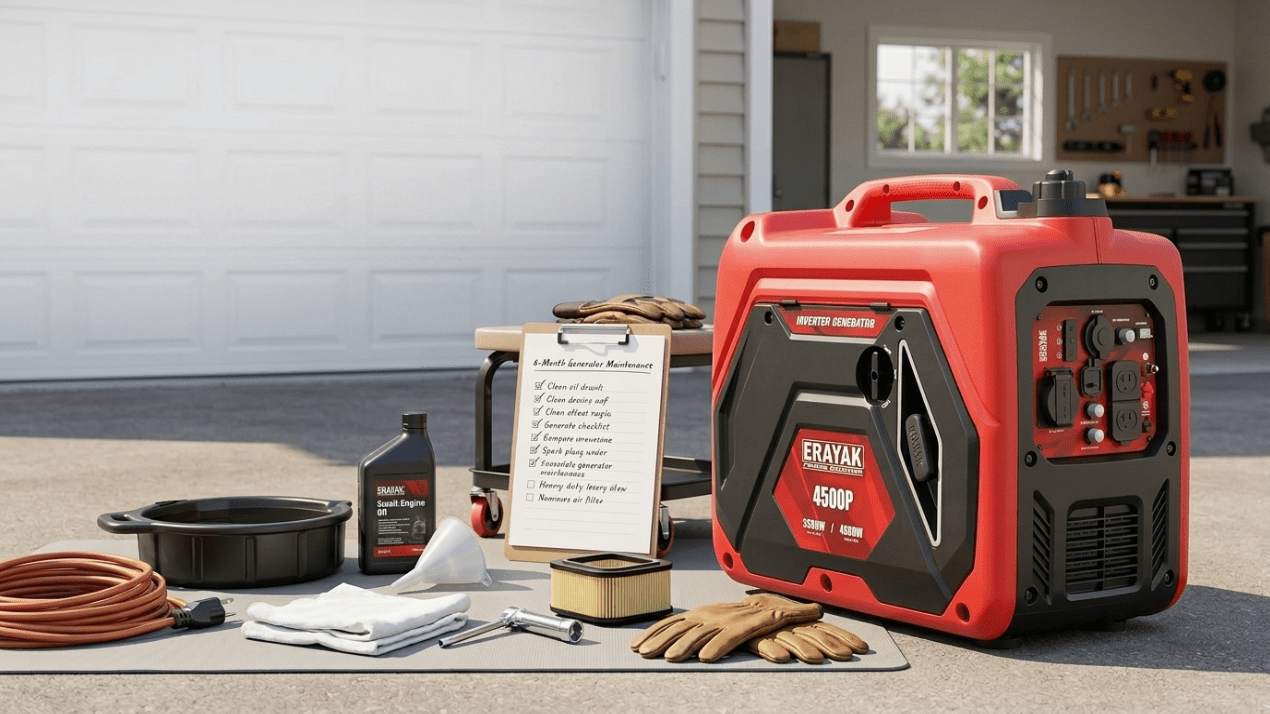
Portable Generator Maintenance Guide: What to Check After 6 Months
Portable generator maintenance is easy to ignore until the next outage, storm, camping trip, or jobsite project. A 6-month check helps you catch old fuel, low oil, dirty air filters, weak batteries, damaged cords, loose hardware, and storage problems before you actually need backup power.
Quick Answer
After 6 months, inspect your portable generator before relying on it. Check the engine oil, fuel condition, air filter, spark plug, battery if equipped, outlets, extension cords, cooling vents, fasteners, tires or feet, recoil starter, and overall signs of leaks, corrosion, or rodent damage.
A proper generator maintenance checklist should include a test run under light load, a review of storage condition, and a generator oil change whenever the oil is dirty, old, contaminated, or due according to the owner’s manual. Always follow the maintenance schedule in your specific generator manual.
Why Portable Generator Maintenance Matters
A portable generator may sit unused for months, then be expected to start immediately during a power outage. That is why maintenance is part of emergency readiness. Fuel can age, oil can degrade, filters can collect dust, batteries can weaken, and cords can become damaged in storage.
Starts When Needed
Regular maintenance helps prevent hard starting, rough running, shutdowns, and poor performance after long storage.
Reduces Engine Wear
Clean oil, clean air, and proper storage help protect the engine during emergency use, outdoor work, and seasonal operation.
Catches Problems Early
A maintenance check can reveal fuel leaks, damaged cords, blocked vents, loose parts, or unsafe storage issues before use.
6-Month Generator Maintenance Checklist
Use this checklist every 6 months, before hurricane season, before winter storm season, before camping season, or after long storage. Always compare this list with your owner’s manual.
| Maintenance Item | What to Check | Why It Matters |
|---|---|---|
| Engine oil | Oil level, color, smell, contamination, and change interval | Low or dirty oil can reduce reliability and increase engine wear |
| Fuel | Old fuel, fuel odor, water contamination, fuel cap, fuel lines | Stale or contaminated fuel is a common cause of starting problems |
| Air filter | Dirt, dust, oil saturation, blockage, damage | A dirty filter can reduce airflow and engine performance |
| Spark plug | Wear, carbon buildup, gap, cracked insulator, loose connection | A poor spark plug can cause hard starting and rough operation |
| Battery | Charge level, terminals, corrosion, wiring, condition | Important for electric-start models and control electronics |
| Cooling vents | Dust, leaves, nests, debris, blocked airflow | Blocked airflow can cause overheating or poor performance |
| Outlets and panel | Cracks, loose covers, corrosion, damaged switches | Protects connected devices and helps prevent electrical issues |
| Extension cords | Cuts, fraying, crushed areas, missing ground prong, correct rating | Damaged or undersized cords can create shock, fire, or performance risks |
| Frame and hardware | Loose bolts, damaged feet, cracked handles, worn wheels | Helps with safe transport, placement, and vibration control |
| Test run | Start, idle, warm-up, light load, shutdown, unusual noise | Confirms readiness before the next outage or trip |
Generator Oil Change and Oil Inspection
A generator oil change is one of the most important maintenance tasks. Oil lubricates the engine, helps manage heat, and protects internal components. After 6 months, inspect the oil even if the generator was not used heavily.
| Oil Check | What It May Mean | Action |
|---|---|---|
| Oil level is low | Normal consumption, leak, or improper storage | Top off or change oil according to the manual and inspect for leaks |
| Oil is dark or dirty | Used oil, carbon, contamination, or long service interval | Change oil before relying on the generator |
| Oil smells like fuel | Possible fuel dilution or carburetor-related issue | Do not ignore it; inspect before extended use |
| Oil looks milky | Possible water contamination | Change oil and inspect storage exposure or engine condition |
| Oil is clean and at correct level | Likely ready if within manual schedule | Record the check date and operating hours |
Fuel System and Storage Check
Fuel condition is one of the most common maintenance issues after storage. If your generator has been sitting for 6 months, check the fuel tank, cap, fuel lines, shutoff valve, and any signs of varnish, stale odor, water, leaks, or residue.
| Fuel System Item | What to Look For | Maintenance Action |
|---|---|---|
| Fuel tank | Old fuel, rust, debris, water, strong stale smell | Drain or refresh fuel according to the manual and local fuel disposal rules |
| Fuel cap | Cracks, damaged seal, clogged vent | Clean or replace if damaged |
| Fuel lines | Cracks, stiffness, leaks, loose connections | Replace damaged lines before operation |
| Fuel shutoff | Sticking, leaking, hard movement | Inspect before starting and store according to manual guidance |
| Propane equipment | Hose condition, regulator condition, connection integrity | For dual-fuel models only; check for damage and follow propane safety instructions |
Air Filter, Spark Plug, and Starting System
Air, spark, and fuel are the basics of reliable starting. After storage, check whether the air filter is clean, the spark plug is in good condition, and the starting system feels normal.
| Component | Check | Why It Matters |
|---|---|---|
| Air filter | Dust, blockage, oil saturation, torn material | Clean airflow helps the engine run smoothly |
| Spark plug | Wear, carbon, gap, corrosion, cracked ceramic | Good spark helps prevent hard starting and misfire |
| Recoil starter | Smooth pull, proper return, no frayed rope | Important for manual-start generators |
| Electric start battery | Charge, terminals, corrosion, cable security | Important for models equipped with electric start |
| Choke and controls | Smooth movement, correct labeling, no sticking | Helps with reliable startup and shutdown |
Outlets, Cords, Loads, and Test Run
A generator maintenance checklist should include the electrical side, not just the engine. Inspect outlets, covers, switches, breakers, cord condition, and load behavior before using the generator for emergency backup.
| Electrical Check | What to Inspect | Maintenance Action |
|---|---|---|
| Outlets | Cracks, looseness, corrosion, damaged covers | Do not use damaged outlets until inspected or repaired |
| Breaker / reset controls | Proper movement and visible damage | Confirm normal operation before connecting loads |
| Extension cords | Cuts, fraying, crushed insulation, missing ground prong | Replace damaged cords immediately |
| Load test | Start with light load after warm-up | Listen for rough running, surging, alarms, or shutdowns |
| Shutdown | Remove load first, then shut down according to manual | Helps protect connected devices and generator components |
How to Store Your Generator After Maintenance
Good storage makes the next 6-month maintenance check easier. Store the generator clean, dry, ventilated, protected from rodents, and away from corrosive chemicals or standing water.
| Storage Step | Purpose | Best Practice |
|---|---|---|
| Clean exterior | Removes dirt, salt, dust, grass, and debris | Wipe down after cooling and before storage |
| Protect vents | Prevents blockage and pest nesting | Store in a clean dry area while maintaining ventilation |
| Manage fuel | Reduces stale fuel and carburetor issues | Follow your manual for fuel shutoff, draining, or stabilizer use |
| Record maintenance | Prevents missed oil changes and service intervals | Keep a log with date, hours, oil, fuel, and inspection notes |
| Store accessories | Keeps cords, funnels, oil, and tools ready | Keep generator accessories labeled and dry |
Erayak Generator Maintenance Notes
Erayak 2400P: Compact Generator Maintenance
The Erayak 2400P is a compact inverter generator often used for camping, lights, phones, WiFi, charging, and small emergency loads. After 6 months, focus on oil condition, fuel freshness, air filter, spark plug, outlets, cords, and a short test run.
- Good fit for compact emergency and outdoor power setups
- Maintenance focus: oil, fuel, air filter, spark plug, cords, and test run
- Always follow the official owner’s manual for service intervals
Erayak 4500P: Maintenance for Home Backup and Outdoor Use
The Erayak 4500P is a gas-only portable inverter generator used for home backup, camping, outdoor events, and worksite support. After 6 months, inspect the engine oil, fuel system, cooling vents, recoil starter, outlets, extension cords, and storage condition.
- Gas-only portable inverter generator
- Manual recoil start
- 55 lb lightweight design
- 2.25 gal fuel tank
- Up to 8 hours runtime
- THD < 1.2% for sensitive electronics
- 60.5 dB noise level
Erayak 4500PD: Dual-Fuel Maintenance Planning
The Erayak 4500PD adds gasoline and propane flexibility. In addition to standard oil, air filter, spark plug, outlet, and test-run checks, inspect propane hoses, regulator condition, and fuel connections before use.
- Gasoline and propane flexibility
- Useful for longer backup power planning
- Maintenance focus includes both gasoline and propane fuel-system checks
Erayak 6800PD / 6800PT: Maintenance for Larger Backup Loads
The Erayak 6800 series is built for larger emergency, outdoor, and selected 120V/240V planning. Maintenance should include oil, fuel system, air filter, spark plug, outlets, cords, frame condition, wheels, and a careful test run before storm season or jobsite use.
- 6800W peak power
- 5000W rated power on gasoline at 100% output
- 30A L5-30R outlet
- 30A 120V/240V L14-30R outlet
- Dual 120V household outlets
- TT-30R RV adapter accessory included
Maintenance Safety Checklist
Generator maintenance should be done carefully. Before inspection, let the generator cool, disconnect loads, work in a ventilated area, and keep fuel away from flame, sparks, heaters, and hot surfaces.
- Read the owner’s manual before service.
- Turn the generator off and let it cool before maintenance.
- Disconnect all loads before inspection or service.
- Check oil level before starting.
- Never run a generator indoors, in a garage, shed, basement, crawlspace, porch, or enclosed area.
- Run test starts outdoors only, away from doors, windows, vents, and enclosed spaces.
- Inspect extension cords for cuts, fraying, crushed insulation, and missing ground prongs.
- Use only properly rated outdoor extension cords.
- Do not service fuel components near flame, sparks, smoking areas, or hot engine parts.
- Let the generator cool before refueling.
- Keep cooling vents clear of dust, leaves, grass, nests, and debris.
- Record service date, oil change, operating hours, and any issues found.
Keep Your Generator Ready Before the Next Outage
A generator that sits for 6 months should be inspected before you rely on it. Check oil, fuel, filters, spark plug, cords, outlets, vents, and test operation. For reliable emergency and outdoor power, explore Erayak inverter generators built for home backup, camping, events, and worksite use.
FAQ: Portable Generator Maintenance
What maintenance does a portable generator need after 6 months?
After 6 months, check the engine oil, fuel condition, air filter, spark plug, battery if equipped, outlets, extension cords, cooling vents, frame hardware, recoil starter, and test operation. Always compare your checklist with the owner’s manual.
How often should I change generator oil?
Follow the oil change interval in your generator owner’s manual. Change oil sooner if it is dirty, contaminated, smells like fuel, looks milky, or if the generator has been used heavily or stored for a long time.
Should I change generator oil after storage?
Inspect the oil after storage. If the oil is dirty, old, contaminated, low, or due according to the manual, change it before relying on the generator for an outage or trip.
What causes a generator not to start after sitting?
Common causes include stale fuel, dirty carburetor, low oil, dirty air filter, worn spark plug, weak battery, clogged fuel system, or improper storage. Start with the basic maintenance checklist and consult the manual.
Can I run a generator with old fuel?
Old or contaminated fuel can cause hard starting, rough running, or fuel-system issues. If fuel smells stale or shows signs of water or debris, follow the manual for draining or replacing it safely.
Do inverter generators need maintenance?
Yes. Inverter generators still have engines, fuel systems, oil, filters, spark plugs, cooling vents, outlets, cords, and storage needs. Follow the same maintenance principles and the model-specific manual.
What should I check before storm season?
Before storm season, check oil, fuel, air filter, spark plug, cords, outlets, generator placement plan, fuel storage, carbon monoxide alarms, and your essential-load list. Do a safe outdoor test run before an emergency.
