

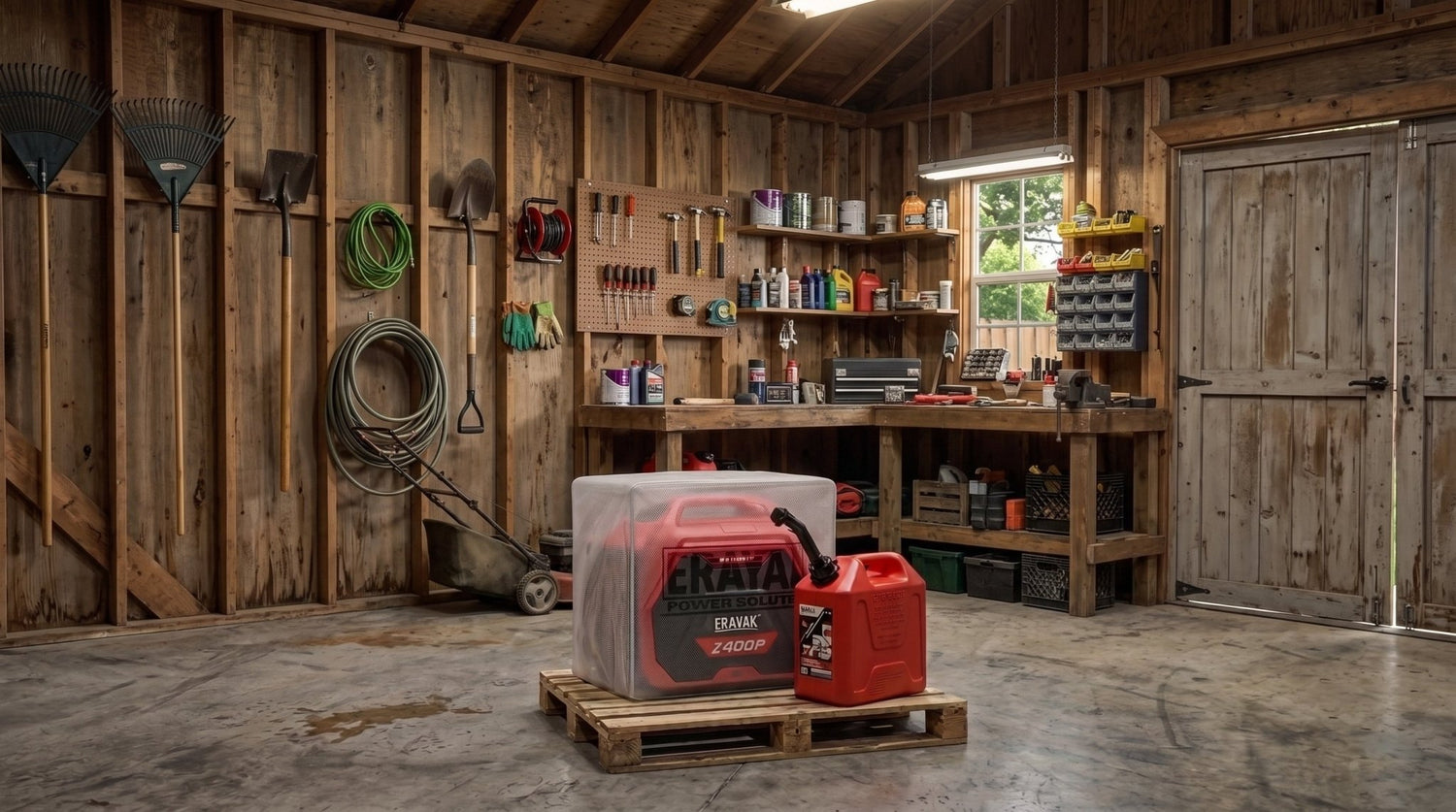
Generator Storage Guide: How to Store Your Generator the Right Way
Proper generator storage helps prevent fuel degradation, carburetor clogging, hard starting, dust buildup, moisture damage, and long-term reliability problems. A few simple preparation steps can protect your generator and keep it ready for the next power outage, storm, camping trip, RV weekend, or emergency backup situation.
Quick Answer
To store a portable generator properly, let it cool, clean the exterior, inspect cords and outlets, follow the manual for fuel draining or fuel stabilizer use, check or change engine oil, protect the air intake and exhaust area from dust, store it in a dry ventilated location, and cover it with a breathable generator cover bag after the unit is fully cool and dry.
For long-term storage, the Erayak Universal Waterproof Generator Cover Bag helps protect your generator from dust, UV exposure, light moisture, and storage wear. It is a practical accessory for keeping your generator cleaner between emergency seasons, camping trips, and home backup use.
Why Generator Storage Matters
A generator may sit unused for months between power outages, storm seasons, camping trips, or RV weekends. During that time, fuel can age, carburetor passages can clog, dust can collect around vents, moisture can attack metal parts, and small maintenance issues can become hard-start problems later.
Prevent Fuel Degradation
Old gasoline can leave sticky deposits, cause hard starts, and clog carburetor passages if the generator is stored incorrectly.
Reduce Dust and Moisture
Dust, humidity, and storage debris can affect vents, controls, wiring, metal surfaces, and air intake areas.
Stay Ready for Outages
A properly stored generator is easier to inspect, start, and use when the next blackout or emergency arrives.
Step 1: Handle Fuel Before Storage
Fuel is the biggest storage issue for most portable generators. Leaving old fuel in the tank and carburetor for long periods can lead to hard starting, surging, stalling, carburetor clogging, and fuel-system residue.
| Storage Choice | When It Makes Sense | What to Remember |
|---|---|---|
| Drain the fuel system | Long-term storage or seasonal shutdown | Follow your generator manual for draining the tank, fuel line, and carburetor bowl |
| Use fuel stabilizer | When the manual allows treated fuel storage | Add stabilizer to fresh fuel, then run the generator long enough to circulate treated fuel |
| Run the carburetor dry | When recommended by the manual | Helps reduce fuel sitting inside small carburetor passages |
| Label fuel cans | Emergency and hurricane-season preparation | Write purchase date and fuel type so old fuel is not used by mistake |
| Rotate stored fuel | Any home backup fuel plan | Use older fuel first and refill with fresh fuel before storm season |
Step 2: Check Oil and Basic Maintenance
Storage is a good time to inspect basic service items. A clean generator with old oil, dirty air filter, loose hardware, or a weak spark plug may still be difficult to start after months of inactivity.
| Maintenance Item | Why It Matters | Storage Tip |
|---|---|---|
| Engine oil | Old or dirty oil can reduce engine protection | Check level and condition; change oil if recommended by the manual |
| Air filter | A dirty filter affects airflow and starting | Inspect, clean, or replace according to the manual |
| Spark plug | A worn or fouled plug can cause weak ignition | Inspect and replace if worn, dirty, or damaged |
| Fuel lines | Cracks or leaks can create safety issues | Check for brittleness, wet spots, and fuel smell |
| Fasteners and frame | Vibration can loosen parts over time | Inspect visible bolts, handles, feet, and panels |
| Outlets and controls | Dust and moisture can affect usability | Keep the control panel clean, dry, and protected |
Step 3: Clean the Generator Before Covering It
Do not cover a dirty, wet, or hot generator. Dust, mud, oil residue, grass clippings, and moisture can stay trapped under a cover and cause long-term storage problems.
Let It Fully Cool
A cover should only be used after the generator is off, cool, and dry. Never cover a hot engine or muffler.
Wipe Exterior Surfaces
Remove dust, oil residue, mud, grass, and debris from the frame, housing, vents, and control panel.
Remove Moisture
Make sure the generator is dry before storage to reduce corrosion, mildew, and moisture-related issues.
Step 4: Use a Generator Cover Bag
A generator cover bag helps protect the unit from storage dust, light moisture, UV exposure, and scratches. It is especially useful if your generator is stored in a garage, shed, covered patio, RV storage area, trailer, or utility room where dust and debris build up over time.
| Cover Bag Benefit | How It Helps | Storage Reminder |
|---|---|---|
| Dust protection | Helps keep vents, housing, and control areas cleaner | Clean the generator before covering it |
| UV resistance | Helps reduce sun exposure when stored in covered outdoor or semi-outdoor areas | Avoid direct long-term exposure when possible |
| Light moisture resistance | Helps protect against minor moisture and storage humidity | Do not trap a wet generator under the cover |
| Scratch protection | Helps protect housing and panels during storage or transport | Keep sharp tools and heavy items away from the covered generator |
| Cleaner emergency setup | A clean generator is easier to inspect before use | Remove the cover and inspect before every start |
Step 5: Choose the Right Storage Location
A generator should be stored somewhere dry, stable, secure, and easy to access during an emergency. The goal is to protect the machine without creating fuel, fire, moisture, or access problems.
| Storage Location | Pros | Watch Out For |
|---|---|---|
| Garage storage | Easy access and weather protection | Do not run the generator in the garage; move it outdoors before use |
| Shed storage | Keeps generator away from living areas | Check humidity, pests, dust, and ventilation |
| Covered patio storage | Convenient for outdoor access | Protect from rain splash, sunlight, and wind-driven moisture |
| RV storage compartment | Useful for travel generators | Store only when cool, dry, and fuel-safe according to manual |
| Utility room or indoor living area | Not recommended for fuel-containing equipment | Fuel vapors, odor, and safety concerns make this a poor choice |
How to Restart a Generator After Storage
Before starting a generator after long-term storage, remove the cover, inspect the machine, check oil, confirm fuel condition, and make sure the generator is outdoors in a safe operating location.
| Restart Step | What to Check | Why It Matters |
|---|---|---|
| Remove cover | Look for dust, moisture, pests, or damage | Confirms the generator is clean and ready |
| Check oil | Confirm level and condition | Protects the engine before startup |
| Check fuel | Use fresh fuel or properly stored treated fuel | Reduces hard starts and carburetor issues |
| Inspect air filter | Look for dust, debris, or damage | Supports correct air-fuel mixture |
| Inspect cords | Check for cuts, fraying, crushed insulation, or loose plugs | Prevents unsafe power connections |
| Start outdoors | Place generator away from doors, windows, vents, and enclosed spaces | Reduces carbon monoxide risk |
| Add loads gradually | Start with small loads after the engine stabilizes | Helps confirm smooth operation before higher demand |
Generator Storage Checklist
Use this checklist before storing your generator for more than a few weeks, after hurricane season, after winter storm season, or after a camping/RV trip.
| Checklist Item | Storage Purpose | Status |
|---|---|---|
| Generator fully cooled | Prevents heat damage and cover hazards | Complete before covering |
| Fuel drained or stabilized | Reduces carburetor clogging and stale fuel problems | Follow manual |
| Oil checked or changed | Protects engine during storage and restart | Record date |
| Air filter checked | Prevents dust-related starting issues | Clean or replace if needed |
| Exterior cleaned | Removes dirt, oil, dust, and debris | Wipe before cover |
| Generator dry | Reduces corrosion and moisture trapping | Do not cover wet unit |
| Cover bag installed | Protects from dust, UV, and storage wear | Use after cooling and drying |
| Stored in dry location | Protects generator and accessories | Keep accessible for emergencies |
| Maintenance log updated | Tracks fuel, oil, storage date, and next inspection | Store with generator |
Erayak Universal Waterproof Generator Cover Bag
Long-Term Generator Storage Protection
The Erayak Universal Waterproof Generator Cover Bag is designed to help protect portable generators during storage. Made from 210D eco-friendly polyester material with weather, UV, and dust-resistant lamination, it helps keep your generator cleaner and better protected between uses.
- Helps protect against dust, storage debris, and light moisture exposure
- Weather, UV, and dust-resistant laminated material
- Designed for long-term generator storage, garage storage, shed storage, and RV travel storage
- Size: 21.5 x 14 x 19.5 inch
- Useful accessory for generator maintenance and emergency readiness

Generator Storage Safety Checklist
Storing a generator correctly is not only about convenience. It also protects your home, fuel system, engine, and future emergency power plan.
- Turn the generator off and let it fully cool before cleaning, covering, refueling, draining fuel, or maintenance.
- Never cover a hot generator, wet generator, leaking generator, or generator with fuel smell.
- Never run a generator indoors, in a garage, basement, crawlspace, shed, RV, tent, or enclosed space.
- Run the generator outdoors only, away from doors, windows, vents, garages, and enclosed spaces.
- Do not store fuel-containing equipment near flame, heat, sparks, cigarettes, heaters, stoves, grills, or ignition sources.
- Store gasoline only in approved containers and label each container with fuel type and purchase date.
- Keep fuel containers upright, sealed, and away from children, pets, living areas, and ignition sources.
- Follow the generator manual for fuel draining, fuel stabilizer use, and long-term storage procedures.
- Keep the generator dry before placing it under a cover bag.
- Do not use a cover bag as rain shelter while the generator is operating.
- Inspect extension cords before storage and before the next use.
- Never use frayed, damaged, crushed, wet, or loose extension cords.
- Keep the maintenance log, manual, fuel checklist, and load plan with the generator.
- Before restarting after storage, remove the cover, inspect the unit, check oil, confirm fuel quality, and start outdoors only.
Store Your Generator the Right Way
Proper generator storage helps prevent fuel degradation, carburetor clogging, hard starting, dust buildup, moisture damage, and emergency failure. Before long-term storage, handle fuel properly, inspect maintenance items, clean the generator, let it fully cool and dry, then protect it with the Erayak Universal Waterproof Generator Cover Bag.
FAQ: Generator Storage
How should I store a portable generator long term?
Let the generator cool, clean it, handle the fuel according to the manual, check oil and basic maintenance items, store it in a dry ventilated location, and cover it only after it is fully cool and dry.
Should I store a generator with gas in it?
It depends on your generator manual and storage period. Some situations call for draining the fuel system, while others may allow fresh fuel with stabilizer. Always follow the manufacturer’s storage instructions.
Can old gas clog a generator carburetor?
Yes. Old gasoline can oxidize, lose volatility, collect moisture, and leave sticky deposits that clog carburetor jets, fuel passages, and the float needle.
Can I put a cover on a generator after use?
Only after the generator is turned off, fully cooled, dry, and free from fuel leaks or fuel smell. Never cover a hot or running generator.
What does a generator cover bag protect against?
A generator cover bag helps protect against dust, storage debris, light moisture exposure, UV exposure, and scratches during garage, shed, RV, or covered storage.
Where is the best place to store a generator?
A dry, stable, secure, ventilated storage location is best. Garages, sheds, and covered storage areas can work, but the generator must always be moved outdoors before running.
Is the Erayak generator cover bag waterproof?
The Erayak Universal Waterproof Generator Cover Bag uses 210D polyester material with weather, UV, and dust-resistant lamination. It is designed for storage protection, but the generator should still be stored in a dry location and covered only when cool and dry.
