

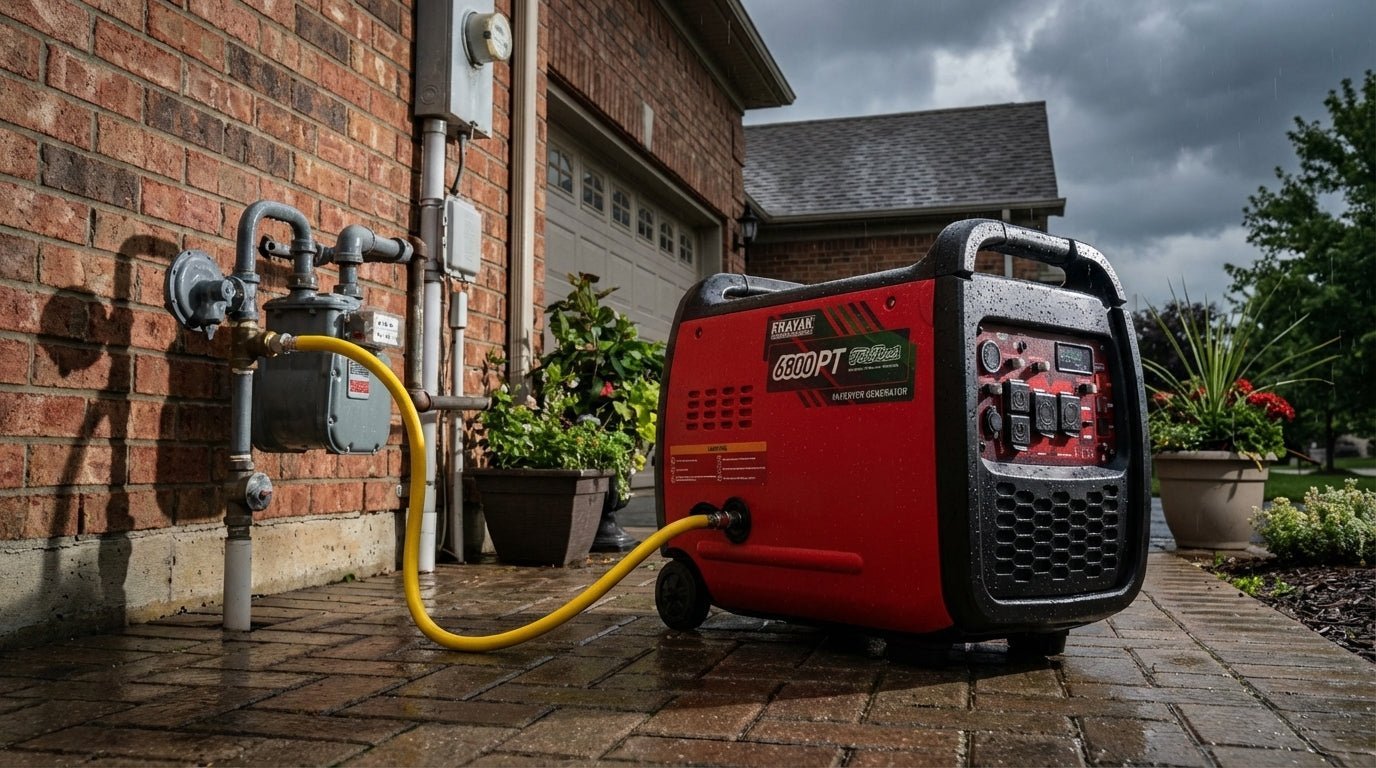
Best Emergency Generator for Home Power Outages: Size & Fuel Guide
The best emergency generator for a home outage is not always the biggest generator you can buy. It is the generator that can reliably power your most important loads: refrigerator, freezer, lights, Wi-Fi, furnace blower, sump pump, well pump planning, and selected outlets without creating unsafe wiring or carbon monoxide risk.
Quick Answer: What Is the Best Emergency Generator for Home Outages?
For most home power outages, the best emergency generator is a quiet inverter generator sized for essential loads, not every appliance in the house. A 4,500W dual-fuel inverter generator can cover many 120V essentials. A 6,000W to 7,000W 120V/240V tri-fuel inverter generator is the better fit when you need selected circuits, a well pump path, or natural gas planning.
If you want automatic startup and whole-house coverage, a standby generator may be worth the higher installed cost. If you want portable selected-load backup with fuel flexibility, a tri-fuel portable inverter generator is often the better value.
Best Emergency Generator by Home Outage Need
Start with the outage problem you are solving. A refrigerator-only backup plan is different from a sump-pump storm plan, and both are different from a 120V/240V transfer-switch setup.
| Outage need | Best generator class | Why it fits | Erayak fit |
|---|---|---|---|
| Light emergency loads | 2,000W to 2,400W inverter | Fridge-only backup, lights, router, phone charging, and small essentials. | Erayak 2400P |
| Most 120V home essentials | 4,000W to 4,500W inverter | Refrigerator, freezer, router, lights, chargers, portable AC planning, and managed small appliances. | Erayak 4500PD |
| Storm backup with propane flexibility | Dual-fuel inverter | Gasoline plus propane helps when fuel storage and availability matter. | Erayak 4500PD |
| Selected home circuits and 120V/240V planning | 6,000W to 7,000W inverter class | Better for transfer-switch planning, well pump checks, sump pump, refrigerator, freezer, and larger backup loads. | Erayak 6800PT |
What Size Generator Do You Need for a Power Outage?
The safest way to size an emergency generator is to list your must-run loads, then add starting watts for motors and compressors. Refrigerators, freezers, pumps, furnace blowers, and AC units may need extra surge power to start.
| Generator size | Best for | Limitations |
|---|---|---|
| 2,000W to 2,400W | One refrigerator or freezer, lights, router, phone charging, small electronics. | Not ideal for multiple large loads or pumps starting at the same time. |
| 3,500W to 4,500W | Refrigerator, freezer, lights, Wi-Fi, chargers, selected kitchen loads, portable AC with load management. | Usually 120V only; not the default for 240V well pumps. |
| 6,000W to 7,000W | Selected circuits, sump pump, well pump planning, furnace blower, refrigerator/freezer, broader outage coverage. | Still requires load management and proper transfer equipment. |
| 10,000W+ standby or large portable | Larger homes, central AC planning, more simultaneous circuits, automatic standby systems. | Higher cost, more installation complexity, less portable. |
For most homes, the best emergency generator is not sized to run an electric oven, central AC, electric dryer, water heater, and every outlet at the same time. It is sized to keep the home safe and functional until utility power returns.
What Should You Power First During an Outage?
During an emergency, prioritize food, water, heat, drainage, communication, and safe lighting. Comfort loads come after essentials.
| Load | Why it matters | Generator sizing note |
|---|---|---|
| Refrigerator and freezer | Protects food and medication that must stay cold. | Allow for compressor startup surge. |
| Sump pump | Prevents basement flooding during storms. | Starting watts can be much higher than running watts. |
| Well pump | Keeps water available if your home depends on a well. | Check voltage, horsepower, FLA, and starting requirements. |
| Furnace blower | Gas furnaces still need electricity for controls and airflow. | Transfer-switch wiring and startup surge matter. |
| Router, lights, chargers | Communication and safe movement around the home. | Low wattage but high value. |
| Portable AC or window AC | Useful during summer outages, especially for one room. | Manage startup surge and avoid running every large load together. |

Gasoline vs Propane vs Natural Gas for Emergency Generators
Fuel is not just a convenience detail. During a storm or grid outage, fuel availability can decide whether your generator plan works.
Highest output
Gasoline usually delivers the strongest power, but it needs safe storage, rotation, and availability during outages.
Storage-friendly
Propane stores well and is useful for emergency kits, RVers, and homeowners who want less fuel maintenance.
Backup planning
Natural gas is useful when the line, pressure, hose, regulator, and installation are correct, but output is usually lower than gasoline.
A dual-fuel generator gives you gasoline and propane. A tri-fuel generator adds natural gas. For longer outage planning, tri-fuel can be valuable, but the gas connection should be checked by a qualified professional.
Transfer Switch and Safe Connection Planning
If you want to power home circuits, you need a safe connection method. That usually means a manual transfer switch, an approved interlock, an outdoor inlet box, and the correct generator cord.
- Do not backfeed. Never connect a generator through a wall outlet, dryer outlet, or improvised cord.
- Use a qualified electrician. Transfer equipment must be installed correctly and follow local code.
- Choose circuits before the outage. Refrigerator, freezer, furnace blower, sump pump, well pump, lights, Wi-Fi, and selected outlets are common priorities.
- Match the outlet and cord. If you need 120V/240V planning, the generator, inlet, cord, and transfer equipment must support it.
- Practice the startup sequence. Test the generator and transfer process before a storm arrives.
Erayak Emergency Generator Recommendations
For home power outages, Erayak’s product fit depends on whether the buyer needs simple 120V essentials or broader 120V/240V selected-load backup.
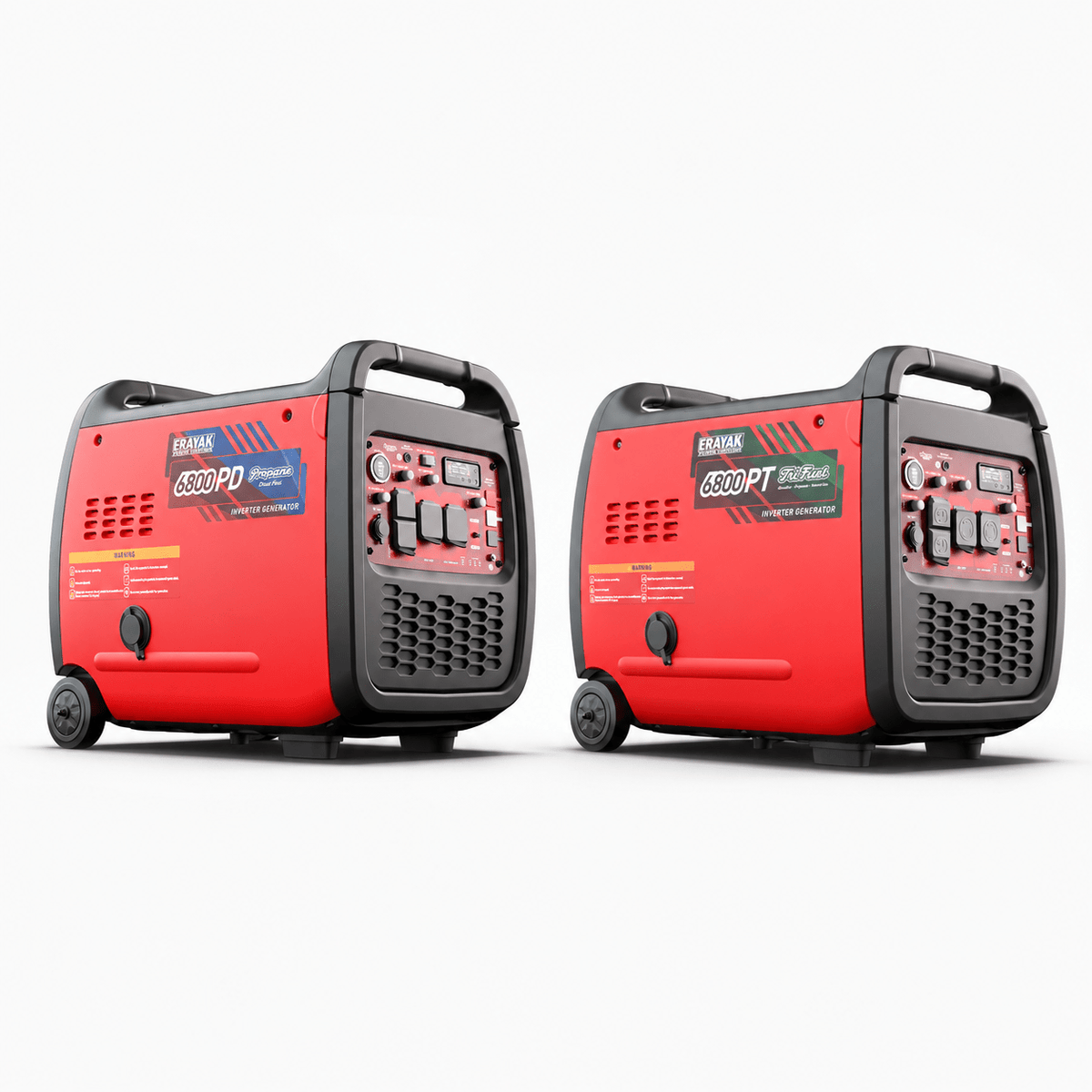
Best for Larger Emergency Home Backup: Erayak 6800PT
The Erayak 6800PT is the primary emergency home backup fit when you need tri-fuel flexibility, selected circuits, and 120V/240V planning. It is rated at 6800W peak and 5000W gasoline rated output, with gasoline, propane, and natural gas capability.
- Best for: refrigerators, freezers, sump pump planning, well pump checks, furnace blower, selected circuits, and longer outage readiness.
- Outlet planning: 30A L5-30R, 30A 120V/240V L14-30R, and dual 120V household outlets.
- Fuel note: propane and natural gas output are typically lower than gasoline output.
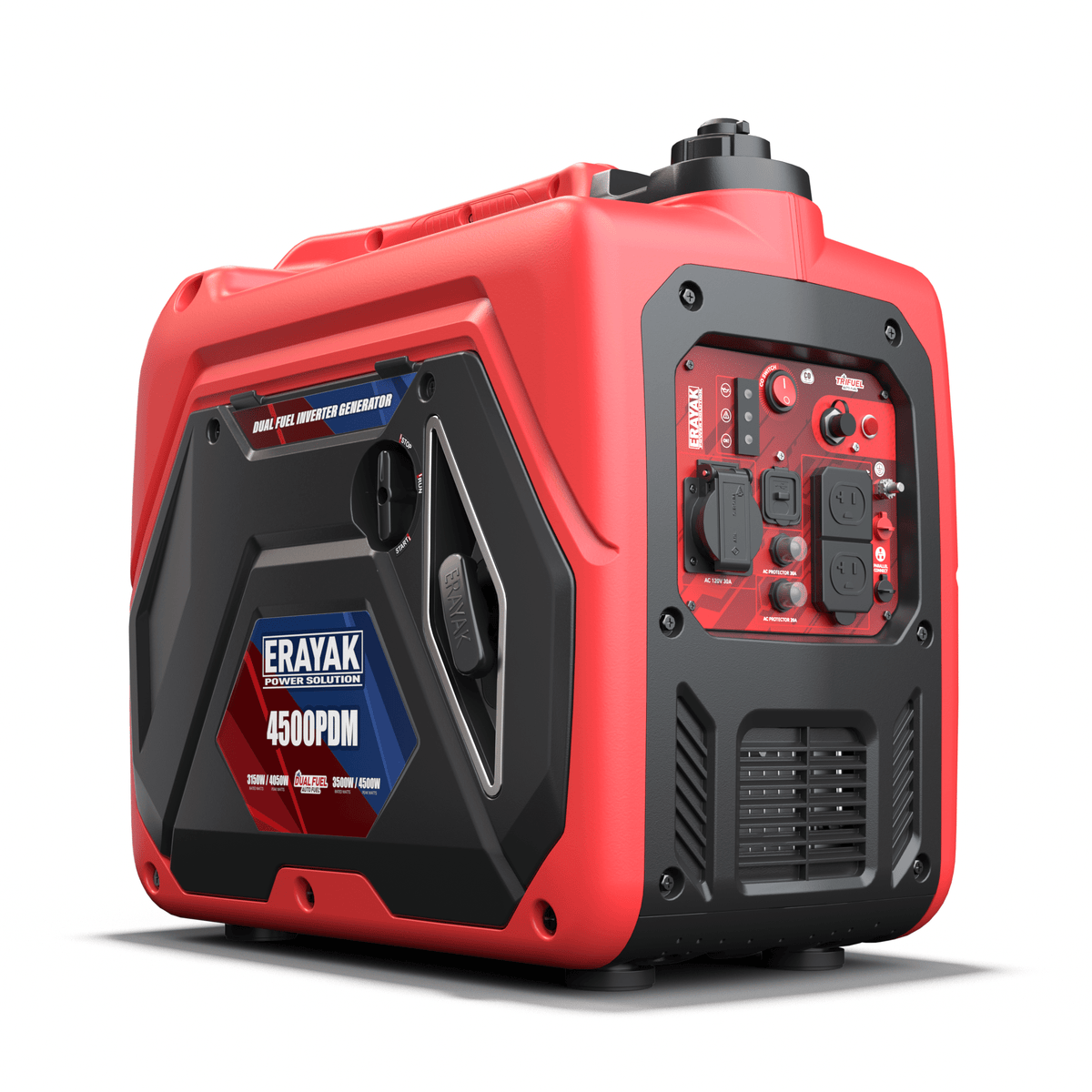
Best for 120V Essentials: Erayak 4500PD
The Erayak 4500PD is the better fit when your outage plan is mostly 120V essentials: refrigerator, freezer, lights, router, chargers, portable AC planning, and propane-friendly backup.
- Best for: smaller homes, apartments with outdoor generator-safe setup, cabins, RV-style backup, and 120V emergency loads.
- Fuel options: gasoline and propane.
- Planning note: not the default choice for 240V well pumps or whole-home standby replacement.
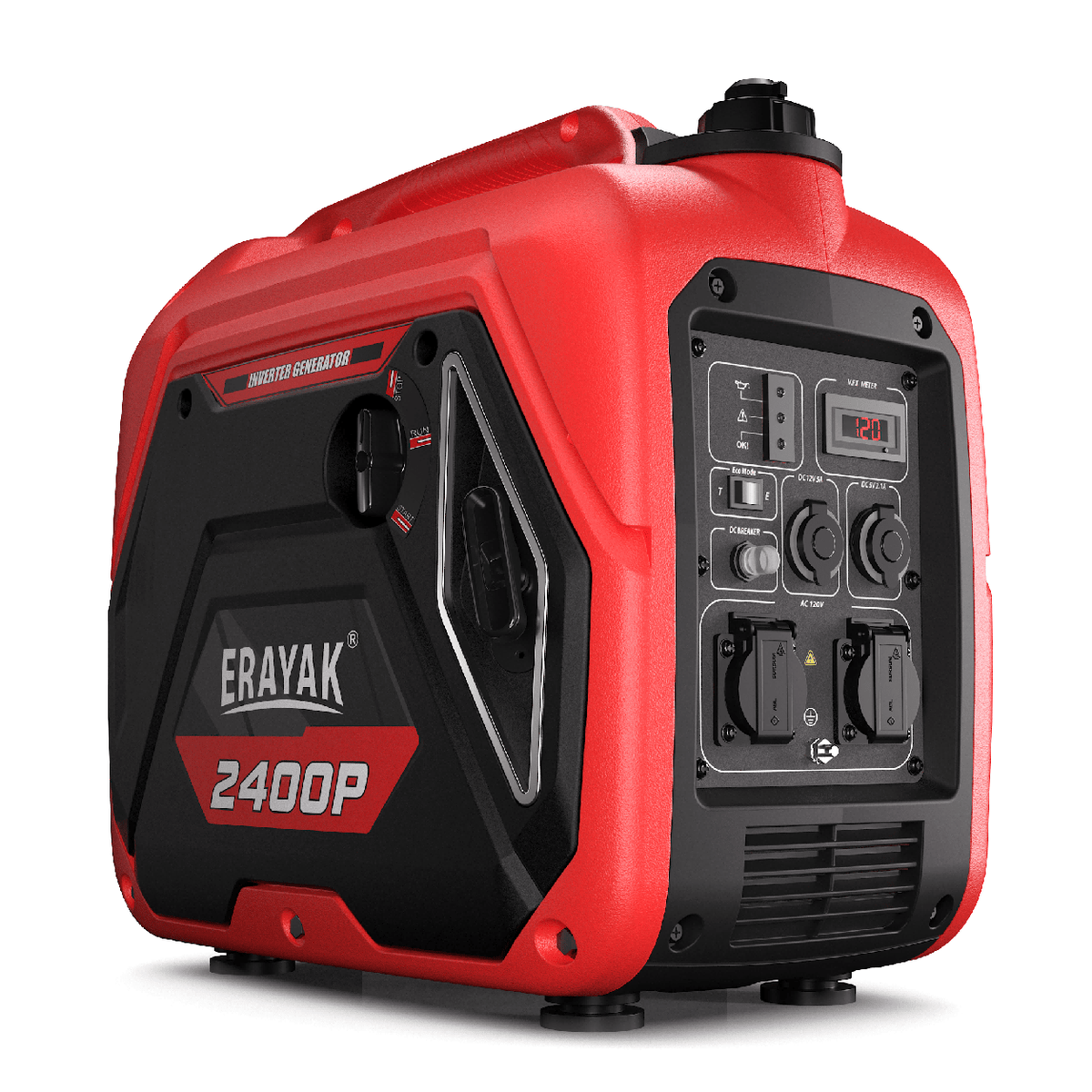
Best for Light Emergency Loads: Erayak 2400P
The Erayak 2400P is a light-load backup option for users who need compact emergency power for essentials such as a refrigerator-only plan, lights, router, phones, laptops, and small devices.
- Best for: light backup, camping crossover use, and smaller outage kits.
- Planning note: not intended for large home circuits, well pumps, or central AC.
Emergency Generator Prep Checklist
- List your must-run loads. Include running watts and starting watts.
- Decide if you need 120V or 120V/240V. Well pumps and some home circuits may require 240V planning.
- Choose fuel before the outage. Store gasoline safely, keep propane tanks ready, or verify natural gas setup.
- Install safe transfer equipment. Use a transfer switch, interlock, and inlet box where needed.
- Test the generator monthly. Confirm startup, cords, fuel, and load sequence.
- Keep maintenance supplies ready. Oil, spark plug, air filter, extension cords, and the manual should be easy to find.
- Use carbon monoxide alarms. Check batteries before storm season.
Generator Safety Notice
Never run a fuel-powered generator indoors, in a garage, in a shed, under a porch, in a crawl space, or near open windows, doors, vents, or enclosed spaces. Operate the generator outdoors with exhaust pointed away from people and structures, and follow the generator manual and local code.
FAQ: Emergency Generators for Home Outages
What is the best emergency generator for home power outages?
The best emergency generator depends on your loads. For 120V essentials, a 4,500W dual-fuel inverter generator is often enough. For selected home circuits, well pump planning, and 120V/240V needs, a 6,000W to 7,000W tri-fuel inverter generator is a stronger fit.
What size generator do I need for a home power outage?
For light emergency loads, 2,000W to 2,400W can work. For most 120V essentials, 3,500W to 4,500W is more useful. For selected circuits, sump pump, well pump planning, and broader outage backup, consider the 6,000W to 7,000W class.
Can a generator run a refrigerator and freezer during an outage?
Yes. Most portable inverter generators can run a refrigerator and freezer if starting watts are managed. Start one compressor load at a time and avoid overloading the generator with other large appliances at the same moment.
What generator do I need for a sump pump?
A sump pump can have high starting watts, so size the generator around the pump nameplate and surge requirement. A larger inverter generator may be needed if the sump pump runs with a refrigerator, freezer, furnace blower, or other loads.
Can a portable generator run a well pump?
Sometimes. It depends on the well pump voltage, horsepower, FLA, starting requirements, depth, age, and wiring. Many well pumps require 240V, so use a 120V/240V generator and proper transfer equipment when required.
Is a tri-fuel generator better for emergencies?
A tri-fuel generator can be better for longer outage planning because it can use gasoline, propane, or natural gas. Natural gas and propane output are usually lower than gasoline output, and natural gas setup must be properly installed.
Do I need a transfer switch for an emergency generator?
If you want to power home circuits, yes, use a transfer switch, approved interlock, and inlet box installed according to local code. Do not backfeed through a wall outlet or dryer outlet.
Can I run an emergency generator indoors?
No. Fuel-powered generators must never be run indoors, in garages, sheds, crawl spaces, or near open windows. Carbon monoxide can be deadly. Run generators outdoors with proper ventilation.

