

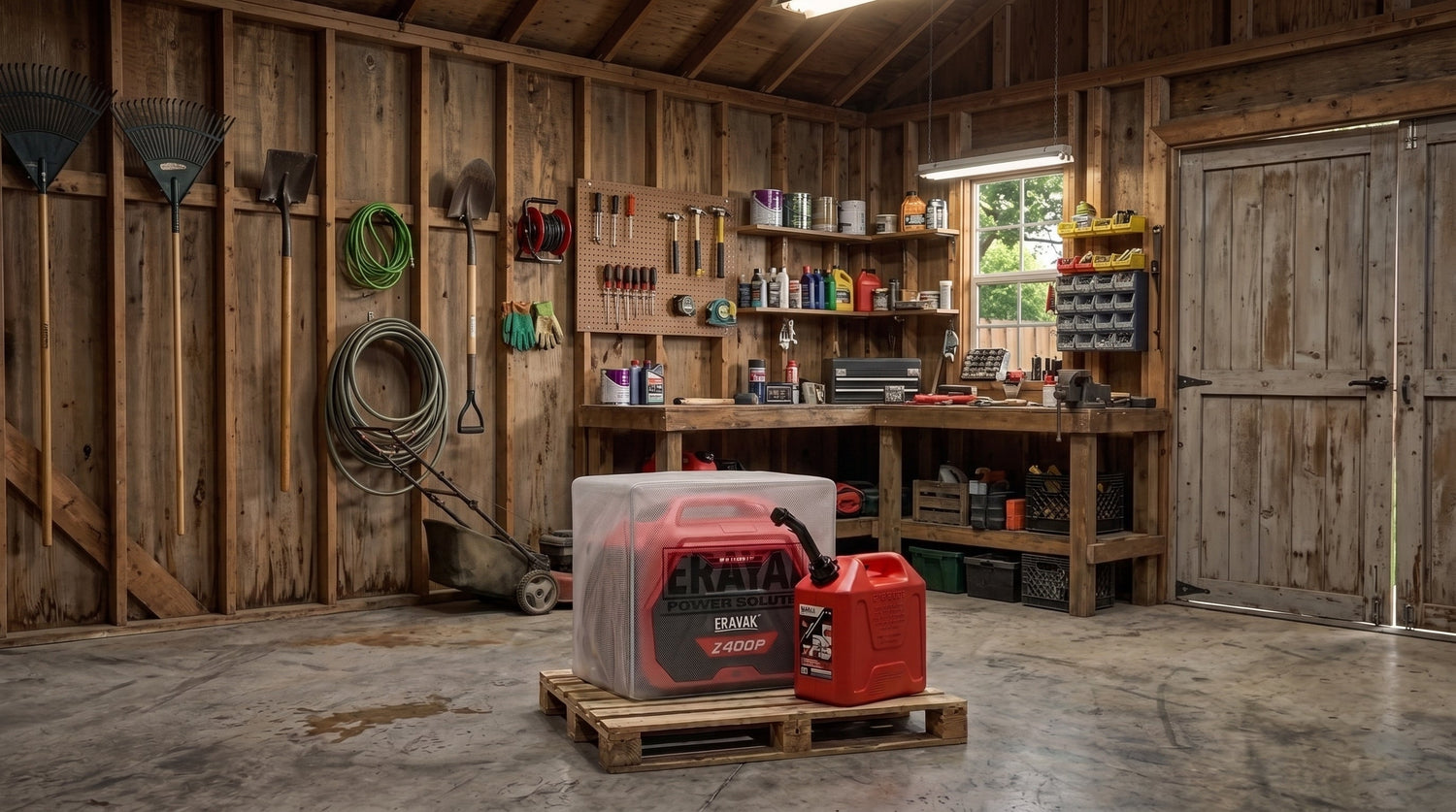
Apartment Backup Power: Safe Options Without an Indoor Generator
Most apartment residents cannot safely use a fuel-powered generator at home, but that does not mean an outage plan has to stop at flashlights. Battery power stations, UPS backups, power banks, rechargeable lighting, and a realistic watt-hour plan can keep communication, Wi-Fi, airflow, and selected essentials available without generator exhaust.
Quick Answer: What Backup Power Can You Use in an Apartment?
Do not run a gasoline, propane, or natural-gas generator inside an apartment or on a balcony. The EPA specifically warns against using fuel-powered portable generators on balconies or near doors, vents, and windows. The CDC says generators should stay outdoors and at least 20 feet from any window, door, or vent, with a working battery-powered CO alarm indoors.
For most renters, the practical indoor backup plan is a battery power station intended by its manufacturer for indoor use, a UPS for the modem and router, USB power banks, LED lanterns, rechargeable fans, and a prioritized load list. Choose battery capacity in watt-hours (Wh) and output in watts (W) from the devices you actually need, not from an “apartment generator” label.
Can You Use a Generator in an Apartment?
No fuel-powered portable generator belongs inside an apartment, hallway, stairwell, basement, parking garage, storage room, or other enclosed or partly enclosed space. Generator exhaust contains carbon monoxide (CO), which cannot be seen or smelled and can incapacitate or kill people within minutes.
Never Indoors
Opening a door or window does not make indoor generator use safe. Exhaust can accumulate and move through a shared building.
Not on a Balcony
A balcony remains attached to the building and is normally too close to windows, doors, vents, neighbors, and occupied rooms.
Only Far From Buildings
The CDC advises keeping a generator at least 20 feet from any window, door, or vent. Typical apartment layouts cannot provide that separation.
Apartment Backup Power Limits Renters Should Know
Apartment backup power is different from single-family home backup power. You may not control outdoor space, building wiring, fuel storage, transfer switches, or safe generator placement. That means your plan should focus on safe, portable, battery-based essentials first.
| Apartment Limitation | Why It Matters | Safer Planning Direction |
|---|---|---|
| No safe generator location | Balconies, hallways, parking garages, and patios may be unsafe or prohibited | Use battery power stations, UPS units, power banks, and rechargeable lights |
| Fuel storage restrictions | Gasoline and propane may be restricted by lease, fire code, or building policy | Avoid storing fuel indoors; check building rules before buying fuel equipment |
| Shared air and vents | Generator exhaust can enter your unit or neighboring units | Do not run combustion equipment near windows, doors, vents, or balconies |
| No transfer switch access | Renters usually cannot modify building electrical panels | Power devices directly with approved battery products or safe cords where allowed |
| Noise rules | Generators can violate quiet hours or building policies | Use silent battery backup for night use |
| Limited storage space | Large emergency kits may be hard to store | Build a compact, labeled apartment outage kit |
Best Apartment Backup Power Options
Apartment backup works best as a set of battery-based layers. Use devices according to their manuals, keep them dry and away from heat or bedding, and stop using any battery that is damaged, swollen, leaking, unusually hot, or subject to a recall.
| Backup Option | Best For | Main Limitation |
|---|---|---|
| Portable power station | Router, laptop, LED lights, small fan, phone charging, selected low-watt devices | Finite watt-hour capacity; high-heat appliances drain it quickly |
| UPS battery backup | Modem, router, desktop shutdown, short interruption bridging | Usually designed for short runtime rather than a long whole-room outage |
| USB power banks | Phones, tablets, headlamps, USB fans | Does not power standard AC appliances unless specifically designed to do so |
| Rechargeable LED lanterns | Room, bathroom, kitchen, and hallway lighting | Charge and test before storm season |
| Rechargeable fan | Personal airflow during a warm-weather outage | A fan does not prevent heat illness in extreme heat; relocate if conditions become unsafe |
| Device-specific medical backup | Equipment covered by a manufacturer-approved battery or backup plan | Do not size medical backup from generic wattage tables; follow the device maker and care team |
How Much Battery Capacity Does an Apartment Need?
Battery capacity and output answer different questions. Watt-hours (Wh) estimate how long the battery can run a load. Watts (W) describe how much power it can deliver at one time, including startup surge where applicable.
| Illustrative Load | Assumed Draw | 500Wh Battery Example | What to Verify |
|---|---|---|---|
| Modem and router | 20W | About 20 hours | Both device labels and whether internet service remains active |
| LED task light | 10W | About 40 hours | Actual lamp wattage and brightness setting |
| Small fan | 40W | About 10 hours | Fan speed and measured draw |
| Laptop charger | 65W | About 6 hours of continuous draw | Charger label and how often the laptop actually charges |
| Mixed essentials | 100W total | About 4 hours | Combined load and power-station output limit |
These are planning examples, not guaranteed runtimes. Measure devices with a plug-in watt meter when possible. Avoid sizing a small apartment battery around space heaters, electric kettles, hot plates, hair dryers, or other high-heat loads; they can consume a compact battery very quickly.
Do Apartment Buildings Have Backup Generators?
Some apartment buildings have permanent emergency or standby power, but coverage varies. A building system may support fire and life-safety equipment, emergency lighting, access controls, water pumps, elevators, or selected common areas without powering the outlets, refrigerator, HVAC, or appliances inside your unit.
Ask What Is Backed Up
Request a written list of the building systems and tenant outlets, if any, that remain powered.
Ask About Elevators and Water
Find out the outage plan for elevators, building access, water pressure, and residents who need mobility assistance.
Plan for Your Unit Separately
Do not assume building emergency power covers personal electronics, food refrigeration, cooling, or medical equipment.
What to Power First During an Apartment Outage
In an apartment, backup power capacity is limited. Prioritize essentials before comfort appliances. A small battery can last much longer when you avoid high-watt devices.
| Priority Level | Devices | Why It Matters |
|---|---|---|
| Highest priority | Phone, medical device charger, emergency contact device, battery radio | Communication and health-related needs come first |
| High priority | LED lanterns, headlamp, Wi-Fi router, modem | Supports safety, visibility, and communication |
| Medium priority | Small fan, laptop, tablet, rechargeable speakers | Supports comfort and work, but should not drain batteries too fast |
| Low priority | TV, gaming console, large monitor, decorative lights | Use only if you have extra battery capacity |
| Avoid on small batteries | Space heater, microwave, toaster, electric kettle, hot plate, hair dryer | High-watt heat loads drain batteries quickly and may overload equipment |
Battery Backup Plan for Phones, Wi-Fi, Lights and Fans
A good apartment backup power plan uses layers. Instead of draining one large battery on everything, separate your loads into communication, light, airflow, and work.
| Power Layer | Recommended Devices | Outage Planning Tip |
|---|---|---|
| Communication layer | Phone, power banks, charging cables, battery radio | Keep phones on low-power mode and charge in short sessions |
| Internet layer | UPS for modem and router | Use only when internet service is still active; turn off when not needed |
| Lighting layer | LED lanterns, headlamps, rechargeable work lights | Use battery lanterns instead of powering large lamps |
| Cooling layer | Rechargeable fan, USB fan, window shade, cooling towels | Reduce heat gain before the outage by closing blinds and pre-cooling when possible |
| Work layer | Laptop, tablet, hotspot, small task light | Save laptop battery and avoid powering a large desktop setup unless needed |
| Medical planning layer | Device-specific battery backup and charging plan | Follow the device manufacturer’s backup power guidance and prepare early |
Can You Run a Generator on an Apartment Balcony?
No. The EPA says not to use fuel-powered portable generators on balconies or near doors, vents, or windows. The CDC also advises keeping a generator outdoors and at least 20 feet from any window, door, or vent. A typical apartment balcony cannot meet those conditions because it is attached to the building and close to your unit or a neighbor’s openings.
| Requirement for Any Fuel Generator | Apartment Reality | Decision |
|---|---|---|
| Outdoors at least 20 feet from windows, doors, and vents | Balconies and shared patios are usually attached to or beside the building | Do not use the balcony |
| Exhaust directed away from buildings and people | Neighbors, walkways, air intakes, and changing wind create shared risk | Use only a truly separated outdoor site |
| Lease, fire-code, and fuel-storage permission | Rules vary and may prohibit the equipment even if a distant site exists | Get written permission before buying or storing fuel |
| Dry, intact, outdoor-rated cord routing | Doors, windows, hallways, and shared spaces can create trip and weather hazards | Do not improvise a cord path |
What Not to Do in an Apartment Power Outage
Many outage mistakes happen because people try to recreate whole-home backup power in a space that was not designed for it. In an apartment, the safest plan is compact, battery-based, and realistic.
| Do Not Do This | Why It Is Dangerous | Safer Alternative |
|---|---|---|
| Run a generator indoors | Carbon monoxide can become deadly | Use battery backup indoors |
| Run a generator on an enclosed balcony | Exhaust can enter apartments and nearby units | Use only legal, safe outdoor generator placement if available |
| Place a generator in a hallway or stairwell | Blocks exits and exposes others to exhaust | Do not use fuel-powered equipment in shared spaces |
| Use a grill, camp stove, or propane heater indoors | Fire and carbon monoxide risk | Use shelf-stable food, battery lighting, and safe heating/cooling plans |
| Backfeed through a wall outlet | Can energize wiring unexpectedly and injure others | Do not connect a generator to building wiring |
| Overload a battery with heat appliances | May trip, overheat, or drain quickly | Use low-watt essentials and conserve battery runtime |
Apartment Emergency Power Kit Checklist
Build a compact kit that fits a closet, storage bin, or entryway shelf. The goal is fast access during night outages, storms, heat waves, winter outages, or grid disruptions.
| Kit Category | What to Include | Why It Helps |
|---|---|---|
| Charging | Power banks, USB-C cables, wall chargers, car charger if applicable | Keeps phones and small devices online |
| Battery backup | Portable power station or UPS battery backup | Supports router, laptop, small fan, lights, and essential electronics |
| Lighting | LED lanterns, headlamps, rechargeable flashlights | Improves safety without draining a large battery |
| Cooling | Rechargeable fan, USB fan, cooling towels | Helps during summer outages |
| Communication | Battery radio, printed emergency contacts, local utility number | Useful when internet or cell service is limited |
| Safety | CO alarm, smoke alarm batteries, first-aid kit | Supports apartment emergency readiness |
| Food and water | Ready-to-eat food, manual can opener, bottled water | Reduces need for electric cooking during outages |
| Documents | Lease rules, building emergency contacts, device manuals | Helps you make safe decisions quickly |
Fuel Generator vs Battery Power Station for an Apartment
| Decision Factor | Battery Power Station | Fuel-Powered Generator |
|---|---|---|
| Indoor apartment use | May be used indoors when the product is designed for it and all manufacturer instructions are followed | Never |
| Exhaust and CO | No combustion exhaust during battery operation | Produces dangerous exhaust and CO |
| Runtime | Limited by stored watt-hours until recharged | Can continue with fuel, but only in a compliant outdoor setup |
| Best apartment role | Phones, router, laptop, lights, fans, and selected low-watt essentials | Usually no practical role unless a separate legal outdoor site meets all distance and building rules |
Apartment Backup Power Safety Checklist
- Never run a gasoline, propane, natural-gas, or other fuel-powered generator inside an apartment, garage, hallway, stairwell, basement, storage room, or partly enclosed space.
- Do not run a fuel generator on a balcony or near doors, windows, vents, air intakes, neighboring units, or shared walkways.
- Keep any permitted outdoor generator at least 20 feet from windows, doors, and vents, with exhaust directed away from the building.
- Use working battery-powered or battery-backup CO alarms and test them regularly.
- Never use a grill, camp stove, charcoal burner, or unvented combustion appliance indoors.
- Never backfeed through a wall outlet or connect a generator to apartment wiring.
- Follow lease terms, property-management rules, local fire codes, and fuel-storage restrictions.
- Use battery power products only as directed; keep them dry, ventilated as specified, and away from heat, bedding, and flammable materials.
- Check product recalls and stop using a battery that is damaged, swollen, leaking, unusually hot, or behaving abnormally.
- For medical devices, use a manufacturer-approved backup plan and prepare a relocation or emergency-contact option.
Build the Apartment Outage Plan Before the Power Goes Out
List the devices you must keep running, record their watts, calculate the watt-hours needed, and split critical functions across a power station, UPS, power banks, and rechargeable lights. Ask building management what common systems have backup power and where residents should go if heat, cold, elevators, water, or medical needs become unsafe.
FAQ: Apartment Backup Power
Can I run a portable generator inside an apartment?
No. Never run a fuel-powered generator inside an apartment or other enclosed or partly enclosed space. Carbon monoxide from the exhaust can incapacitate or kill people within minutes.
Can I run a generator on an apartment balcony?
No. The EPA says not to use fuel generators on balconies or near doors, vents, or windows. The CDC advises at least 20 feet of separation from every window, door, and vent, which a typical balcony cannot provide.
What is the best backup generator for an apartment?
For indoor apartment use, choose a battery power station intended by its manufacturer for indoor operation, not a fuel-powered generator. Match its watt-hour capacity and output watts to your essential devices.
How large a battery backup do I need for an apartment?
Add the watts of the devices you will run together, then estimate runtime with battery Wh × 0.8 ÷ load watts. Check surge requirements and use the actual device labels or measured power.
Can a battery backup run my Wi-Fi router?
Usually, if the UPS or power station is rated for the modem and router. Runtime depends on their combined draw and whether the internet provider’s local equipment remains online.
Do apartment buildings have backup generators?
Some do, but coverage varies. Building backup may serve life-safety systems and common areas without powering outlets or appliances inside your unit. Ask property management exactly what remains powered.
Can a power station run an apartment refrigerator?
Possibly, but verify refrigerator running watts, compressor startup surge, power-station output, battery capacity, and the expected outage length. A compact battery can drain quickly on a large appliance.
Can I use a generator from a ground-floor apartment?
Only if a separate legal outdoor site stays at least 20 feet from all windows, doors, and vents, directs exhaust away from buildings and people, and meets lease, fire-code, fuel-storage, and cord-routing rules. Many apartment properties cannot provide such a site.


