

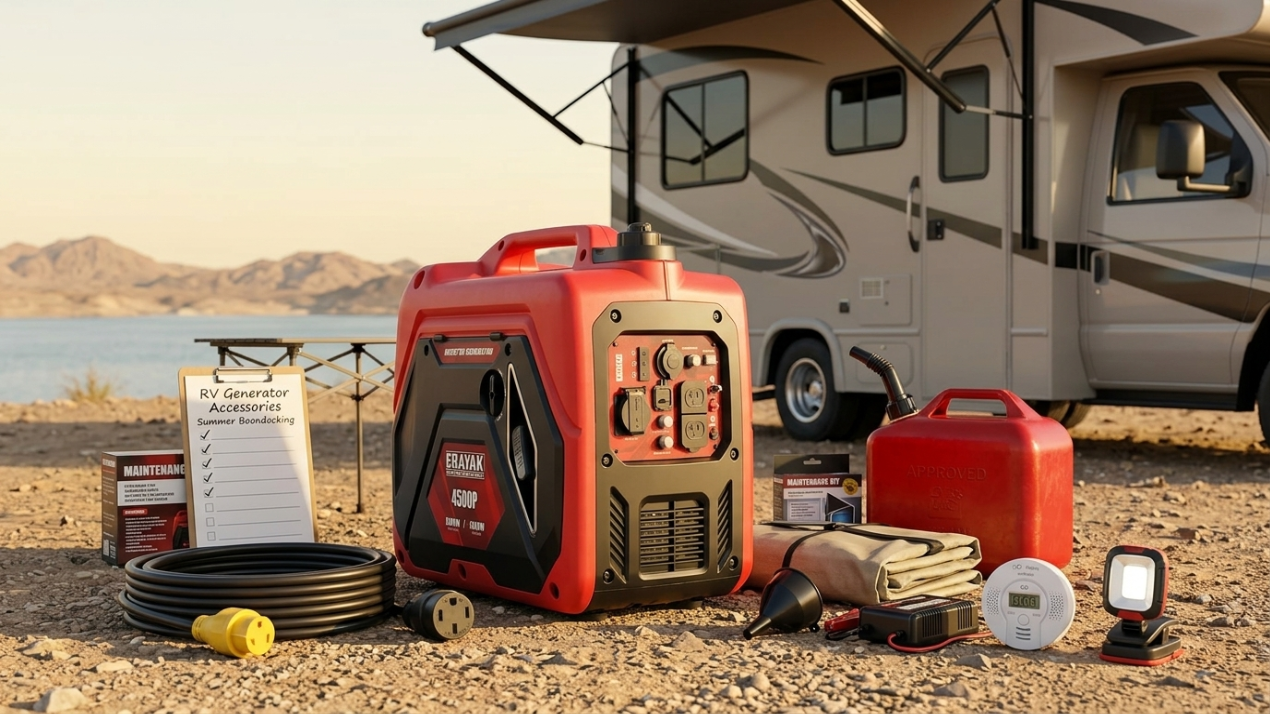
RV Inverter Generator Setup: 6 Safe Steps for Camping Power
A good RV inverter generator setup is not just "plug it in and start camping." The right sequence helps protect your RV electrical system, avoid overloads, reduce campsite noise, and keep carbon monoxide away from people and pets.

Quick Answer: How Do You Set Up an RV Inverter Generator?
To set up an RV inverter generator, first size your expected loads, place the generator outdoors and away from openings, check fuel and oil, turn off major RV appliances, connect with the correct RV-rated cord or adapter, start the generator, let it stabilize, then turn on appliances one at a time. Use a surge protector or EMS when possible, monitor total wattage, and shut everything down in reverse order before unplugging.
Before You Start: Confirm Your RV Power Needs
An inverter generator is a strong match for RV camping because it can supply cleaner, quieter portable power than many conventional open-frame generators. But the setup still depends on your RV's real loads: rooftop AC, converter/charger, refrigerator mode, microwave, water heater mode, lights, laptops, and battery charging.
Before choosing a setup, list what you want to run at the same time. Running watts matter during normal use, while starting watts matter when compressors and motors kick on. Air conditioners, refrigerators, and pumps can briefly need more power at startup than their running wattage suggests.
| RV load | Setup impact | Practical note |
|---|---|---|
| RV rooftop AC | Usually the largest startup load | Start the AC after the generator has warmed up and after other heavy loads are off. |
| Converter / battery charger | Can draw meaningful power when batteries are low | If the generator struggles, reduce other loads while charging. |
| Microwave or electric kettle | High short-duration load | Use these one at a time, especially when the AC is running. |
| Refrigerator | Moderate running load with possible compressor surge | Confirm whether it is running on electric mode, propane mode, or battery power. |
| Lights, router, laptops, phone chargers | Usually lighter loads | These are easiest to add after major appliances are stable. |
Setup rule of thumb: do not judge your generator only by the RV plug. A 30 amp RV service can theoretically draw up to 3,600 watts at 120V, but your actual campsite setup depends on generator output, starting surge, appliance sequence, elevation, temperature, fuel type, and whether you are trying to run several heavy loads together.
The 6 Essential RV Inverter Generator Setup Steps
Choose the right generator size for the RV loads you actually use
Start with your must-run items, not the entire RV. Many weekend setups need battery charging, refrigerator support, lights, small electronics, and occasional appliance use. Comfort setups may add rooftop AC, a microwave, or a portable AC. Larger RVs or 50 amp rigs may need careful load management instead of assuming one portable generator replaces full shore power.
- Use the appliance nameplate, RV manual, or manufacturer data when available.
- Leave headroom for compressor startup, especially for AC and refrigerators.
- Avoid running the AC, microwave, electric water heater, and battery charger at full draw all at once.
Place the generator outdoors before connecting anything
Set the generator on a stable, level outdoor surface with clear airflow around the intake and exhaust. Keep it away from doors, windows, vents, awnings, neighboring campsites, dry brush, and foot traffic. The exhaust should point away from the RV and away from people.
Generator safety notice: never run a fuel-powered generator indoors, inside an RV, in a garage, under the RV, in a storage bay, or near open windows, doors, or vents. Use working carbon monoxide detectors inside the RV and follow the generator manual and campground rules.
Check oil, fuel, ventilation, and cord condition
Before startup, check engine oil level, fuel supply, air intake clearance, and the condition of your RV power cord. Use an outdoor-rated cord sized for the current you plan to draw. If your generator requires specific grounding or neutral-bonding instructions, follow the current generator manual and local code.
- Use approved fuel containers and store fuel away from heat sources.
- Let the generator cool before refueling.
- Do not use damaged, undersized, or loosely fitting extension cords.
Turn off major RV appliances before plugging in
Before connecting the RV, turn off the air conditioner, microwave, electric water heater, space heater, and other heavy loads. This prevents the generator from being hit with a large demand the moment you connect power.
If you use a surge protector or EMS, place it between the generator output and the RV cord according to the device instructions. Some EMS units may react differently depending on generator neutral configuration, so check both manuals if you see a fault code.
Start the generator, let it stabilize, then connect the RV
Start the generator according to the manual and let it run briefly with no load. Once it is stable, connect the RV using the correct cord or adapter. If your generator has Eco Mode, you may need to turn Eco Mode off while starting a large compressor load, then turn it back on after the load is stable if the manual allows.
Bring appliances online one at a time and monitor the load
Turn on light loads first, then add the largest planned load when you are ready to test. Listen for the generator struggling, watch any overload indicator, and reduce non-essential loads if needed. When shutting down, turn off RV loads first, unplug the RV, let the generator cool briefly with no load, then shut it down according to the manual.

30A, 50A, and Adapter Setup Notes
The physical connection is where many RV generator setup mistakes happen. The plug shape tells you how to connect safely, but it does not magically increase generator capacity. Match the generator outlet, RV cord, adapter, and load plan.
| RV setup | Common connection path | What to watch |
|---|---|---|
| 30 amp RV | 120V TT-30 style RV cord or approved adapter path | Good fit for one major comfort load plus essentials when the generator has enough output. |
| 50 amp RV using a smaller portable generator | 50A-to-30A dogbone or adapter when appropriate | This does not provide full 50A shore power. Manage loads and avoid trying to run both AC units plus heavy appliances. |
| Small camper or van | Lower-current outdoor-rated cord or RV inlet, depending on the build | Confirm cord rating, grounding requirements, and whether charging is through a converter, inverter/charger, or portable battery system. |
| Home and RV mixed use | Different cords and transfer equipment may be required | Do not backfeed a home outlet. Home connection requires proper transfer equipment and qualified installation. |
Important: do not connect a portable generator to a home through a dryer outlet or wall outlet. For home backup, use listed transfer equipment, a proper inlet, and a qualified electrician. RV campsite use and home backup connection are different setups.
What to Turn On First
Load order matters because generators handle steady loads better than surprise surges. A simple sequence makes troubleshooting easier and reduces nuisance overloads.
Start with essentials
Begin with the converter/charger, lights, refrigerator controls, router, and small electronics. These confirm that power is flowing before you test larger loads.
Add one heavy load
Turn on the rooftop AC, microwave, or other large appliance by itself. Give it time to stabilize before adding anything else.
Manage comfort loads
If the AC is running, avoid using the microwave, electric water heater, hair dryer, or space heater at the same time unless your generator setup clearly supports it.
Simple RV generator startup sequence
- Place the generator outdoors and check fuel, oil, airflow, and cord condition.
- Turn off major RV loads.
- Start the generator and let it stabilize.
- Connect the RV cord and verify normal power through your surge protector or EMS if used.
- Turn on light loads first.
- Start one major appliance and watch for overload signs.
Best ERAYAK Fit for RV Generator Setup
This article should include a product card because the search intent is not only informational. Readers are actively trying to set up or choose an inverter generator for RV use, so a product-routing section after the setup checklist is natural and helpful.
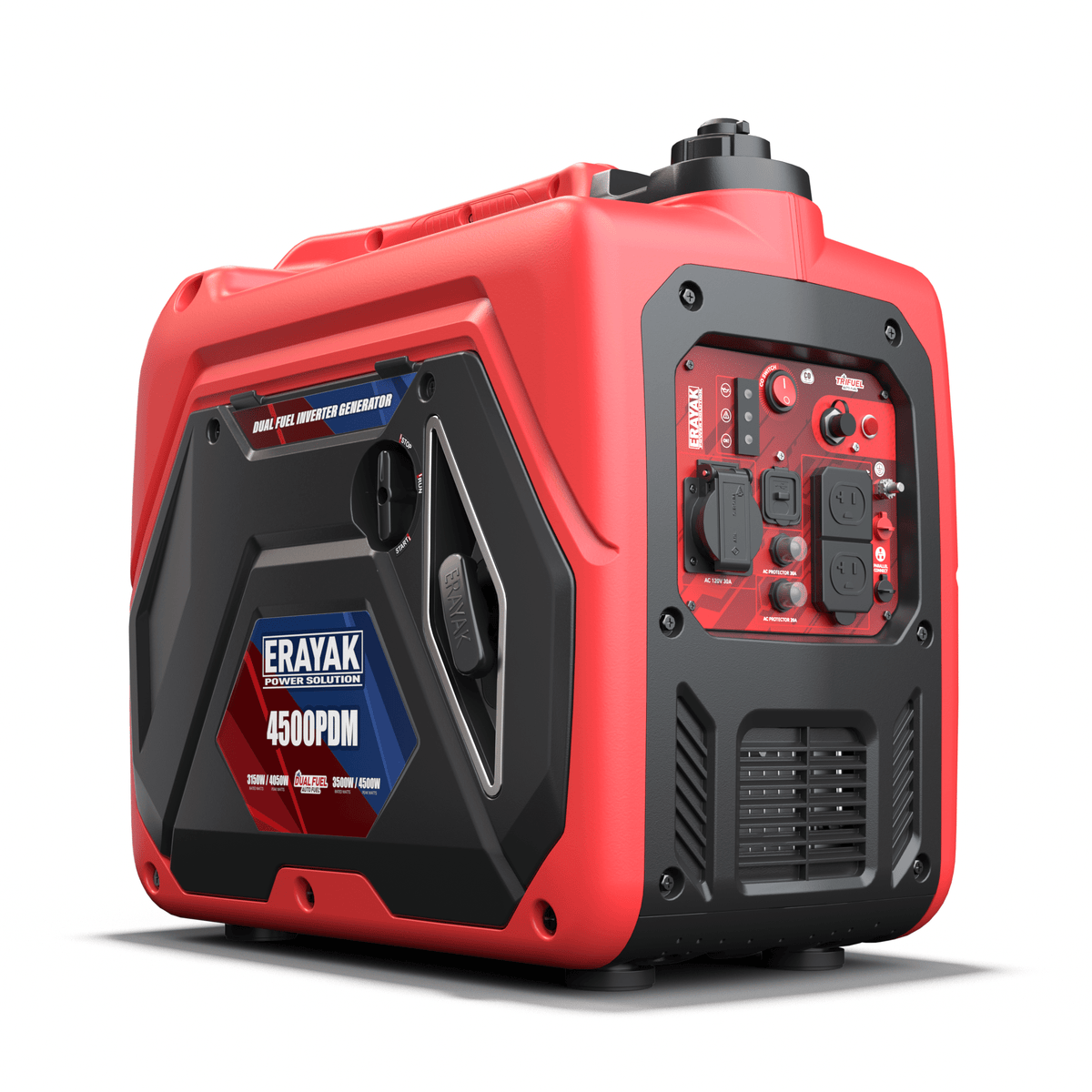
Primary RV Setup Pick: ERAYAK 4500PD Dual-Fuel Inverter Generator
The ERAYAK 4500PD is the best fit for many RV setup readers because it supports RV camping, dual-fuel flexibility, and portable backup planning without pushing buyers into a larger 120V/240V generator they may not need.
- Best for RVers who want more flexibility than a gas-only generator.
- Useful when the setup includes an RV AC, battery charging, refrigerator support, and small essentials.
- A natural fit for campers who want one portable inverter generator for both trips and outage preparation.
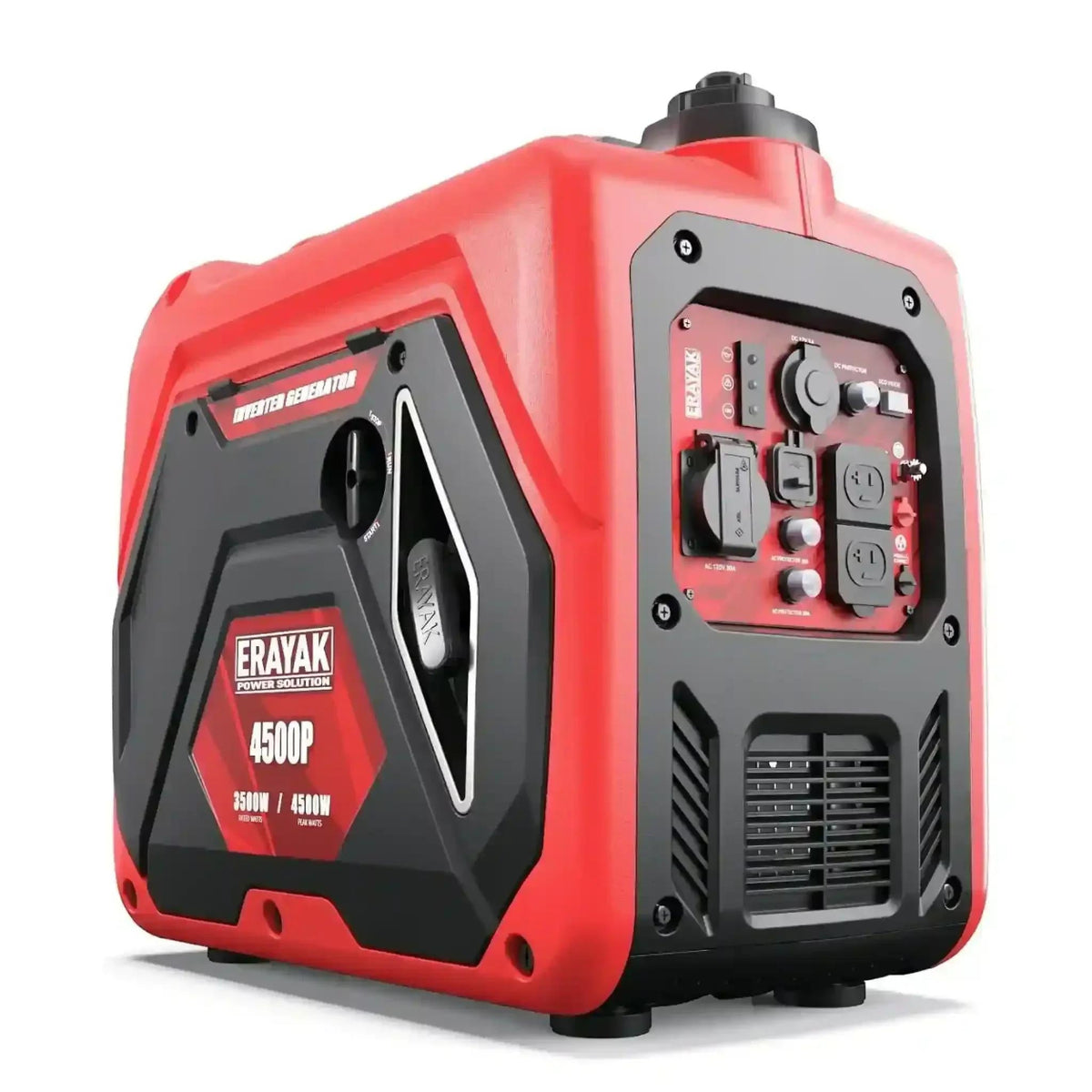
Gas-Only Alternative: ERAYAK 4500P
Choose the ERAYAK 4500P when you want a quiet enclosed inverter generator for RV and camping use and do not need propane. It is a gas-only model with manual recoil start, a 55 lb class design, 2.25 gal fuel tank, up to 8 hours runtime, 60.5 dB rating, and THD below 1.2%.
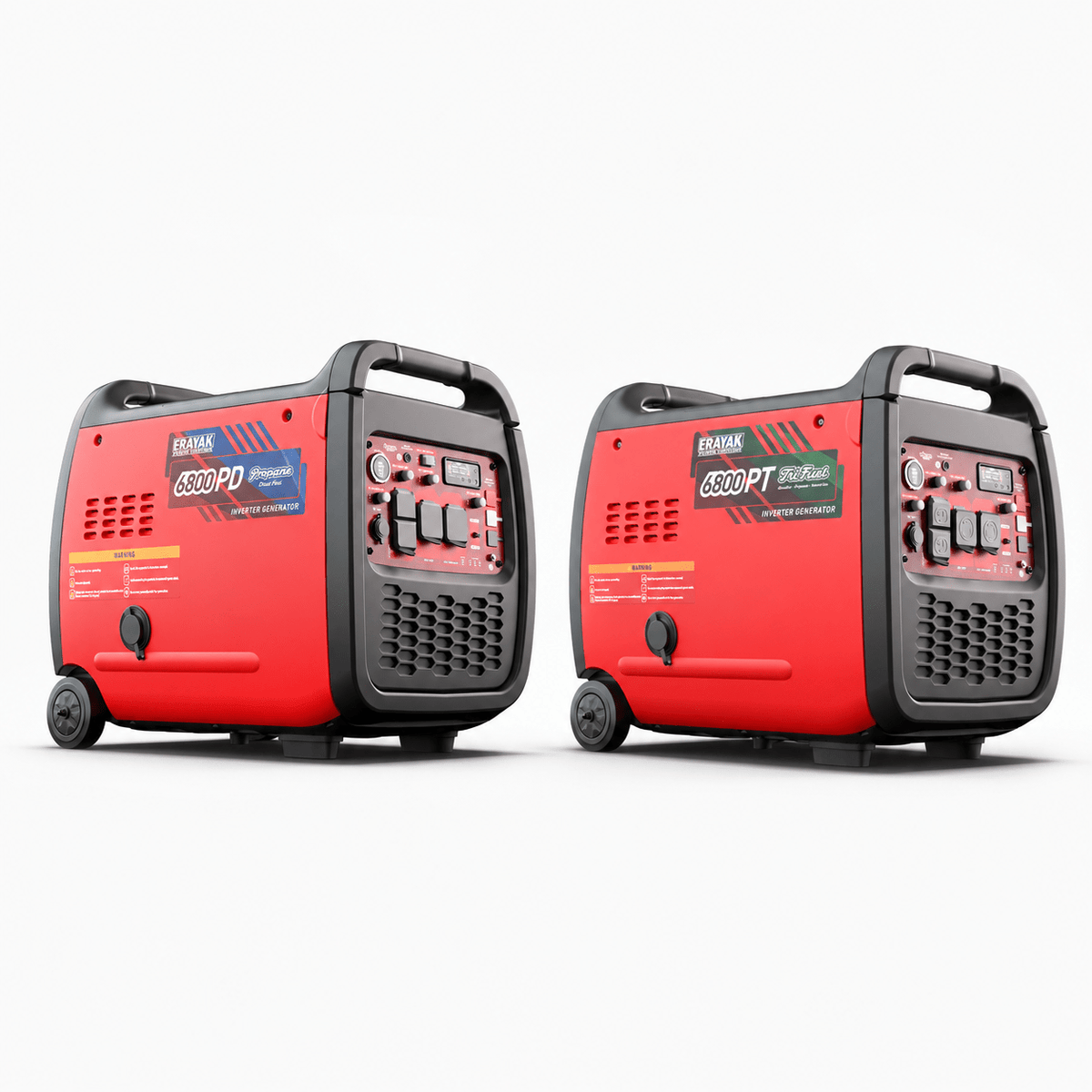
Upgrade Path: ERAYAK 6800PD / 6800PT Series
Step up to the 6800PD / 6800PT platform when your generator plan extends beyond a simple RV campsite setup into larger RV load management, selected home circuits, 120V/240V planning, sump pump, well pump, or more complex outage backup. The 6800 series is rated at 6800W peak and 5000W continuous output on gasoline, with 30A L5-30R, 30A 120V/240V L14-30R, dual 120V household outlets, and TT-30R adapter accessory support for RV connection.
Common RV Generator Setup Mistakes to Avoid
Starting with everything on
Large loads should not all hit the generator at once. Turn major appliances off before connection and bring them online one at a time.
Using the wrong cord
A light household extension cord is not a safe substitute for a properly rated outdoor RV power cord or adapter path.
Treating an adapter as extra power
A 50A-to-30A adapter changes the connection, not the generator's available wattage. The load still has to fit the generator.
Running too close to the RV
Carbon monoxide risk is serious. Keep the generator outdoors, away from openings, and use functioning CO alarms inside the RV.
Refueling while hot
Shut the generator off and let it cool before refueling. Store fuel in approved containers away from ignition sources.
Ignoring campground rules
Many campgrounds limit generator hours or noise. Quiet inverter operation helps, but rules still matter.
Match the generator to the way you actually camp
For most RV inverter generator setup searches, the best next step is comparing a 4500W-class RV inverter generator against your real loads, fuel preference, and comfort expectations.
RV Generator Setup FAQ
Can I plug my RV directly into an inverter generator?
Yes, if the generator output, cord, adapter, and RV inlet are compatible and rated for the load. Turn off major appliances first, start the generator, let it stabilize, connect with the correct RV-rated cord, then add loads one at a time.
Do I need a surge protector with an RV generator?
A surge protector or EMS is a good idea because it can help protect the RV electrical system and alert you to some connection issues. Check the surge protector and generator manuals, especially if the device reports an open-ground or neutral-related fault.
Will a 30 amp RV generator run my air conditioner?
It may, but the answer depends on the air conditioner's starting surge, the generator's rated and peak output, altitude, temperature, fuel type, and other RV loads. Start the AC by itself after the generator is stable, and avoid running other heavy appliances at the same time.
Can I run a generator under my RV awning?
No. A fuel-powered generator should run outdoors with open ventilation and exhaust directed away from the RV, windows, doors, vents, people, and neighboring campsites. Do not run it under an awning, inside a storage compartment, in a garage, or in any enclosed or semi-enclosed space.
Should Eco Mode be on or off for RV AC startup?
For a large compressor load such as an RV AC, many users turn Eco Mode off during startup so the generator can respond faster, then turn it back on after the load stabilizes if the generator manual allows. Always follow the specific generator instructions.
Can a 50 amp RV use a portable inverter generator?
Yes, with the right adapter and load management, but a portable generator usually will not replace full 50 amp shore power. Treat it as selected-load power for one AC, charging, refrigerator support, lights, and essentials unless your generator and RV electrical setup are specifically designed for more.
