

![What Size Generator Do I Need to Run a Refrigerator? [2026 Guide] - Erayak Power](http://erayakpower.com/cdn/shop/articles/what-size-generator-do-i-need-to-run-a-refrigerator-2026-guide-3314398.jpg?v=1785205635&width=1500)
Refrigerator Generator Sizing Guide
Generator for Refrigerator: Fridge & Freezer Size Chart
Most household refrigerators need about 400 to 800 running watts and about 1,200 to 1,600 starting watts. For a refrigerator only, a 2,000W to 2,400W inverter generator is usually enough. For a refrigerator plus freezer, lights, Wi-Fi, fans, or a small TV, a 3,500W to 4,500W inverter generator gives safer backup margin.
If you are searching for a generator for refrigerator, generator for fridge, or best generator for refrigerator, start with compressor starting watts, not only the normal running watts on the appliance label.
When a summer storm, hurricane, wildfire outage, or winter freeze knocks out the power grid, food safety becomes urgent. A refrigerator can keep food safely cold for up to about 4 hours if the door stays closed, while a full freezer can hold a safe temperature for about 48 hours if it remains closed, according to FoodSafety.gov power outage guidance.
This 2026 guide explains what size generator you need to run a refrigerator, freezer, fridge and freezer together, refrigerator plus TV, and basic outage essentials. It also answers common searches like generator for refrigerator, generator for fridge, best generator for freezer, and whether a 2,000 watt generator is enough.
Quick Answer
Quick Answer: Best Generator Size for a Refrigerator
For one standard kitchen refrigerator, choose at least a 2,000W inverter generator. A 2,400W inverter generator gives better breathing room for compressor surge, phone charging, Wi-Fi router, LED lights, and a small TV. For a refrigerator and freezer at the same time, choose a 3,500W to 4,500W inverter generator so two compressor loads do not overload the generator during startup.
For indoor refrigerator backup, use a battery power station only. Gasoline, propane, diesel, and natural gas generators must run outdoors because they produce carbon monoxide.
Generator for Refrigerator Sizing Chart
The key is not just the refrigerator's normal running wattage. Refrigerators and freezers use compressors, and compressors need a brief startup surge. That is why a generator that looks large enough on running watts can still overload when the compressor starts.
Use this chart for common searches such as generator for fridge, refrigerator generator, backup generator for refrigerator, and generator for fridge and freezer.
| Appliance / Setup | Typical Running Watts | Typical Starting Watts | Recommended Generator Size |
|---|---|---|---|
| Mini fridge | 100-250W | 400-800W | 1,000W+ inverter generator or battery power station |
| Standard kitchen refrigerator | 400-800W | 1,200-1,600W | 2,000W minimum; 2,400W recommended |
| Garage refrigerator | 500-900W | 1,400-1,800W | 2,400W recommended |
| Chest freezer or upright freezer | 300-600W | 1,000-1,500W | 2,000W minimum; 2,400W recommended |
| Refrigerator + freezer | 700-1,400W | 2,500-3,100W | 3,500W to 4,500W inverter generator |
| Refrigerator + freezer + lights + Wi-Fi + TV | 900-1,700W | 2,700-3,300W+ | 4,500W-class inverter generator |
| Refrigerator + freezer + portable AC | 1,700-3,000W | 4,000-6,000W+ | 4,500W to 6,800W inverter generator, depending on AC size |
Important: These are planning ranges. Always check the appliance nameplate or owner manual for exact wattage. Older refrigerators, garage units, deep freezers, and appliances in hot environments can draw more power than newer high-efficiency units.
How Many Watts Does a Refrigerator Use?
Most modern full-size refrigerators use about 400 to 800 running watts when the compressor is operating, but the starting surge can briefly jump to about 1,200 to 1,600 watts. Some efficient refrigerators use less, while older garage refrigerators, large side-by-side models, and refrigerators working in hot rooms may need more.
If your search is really about a fridge generator or generator for fridge, treat those terms the same way as refrigerator sizing: check the appliance label, account for compressor startup, then add the other devices you want to run at the same time.
Fridge Only
A 2,000W generator can run many refrigerators, but a 2,400W inverter generator gives better margin for startup surge and small essentials.
Fridge + Freezer
Use 3,500W to 4,500W as the practical range because two compressors may start close together after an outage.
Running Watts vs Starting Watts for a Refrigerator
Running watts are the watts your refrigerator uses after the compressor is already running. Starting watts, also called surge watts, are the short power spike needed when the compressor starts. Generator sizing should account for the starting surge, not just the running watts.
Sizing Formula
Use This Simple Generator Rule
For better reliability, add extra headroom instead of running a generator constantly at its limit. This helps with compressor surge, fuel efficiency, noise, voltage stability, and normal load changes.
Can a 2,000 Watt Generator Run a Refrigerator?
Yes, a 2,000 watt inverter generator can run many standard refrigerators if the refrigerator's starting watts are within the generator's peak rating and you do not connect too many other loads at the same time.
However, a 2,000W generator can be tight when the refrigerator compressor starts. If you also plug in a TV, laptop, lights, router, or freezer, the generator may overload. That is why a 2,400W inverter generator is usually a better refrigerator-only backup choice.
| Generator Size | Can It Run a Refrigerator? | Best Use Case |
|---|---|---|
| 1,000W | Maybe for a mini fridge only | Small fridge, no major extra loads |
| 1,500W | Possible for some efficient refrigerators | Check starting watts carefully |
| 2,000W | Yes, for many standard refrigerators | Fridge-only backup with limited extras |
| 2,400W | Yes, with better surge margin | Refrigerator, lights, router, chargers, small TV |
| 3,500W-4,500W | Yes, with room for more essentials | Refrigerator + freezer + outage essentials |
What Size Generator Do I Need to Run a Refrigerator and Freezer?
For a refrigerator and freezer together, use a 3,500W to 4,500W inverter generator as the practical starting point. Two compressors can start close together, especially after a long outage or after the appliance doors have been opened.
If the search phrase is generator for refrigerator and freezer, generator for fridge and freezer, or best generator for fridge and freezer, the answer is the same: do not size only for the refrigerator's running watts. Size for the largest compressor startup event, the freezer load, and the small essentials you will actually plug in during the outage.
Real-World Example
Kitchen Refrigerator + Chest Freezer + Lights + Router
- Refrigerator starting surge: 1,500W
- Chest freezer running load: 500W
- LED lights, Wi-Fi router, phone chargers: 150W
- Small TV or fan: 100W
This is where a 2,000W generator becomes risky. A 4,500W-class inverter generator gives more margin for starting surge and normal household backup loads.
Best Generator for a Refrigerator: What to Look For
The best generator for a refrigerator is not always the biggest model. For most homeowners, the best match is an inverter generator with enough starting-watt capacity, clean output for modern appliance controls, manageable noise, and enough fuel flexibility for the outage length you expect.
Enough Starting Watts
Refrigerators and freezers need surge power when the compressor starts. Leave extra headroom instead of running the generator at its limit.
Clean Inverter Power
An inverter generator is a better fit for refrigerators, routers, laptops, and TVs than a rougher open-frame unit when sensitive electronics are part of the backup plan.
Right Backup Scope
Fridge-only backup can stay compact. Fridge plus freezer, fans, lights, sump pump, or portable AC calls for a larger generator class.
Best Indoor Generator for Refrigerator? Use a Battery Power Station Indoors
Many shoppers search for an indoor generator for refrigerator backup. The safe answer is simple: only a battery power station should be used indoors. Fuel-powered generators are outdoor-use only.
Battery Power Station
A battery power station can be used indoors because it has no exhaust. The tradeoff is runtime. A full-size refrigerator can drain many portable battery stations in hours unless you have enough battery capacity and reliable solar recharging.
Gas, Propane, or Natural Gas Generator
A fuel-powered generator must never run indoors, in a garage, near open windows, or in enclosed spaces. It must be operated outdoors with proper ventilation because it produces carbon monoxide.
For multi-day outages, a fuel-powered inverter generator is often the more practical choice for refrigerators and freezers because you can refuel it. For short indoor backup, a battery station may be convenient, but confirm both wattage and watt-hour capacity before relying on it.
Running a Refrigerator on a Generator Safely
For basic appliance backup, many homeowners use a heavy-duty outdoor-rated extension cord from an outdoor generator to the refrigerator. For powering home circuits, use a properly installed transfer switch or interlock system and consult a licensed electrician.
- Place the generator outside. Keep it away from doors, windows, vents, enclosed patios, and attached garages.
- Use a heavy-duty outdoor-rated cord. Choose the correct gauge and rating for the appliance load and cord length.
- Start the generator before applying load. Let the engine stabilize before plugging in the refrigerator.
- Do not overload the generator. Add loads one at a time and leave headroom for compressor surge.
- Keep refrigerator and freezer doors closed. This reduces runtime and helps preserve food temperature.
Generator Safety Notice
Portable generators can produce deadly carbon monoxide. Use them correctly every time.
- Never run a generator indoors.
- Never run a generator in a garage.
- Never run a generator near open windows, doors, vents, or enclosed patios.
- Always operate generators outdoors with proper ventilation.
- Do not backfeed power into a wall outlet. Use a properly installed transfer switch or interlock for selected home circuits.
- Follow your generator manual, appliance manual, and local electrical code.
How Long Should You Run a Generator for a Refrigerator?
A refrigerator does not need to run continuously to stay cold, especially if the door stays closed. In an outage, many users run the generator in cycles to bring the refrigerator and freezer back down to safe temperatures, then shut down to save fuel. The safe timing depends on the appliance, food load, outside temperature, door openings, and temperature readings.
Use appliance thermometers when possible. FoodSafety.gov recommends keeping refrigerators at or below 40°F and discarding perishable refrigerated food after 4 hours without power if it has not been kept cold. A full freezer can hold a safe temperature for about 48 hours if the door remains closed.
Best ERAYAK Generator for Refrigerator and Freezer Backup
The best generator for a refrigerator depends on whether you want fridge-only backup, fridge plus freezer, or a larger emergency setup that includes lights, Wi-Fi, fans, a portable AC, or selected home circuits.
Recommended ERAYAK Match
Choose by Backup Load, Not Just Appliance Name
Use a compact generator for refrigerator-only backup. Step up when you add a freezer, multiple appliances, or storm-prep fuel flexibility. For broader home backup planning, compare the full ERAYAK inverter generator collection.
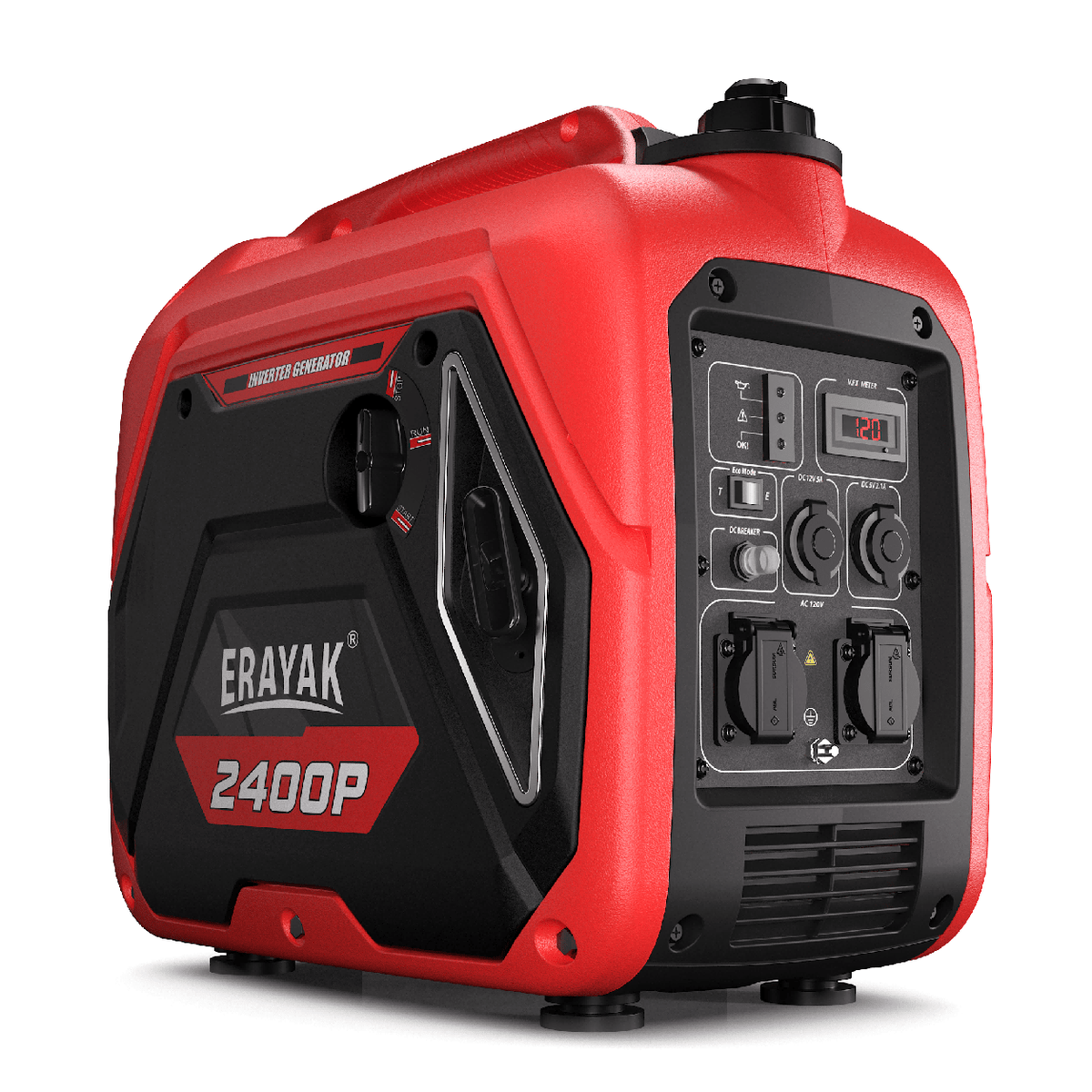
ERAYAK 2400P
Best for: one refrigerator, lights, Wi-Fi router, phone charging, laptop use, and compact outage backup.
Choose this when your goal is to keep food cold and basic devices powered without moving to a larger generator.
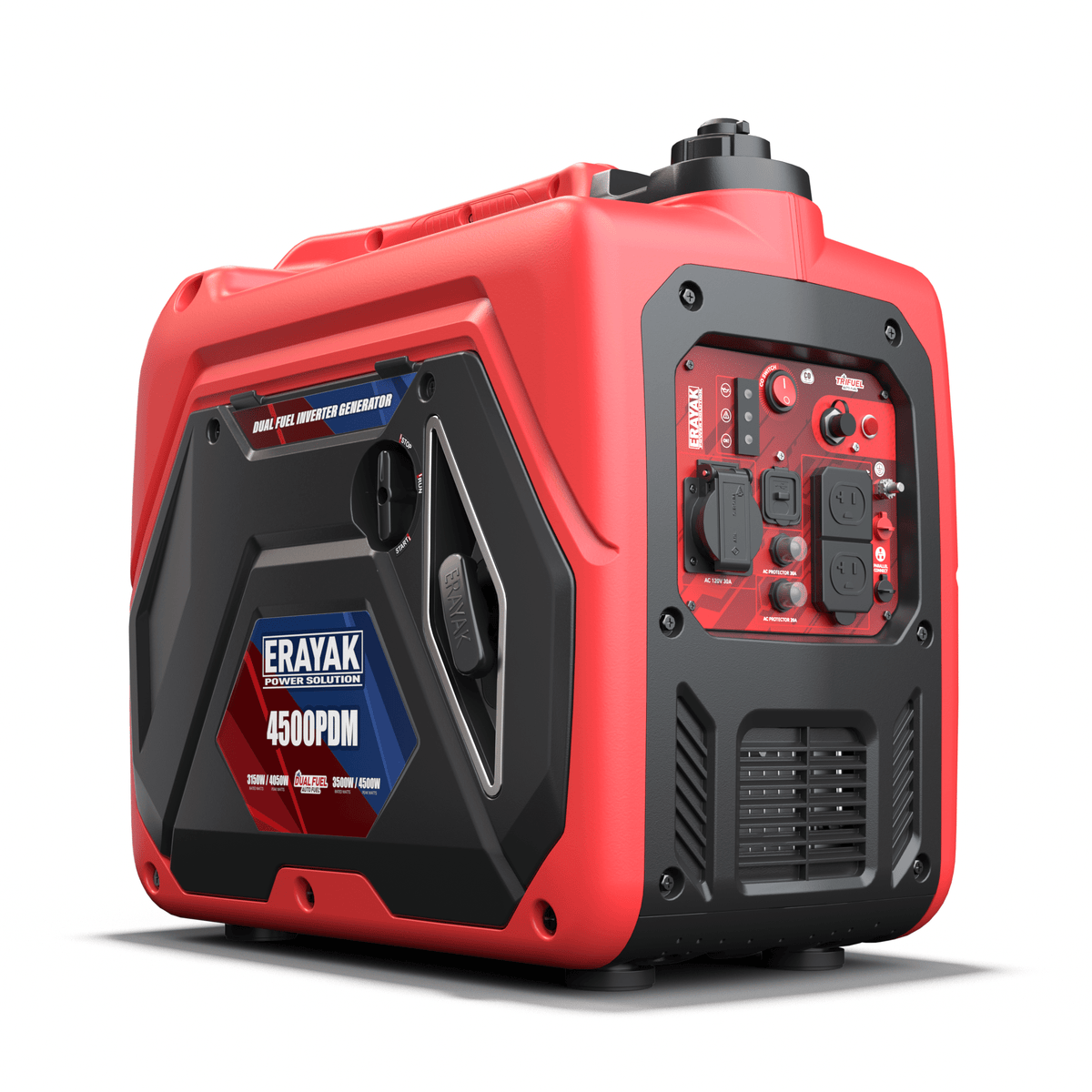
ERAYAK 4500PD Dual-Fuel Series
Best for: refrigerator and freezer backup, storm preparation, RV essentials, lights, router, fans, and a larger emergency setup.
Choose the 4500PD series when fuel flexibility matters and you want more usable margin than a small generator.
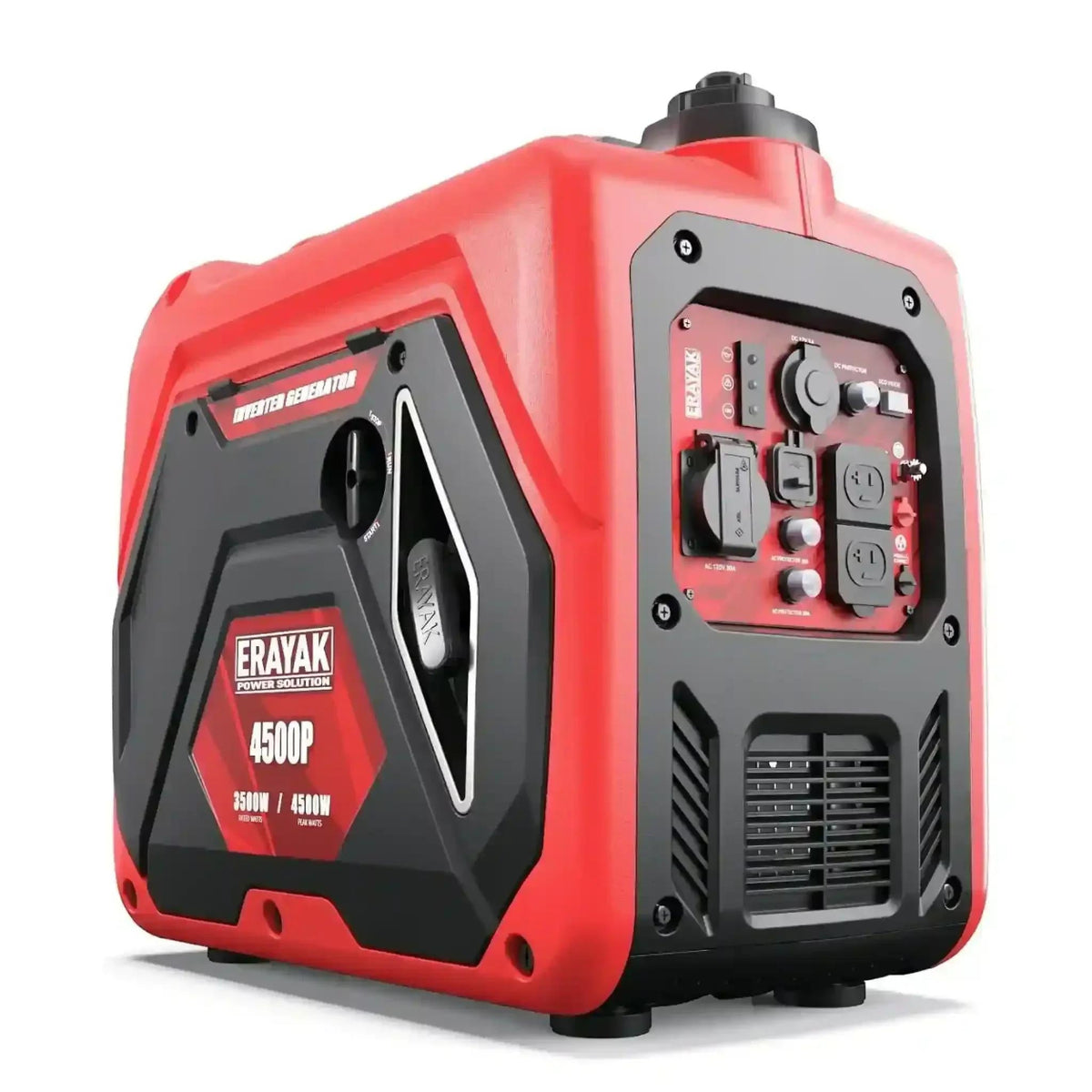
ERAYAK 4500P Gas Inverter Generator
Best for: users who want a gas-only 4500W inverter generator for refrigerators, freezer backup, RV weekends, and essential home loads.
The ERAYAK 4500P is the simpler gas-only option. It is not dual fuel, tri-fuel, propane, natural gas, electric start, or remote start.
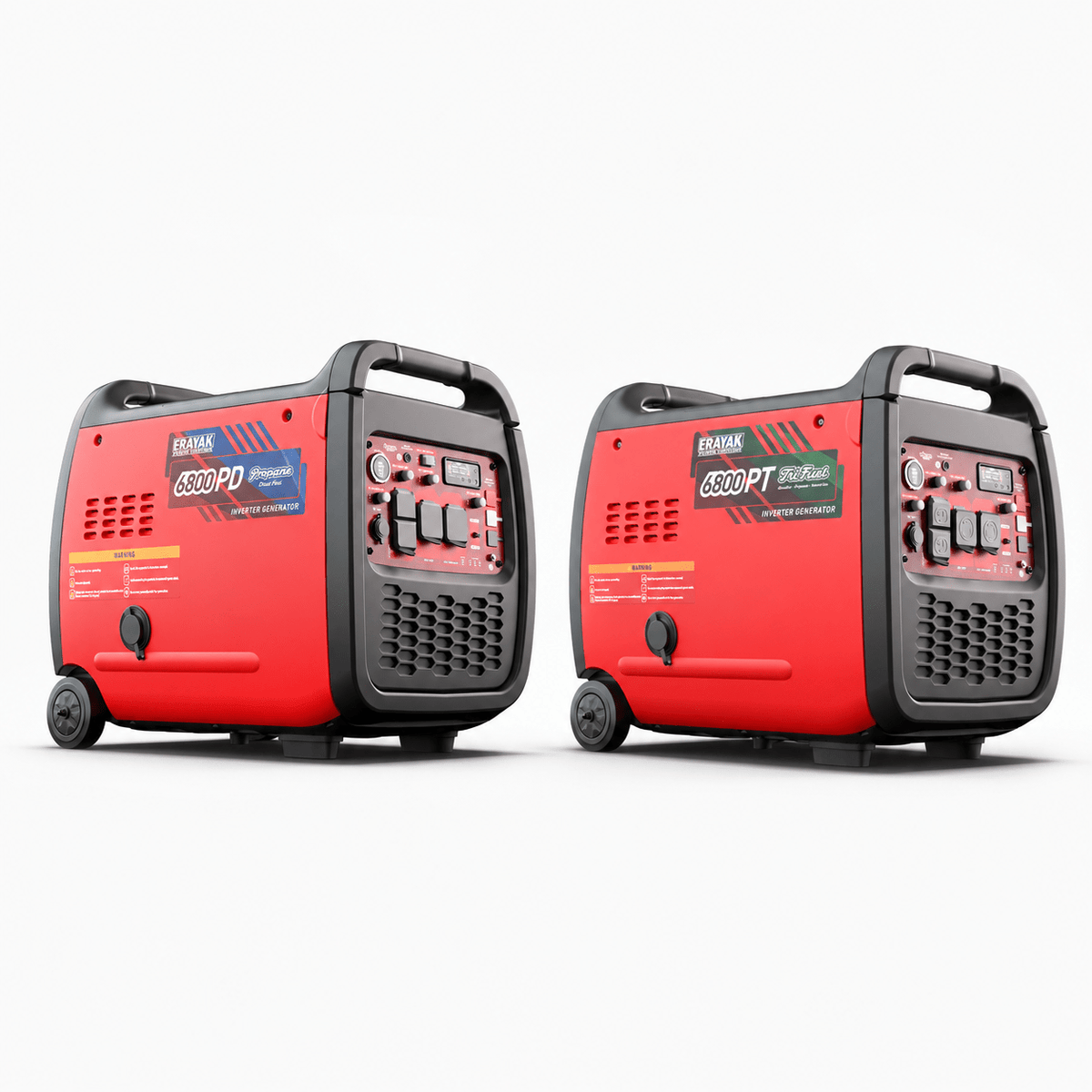
ERAYAK 6800PD / 6800PT Series
Best for: refrigerator, freezer, sump pump, selected home circuits, RV power, portable AC backup, and higher-capacity outage planning.
Choose 6800PD for dual-fuel gasoline/propane flexibility, or 6800PT when you want tri-fuel capability with gasoline, propane, and natural gas support. Use a qualified setup for any home circuit connection.
Generator Sizing Cheat Sheet for Refrigerators
| Your Backup Goal | Recommended ERAYAK Match | Why It Fits |
|---|---|---|
| One refrigerator, phones, Wi-Fi router, LED lights | ERAYAK 2400P | Compact inverter generator choice for refrigerator-only and light essential backup. |
| Refrigerator plus freezer and basic outage loads | ERAYAK 4500PD Dual-Fuel Series | More surge margin and gasoline/propane flexibility for storm season. |
| Gas-only 4500W inverter power for fridge, freezer, RV, and essentials | ERAYAK 4500P Gas Inverter Generator | Simple gas-only option when dual fuel is not required. |
| Refrigerator is one of several home backup loads | ERAYAK 6800PD / 6800PT Series | Higher-capacity 120V/240V platform for selected circuits, RV power, and more complex backup planning. |
| Still comparing generator types and sizes | ERAYAK Inverter Generator Collection | Compare compact, dual-fuel, and high-capacity inverter generator options. |
FAQs: Generator for Refrigerator and Freezer Backup
What size generator do I need to run a refrigerator?
Most standard refrigerators need a 2,000W inverter generator minimum, with 2,400W being the safer choice for added surge margin and small essential loads.
Can a 2,000 watt generator run a refrigerator?
Yes, many 2,000 watt inverter generators can run a standard refrigerator if the refrigerator's starting watts are within the generator's peak output. Avoid adding heavy extra loads at the same time.
What size generator do I need for a refrigerator and freezer?
A 3,500W to 4,500W inverter generator is usually the better range for running a refrigerator and freezer together, especially if you also need lights, Wi-Fi, fans, or a TV.
Will a 1,500 watt generator run a refrigerator?
It may run some efficient refrigerators, but it can be tight because refrigerator compressors need starting surge. Check the appliance nameplate and avoid additional loads if using a 1,500W generator.
Can a generator damage a refrigerator?
Unstable power, incorrect cords, overloads, and unsafe connections can create problems. A quality inverter generator is preferred for modern refrigerators because it provides cleaner, more stable power than many basic open-frame generators.
Does a refrigerator need to run constantly during an outage?
Not always. If doors stay closed, refrigerators and freezers can hold temperature for a period of time. Use appliance thermometers and food safety guidance to decide when to run the generator and when to discard perishable food.
Can I run a refrigerator and TV on a generator?
Yes. A modern LED TV usually uses much less power than a refrigerator compressor surge. A 2,400W inverter generator is often a practical size for refrigerator, TV, lights, router, and chargers.
What is the best indoor generator for a refrigerator?
Only a battery power station can be used indoors for refrigerator backup. Gasoline, propane, diesel, and natural gas generators must never be used indoors or in a garage because they produce carbon monoxide.
How many watts does a refrigerator use?
Many standard refrigerators use about 400 to 800 running watts and about 1,200 to 1,600 starting watts. Check the nameplate or manual because older, larger, and garage refrigerators can use more.
Conclusion: Start With Refrigerator Watts, Then Add Your Emergency Loads
For a single refrigerator, a 2,000W generator can often work, but a 2,400W inverter generator gives better surge margin. For a refrigerator and freezer together, move into the 3,500W to 4,500W range. For refrigerator, freezer, portable AC, sump pump, RV, or selected home circuit backup, consider a higher-capacity platform such as the ERAYAK 6800PD/PT series.
Emergency Power Planning
Keep Your Refrigerator and Freezer Running During the Next Outage
Compare compact, dual-fuel, gas-only, and higher-capacity ERAYAK inverter generators for refrigerator backup, freezer protection, RV power, and home essentials.


