

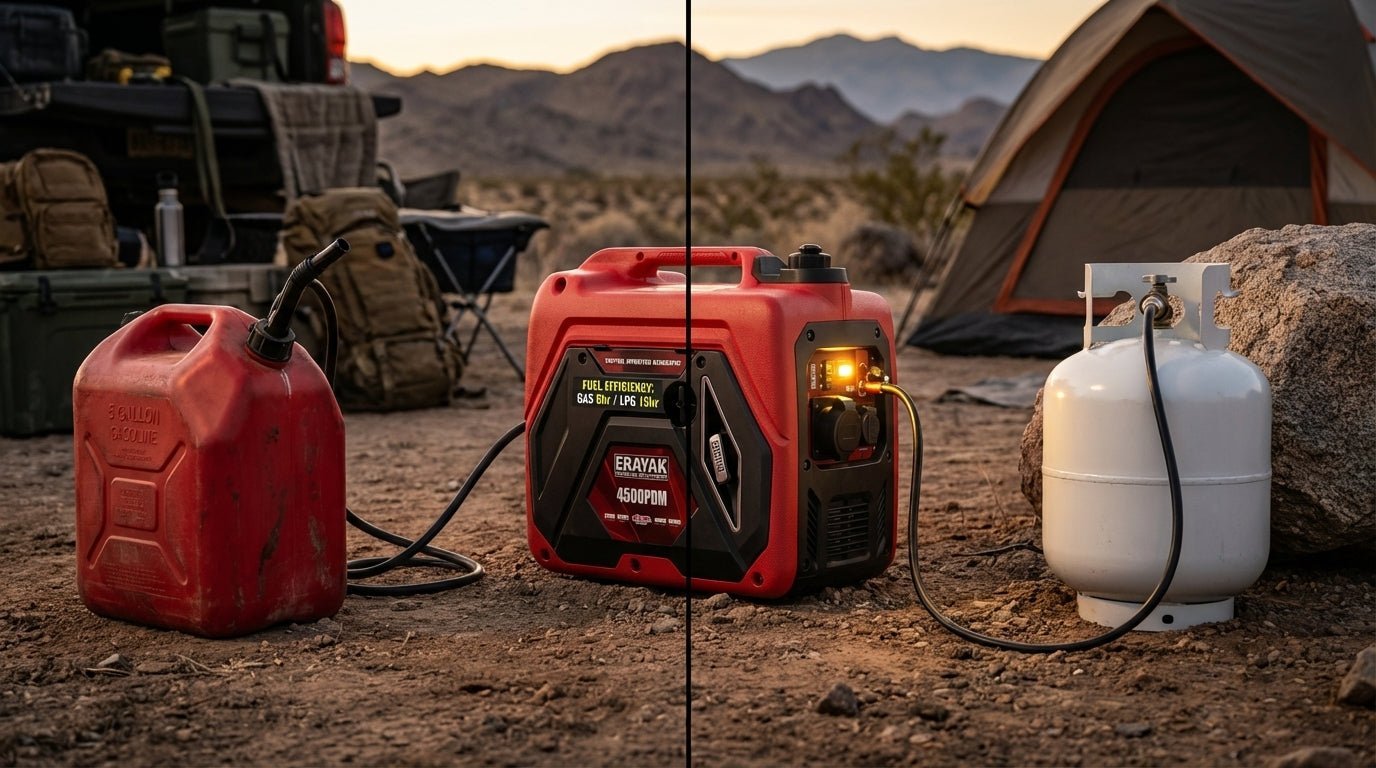
Inverter Generator Fuel Consumption: Gas & Propane Charts
Inverter generators still use fuel, but they can save fuel at light and medium loads because the engine can slow down with Eco Mode. Use these planning charts to estimate gasoline and propane runtime for camping, RV power, and home backup.
Quick Answer: How Much Fuel Does an Inverter Generator Use?
A small inverter generator may use roughly 0.10 to 0.20 gallons per hour at light load. A 4,000W to 4,500W inverter generator may use roughly 0.25 to 0.50 gallons per hour at moderate load, and more when running heavy loads such as an RV air conditioner, microwave, pump, or high-output battery charger.
Eco Mode helps most when loads are light and steady. It helps less when the generator must keep throttling up for compressors, pumps, or large surge loads. Treat all runtime numbers as planning ranges, then verify with your generator manual and real-world load test.
Do Inverter Generators Use Less Fuel?
Usually, yes, especially at light and medium loads. The reason is variable engine speed. A conventional generator often runs at a fixed speed to maintain output, while an inverter generator can slow the engine when demand is low and still rebuild stable AC power electronically.
Biggest savings
Charging batteries, phones, routers, lights, and small appliances lets Eco Mode reduce engine speed.
Useful savings
Refrigerators, freezers, RV converters, and mixed campsite loads still benefit from better load matching.
Less difference
At high output, every generator must burn more fuel. Eco Mode has less room to help.
The key is correct sizing. An oversized generator can waste fuel on small loads, while an undersized generator may run near maximum output and burn fuel quickly.
Fuel Consumption by Load: Gallons and Liters per Hour
The table below gives broad planning ranges for inverter generators. Exact fuel consumption depends on engine design, wattage class, fuel quality, altitude, temperature, maintenance, and connected load.
| Load level | Typical use | Gasoline estimate | Liters per hour |
|---|---|---|---|
|
Light load About 25% |
Lights, router, laptop, phone charging, small battery charging. | 0.10-0.25 gal/hr | 0.38-0.95 L/hr |
|
Medium load About 50% |
Refrigerator/freezer, RV converter, fan, small kitchen loads. | 0.25-0.50 gal/hr | 0.95-1.89 L/hr |
|
Heavy load About 75%+ |
RV AC, microwave, pump, compressor cycling, multiple appliances. | 0.50-0.80+ gal/hr | 1.89-3.03+ L/hr |
Gasoline Runtime: 3, 5, and 10 Gallons
Use this table to plan fuel storage for camping, RV trips, or outages. Always leave a reserve instead of planning to run the tank completely dry.
| Stored gasoline | Light load | Medium load | Heavy load |
|---|---|---|---|
| 3 gallons | 12-30 hours | 6-12 hours | 4-6 hours |
| 5 gallons | 20-50 hours | 10-20 hours | 6-10 hours |
| 10 gallons | 40-100 hours | 20-40 hours | 12-20 hours |
If your search is “how long does 5 gallons of gas last in a generator,” the honest answer is: it depends on load. Five gallons can last a weekend for light charging loads, or far less if you are running AC, pumps, and kitchen appliances.
Propane Runtime: 20 lb, 30 lb, and 100 lb Tanks
Propane is popular because it stores well and is convenient for RVers and storm prep. However, propane usually provides less output than gasoline, and runtime changes with tank size, temperature, vaporization, and load.
| Propane tank | Approx. liquid propane | Light to medium load | Heavy load |
|---|---|---|---|
| 20 lb tank | About 4.6-4.7 gallons | 8-18 hours | 4-9 hours |
| 30 lb tank | About 7 gallons | 12-27 hours | 6-14 hours |
| 100 lb tank | About 23-24 gallons | 40-90 hours | 20-45 hours |
Eco Mode vs Normal Mode
Eco Mode, sometimes called Smart Throttle, lets an inverter generator slow the engine when electrical demand is low. Normal mode keeps the engine more ready for sudden load changes.
| Mode | Best for | Fuel impact |
|---|---|---|
| Eco Mode | Lights, chargers, router, laptop, TV, steady small appliances. | Best fuel savings and lower noise at light loads. |
| Normal Mode | Starting RV AC, pumps, compressors, microwave, or high-surge loads. | Uses more fuel but may respond better to sudden loads. |
| Mixed use | Camping or RV loads that change throughout the day. | Use Eco Mode for quiet periods, normal mode before high-surge starts. |

Fuel Consumption by Use Case
Light-load efficiency
Lights, fans, chargers, and small appliances are ideal for Eco Mode and long runtime.
AC changes everything
RV AC, microwave, and converter charging can move the generator into a much higher burn range.
Essential-load planning
Refrigerator, freezer, lights, Wi-Fi, and furnace blower are usually more fuel-efficient than whole-home loads.
Erayak Fuel-Efficient Generator Picks
The most fuel-efficient generator is the one matched to your load. A smaller generator can be excellent for light loads. A larger dual-fuel inverter is better when RV AC, home essentials, or propane flexibility matter.
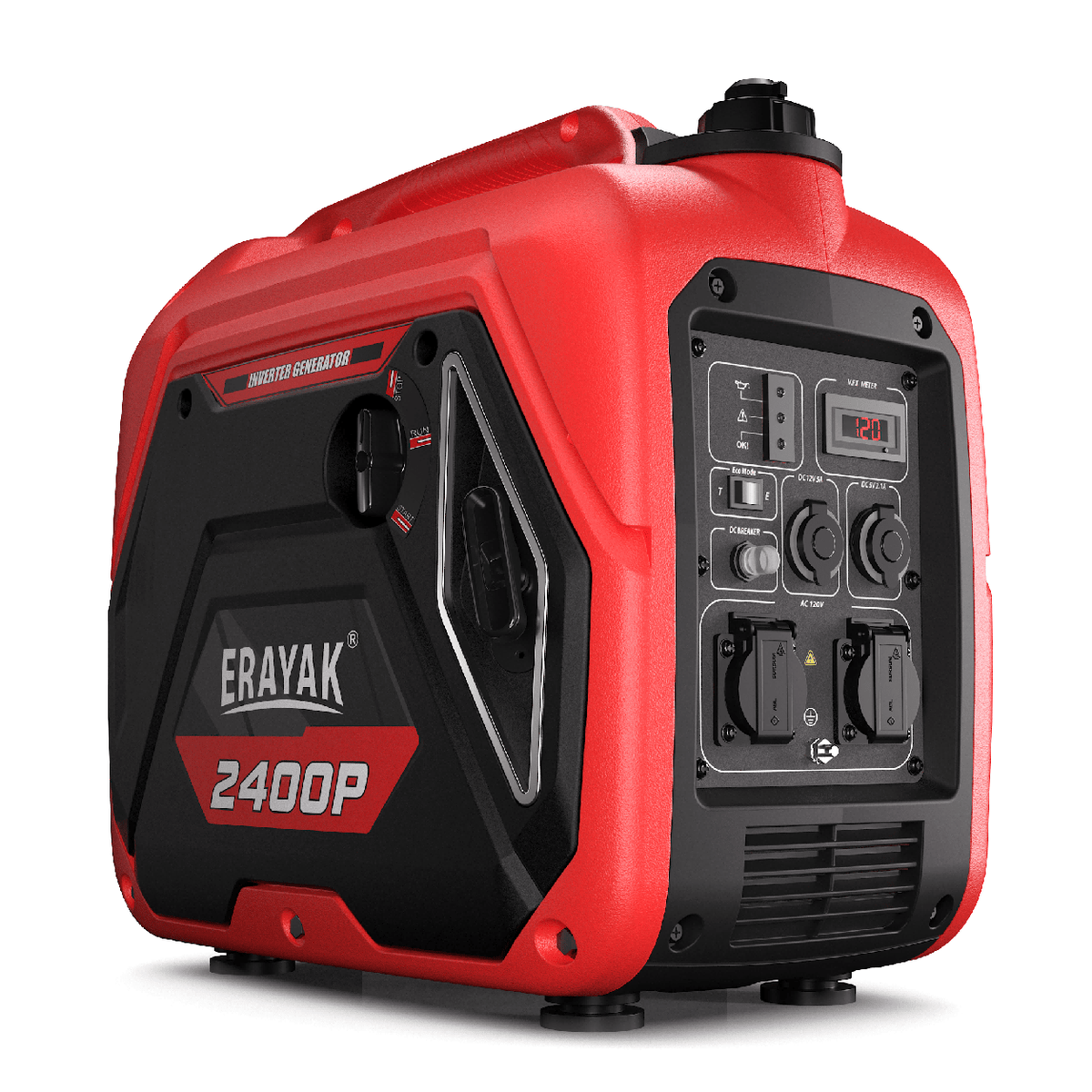
Best for Light-Load Fuel Savings: Erayak 2400P
The Erayak 2400P is the better fit when your main goal is compact, efficient power for camping, small backup loads, battery charging, lights, phones, laptops, router, and small appliances.
- Best for: light camping, small emergency loads, and fuel-saving portable power.
- Planning note: not the default pick for standard RV rooftop AC.
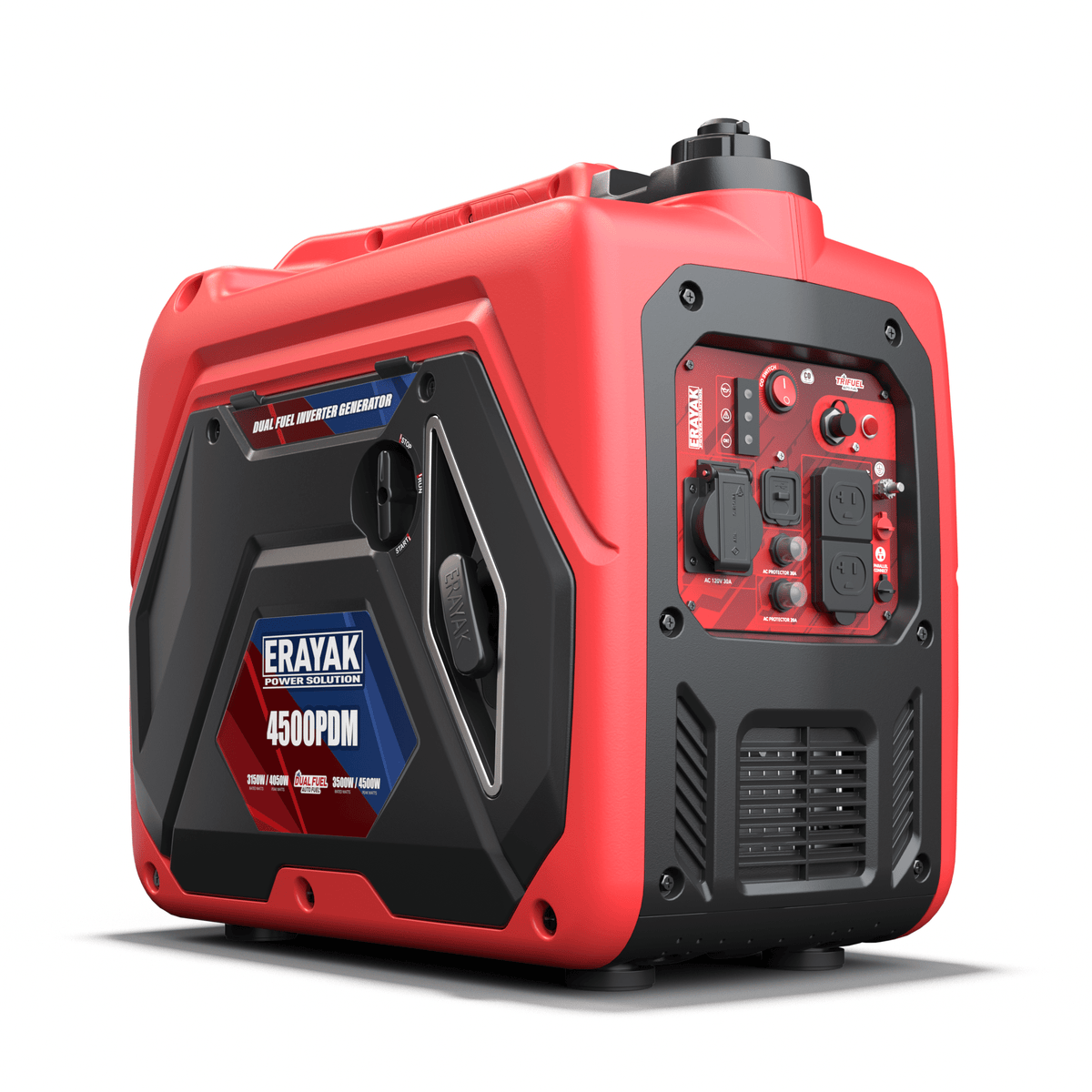
Best Dual-Fuel RV and Home Essentials Fit: Erayak 4500PD
The Erayak 4500PD is the stronger fit when fuel planning includes RV AC, refrigerator backup, propane flexibility, 30 amp RV-style loads, or storm-prep essentials.
- Best for: RV camping, propane flexibility, refrigerator/freezer backup, portable AC planning, and home essentials.
- Fuel options: gasoline and propane.
- Runtime note: actual fuel use depends on load, fuel type, temperature, altitude, and Eco Mode behavior.
Fuel Storage and Generator Safety
- Never refuel a hot or running generator. Shut it down and let it cool first.
- Store gasoline safely. Use approved containers, rotate old fuel, and follow local rules.
- Check propane setup. Use the correct regulator, hose, tank size, and ventilation.
- Keep loads realistic. Running near maximum output burns fuel faster and increases heat.
- Maintain the generator. Oil, air filter, spark plug, and fresh fuel all affect efficiency.
Generator Safety Notice
Fuel-powered generators must be operated outdoors with proper ventilation. Never run a generator indoors, in a garage, in a shed, under a porch, inside an RV, or near open windows, doors, vents, or crawl-space openings. Keep exhaust pointed away from people and structures, and use working carbon monoxide alarms.
FAQ: Inverter Generator Fuel Consumption
Does an inverter generator use fuel?
Yes. An inverter generator still uses an engine that runs on gasoline, propane, or natural gas depending on the model. “Inverter” refers to how the generator converts and cleans the electrical output.
Do inverter generators use less fuel?
Often yes, especially at light and medium loads. Inverter generators can reduce engine speed with Eco Mode, which saves fuel when demand is low.
How much gas does an inverter generator use per hour?
A small inverter generator may use roughly 0.10 to 0.20 gallons per hour at light load. A 4,000W to 4,500W inverter generator may use roughly 0.25 to 0.50 gallons per hour at moderate load, and more under heavy loads.
How long does 5 gallons of gas last in an inverter generator?
Five gallons may last about 20 to 50 hours at light load, 10 to 20 hours at medium load, or 6 to 10 hours under heavy load. Exact runtime depends on generator size and connected appliances.
How long does a 20 lb propane tank last on a generator?
A 20 lb propane tank may last about 8 to 18 hours under light to medium load, or 4 to 9 hours under heavier load. Cold weather and high load can reduce usable runtime.
Is Eco Mode always better?
Eco Mode is best for light, steady loads. For starting an RV air conditioner, pump, compressor, or other high-surge appliance, normal mode may be more reliable.
Is propane more efficient than gasoline?
Propane stores well and burns cleanly, but gasoline usually provides stronger output and often longer runtime for the same generator under comparable load. Propane is often chosen for storage and convenience rather than maximum output.
Which Erayak generator is best for fuel efficiency?
The Erayak 2400P is the best fit for light-load fuel savings. The Erayak 4500PD is the better fit when you need dual-fuel flexibility, RV AC planning, or larger home/RV essentials.


