

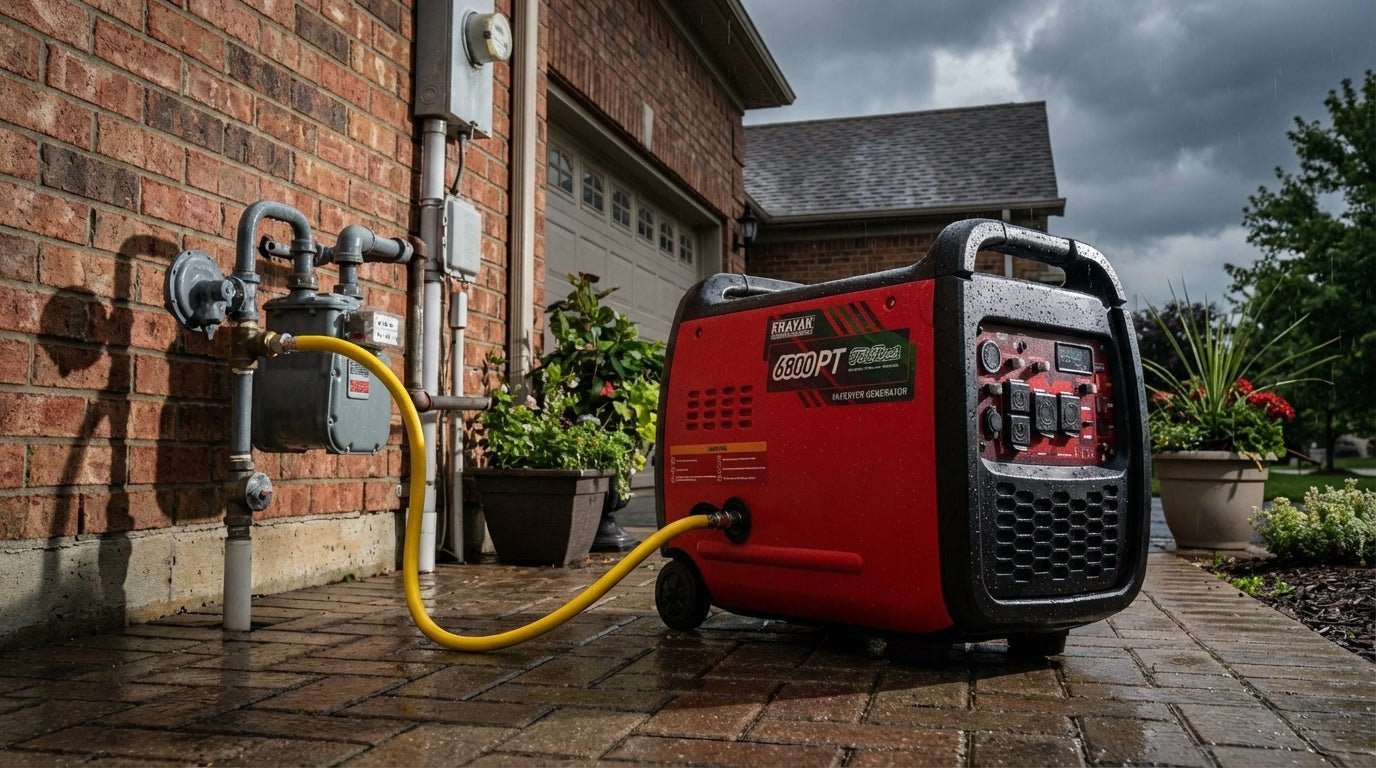
Smallest Whole House Generator? Size Guide for Small Homes
The smallest “whole house” generator is usually not a tiny unit that runs every appliance at once. For most small homes, cabins, and tiny homes, the smarter goal is essential-load backup: refrigerator, freezer, lights, Wi-Fi, furnace blower, sump pump, selected outlets, and sometimes a 240V well pump.
Quick Answer: What Is the Smallest Whole House Generator Size?
For a small home, the smallest practical generator is usually 4,500W for 120V essentials or about 6,000W to 7,500W for selected 120V/240V loads. A 4,500W inverter generator can support many tiny-home and small-cabin essentials. A compact 120V/240V generator is a better fit if you need a well pump, selected circuits, or larger backup planning.
The key phrase is selected loads. A small portable generator can keep a small home livable during an outage, but it is not the same as a permanently installed standby generator that powers every circuit automatically.
What Does “Small Whole House Generator” Really Mean?
Many shoppers use “whole house generator” to mean “I want my home to keep functioning during an outage.” But electrically, there is a big difference between powering the whole house and powering the most important circuits in the house.
Mostly 120V loads
Fridge, lights, outlets, router, small appliances, and sometimes a window AC or small mini-split setup.
Essential circuits
Refrigerator, freezer, furnace blower, sump pump, well pump planning, lights, and communications.
Large standby territory
Central AC, electric range, electric dryer, water heater, and all circuits at once usually need a larger standby-style plan.
If the goal is to survive a blackout comfortably, a portable inverter generator can be a smart small-home solution. If the goal is to run every major appliance with no manual setup, a standby generator is the more realistic category.

Generator Size Chart for Small Homes
Use this as a starting point. The right generator size depends on your appliance nameplates, starting watts, fuel type, and whether loads run at the same time.
| Home or load plan | Practical generator size | Voltage need | What to expect |
|---|---|---|---|
| Tiny home or small cabin essentials | 3,500W to 4,500W | 120V | Fridge, lights, router, chargers, small appliances, and managed heating/cooling loads. |
| Small home essential circuits | 4,500W to 6,800W | 120V or 120V/240V | Refrigerator, freezer, lights, furnace blower, sump pump, Wi-Fi, and selected outlets. |
| Small home with 240V well pump | 6,000W to 7,500W class | 120V/240V | Well pump planning plus selected 120V circuits, depending on pump starting load. |
| Central AC or electric heat | Often larger than portable class | Usually 240V | Requires careful sizing and may push you toward a larger standby or professional backup system. |
120V vs 120V/240V: Why It Matters
The fastest way to choose the wrong generator is to look only at watts. Voltage matters just as much.
| Load type | Usually 120V? | May need 240V? | Generator note |
|---|---|---|---|
| Refrigerator or freezer | Yes | Usually no | Works well in essential-load backup plans. |
| Lights, router, laptop, phone chargers | Yes | No | Low wattage, but clean inverter power is still preferred. |
| Furnace blower | Often yes | Check the unit | Starting watts and transfer switch setup matter. |
| Sump pump | Often yes | Some setups vary | Motor starting surge can be high. |
| Deep well pump | Sometimes | Often yes | Check nameplate voltage, horsepower, FLA, and starting requirements. |
| Central AC, electric range, electric dryer | No | Usually yes | Often outside the realistic range of small portable backup. |
If your small home has no 240V loads, a 120V inverter generator may be enough. If you have a 240V well pump or selected 240V circuit, you need a generator and transfer setup that actually supports 120V/240V output.
What Can a Small Home Generator Run?
A realistic small-home backup plan is built around priorities. Keep food cold, keep water moving if possible, keep heat controls or fans working, keep lights on, and keep communication online.
| Essential load | Typical running watts | Starting watts? | Planning note |
|---|---|---|---|
| Refrigerator | 150W to 800W | Yes | Startup surge varies by age and compressor type. |
| Freezer | 100W to 700W | Yes | Do not start every compressor at the same time. |
| Furnace blower | 400W to 1,200W | Sometimes | Gas furnace still needs electricity for blower and controls. |
| Sump pump | 800W to 1,500W | Yes | Starting watts can be several times running watts. |
| Well pump | 750W to 2,000W+ | Yes | Voltage and pump size decide whether 120V/240V is needed. |
| Router, lights, chargers | 50W to 500W combined | Usually no | Small loads, but high value during outages. |
| Portable AC or window AC | 700W to 1,500W+ | Yes | Possible with load management; central AC is a different category. |
The most common mistake is adding only running watts and forgetting starting watts. Pumps, compressors, and AC units can briefly require much more power to start.
Portable vs Standby for a Small House
For a small house, a portable generator can be a strong alternative to a standby generator when the goal is essential-load backup. But the two categories are not identical.
| Feature | Portable inverter generator | Standby generator |
|---|---|---|
| Startup | Manual setup and startup. | Usually automatic. |
| Best use | Selected circuits and managed loads. | Whole-house or larger-load backup when sized correctly. |
| Installation | Manual transfer switch or interlock plus inlet box. | Permanent pad, transfer switch, fuel connection, permits. |
| Mobility | Can be moved, stored, or used elsewhere. | Permanent fixture. |
| Cost profile | Often lower total project cost. | Higher convenience and usually higher installed cost. |
Choose portable if you want flexible backup for critical loads. Choose standby if automatic startup and whole-house convenience matter more than cost and portability.
Erayak Small Home Generator Picks
For this article, Erayak’s best fits are split by voltage need. The 6800PT is the better match for 120V/240V selected-load planning. The 4500PD is the better match for 120V tiny-home and small essential-load backup.
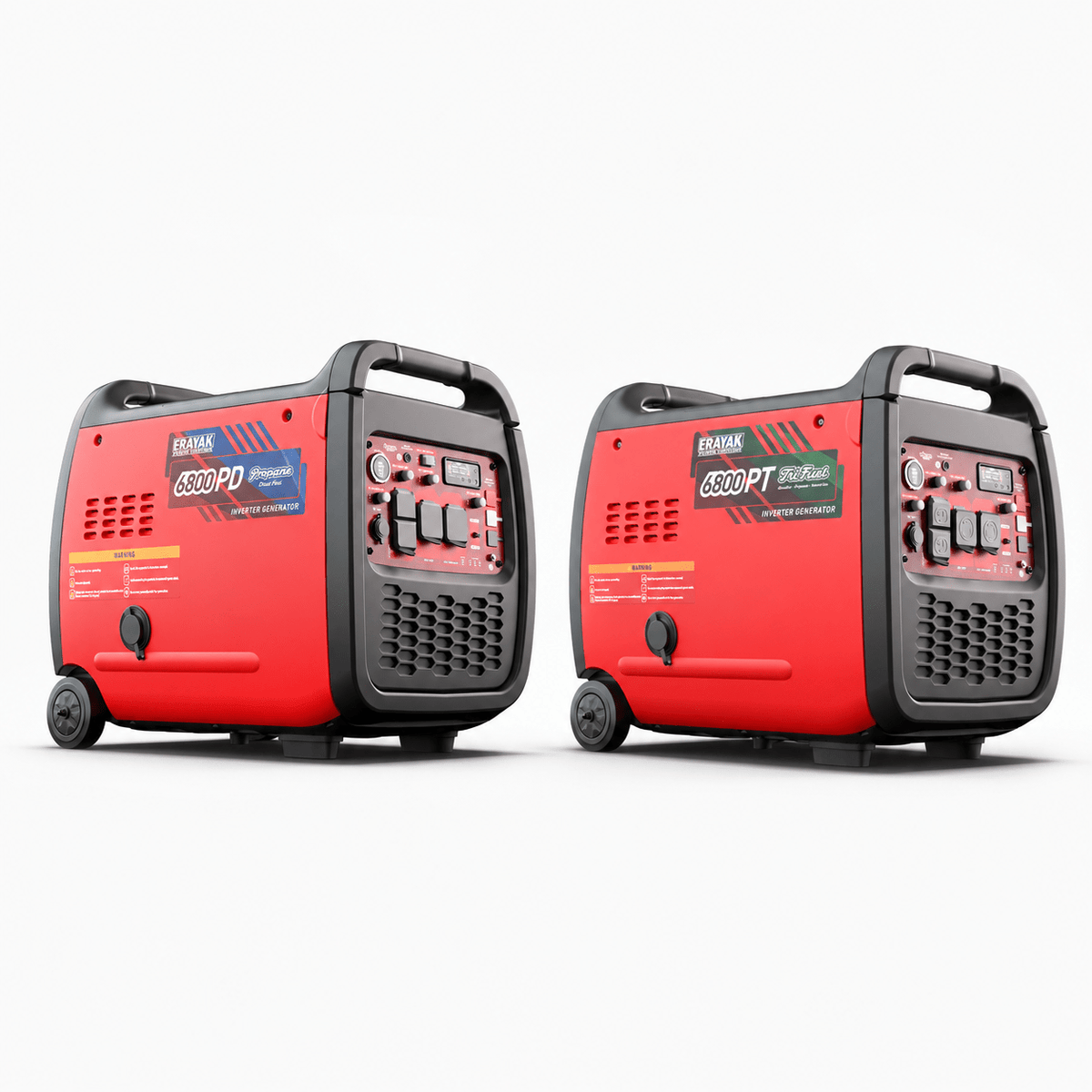
Best for 120V/240V Small Home Backup: Erayak 6800PT
The Erayak 6800PT is the primary fit when a small home needs 120V/240V planning, selected circuits, a well-pump backup path, or tri-fuel flexibility. It is rated at 6800W peak and 5000W gasoline rated output, with gasoline, propane, and natural gas capability.
- Best for: selected home circuits, well-pump planning, storm backup, and 120V/240V needs.
- Outlet planning: 30A L5-30R, 30A 120V/240V L14-30R, and dual 120V household outlets.
- Fuel note: propane and natural gas output are typically lower than gasoline output.
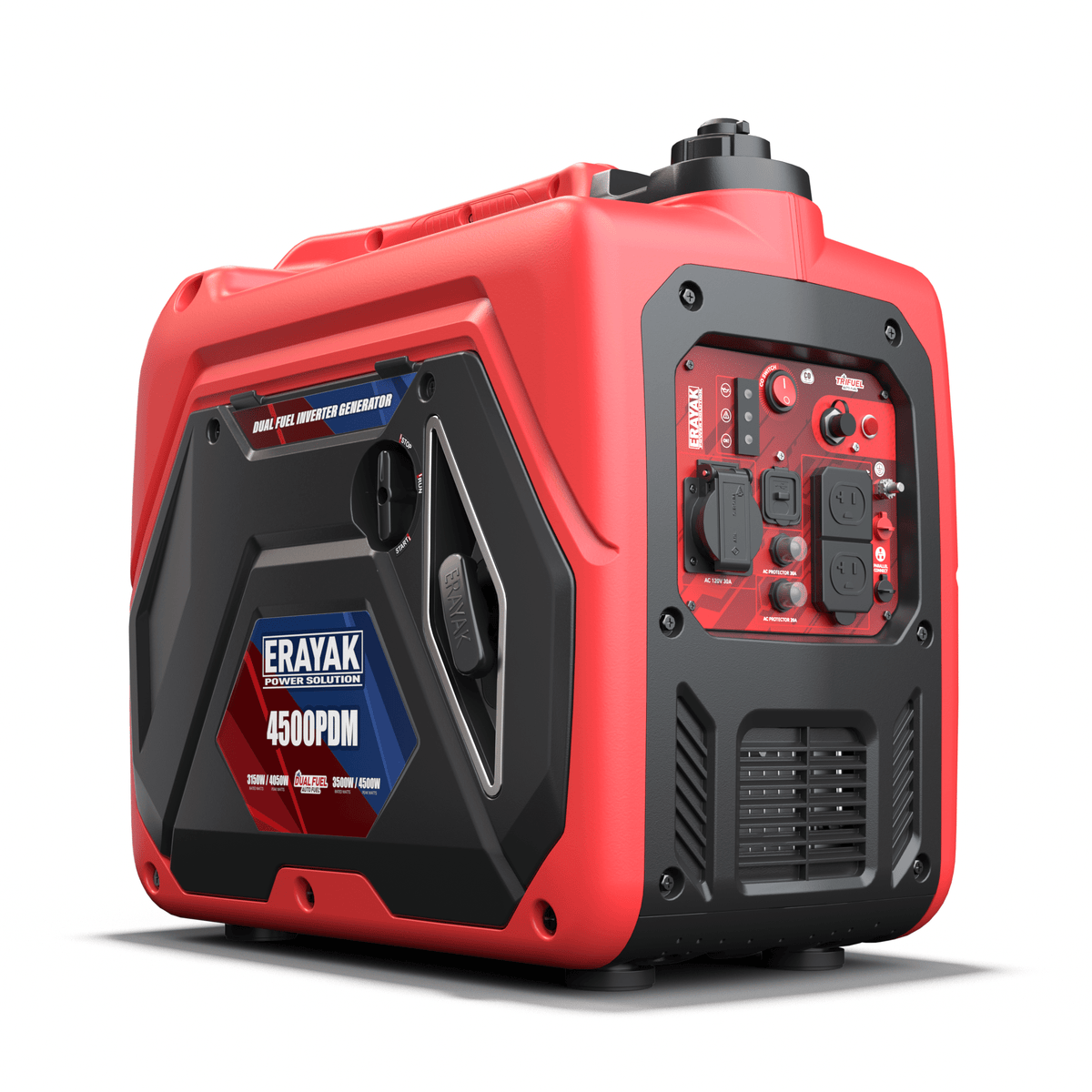
Best for Tiny Homes and 120V Essentials: Erayak 4500PD
The Erayak 4500PD is a better match when the home or cabin is mostly 120V loads: refrigerator, lights, router, chargers, small appliances, RV-style living, portable AC planning, and propane-friendly backup.
- Best for: tiny homes, cabins, RV-style living, 120V essentials, and dual-fuel flexibility.
- Fuel options: gasoline and propane.
- Planning note: not the default choice for 240V well pumps or central AC systems.
Transfer Switch and Safety Notes
If you want a portable generator to power home circuits, plan the connection before the outage. For home panels, that usually means a manual transfer switch, approved interlock, outdoor inlet box, and correctly rated generator cord.
- Do not backfeed. Never plug a generator into a wall outlet or dryer outlet.
- Use a qualified electrician. Transfer equipment and interlocks must be installed correctly and follow local code.
- Confirm 240V loads. Well pumps, central AC, electric dryers, and electric ranges need careful sizing.
- Start large loads one at a time. Pumps and compressors can create high surge loads.
- Do not run indoors. Fuel-powered generators must operate outdoors with proper ventilation.
- Use carbon monoxide alarms. CO is deadly and can enter through windows, doors, vents, and attached spaces.
Carbon Monoxide Safety Notice
Never run a fuel-powered generator indoors, in a garage, in a shed, under a porch, in a crawl space, or near open windows, doors, vents, or enclosed spaces. Operate the generator outdoors with exhaust pointed away from people and structures, and follow the generator manual and local code.
FAQ: Small Whole House Generators
What is the smallest whole house generator?
The smallest practical “whole house” generator depends on what you mean by whole house. For selected essential loads in a small home, 4,500W may be enough for 120V loads, while 6,000W to 7,500W is more realistic for 120V/240V selected-load planning.
Is a 7.5 kW generator enough for a small house?
A 7.5 kW-class generator can be enough for many small-house essential loads, especially refrigerators, freezers, lights, furnace blower, sump pump, and selected outlets. It may not be enough for central AC, electric range, electric dryer, and every circuit at once.
Can a portable generator power a small whole house?
A portable generator can power selected home circuits through a proper transfer switch or interlock. It should not be treated as a full automatic standby replacement unless the loads are carefully sized and managed.
What size generator do I need for a tiny home?
Many tiny homes can use a 3,500W to 4,500W inverter generator if the loads are mostly 120V and managed carefully. Add more capacity if you need large heating, cooling, pumps, or 240V loads.
Do I need a 240V generator for a small house?
You need 120V/240V output if your backup plan includes 240V loads such as many deep well pumps, central AC systems, electric dryers, or electric ranges. If you only need 120V essentials, a 120V generator may be enough.
Can the Erayak 6800PT run a whole house?
The Erayak 6800PT is best described as a selected-load home backup generator. It can support important small-home circuits when properly sized and connected, but it is not the same as an automatic whole-house standby system.
Is the Erayak 4500PD enough for a small house?
The Erayak 4500PD can be enough for many 120V essentials in a tiny home, cabin, or small-house emergency setup. It is not the best fit for 240V well pumps or central AC planning.
Can I run a generator indoors for a tiny home?
No. Fuel-powered generators must never be run indoors, inside a tiny home, in a garage, in a shed, or near open windows. Use them outdoors with proper ventilation and working carbon monoxide alarms.
