

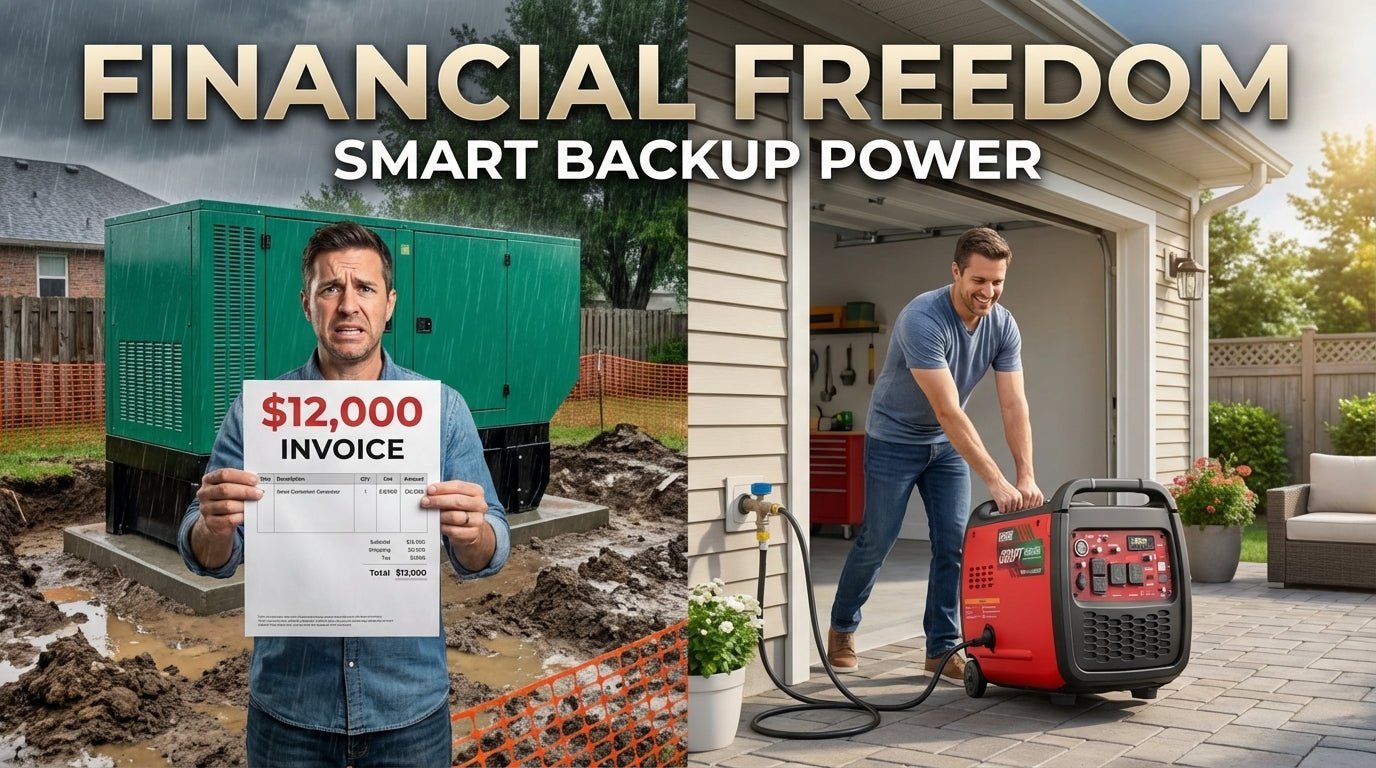
Portable vs Standby Generator: Cost, Transfer Switch & Backup Power
A standby generator is the most convenient home backup option, but it is not the only way to keep critical circuits running during an outage. A portable inverter generator with the right transfer switch, fuel plan, and load management can be a lower-cost alternative for homeowners who do not need automatic whole-house power.
Quick Answer: Is a Portable Generator a Good Alternative to a Standby Generator?
Yes, a portable generator can be a good alternative to a standby generator if you only need selected-load backup. That means powering essentials such as refrigerators, freezers, lights, Wi-Fi, furnace blower, sump pump, selected outlets, or some well-pump setups rather than every circuit in the home at once.
A standby generator is still better if you want automatic startup, whole-house coverage, central AC support, and no manual setup during an outage. A portable tri-fuel inverter generator is better when you want lower equipment cost, mobility, gasoline/propane/natural gas flexibility, and a backup plan you can take with you if you move.
Portable vs Standby Generator: The Real Difference
The difference is not just price. Standby generators are permanently installed and usually start automatically. Portable generators are moved into place, connected manually, and used for selected loads.
| Feature | Standby generator | Portable inverter generator |
|---|---|---|
| Startup | Automatic during an outage. | Manual: move it outdoors, connect fuel and cord, then start it. |
| Installation | Permanent pad, gas/electrical work, permits, automatic transfer switch. | Usually manual transfer switch, interlock, inlet box, cord, and safe outdoor placement. |
| Power coverage | Can be sized for whole-house or large-load backup. | Best for selected critical circuits and managed loads. |
| Fuel | Often natural gas or propane. | Gasoline, propane, or tri-fuel options depending on model. |
| Mobility | Permanent fixture. | Can be used for home backup, RV, work, camping, or moved to another home. |
| Convenience | Highest convenience. | Lower convenience, but more flexible and often lower cost. |
The honest comparison is simple: a standby generator is the premium convenience option. A portable inverter generator is the flexible selected-load option.
Cost Comparison: Equipment, Installation, and Ownership
Installed standby generator projects can cost thousands of dollars because the generator is only one part of the job. The final price can include a concrete pad, gas line work, electrical work, transfer equipment, permits, inspections, and labor.
| Cost factor | Standby generator | Portable generator backup setup |
|---|---|---|
| Generator equipment | Higher, especially for larger whole-house units. | Usually lower for selected-load portable inverter generators. |
| Electrical installation | Automatic transfer switch and permanent wiring. | Manual transfer switch or interlock plus inlet box. |
| Fuel connection | Often permanent natural gas or propane connection. | Gasoline/propane is portable; natural gas requires proper gas-line setup. |
| Permits and labor | Can be significant depending on local code and site conditions. | Still may require an electrician or plumber, but typically a smaller project. |
| Maintenance | Permanent system maintenance and periodic exercise. | Portable generator maintenance, fuel storage, and test runs. |
When a Portable Generator Makes More Sense
A portable inverter generator is often the smarter choice when your goal is to keep essentials running, not to recreate normal utility service during a blackout.
Selected circuits
Refrigerator, freezer, lights, router, furnace blower, sump pump, chargers, and a few key outlets.
Fuel flexibility
Tri-fuel portable generators can support gasoline, propane, and natural gas planning.
Mobility
Use the same generator for home backup, RV camping, jobsite needs, or a future move.
Portable generators are especially attractive for homeowners who are comfortable with manual setup and load management. They can be powerful, but they require a real plan.
When a Standby Generator Is Better
A standby generator is still the better answer for some homes. If you need power to come on automatically, or if someone in the home cannot safely set up a portable generator during bad weather, standby may be worth the higher cost.
| Choose standby if... | Why it matters |
|---|---|
| You need automatic startup | Standby units can start without someone rolling out equipment or connecting cords. |
| You want whole-house convenience | A properly sized standby generator can support more circuits with less manual load management. |
| You have critical medical or accessibility needs | Manual generator setup may not be appropriate for every household. |
| You want central AC coverage | Many portable generators are not sized for large central air conditioning systems. |
This is why the best choice is not “portable always wins” or “standby always wins.” The better question is: how much of your home do you actually need to power?
Portable Generator Transfer Switch Setup
If you want a portable generator to power home circuits, you need a safe connection method. That usually means a manual transfer switch, an approved interlock kit, an outdoor inlet box, and a properly rated generator cord.
- Choose the circuits. Decide what matters most: refrigerator, freezer, well pump, furnace blower, Wi-Fi, lights, outlets, sump pump, or a small portable AC.
- Size the generator. Add running watts and starting watts. Motors and pumps need surge capacity.
- Install transfer equipment. Use a licensed electrician where required. The transfer equipment prevents dangerous backfeeding.
- Use the correct inlet and cord. Match the generator outlet, cord rating, inlet box, and transfer equipment.
- Practice before the outage. Test the setup in daylight so you know which circuits to switch on and which loads to avoid.
Can a Portable Generator Run on Natural Gas?
Yes, if it is designed as a tri-fuel generator and the natural gas connection is properly sized and installed. Natural gas can be a major advantage because it reduces the need to store gasoline or swap propane tanks during a longer outage.
But natural gas is not magic. Output is usually lower than gasoline, and the generator depends on gas pressure, line size, regulator setup, hose length, and whether the utility gas service remains available. For the Erayak 6800 series, natural gas output is typically about 80% to 90% of gasoline output.
Maximum output
Best when you need the highest available wattage from the generator.
Storage-friendly
Good for preparedness and RV use, with lower output than gasoline in many setups.
Home backup convenience
Useful for longer outages when connection, pressure, and local code are handled correctly.
Best Erayak Fit for Portable Home Backup
For this comparison, the main Erayak fit is the 6800PT because it supports tri-fuel planning, 120V/240V output, and selected-load home backup through proper transfer equipment.
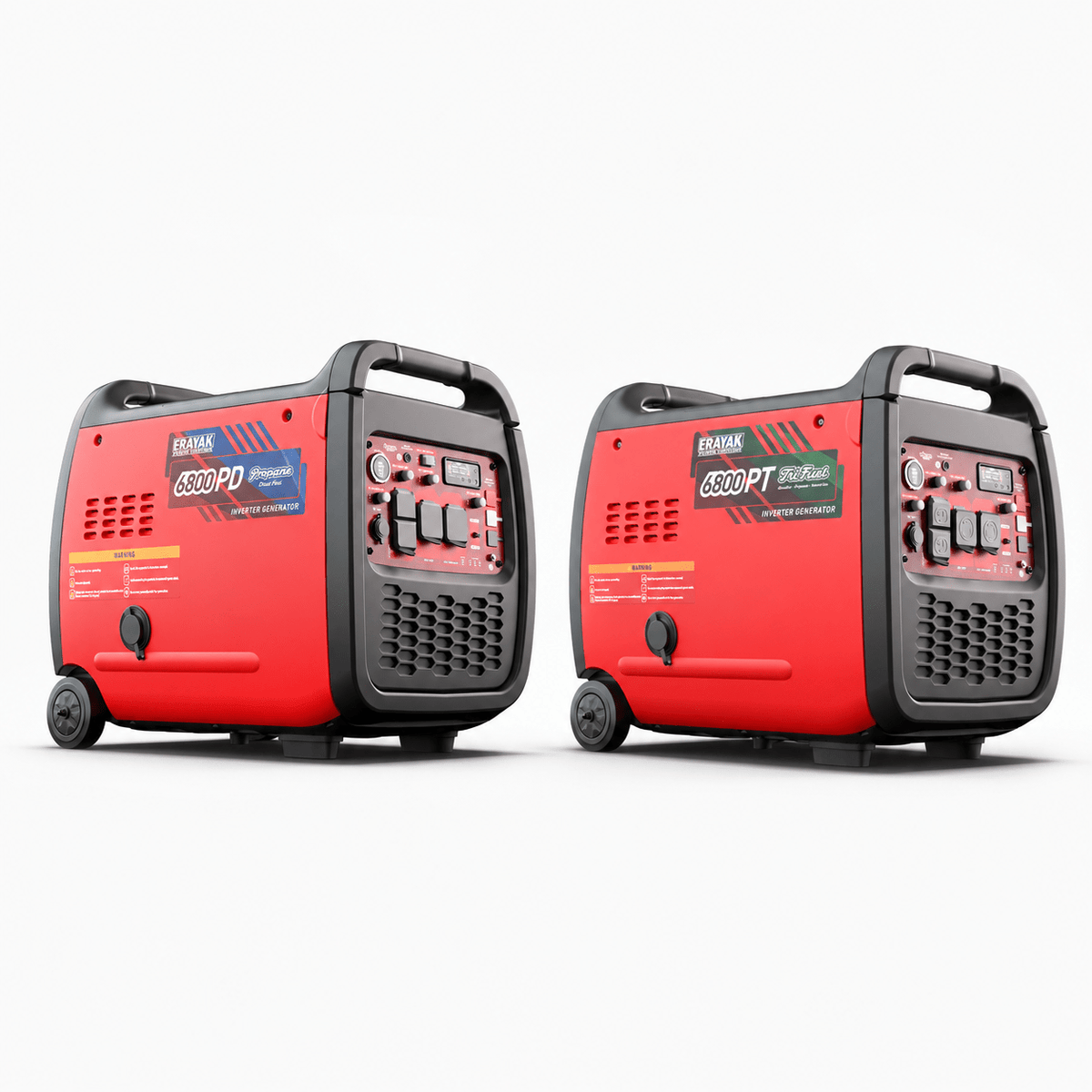
Erayak 6800PT Tri-Fuel Inverter Generator
The Erayak 6800PT is a portable selected-load backup option for homeowners who want gasoline, propane, and natural gas flexibility. It is designed for 6800W peak output and 5000W gasoline rated output, with 120V/240V capability for more serious backup planning.
- Fuel options: gasoline, propane, and natural gas.
- Power class: 6800W peak, 5000W gasoline rated output.
- Outlet planning: 30A L5-30R, 30A 120V/240V L14-30R, and dual 120V household outlets.
- Best use: selected home circuits, outage prep, well-pump planning, refrigerator/freezer backup, and larger portable power needs.
Safety Notes for Portable Home Backup
- Operate outdoors only. Never run a fuel-powered generator indoors, in a garage, in a basement, in a shed, under a porch, or near open windows.
- Use carbon monoxide alarms. CO is deadly and can enter the home through openings, vents, or attached spaces.
- Use transfer equipment. A manual transfer switch, interlock, or approved inlet protects your home and utility workers.
- Confirm natural gas setup. A plumber or qualified gas professional should verify line size, pressure, fittings, and local code.
- Manage loads. Do not run every large appliance at once. Start high-surge loads one at a time.
- Keep the generator dry and ventilated. Use only weather protection designed for generator operation.
Carbon Monoxide Safety Notice
Fuel-powered generators must be used outdoors with proper ventilation. Never run a generator indoors, inside a garage, under a porch, in a shed, or near open windows, doors, vents, or crawl-space openings. Keep exhaust pointed away from people and structures.
FAQ: Portable vs Standby Generator
Is a portable generator a good alternative to a standby generator?
Yes, if you only need selected-load backup and are comfortable with manual setup. A portable generator is not as convenient as standby, but it can power essential circuits through a proper transfer switch or interlock.
What is the main difference between portable and standby generators?
A standby generator is permanently installed and usually starts automatically. A portable generator must be moved outdoors, connected manually, and used with load management.
Can a portable generator run a whole house?
A portable generator is usually best for selected circuits, not the entire house. It can run refrigerators, freezers, lights, routers, furnace blowers, and some pumps when properly sized, but large loads like central AC, electric ovens, and whole-house simultaneous use may exceed capacity.
Do I need a transfer switch for a portable generator?
If you want to power home circuits, you need a safe transfer method such as a manual transfer switch, approved interlock, and inlet box. Do not backfeed through a wall outlet or dryer outlet.
Can a portable generator run on natural gas?
Yes, if it is a tri-fuel generator designed for natural gas and the gas connection is properly installed. Natural gas output is usually lower than gasoline output, and line size and pressure matter.
Is a standby generator worth the higher cost?
A standby generator can be worth it if you want automatic startup, whole-house coverage, or central AC support. A portable generator may be better if you want lower cost, mobility, fuel flexibility, and selected-load backup.
What is the best Erayak generator for portable home backup?
The Erayak 6800PT is the strongest Erayak fit for portable tri-fuel home backup because it supports gasoline, propane, natural gas, 6800W peak output, 5000W gasoline rated output, and 120V/240V selected-load planning.
