

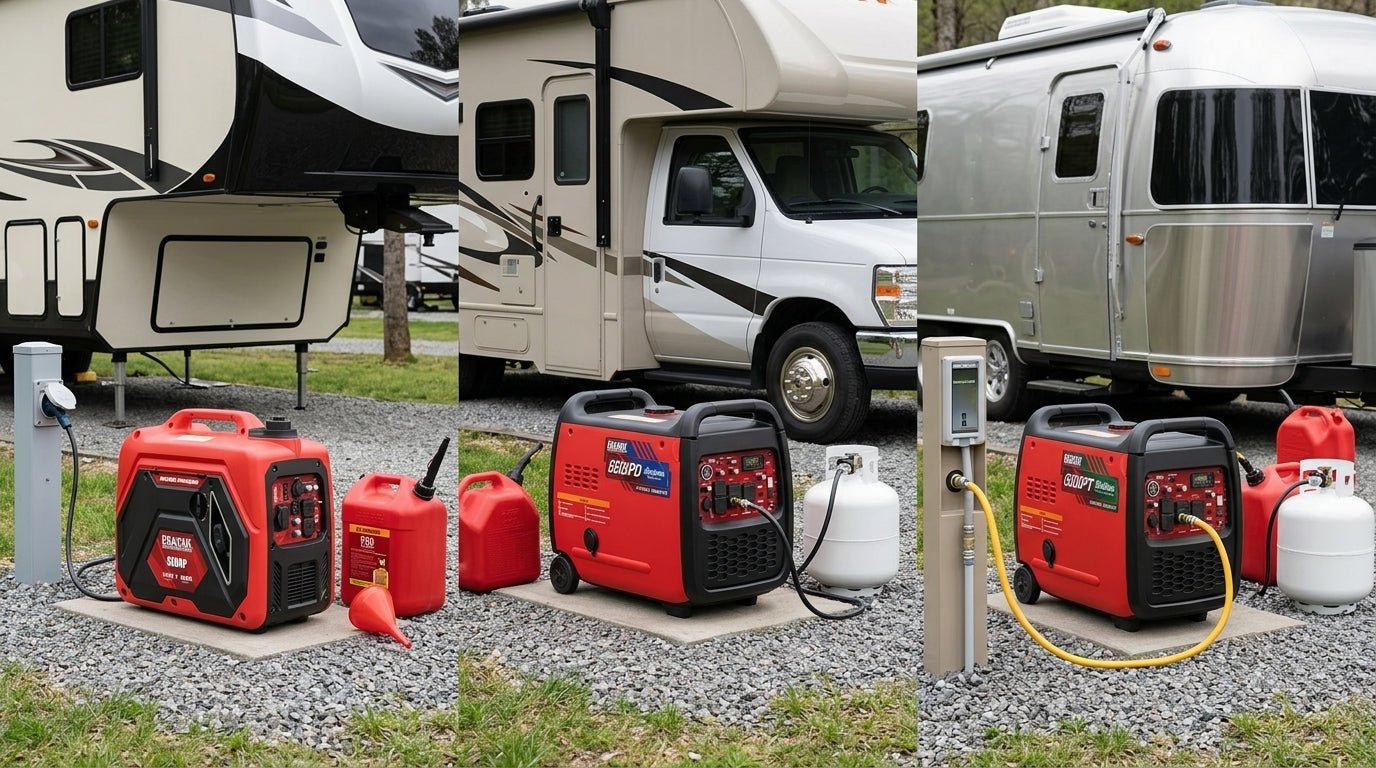
Best Tri Fuel Inverter Generator: Natural Gas, Propane & Home Backup
A tri fuel inverter generator can be one of the most flexible portable backup choices for outages, storms, RV use, and selected home circuits. The key is understanding what tri fuel actually gives you: gasoline power, propane storage convenience, and natural gas connection potential, each with different output and setup requirements.
Quick Answer: Is a Tri Fuel Inverter Generator Worth It?
Yes, a tri fuel inverter generator is worth it if you want one portable generator that can use gasoline, propane, and natural gas. It is especially useful for home backup planning when you already have access to natural gas or want propane storage as a cleaner, longer-lasting fuel option.
It is not automatically the right choice for everyone. Natural gas and propane usually produce less output than gasoline, and a safe home connection may require a plumber, electrician, transfer switch, interlock, or approved inlet setup. If you only need RV camping power from gasoline and propane, a dual-fuel inverter generator may be the simpler choice.

What Is a Tri Fuel Inverter Generator?
A tri fuel generator is a generator designed to run on three fuel types: gasoline, propane, and natural gas. A tri fuel inverter generator adds cleaner inverter output, quieter enclosed operation, and better electronics compatibility compared with many conventional open-frame generators.
Highest output
Gasoline usually delivers the strongest rated output, but it needs safe storage, rotation, and maintenance planning.
Great storage fuel
Propane stores well and is convenient for RVs and storm prep, but output can be lower than gasoline.
Home backup flexibility
Natural gas can reduce refueling trips, but it requires the right connection, pressure, hose, regulator, and local code compliance.
The main reason shoppers search for the best tri fuel inverter generator is simple: they want fuel options before an outage, not after the outage has already started.
When Is a Tri Fuel Generator Worth It?
A tri fuel generator is worth considering when fuel availability is part of your backup plan. If you live in a storm-prone area, use natural gas at home, keep propane tanks for camping, or want one generator for both home backup and RV-style portable power, tri fuel can make a lot of sense.
| Buyer situation | Is tri fuel worth it? | Why |
|---|---|---|
| Home has natural gas service | Usually yes | Natural gas can reduce the need to store or transport fuel during an outage. |
| Storm backup and outage prep | Yes | Fuel flexibility matters when gas stations are crowded, closed, or out of fuel. |
| RV camping only | Maybe | Dual fuel may be enough if you only need gasoline and propane. |
| Small appliance backup only | Not always | A smaller dual-fuel or gas inverter generator may be easier to carry and store. |
| 240V selected-load planning | Often yes | A larger 120V/240V inverter generator can support more serious backup planning when installed correctly. |
Gasoline vs Propane vs Natural Gas: Which Fuel Should You Use?
The best fuel depends on the situation. Gasoline is usually best for maximum output. Propane is easier to store. Natural gas can be convenient for home backup if your supply is available and your connection is properly installed.
| Fuel | Strengths | Tradeoffs | Best use |
|---|---|---|---|
| Gasoline | Highest output, easy to find in normal conditions, familiar for portable generators. | Can go stale, requires safe storage, may be harder to get during wide outages. | Maximum wattage and short-term portable use. |
| Propane | Stores well, clean handling, common for RVers and preparedness. | Lower output than gasoline, tank capacity limits runtime. | RV backup, storm kits, and long-term storage. |
| Natural Gas | No portable tank refills, useful for home backup, convenient when the gas utility remains active. | Lowest output of the three in many setups, depends on pressure, line size, and local utility service. | Selected home circuits and longer outage planning with proper installation. |
For the Erayak 6800 series, use the output expectation carefully: gasoline provides the strongest output. Propane is typically about 85% to 95% of gasoline output. Natural gas is typically about 80% to 90% of gasoline output. Exact results depend on conditions and setup.
Dual Fuel vs Tri Fuel Generator: Which Should You Buy?
A dual-fuel generator runs on gasoline and propane. A tri-fuel generator adds natural gas. That third fuel is the real difference.
| Choice | Best for | Why you might choose it |
|---|---|---|
| Gas-only inverter generator | Simple portable power | Lower complexity when you do not need propane or natural gas. |
| Dual-fuel inverter generator | RV camping, propane flexibility, storm prep | Good balance when you want gasoline plus propane without natural gas setup. |
| Tri-fuel inverter generator | Home backup and fuel resilience | Best when natural gas access is part of your backup plan. |
If your main use is a 30 amp RV, the Erayak 4500PD dual-fuel inverter generator may be a cleaner fit. If your main use is home backup with natural gas and 120V/240V planning, the Erayak 6800PT is the better match.
Home Backup Setup: Natural Gas, 240V, and Transfer Switch Planning
A tri fuel inverter generator becomes most valuable when it is part of a real home backup plan. That usually means thinking beyond the generator itself.
Natural Gas Connection
Natural gas generator use depends on the correct line size, gas pressure, regulator, hose, quick-connect fitting, and local code. Do not assume that every patio gas stub can support a generator at full load. A licensed plumber or qualified gas professional should confirm the connection.
Transfer Switch or Interlock
If you want to power home circuits, use a properly installed transfer switch, interlock, or approved inlet system. Never backfeed a home through a dryer outlet or wall outlet. Backfeeding can injure utility workers, damage equipment, and create fire risk.
120V/240V Loads
Some home backup loads, such as certain well pumps or selected circuits, may require 120V/240V planning. In that case, look for a generator with the proper 120V/240V outlet and enough surge capacity for the load. Always check the appliance nameplate and starting requirements.
Best Erayak Tri Fuel Inverter Generator for Home Backup
For Erayak shoppers, the primary tri fuel match is the Erayak 6800PT. It is the right product to feature when the article is about natural gas, propane, gasoline, 120V/240V planning, and selected home backup circuits.
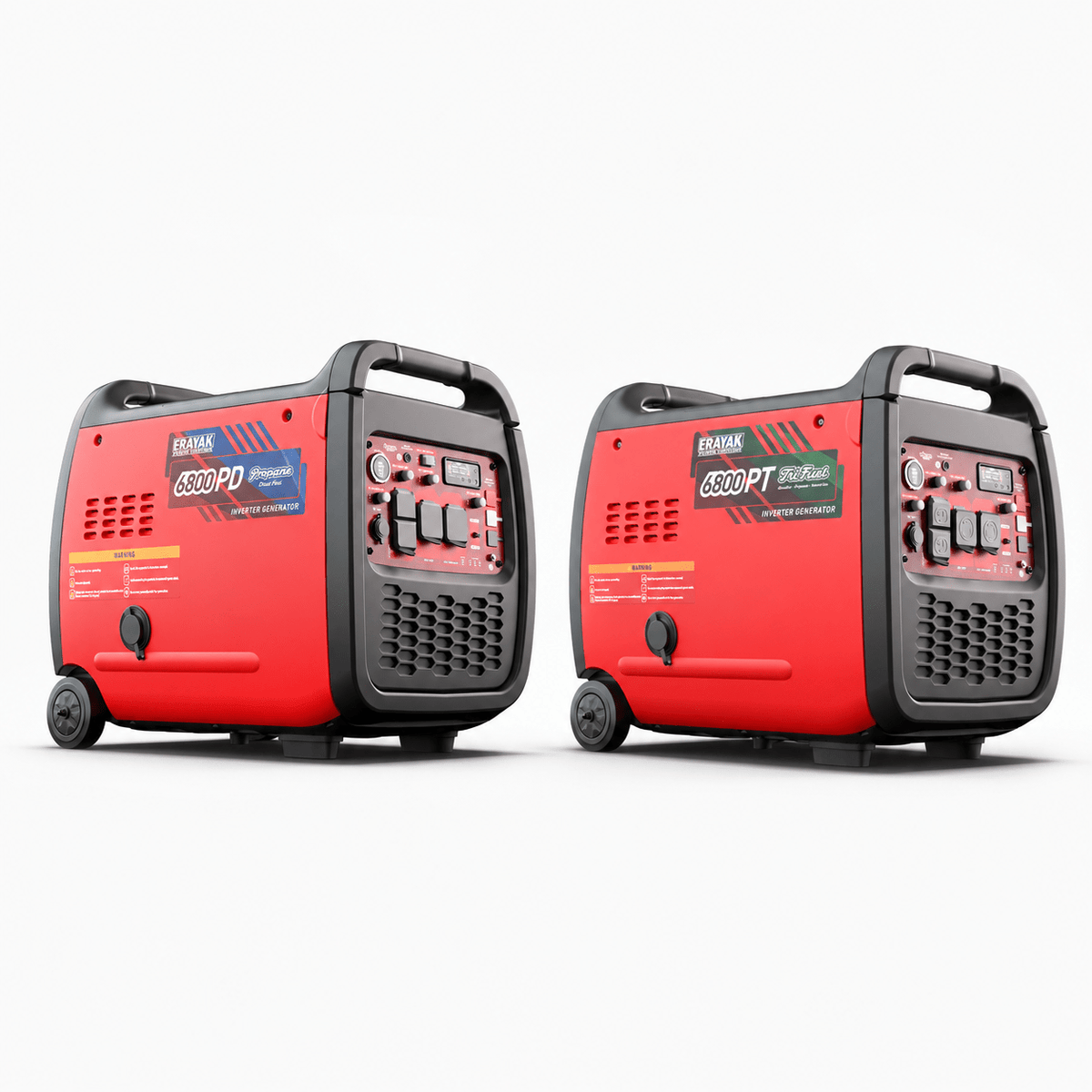
Erayak 6800PT Tri Fuel Inverter Generator
The Erayak 6800PT is the tri-fuel option for buyers who want gasoline, propane, and natural gas flexibility in a portable inverter generator. It is designed for 6800W peak output and 5000W gasoline rated output at 100% load, with 120V/240V capability for more serious selected-load backup planning.
- Fuel options: gasoline, propane, and natural gas.
- Power class: 6800W peak and 5000W gasoline rated output.
- Outlet planning: includes 30A L5-30R, 30A 120V/240V L14-30R, and dual 120V household outlets.
- Best use: home backup, storm preparation, well-pump planning, selected circuits, and larger portable power needs.
Safety and Installation Notes
- Never run a fuel-powered generator indoors. This includes garages, sheds, basements, crawl spaces, enclosed patios, and near open windows.
- Use carbon monoxide alarms. CO can be deadly and can build up even when doors or windows are open.
- Use a proper transfer switch or interlock. Never backfeed a home through a wall outlet, dryer outlet, or improvised cord.
- Confirm natural gas supply. Gas line size, pressure, and connection type affect whether the generator can operate correctly.
- Account for fuel output drops. Propane and natural gas usually reduce available wattage compared with gasoline.
- Size loads realistically. Well pumps, sump pumps, refrigerators, furnace blowers, and AC units may have high starting watts.
Carbon Monoxide Safety Notice
Fuel-powered generators must be operated outdoors with proper ventilation. Never run a generator indoors, in a garage, under a porch, in a shed, or near open windows, doors, vents, or crawl-space openings. Keep exhaust pointed away from people and structures, and follow the manual and local code.
FAQ: Tri Fuel Inverter Generators
What is a tri fuel inverter generator?
A tri fuel inverter generator is a generator that can run on gasoline, propane, and natural gas while using inverter technology to provide cleaner, more stable power than many conventional generators.
Is a tri fuel generator worth it?
A tri fuel generator is worth it when fuel flexibility matters, especially for home backup, storm preparation, and natural gas access. If you only need RV camping power from gasoline and propane, a dual-fuel generator may be enough.
What is the best fuel for a tri fuel generator?
Gasoline usually provides the highest output. Propane stores well and is convenient for preparedness. Natural gas is useful for home backup when the gas line, pressure, and installation are correct.
Does a tri fuel generator lose power on propane or natural gas?
Yes, usually. Propane and natural gas often produce less output than gasoline. For the Erayak 6800 series, propane output is typically about 85% to 95% of gasoline output, while natural gas is typically about 80% to 90%.
Can a tri fuel generator run a whole house?
A portable tri fuel generator is best treated as selected-load backup, not an automatic whole-house standby system. It can support important circuits when properly sized and installed, but the exact loads depend on wattage, starting surge, fuel type, and transfer equipment.
Can I connect a tri fuel generator to my home natural gas line?
Sometimes, but the connection must be correctly sized and code-compliant. A qualified plumber or gas professional should verify line size, pressure, quick-connect fittings, regulator requirements, and safe outdoor placement.
Do I need a transfer switch for a tri fuel generator?
If you want to power home circuits, use a properly installed transfer switch, interlock, or approved inlet. Do not backfeed through a wall outlet or dryer outlet.
What is the best Erayak tri fuel generator?
The Erayak 6800PT is the primary Erayak tri fuel inverter generator. It offers gasoline, propane, and natural gas flexibility, 6800W peak output, 5000W gasoline rated output, and 120V/240V planning for selected home backup loads.
